

15 Best Sitcoms Of The '90s, Ranked
As the de facto bridge between the family-centric '80s and the bone-dry cringe comedies of the 2000s, the '90s are one of the most interesting decades in sitcom history to look back on. The decade also produced some of the genre's finest shows, ranging from refined traditional formulas to groundbreaking innovations. At the same time, the '90s reflected a shifting cultural landscape, with sitcoms beginning to embrace sharper writing, more diverse perspectives, and a willingness to take bigger creative swings.
Below is a ranking of the 15 best sitcoms of the '90s, limited to American productions and — with apologies to "The Simpsons," "Daria," "Rocko's Modern Life," "The Critic," and other wonderful animated iterations of the genre — limited to live-action (and one animatronic) series, if only to make slightly easier what is already a daunting narrowing-down mission. In weighing these picks, factors like cultural impact, consistency, and rewatchability all played a role. From workplace chaos to family dynamics to genre-bending experiments, these shows capture the range of what '90s sitcoms could be.
15. Just Shoot Me!
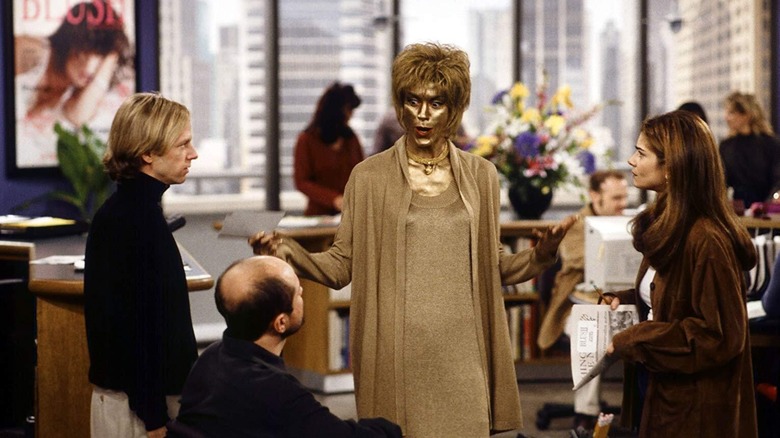
Created by Steven Levitan, "Just Shoot Me!" is a highly underrated sitcom that layers sharp, snarky, delightfully mean writing atop a foundation of affectionate character work. This approach makes it one of the most riotously funny and endearing sitcoms of the '90s, as well as a forward-looking precursor to much of post-2010s TV comedy.
Originally airing on NBC and later in syndication, "Just Shoot Me!" is set in the offices of Blush, a fictional New York fashion magazine, where take-no-prisoners feminist journalist Maya Gallo (Laura San Giacomo) begrudgingly comes to work for her father, Jack (George Segal), after alienating most of her industry connections. While butting heads with the magazine over its cosmetic-focused depictions of women, Maya befriends the office's kooky fellow employees, including supermodel-turned-editor Nina Van Horn (Wendie Malick), photographer Elliott DiMauro (Enrico Colantoni), and Jack's secretary Dennis Finch (David Spade). An incredible ensemble dynamic soon develops, fueled by savvy, perceptive skewering of New York City adult life.
14. The Nanny
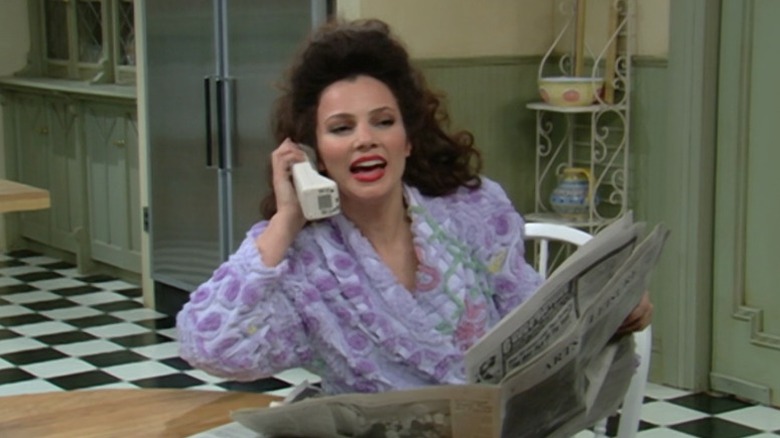
CBS' "The Nanny" is one of the most iconic sitcoms of the '90s for good reason. Few entries in the genre have succeeded as strongly at fostering audience investment through storytelling in addition to the comedy itself. Pretty much every episode offered hearty laughs and memorable one-liners, with laudable consistency for something that ran for six seasons and 146 episodes, but the real magic was in how the show endeared you to Fran Fine (Fran Drescher), Maxwell Sheffield (Charles Shaughnessy), and the rest of the cast until following their lives felt like checking in on loved ones.
This gradual-attachment tactic mirrored the premise itself, which pitches Drescher's loud, effervescent, no-nonsense titular protagonist as a wealthy family's gateway back into love and joy, "The Sound of Music"-style. Created by Drescher alongside Peter Marc Jacobson, the show begins with the intuitive fascination of watching a character as magnetic as Fran acclimate to a seemingly incompatible new environment, but soon becomes a paean to the beauty of unlikely connection, cross-cultural understanding, and unapologetic working-class Jewish identity, featuring one of the all-time great sitcom love stories.
13. Arliss
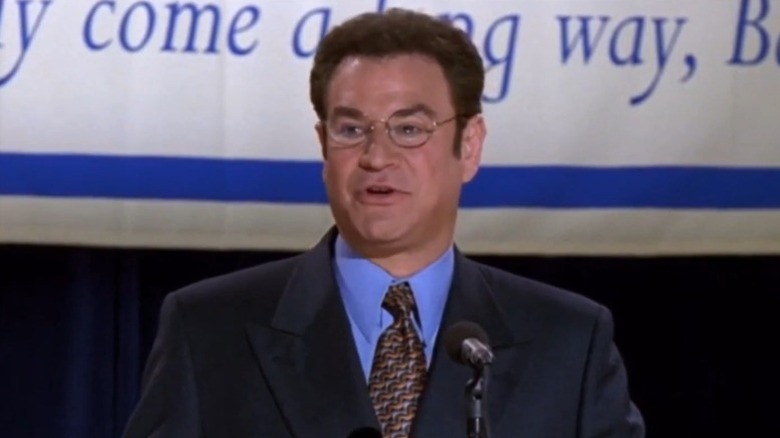
If any American '90s sitcom was particularly ahead of its time, it was HBO's "Arliss." Stylized as "Arli$$," this Robert Wuhl-created satire of the world of professional sports alienated mainstream audiences but conquered a small army of devotees with its willingness to go really, really dark. Protagonist Arliss Michaels, played by Wuhl himself, is an amoral, shockingly unscrupulous sports agent who makes the cast of "Seinfeld" look likable — and that's exactly where the fun lies.
With Sandra Oh, Jim Turner, and Michael Boatman in tow as Arliss' business acolytes, "Arliss" takes a head-on look at the greed, corruption, hypocrisy, and exploitation that plague the upper echelons of the sports business, and finds all the humor and fascinating absurdity therein. A-list sports stars of the late '90s and early 2000s (the show ran from 1996 to 2002) frequently appear as exaggerated versions of themselves, making the series a precursor to the industry-roast antics of "Extras" and "The Studio." Indeed, if you were to list every comedy series that owes something to the dry, fast-paced trenchancy of "Arliss," you'd have to mention everything from "Veep" to "Arrested Development" to "Entourage." It's even one of the best TV shows to watch if you like "Ted Lasso."
12. Boy Meets World
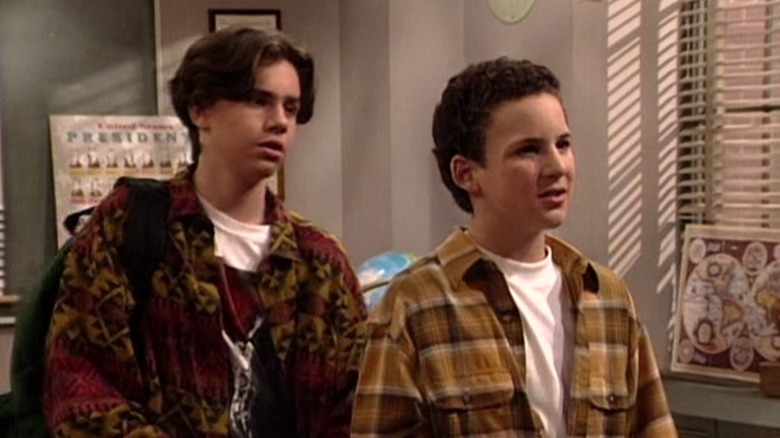
It wouldn't be an exaggeration to say that "Boy Meets World" permanently transformed coming-of-age shows. Created by Michael Jacobs and April Kelly for ABC's family-oriented "TGIF" block, the series departed from numerous teen sitcom tenets of the time — low-stakes stories, strictly lighthearted material, and a constantly resetting status quo — to carve out something that felt real, unique, and relatable to growing up in the '90s. It's little wonder "Boy Meets World" became an enduring cult hit and a generational touchstone for millennials.
Protagonist Cory Matthews (Ben Savage) begins the show as an 11-year-old just starting sixth grade, and the seven seasons chart his growth all the way to college, alongside his family, his best friend Shawn Hunter (Rider Strong), and his classmate and eventual love interest Topanga Lawrence (Danielle Fishel). Although the humor is always on point, with delightfully witty dialogue and a rich inner universe of comic runners and ensemble quirks, "Boy Meets World" also wades into dark thematic territory that most of its genre contemporaries wouldn't touch with a 10-foot stick — which allows it to honor the reality of teen life in its messy, unbridled totality.
11. Married... with Children
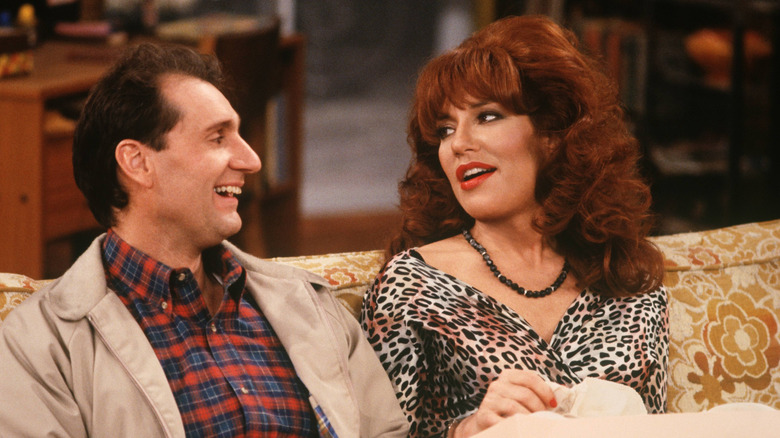
Take a look at "Married... with Children" from the outside, and it might seem like just another corny '80s-style nuclear family sitcom held over into a decade where those were falling out of cultural favor. But the opposite is true: What made this 1987 Fox premiere an enduring 11-year success and an integral part of the '90s TV comedy landscape was its complete evisceration of the genre's feel-good doctrine. It might just be the single most caustic sitcom of the '90s — which is saying a lot.
Ed O'Neill and Katey Sagal star as Al and Peggy Bundy, respectively, a washed-up high school football star and a washed-up popular girl, who now make up the world's most dysfunctional and mutually resentful married couple. They're awful parents to their kids Kelly (Christina Applegate) and Bud (David Faustino), their lives are filled with constant exasperation, they never show even an inkling of growth or change, and it's all ferociously hilarious — a crude live-action cartoon that never takes itself seriously enough to be above cackling at its characters' self-inflicted misery. Family sitcoms were never the same after it.
10. NewsRadio
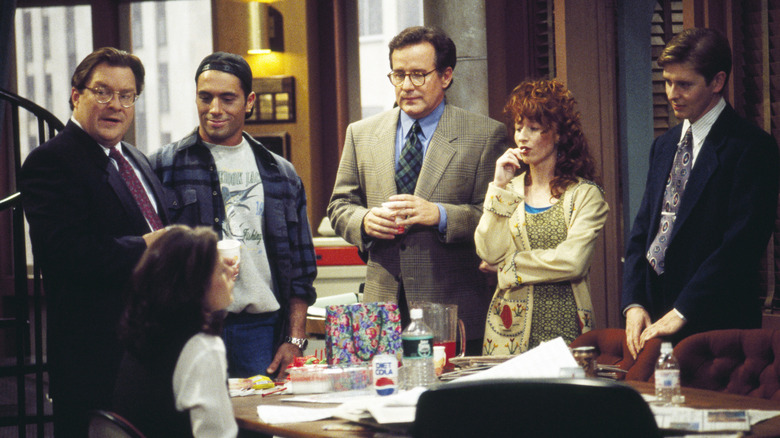
Shows that played a part in codifying and transforming genres are a running theme on this list, and NBC's underappreciated "NewsRadio" helped usher in the modern era of workplace comedies. As its title suggests, it's set among the employees of a fictional AM all-news radio station, where news director Dave Nelson (Dave Foley) holds down the fort as the straight man to a cast of bickering, erratically competent kooks.
Also starring TV royalty such as Maura Tierney, Khandi Alexander, Vicki Lewis, Phil Hartman, and Stephen Root as boisterous station owner Jimmy James, the show prefigures the "30 Rock" method of piling up gags by any means necessary, with the eccentricities of its characters transforming a showbiz production environment into an anything-goes pandemonium. Although it never became the ratings hit it deserved to be, "NewsRadio" stands out as one of the '90s comedy series that have aged the best, and its whip-smart, endlessly resourceful writing remains a wonder to behold.
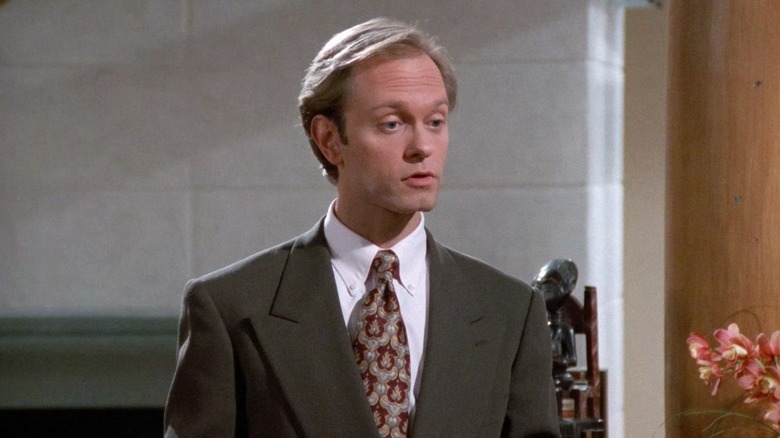
9. Frasier
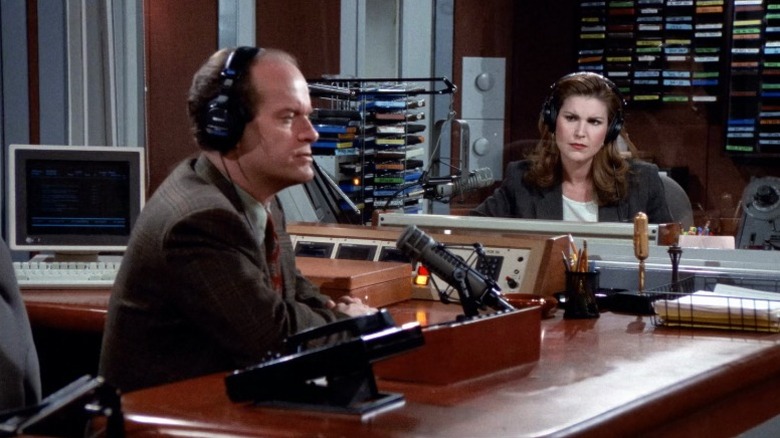
One of the most iconic and massively successful spin-off shows of all time, "Frasier" can't be said to have outshined its parent series because that series happens to be "Cheers." Still, it's a testament to the greatness of "Frasier" that it now feels odd to remember Frasier Crane (Kelsey Grammer) was once a supporting character on another show for nine seasons.
The key to the sparkling brilliance of this astonishingly consistent 11-season NBC series is the way it weaves together the highbrow and the lowbrow. Psychiatrist Frasier Crane, who moves from the Boston of "Cheers" to his hometown of Seattle after his marriage to Lilith Sternin (Bebe Neuwirth) falls apart, is a testy, neurotic snob who prefers to surround himself with haute culture and initially resents dealing with salt-of-the-earth figures like his father Martin (John Mahoney) and Martin's live-in caretaker Daphne (Jane Leeves). But interspersed with the erudite verbal tussles between Frasier and his brother Niles (David Hyde Pierce) are giddy, rambunctious, and often gleefully silly comic mishaps, which puncture the protagonist's intellectual arrogance while impeccably deploying it in service of farcical accumulation.
8. Dinosaurs
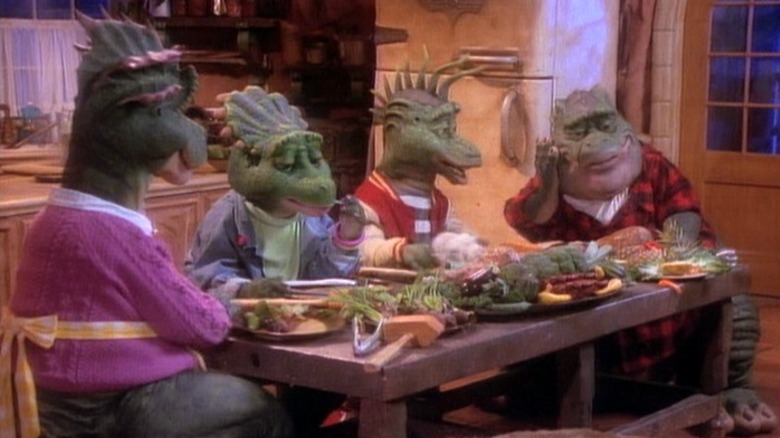
At once the goofiest and most avant-garde series on this list, ABC's "Dinosaurs" largely hewed to the classic structure of American family sitcoms but for one detail: its protagonists, of course, were anthropomorphic dinosaurs living in 60,000,000 BC. This brazen idea, accomplished through animatronic puppets created by Jim Henson's Creature Shop (with Henson having contributed extensively to the series' development prior to his death in 1990), allowed "Dinosaurs" to tackle stock sitcom conflicts with a nimble touch of parody and expand them into scathing sociopolitical allegories.
For a show set millions of years before the existence of humans, "Dinosaurs" sure managed to offer up more pointed and prescient satire than almost any human-led network show of its time, touching on thorny themes that most mainstream TV would take years to start addressing with similar directness. Naturally, it couldn't have done it, or sold viewers on the idea of an animatronic sitcom in the first place, without riotously funny writing to back it up — which makes it all the more fascinating that it had probably the darkest and most gut-wrenching ending of any American sitcom ever.
7. A Different World
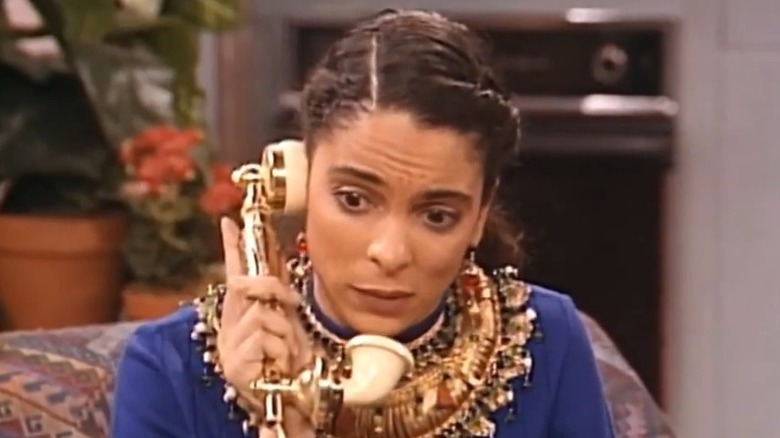
"A Different World" premiered on NBC in 1987 as a spin-off of "The Cosby Show," focusing on Denise Huxtable's (Lisa Bonet) life and friendship with her white roommate Maggie Lauten (Marisa Tomei) at a fictional historically Black college in Virginia. Bonet and Tomei ultimately left at the end of Season 1 — but what the show lost in talent, it gained in focus, direction, and purpose, emerging from under the shadow of "Cosby" to become its era's foremost comedic depiction of contemporary struggles and issues faced by young American adults.
Under the supervision of producer Debbie Allen (who was hired in Season 2 to make the series more accurate to HBCU life), "A Different World" became an agile, modern, and refreshing college comedy that deftly filtered topical subject matter through the zany but authentically written misadventures of a fully realized ensemble. Although only three and a half of its six seasons aired in the '90s, it warrants association with that decade by virtue of being a de facto portal into it — a show that originated from the prim traditionalism of the '80s and then charged into a bolder, more inquisitive future.
6. The Fresh Prince of Bel-Air
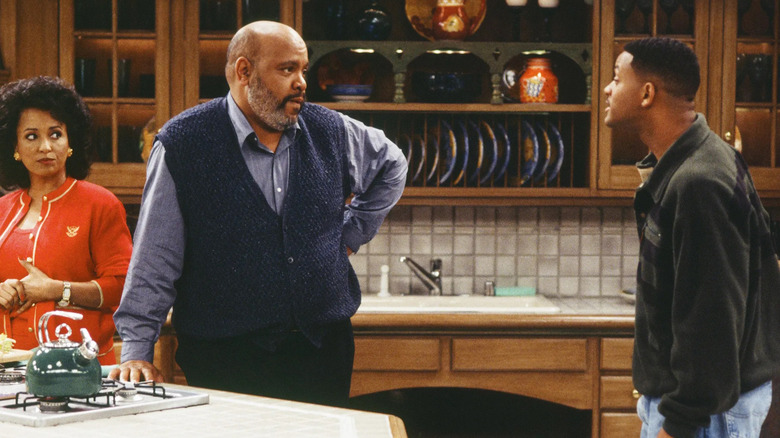
If sitcoms can be measured on their effectiveness as star vehicles, then there's no match out there for "The Fresh Prince of Bel-Air." The fact that Will Smith was once an up-and-coming rapper dipping his feet into acting feels like a distant dream after decades of his world-dominating movie stardom — and this six-season NBC series was the show that started it all. But the merit of "Fresh Prince" extends far beyond its success as a career catapult; unconventional though its structure may have been, it was one of the most definitional family sitcoms of the '90s.
Pitting Smith's fictionalized West Philadelphia self head-to-head with his wealthy uncle Phil Banks (James Avery), the show contrasted two outwardly opposing views of late-20th-century Black American identity, mining incredible culture-clash humor from Will's shakeup of his relatives' stiff upper-class life — only for a core of surprising dramatic sincerity to slowly emerge from the elastic sitcom antics, revealing the fundamental, class- and generation-transcending commonalities between Will and Uncle Phil's experiences. It was one thing to be as funny, entertaining, and laden with iconic gags and one-liners as this show was; it was another thing entirely to be this heartrending.
5. Friends
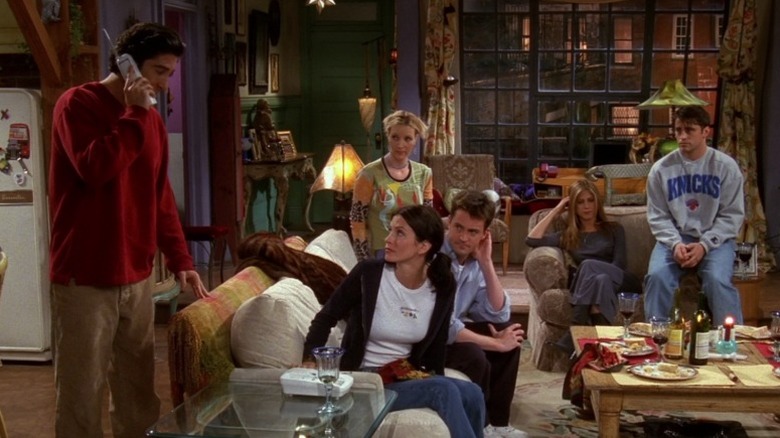
"Friends" changed the molecular composition of American social life. By the time it was drawing 20-plus million (and occasionally 30-plus million) weekly viewers on NBC, the show's six twentysomething best friends had become an aspirational image of young adult life at its most fun and interesting — a practical guide for navigating relationships, bills, career roadblocks, and misunderstandings while sharing it all with a chosen family.
By its very nature as an industry behemoth that had to juggle the interests of an entire country, "Friends" had its creative ups and downs, and occasionally went through stretches of waning inspiration across its 10-season, 236-episode run. But when it flew, it soared, crafting essential episodes and moments of pure comedic exuberance that have taken on an almost elemental power in the annals of turn-of-the-century pop culture. If sitcoms are the art of nesting, successful insofar as they provide a cozy TV refuge for 22 minutes a week, "Friends" is the Sistine Chapel.
4. Murphy Brown
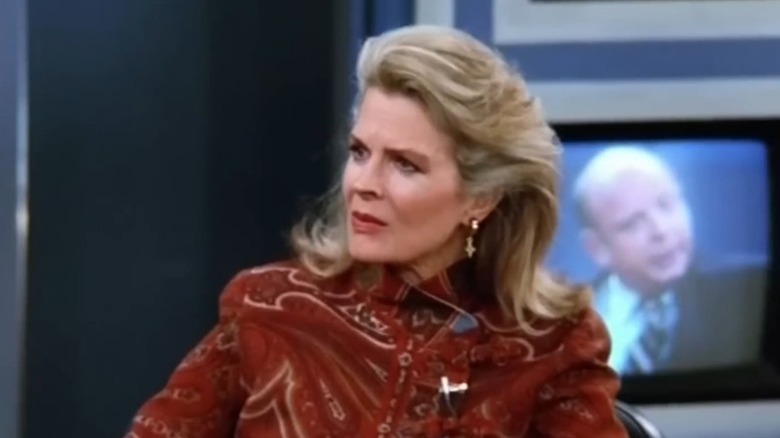
Paradoxically, "Murphy Brown" may be the most modern show on this list, and the one that now feels most like a relic of a different time — a time in which TV news was still a sacred American institution, direct-address political messaging still felt galvanizing, and a CBS show could raise a national ruckus just for the temerity of depicting a single mother in a positive light.
Starring the legendary Candice Bergen as a celebrated journalist fresh out of rehab who makes a grand comeback as the take-no-prisoners anchor of a TV newsmagazine, "Murphy Brown" infused tight joke construction with a genuine, unfettered political point of view, and demonstrated that snappy, fast-paced comedy could be an excellent delivery system for satire, critique, and even open discussion of current affairs.
That alone would have made it a game-changer in sitcom history. It also had a strong sensibility for character shading and development, rendering even the broadest comic figures into three-dimensional characters with compelling stories and cementing Murphy herself as a role model for a generation of women eager to break rules and take names.
3. Living Single
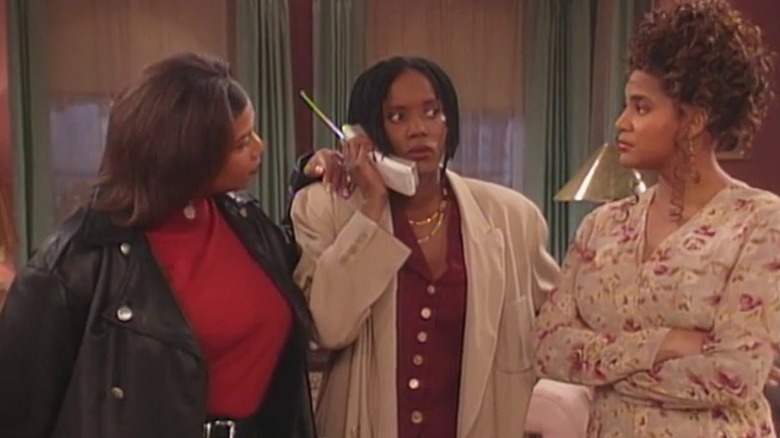
The central line of Queen Latifah's opening theme song — "In a '90s kind of world, I'm glad I got my girls" — sums up the ethos and the time-capsule perfection of "Living Single," a '90s show that epitomizes the decade's novel infatuation with the friend group, that trusted regiment in the battle against the trials of big-city adulthood.
The core unit of Khadijah (Latifah), Synclaire (Kim Coles), and Régine (Kim Fields), living together on the ground floor of a Prospect Heights brownstone where they're frequently joined by Max (Erika Alexander), pushed the envelope for network TV representation not just by spotlighting four successful, career-driven young Black women, but by presenting them as multidimensional characters with a rich, lived-in dynamic that felt less like a written TV show and more like dispatches from the world's most fun household.
This is not to discount the phenomenally skillful and consistent wielding (and frequent inventing) of sitcom tropes by Yvette Lee Bowser and her writers' room, or the expert way they wrung the girls' relationships — with each other and with their upstairs neighbors Kyle (T. C. Carson) and Overton (John Henton) — for screwball glory and slow-burning romcom perfection. It was the absolute peak of "traditional" sitcom artisanship in the '90s, starting with the myriad ways in which it refused to be traditional.
2. The Larry Sanders Show
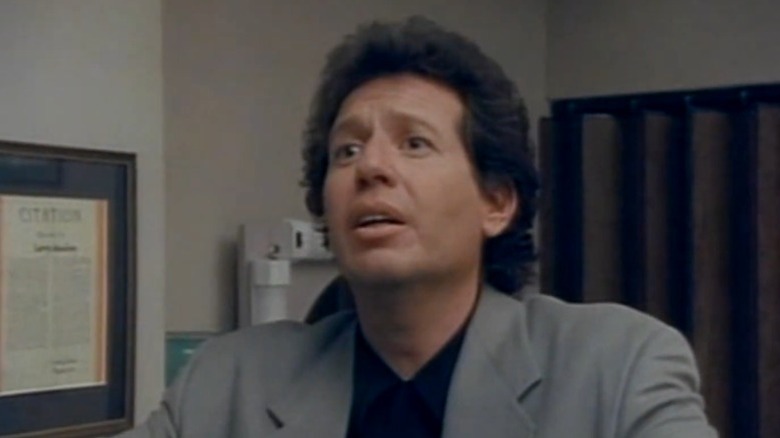
Even though it aired between 1992 and 1998, HBO's "The Larry Sanders Show" was arguably the first 21st-century sitcom. It was enough of a novelty at the time for a comedy series to be shot in a single-camera format, but this Garry Shandling and Dennis Klein-created trailblazer went even further, stitching together digital and film photography in a way that still feels advanced even by 2020s standards. What's more, there was a clear comedic and conceptual purpose behind that innovation: Where slick digital video segments showcased the fictional titular talk show, the grain of film stock functioned as a marker of the gritty, unembellished reality behind the scenes.
With the perfect formal groundwork thus laid, "The Larry Sanders Show" skewered the madness of the showbiz world as dryly, savagely, and brilliantly as any show or movie ever has, and propelled the genre forward into a universe where the artifice of three-wall sets, canned audience laughter, and pause-for-one-liner writing would no longer cut it. Once audiences got up close and personal with the sweaty neuroses of Larry Sanders (Shandling) and his staff via untethered cameras and dense dialogue, it was as if the true potential of TV comedy had been unleashed; everything from "The Office" and "30 Rock" onward followed.
1. Seinfeld
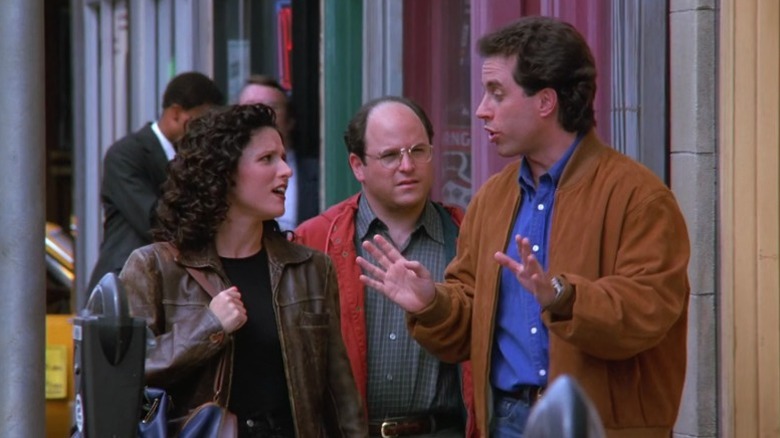
Well, what else could it be? IIf it has become a cliché to name "Seinfeld" not just the best live-action sitcom of the '90s but also the best live-action sitcom ever (with the "live-action" qualifier required solely by the existence of "The Simpsons"), it's only because it's that good — that original, that transformative, that smart, and most importantly, that funny.
No other show in American TV history has ever been so forcefully laser-focused on the task of keeping laughs coming, at any and all costs, with that mission taking complete precedence over such square concerns as "plot," "themes," "lessons," "character development," or "emotional satisfaction." The world of Jerry (Jerry Seinfeld), George (Jason Alexander), Elaine (Julia Louis-Dreyfus), and Kramer (Michael Richards) is a cosmic void of morality and meaning, which only sounds bleak until you find out how much room that opens up for dazzling, soul-replenishing chaos. In its own way, it's the ultimate form of comfort viewing: on "Seinfeld," life needn't be anything but the farce that it is.