

Every Version Of The Starship Enterprise In Star Trek, Ranked
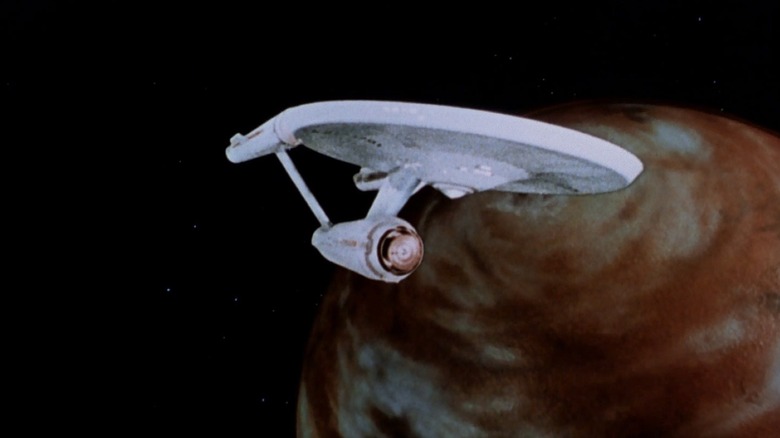
Space. The final frontier. These are the voyages of the starship Enterprise. And the Enterprise. And the next Enterprise. It turns out there are a lot of Enterprises. In fact, it's quite likely the casual "Star Trek" viewer isn't aware just how many there are.
Consider this your guide. We've considered not just all the officially designated and registered Enterprises in Starfleet, but also alternative versions that may technically be the same ship but look very different, due to alternate universes, retcons and the like. We are only considering live-action iterations, though.
Aesthetics are not the only concern here. How did the ships function, as plot devices and as future equipment? Who was in charge? How different are they from other models, and why? How do they reflect the eras in which their shows aired? All of these are considerations.
Throughout the decades — and aside from one notable exception — it's remarkable how much the basic design has endured. Despite all the changes to various models over the years, we're still basically talking about a saucer section with at least two nacelles. As one theme song says, 'It's been a long road"... and it's probably far from done. Some are still better than others, though. Here's our ranking.
14. Honorable Mention: Sailing Ship Enterprise from Star Trek Generations
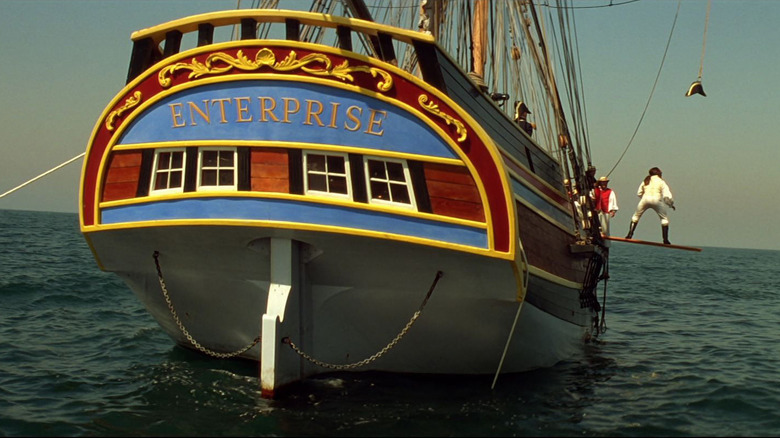
It may not look like a starship, but it is a ship, and by virtue of existing on a holodeck flying through space at warp speed, it technically is travelling through the stars. This Enterprise really isn't quite comparable to any other ship on this list, but it's aesthetically fancier, by a longshot. As a location, the sailing ship also forces the crew to dress in Napoleonic Navy gear. Goofy giant hats aside, they look quite stylish.
Why a sailing ship? We can probably trace it back to Captain Picard's obsession with "Moby Dick." As a location in which to promote Worf to Lieutenant Commander, it feels rather un-Klingon. The discomfort may be the point, of course, even if the awkwardly phrased removal of the plank comes out wrong.
The movie years of the Kirk-era already had strongly Naval-inspired uniforms, at least from "the Wrath of Khan" onward. Stuck back in spandex, the "Next Generation" crew deserved a chance to cosplay in something closer.
13. USS Enterprise NCC-1701 (Kelvin Timeline) from J.J. Abrams' Star Trek
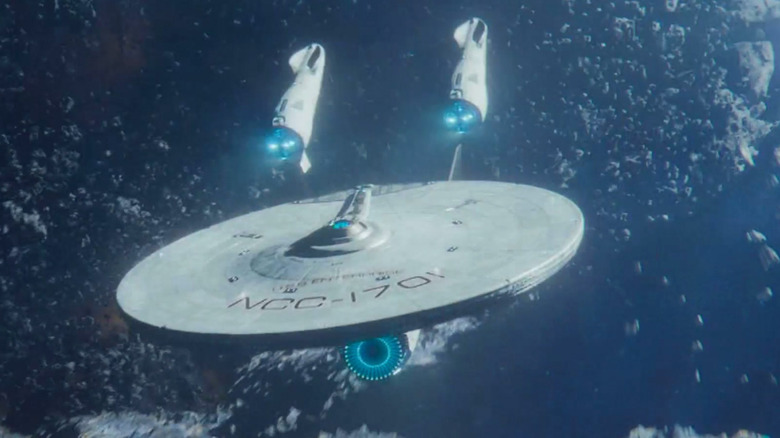
J.J. Abrams delivered the most expensive-looking Enterprise, at least until "Strange New Worlds" came along, but he didn't really seem to understand its functionality.
As most every fan did state after seeing the trailer, it makes no sense for the Enterprise, or any Constellation class ship, to be built on Earth. It's an orbital ship, not designed for breaking out of an atmosphere. This goes double for it going underwater to hide in an alien ocean: either it descends so slowly it would have to be noticed, or it would splash down making a massively destructive tidal wave.
Then there's the interior. Engineering looks like a brewery warehouse, rather than the interior of a spaceship. As for the bridge, seemingly designed to look more like Apple technology, all its shininess and lens flares certainly look cool to Abrams' eyes, but would make visibility a lot more difficult than the classic dull matte color scheme.
It all looked pretty cool onscreen, for sure, but "Star Trek" as a franchise works hard to make its future tech plausible. This wasn't it.
12. USS Enterprise NCC-1701-F from Star Trek: Picard
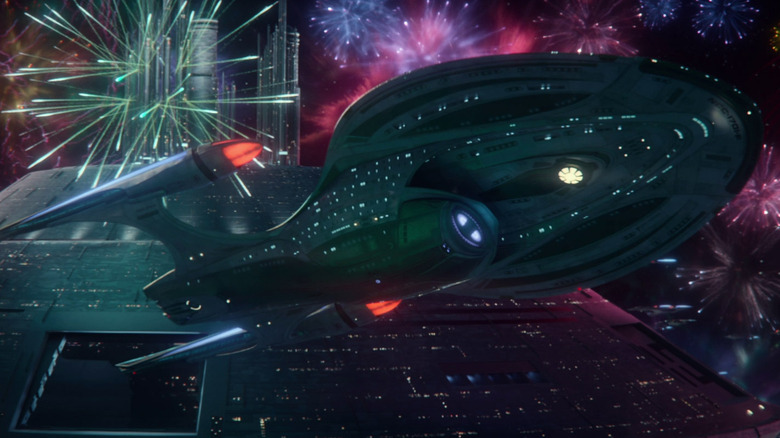
Now you see it, now you don't. No sooner did the Enterprise-F make its big, splashy debut in live-action — on the best season of "Picard" — than it was promptly taken over by the Borg, and its commanding officer, Admiral Shelby, killed. One episode later it was decommissioned and replaced by the Enterprise-G.
The ship initially debuted as part of the "Star Trek Online" game and was created by a fan as the winning entry in a contest. Unlike the basic hybrid that is the Enterprise-C, this Odyssey Class ship incorporates some of the best elements of Enterprises E, D, and Voyager. Its double-connection of the saucer to engineering from both sides is elegant and makes sense.
We don't get to see much of the interior in "Picard" — just Shelby's command chair. It does appear to be better lit than many similar starships of its era. Nonetheless, the fact that it needed saving by the Enterprise-D with a skeleton crew doesn't speak especially well of its capabilities.
11. USS Enterprise NCC-1701-B from Star Trek: Generations
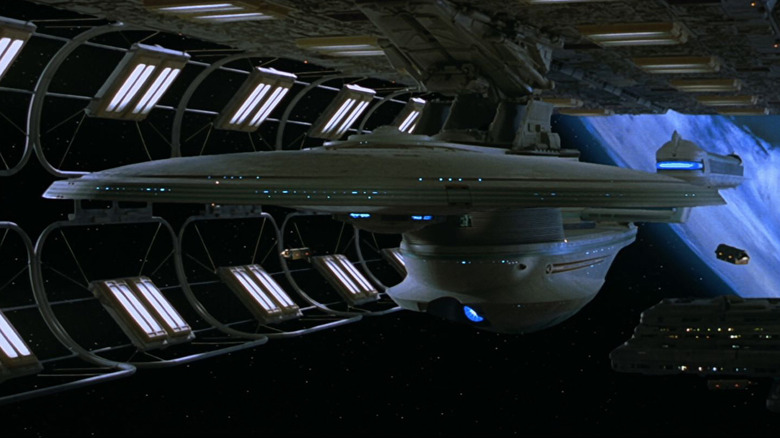
The Enterprise-B is a thing of majesty to look at; basically a variation of Excelsior, which was intended to be the larger, more impressive new model when compared to the classic Enterprise. The problem with it is that when we see it in action, nothing works. Every part they actually need in an emergency situation is scheduled to arrive the following Tuesday. Due to this grievous lack of preparation, Captain Kirk gets sucked into the Nexus, ending up in the far future where he promptly dies in action.
Really, it should get a grade of "incomplete" since we never saw it at full capacity, but it's up to the Captain to overrule any early mission that would endanger the crew too greatly (no medical staff? Really?). Neither Kirk nor Picard would let that stand, so our lack of confidence in its leadership somewhat counteracts its awesome aesthetic and earns it this spot.
As far as we know, though, it never crashed or exploded, unlike many on this list.
10. USS Enterprise NCC-1701-A from Star Trek IV: The Voyage Home
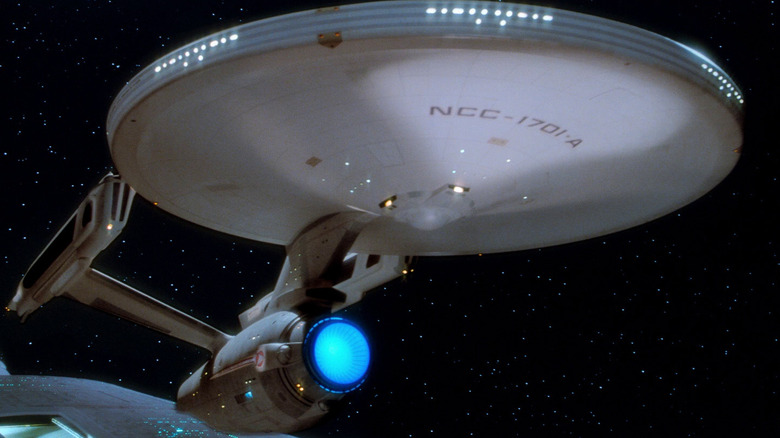
Revealed soon after Kirk reluctantly blew up the original, the NCC-1701-A was attractive enough for an impostor God to want to steal it. Onscreen, however, it mostly served to stymie our heroes in "Star Trek V: The Final Frontier," due to still being in the midst of refurbishments. Scotty claims he knows it like the back of his hand, then promptly knocks himself out on a low beam. It is at least the first onscreen Enterprise in which we actually see a toilet, in the holding cell.
In "Star Trek VI: The Undiscovered Country," we don't get much of a sense of it before Kirk is accused of a crime he didn't commit and sent to Klingon prison, though it does host a memorable dinner party.
In the end, it takes Sulu's Excelsior to save the Enterprise-A from Klingon destruction. The "A" is a serviceable enough copy of the original, for sure, but never really does much to distinguish itself from the ship it's based on.
9. USS Enterprise NCC1701-C from Star Trek: The Next Generation
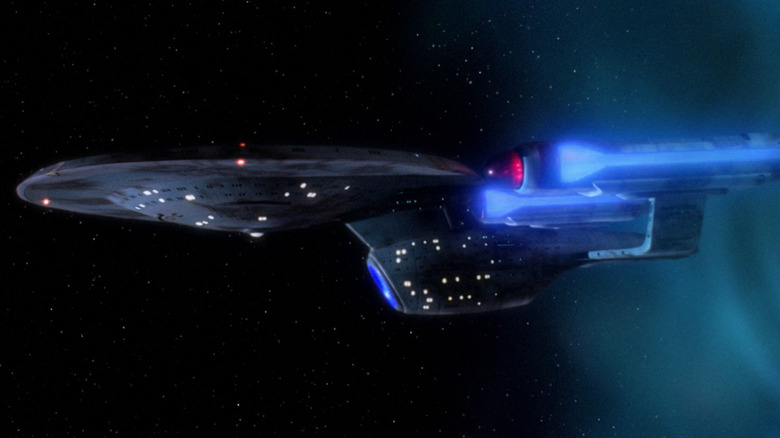
Its design isn't much — if you asked ChatGPT to create something halfway between the Enterprise-A and -D, the AI might spit up something like this. The Enterprise-C earns its spot on the list not because of how it looks, but because of its plot significance.
The C had the first female Captain of an Enterprise in Rachel Garrett (Tricia O'Neil), who has since been retconned with a "Section 31" past. In the "Next Generation" episode "Yesterday's Enterprise," her ship was brought forward in time 22 years through a pesky anomaly. The time jump saved the crew from a Romulan attack, but crucially changed the 24th-Century present for the worse. Eventually it must be sent back in order to be destroyed defending a Klingon outpost, thereby bringing about peace with the Klingon empire.
If Klingons wrote this list, the Enterprise-C would be at the top for its honorable sacrifice. Aesthetically, though...at least its battle-damaged, darker version of the movie-style classic bridge offered a different look from the norm.
8. USS Enterprise-J from Star Trek: Enterprise
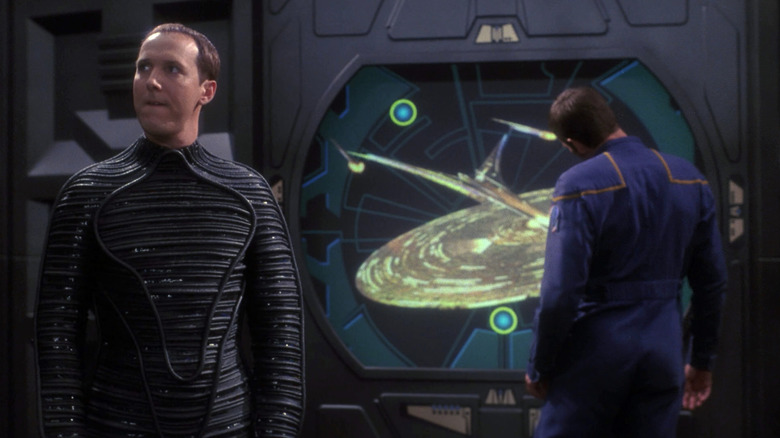
When he's about to sacrifice himself against the alien Xindi, "Star Trek: Enterprise" Captain Archer (Scott Bakula) is briefly spirited out of his timeline by Temporal Agent Daniels (Matt Winston) — a character who would later reappear in the "Discovery" series finale.
It was the early aughts, and the "Enterprise" storyline was pointedly about the immediate post-9/11 War on Terror. Bright and shiny aesthetics were out, and grimdark was in. They talk aboard an Enterprise 400 years in Archer's future, and it's unsurprisingly Giger-esque in inspiration, on a budget. It's that way on the interior and the uniform designs, at least, despite existing in a future when things will ostensibly be better. Consider it the Hot Topic of Federation starships.
We don't actually see it from the outside, though an interior display shows us what it looks like. It's the same basic idea as most other Enterprises, except that the nacelles look crazy tiny in comparison to the ultra-wide saucer. Technology generally gets smaller in the future, but the proportions on the J just look silly somehow, like they could be snapped off pretty easily.
7. USS Titan-A, a.k.a. Enterprise-G, from Star Trek: Picard
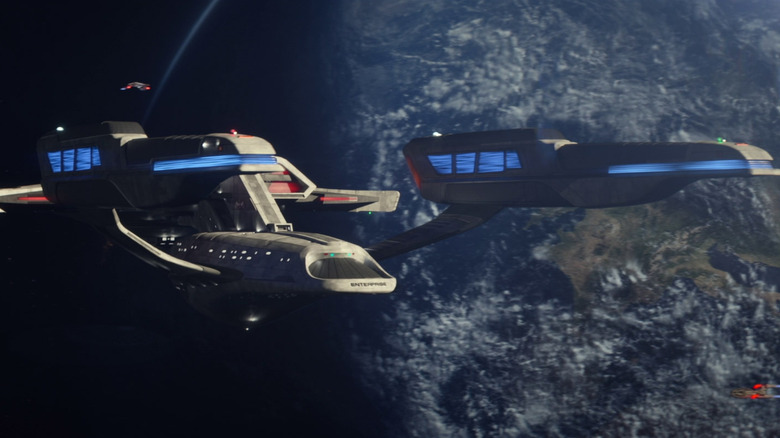
The Titan returns some of the hard edges to the flagship aesthetic, which reflects the fact that Captain Liam Shaw is hard-edged, to put it mildly, himself. In a future that prizes diversity, the fact that he insists on deadnaming Seven of Nine is a real red flag.
The inside of the ship is lit like a dive bar, the seats look less comfortable than ever, and the color scheme includes more harsh reds than any previous Enterprise. It's not a ship that's easy on the eyes, just like Shaw's not easy on his crew.
It's nonetheless an effective ship right up until the Borg hijack it in "Picard" Season 3, with Shaw heroically dying fighting them, but not before ceding his Captaincy to Seven. Once she takes over and the Borg are beaten back, it's renamed the Enterprise-G — a reclaimed ship for a Captain who was herself reclaimed from an authoritarian collective. Once she takes the Captain's chair, the ship already starts to look a little more comfortable and better-lit. Should it return, for a hypothetical "Picard" Season 4 or a follow-up "Star Trek: Legacy," it'll most likely get a full Enterprise-style makeover. That makes its final position on this list technically an incomplete grade for now.
6. USS Enterprise NCC-1701 - Strange New Worlds version
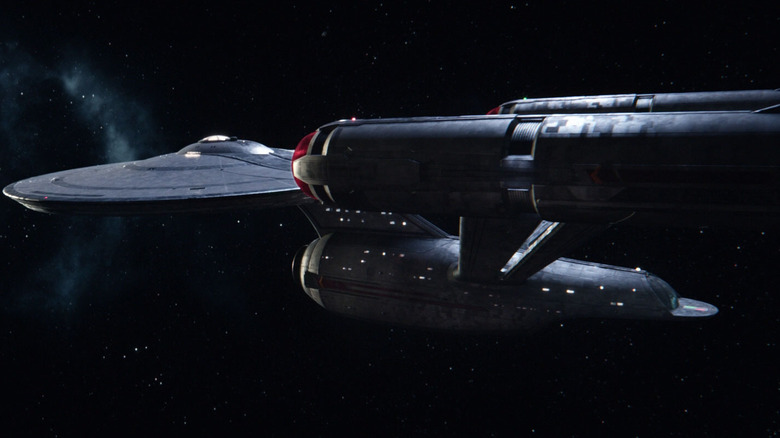
It must have been an audacious design challenge: create a starship bridge with the design and color scheme of the 1966 TV series, but also make it look modern and high-tech for today's viewers. It looks like a million bucks, figuratively, and probably cost even more. From the outside, it's a cool-looking update of the OG look.
Still, the most expensive-looking Enterprise on the inside isn't necessarily the best. The visuals meant to dazzle us audiences would be a distraction for an actual crew. They occasionally do detract from the performances, when there's simply too much stuff happening onscreen. When "Star Trek: Enterprise" had its characters glimpse 23rd-century style, they took an "If it ain't broke" attitude and duplicated the '60s aesthetics as closely as possible. That's a riskier gamble, perhaps, than making everything looks super-cool. Longtime "Star Trek" fans do love throwbacks, however, as seen in the popular "Deep Space Nine" episode "Trials and Tribble-ations," which canonized '60s style for the 23rd century. (It's one of five absolute must-watch "Deep Space Nine" episodes.)
Pike's ship is mighty impressive, but it's not the OG Enterprise that it's meant to be.
5. USS Enterprise NCC-1701-E from Star Trek: First Contact
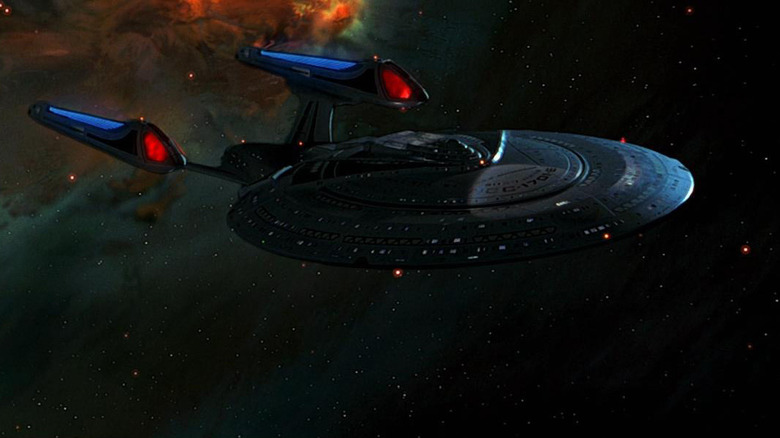
After "Generations" spectacularly crashed the Enterprise-D, the "Next Generation" crew needed a new ship. They got one that debuted in one of the best "Trek" movies ("First Contact") and then appeared in two of the worst ("Nemesis" and "Insurrection"). It's not the ship's fault that only one of its three films was a great one, though. The vehicle itself had some great new features, with the stellar cartography room serving as by far the best highlight of "Insurrection."
In "First Contact," we got to see crewmen do spacewalks on the hull, which was awesome. We also learned that the ship contained its own version of the Emergency Medical Hologram (Robert Picardo), just in case Dr. Crusher ever became unavailable. It's a shame Picard and Picardo, the franchise's most famous openly bald men, never had the time to discuss scalp maintenance tips while technically on the same starship for three installments (though Picardo only cameo'd in one).
Based on comments made by Worf in Season 3 of "Picard," the Enterprise-E apparently met a bad end under his command.
4. USS Enterprise NX-01 from Star Trek: Enterprise
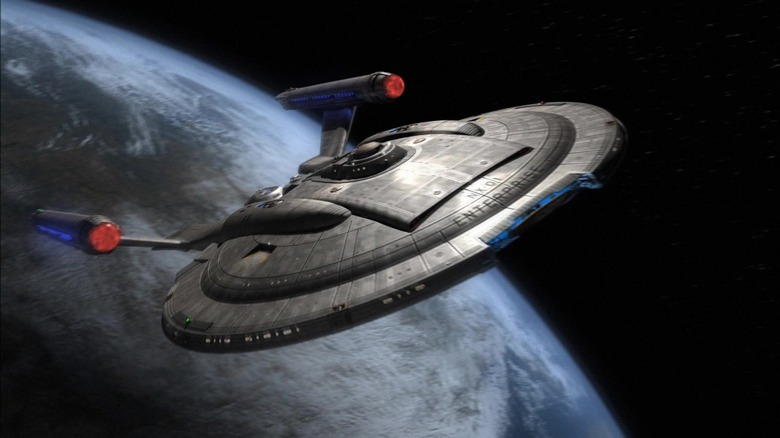
"Star Trek" has often used submarine combat as the basis for imagining ship-to-ship battles in space. The TV episode "Balance of Terror" and of course the movie "The Wrath of Khan" are the most notable. So when it came time to design the pre-Federation, proto-Enterprise NX-01 for "Star Trek: Enterprise," it made sense to have it actually look more like a submarine inside.
Outside, it still retains the saucer and nacelles base, though it's more compact, like something that might have been built on Earth rather than space. Inside, it's metallic and tactical-looking, and the crew uniforms are basically workmen's coveralls. This is an Enterprise built for functionality rather than comfort. After all, why add a bunch of luxury-based extras when you're not yet sure the ship itself will do what it needs to do?
"Star Trek" on the whole prides itself as having plausible science, even if when it's technically not possible. The NX-01 takes that to its logical conclusion, giving us the most plausibly functional design of any Enterprise. It's also the only Enterprise with a ship's dog. All hail Porthos.
3. USS Enterprise NCC-1701 from Star Trek: The Original Series
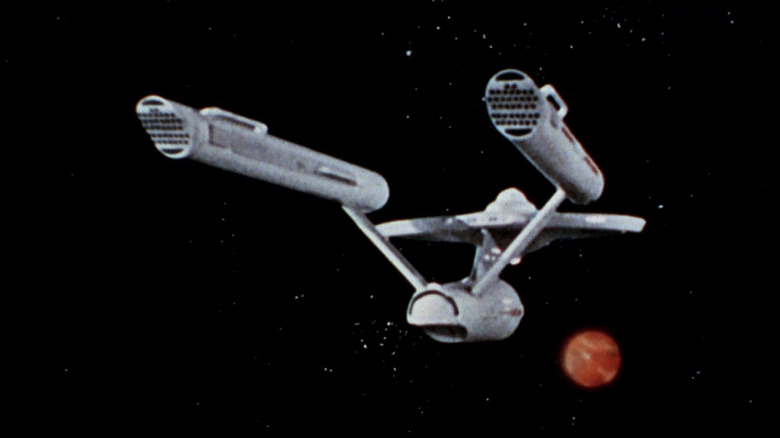
When "Star Trek" first debuted, the default style for a spaceship in fiction was the classic flying saucer. Enterprise was a most American modification: a flying saucer with jets! Sure, we believed that saucers could attack us from Mars, but the Enterprise needed to go into deep space, and go faster than any star craft seen onscreen before. To make that believable, it needed to look boosted and turbo charged ... which is to say, it has warp nacelles to go to warp speed. Sure, Scotty's engines kept giving out, but he always fixed them.
Inside, it mixed battleship-style architecture with a Swingin' Sixties color palette. All the better to reflect a lover and a fighter like Captain James T. Kirk.
The ship design captured the attention of the public, and has served as the basic design template for every Earth ship in the "Star Trek" franchise ever since. Now that we know and intellectually accept that a ship can be any shape in a vacuum without losing or gaining speed advantage, it's no longer relevant exactly how practical a disc with engine tubes is. At this point, it's just as much the beloved default as a solo flying saucer used to be.
2. USS Enterprise NCC-1701-D from Star Trek: The Next Generation
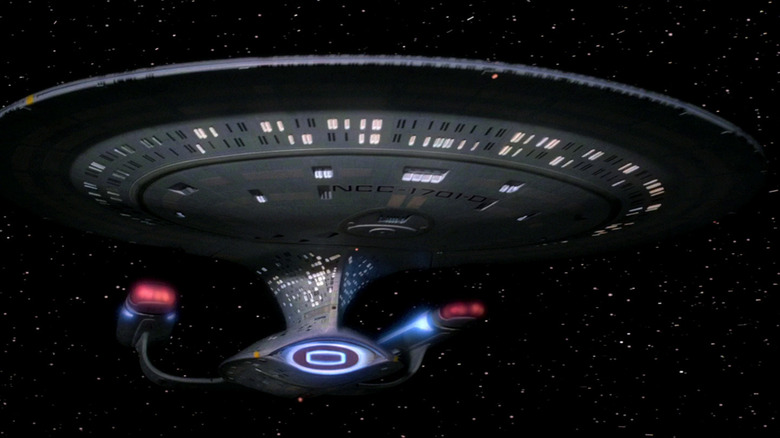
If the original Enterprise was a bachelor pad ready for battle, the D in "Star Trek: The Next Generation," was like a luxury hotel. As a galaxy-class vessel, this Enterprise was a ship for families, all the better to incentivize long-term crew members. Sure, considering how often any ship named Enterprise ends up in danger, it's arguably irresponsible to put children aboard. Families do live on military bases, though, so why not one in space, for a mostly peacekeeping force?
At any rate, the interior is super-inviting, with the most comfortable-looking command seats (why no chair at tactical, though?), and inviting personal quarters. Outside, it also pops, with neon blue piping, and a design that rounds off all the hard edges to subtly convey more of a "We come in peace" vibe. It was also the first to do that cool saucer separation, and demonstrate that it could be two ships in one. That's a toyetic feature kids will always find appealing.
1. USS Enterprise NCC-1701 (refurbished) from Star Trek: The Motion Picture
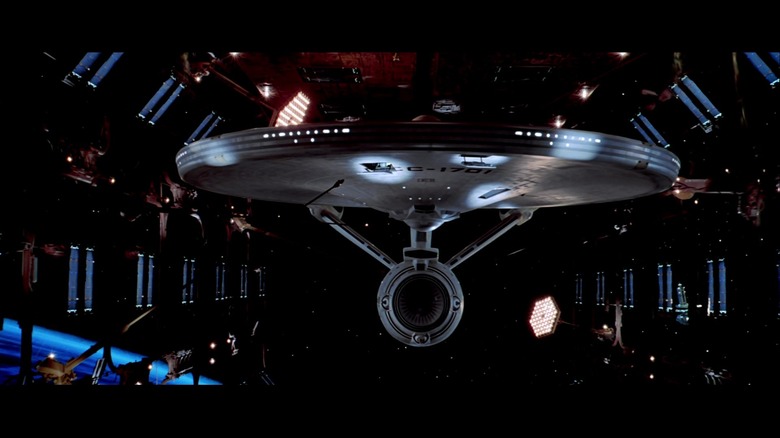
The Enterprise never looked better on a big screen. "Star Trek: The Motion Picture," released in 1979 and directed by Robert Wise, didn't mess with the classic design; it just made it a thing of awe. In the wake of "Star Wars," "2001: A Space Odyssey," and "Alien," fans would have accepted nothing less, and the classic spaceship needed to show everyone it could compete in the modern era. Displayed in a gigantic space dock that actually made sense for the Enterprise's odd shape, the Federation flagship was visualized with a highly detailed miniature, and tiny humans composited in for scale.
Watching on a TV set, it's easy to mock the lengthy fly-around that Kirk's shuttle takes around his old ship. For anyone who was there in theaters that very first time, though, it was a revelation -– that small, not quite convincing model seen on TV a decade and a half prior had literally grown up and looked magnificently real at last. You could believe this would actually fly into deep space.