

15 TV Shows To Watch If You Like Monarch: Legacy Of Monsters
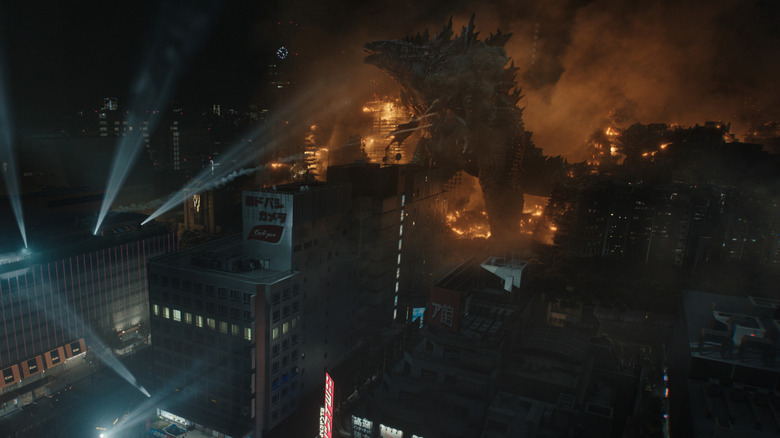
The Monsterverse franchise that includes the modern Warner Bros. Godzilla and Kong movies came about largely because Legendary Entertainment's Thomas Tull wanted to see the two most iconic giant movie monsters fight. Once that happened, however, fans clearly wanted more: more epic brawls and more story to give those battles emotional stakes. So, in between mega-budget battles between the gigantic kaiju, "Monarch: Legacy of Monsters" filled in the gaps.
The show bridges decades by casting both Kurt Russell and his son Wyatt as former U.S. Army Colonel Lee Shaw in different eras. Shaw helped found the Monarch organization that monitors the Titans, though Monarch may not always be entirely benevolent, as secretive organizations rarely are. It's a longstanding sci-fi TV tradition to feature shadow government agencies trying to hide and control world-shaking secrets, particularly those involving nuclear weapons, creatures of some sort, and grand conspiracies. Usually, audiences are brought into those stories through protagonists who don't yet understand the scale of what's happening.
"Monarch" is a compelling variation on that formula, with appearances from both Godzilla and Kong, as well as other humongous beasts. It also doesn't have a whole lot of episodes yet. Luckily for fans, there's already a wealth of shows with stories along the same lines. Read on as we uncover 15 series filled with varying degrees and timespans of monstrous secrets, and the people caught in the middle of them.
The X-Files
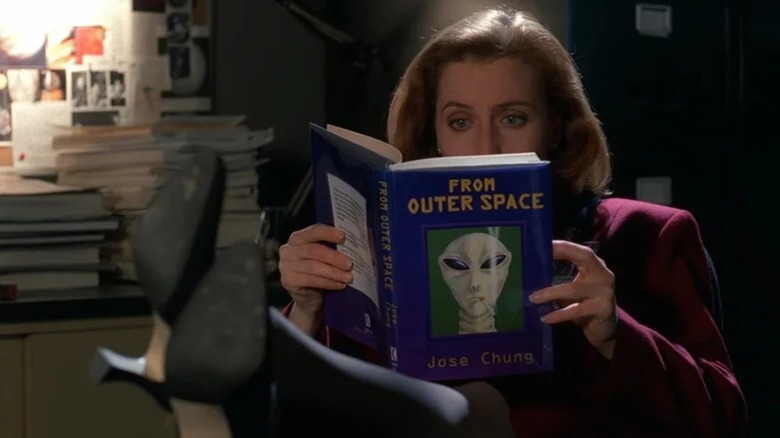
When talking about shows that deal with unnatural beasts and conspiracies designed to cover them up, we'd face dereliction of duty accusations if "The X-Files" weren't top of the list. FBI Agents Mulder (David Duchovny) and Scully (Gillian Anderson) weren't exactly confronting city-stompers; their monsters usually looked more like humans wearing prosthetics. Yet from worm hybrid Flukeman to stretchy Eugene Tooms, they still delivered enough nightmare fuel to induce the creeps, or at least a tiny stomach churn.
Interspersed with the monster encounters were "mythology" episodes about a larger government conspiracy Mulder stumbled upon while searching for answers about his sister's apparent alien abduction. Things got so layered that whatever seemed to be true in any given season could be overturned and rug-pulled in the next, but it went back for decades. Unlike in "Monarch," the government was mainly dealing with aliens and mostly unaffiliated with the monsters... assuming we're understanding the conspiracy correctly, which we're not even sure creator Chris Carter does.
We have to admit that most of the 15 best "X-Files" episodes involve monsters.
Kolchak: The Night Stalker
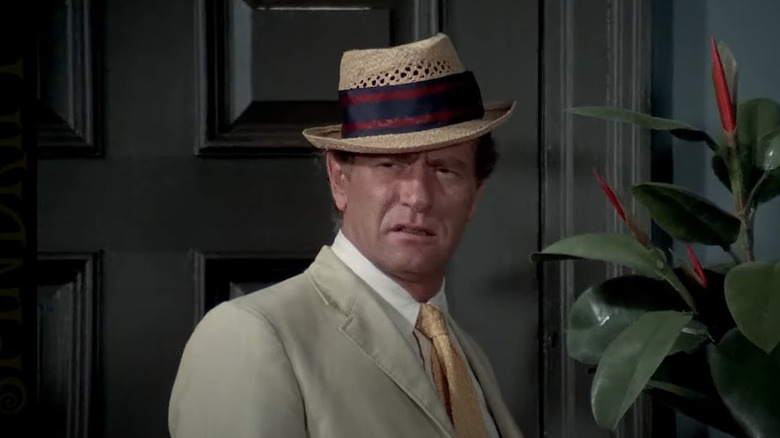
"X-Files" creator Chris Carter cited "Kolchak: The Night Stalker" as a direct inspiration for "The X-Files." It also featured a different monster every week, and a protagonist whose colleagues seldom believed him. As in "Monarch," he inhabits a world of unusual phenomena, and a system designed to keep him from exposing them. These creatures are generally a bit more human-sized, though, and easier to conceal.
It began as two TV movies, written by Richard Matheson and based on the novel "The Kolchak Papers" by Jeff Rice. In the first, reporter Carl Kolchak (Darren McGavin) tracks down a vampire; in the second, an immortal. In both cases, any evidence supporting supernatural claims is covered up or lost, and Kolchak loses his job. For the sake of the TV series, he manages to hold down a gig in Chicago despite the same issues of story redactions and missing evidence.
If Kolchak had ever met the likes of Godzilla, he wouldn't need proof. Instead, he faced witches, werewolves, ghosts, and even a headless motorcycle rider. With few allies, he could never bust those at the top who would consistently cover up his investigations. However, his ability to handle such unusual threats would have made him a great asset to Monarch.
House of the Dragon
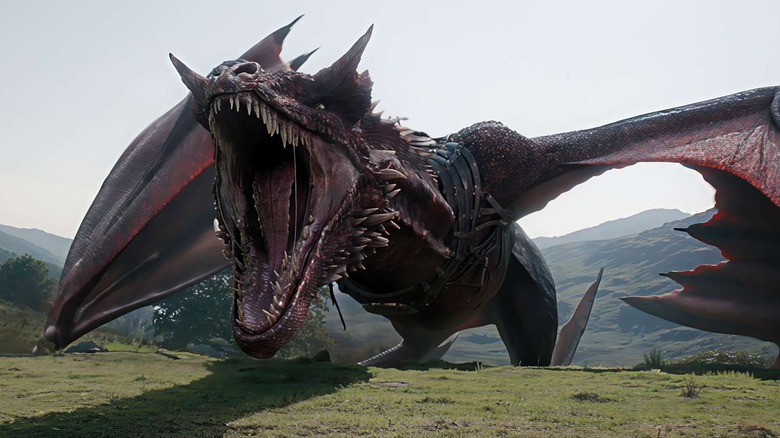
If you like gigantic reptiles that torch people, cities, and other monsters with their breath, "House of the Dragon" may be the best currently running show featuring them that isn't somehow connected to Godzilla. "Game of Thrones" played the long game in teasing its dragons, before finally unleashing them as Westeros' own metaphor for an A-bomb-style weapon of mass destruction (sound familiar?). For the prequel, with the word "dragon" actually in the name, everyone involved clearly knew they'd have to deliver on that promise much sooner.
Monarch would likely be envious of how thoroughly these particular dragons are harnessed by the governments of their day. The show, however, makes clear that even under those circumstances, safety from the creatures is never guaranteed. Even when a single royal house controls them all, what happens when there's a civil war because a leprosy-stricken king was misinterpreted on his deathbed? The glorious answer for viewers is that we get to see dragons fight.
Land of the Lost
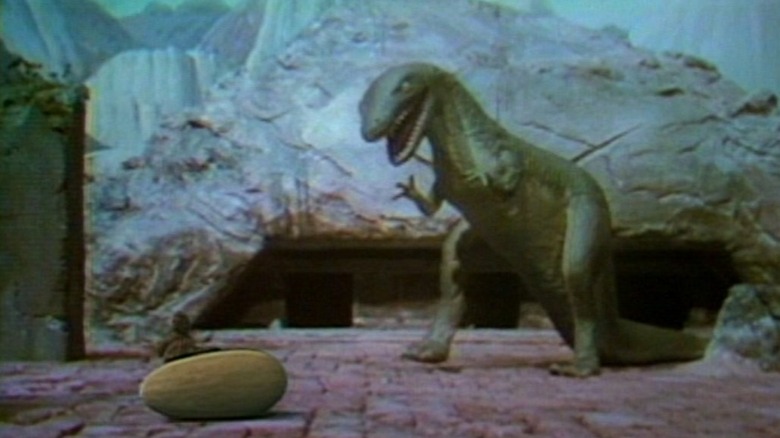
Both Godzilla and Kong owe a debt to Arthur Conan Doyle's novel "The Lost World," adapted as a silent film in 1925 and several times thereafter. Hailing from that same family tree, but in a uniquely '70s style, was Sid and Marty Krofft's "Land of the Lost," which has also been remade a couple of times and has another Netflix reboot in the works.
Rather than some lost enclave on Earth, the titular land existed in another dimension with three moons. Dinosaurs still roamed there, but so too did lizard people called Sleestak and a Neanderthal-ish race known as the Pakuni. It wasn't all primitive, either; bizarre technological artifacts littered the landscape.
The stranded Marshall family — Rick (Spencer Milligan), Will (Wesley Eure), and Holly (Kathy Coleman) — didn't have any government agencies looking out for them, but the way they befriended some creatures and ran afoul of others required survival smarts, nonverbal communication skills, and Holly's talent for giving things cute names. The Kroffts couldn't possibly have afforded a "Monarch" budget, but their tales of regular folks thrust into dangerous situations with prehistoric titans contain the same adventure-driven DNA.
The Godzilla Power Hour
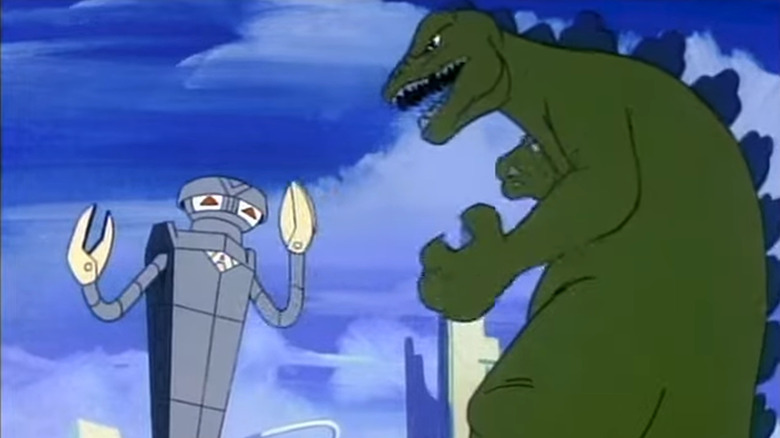
Before the Monarch organization studied Titans, there was the Calico, a research hydrofoil traveling the globe and encountering monsters and other threats. If any danger became more than the crew could handle, the team aboard could summon Godzilla almost instantly via a futuristic pager.
In the meantime, they dealt with the dubious protection of Godzooky, Godzilla's childlike nephew who fit in the palm of his uncle's hand. Like Godzilla's canonical son Minilla in the movies, Godzooky could breathe smoke rings. Unlike Minilla, he had tiny wings that gave him limited flying and gliding abilities.
The year was 1978, and this was Hanna-Barbera's take on Godzilla, who also had Superman-style laser vision. The Godzilla cartoon probably works best for those who think "Monarch" has too much plot, but it can also serve as a gateway show for kids. Like Scrappy-Doo and Jar Jar Binks, Godzooky appeals most to the very young.
The King Kong Show
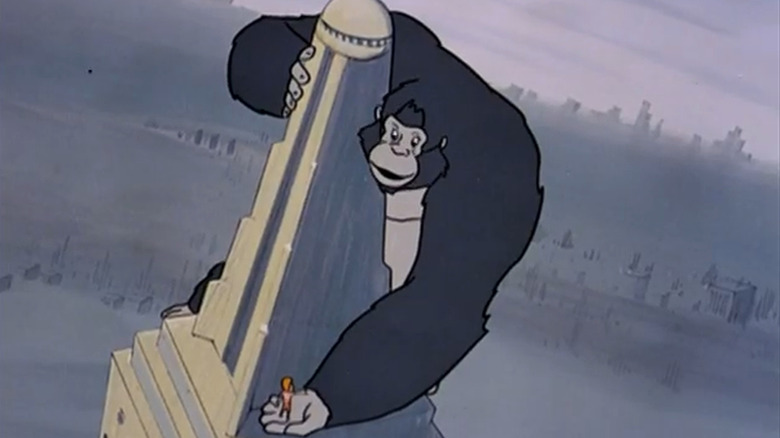
"King Kong! You know the name of / King Kong! You know the fame of / King Kong! Ten times as big as a man!" A viewer need only hear that theme song for the Rankin/Bass animated Kong show once to make it a permanent earworm.
Just as "Monarch: Legacy of Monsters" serves as a bridge between the Kong and Godzilla movies of the Monsterverse, so too did "The King Kong Show" fill the gap between Toho's Japanese King Kong movies. Following "King Kong vs. Godzilla," the cartoon retconned Kong's origins to make him more of a heroic, lovable doofus than a fearsome beast. Along with his new best friend, a young boy named Bobby, Kong battled against an evil scientist named Doctor Who (unrelated to the BBC show of the same name), and his giant robot doppelganger monster Mechani-Kong. Both Who and his creation would subsequently face Kong in live action in the Japanese movie sequel "King Kong Escapes."
Toho's rights to use King Kong expired soon thereafter, though the gorilla suit was reused on an episode of their TV show "Go! Greenman." Legendary's rights remain intact, allowing Kong to have similar human interactions seen in "The King Kong Show," albeit with photorealistic special effects on "Monarch."
Moon Knight
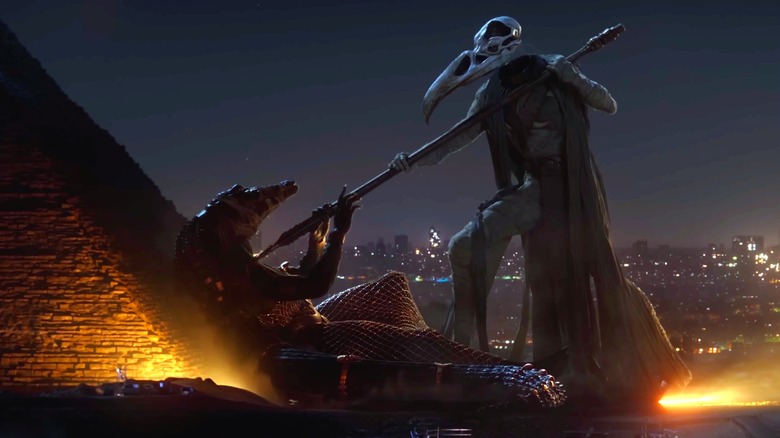
It begins as an almost Hitchcockian tale of amnesia and suspense. It ends with two giant monster god avatars stomping each other around the pyramids in Egypt. What happens in between may be more Marvel than Monsterverse, but it has the two key elements that make "Monarch" so compelling: characters caught up in larger events and huge creatures that smash buildings.
Steven Grant (Oscar Isaac) is a nervous museum employee who comes to realize he has a split personality, and at least one of his other personalities is violent mercenary Marc Spector. Spector also happens to be possessed by Khonshu, the Egyptian god of the moon. That divine connection earns him some powerful enemies, like cult leader Arthur Harrow (Ethan Hawke), who serves the goddess Ammit.
By the end of the season, Ammit has manifested as a building-sized humanoid crocodile to fight a bird skull-faced Khonshu in a battle worthy of Godzilla. There's no need to spoil who wins if you haven't seen it, but it's entirely possible the real victors are the viewers. As in "Monarch," that's not even the real climax — the human drama, here pitting Spector against Harrow, is the heart of the story.
The Book of Boba Fett
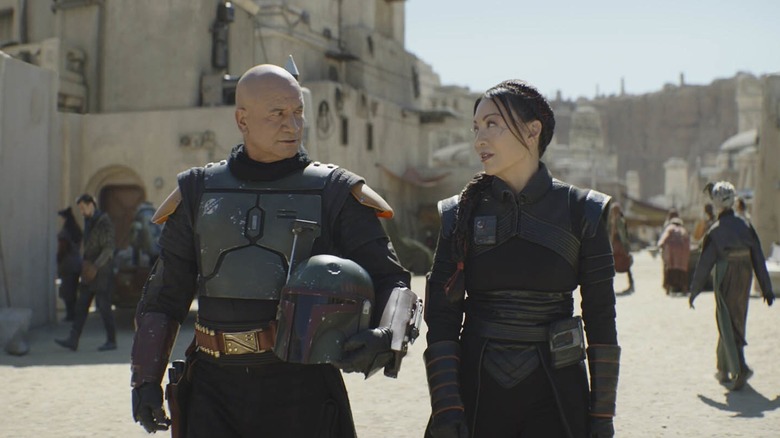
On the whole, "The Book of Boba Fett" plays like a space Western, but it also gives justice to two of the largest monsters in the original "Star Wars" trilogy: the Sarlacc and the Rancor. Like "Monarch," it also utilizes a split timeline, at least until that other Mandalorian from the more popular series shows up.
Once thought dead from digestion in the stomach of the Sarlacc, Boba Fett goes full King Kong on the desert pit beast after escaping its maw, blasting it from the air in a flying vehicle it can't catch.
The Rancor monster actually seems tameable this time around, perhaps because Danny Trejo is there to keep it in line. In the season's final battle, however, it lets loose on the local town with Godzilla-like fury, until Grogu's power of the Force can calm it down. It's a full-circle moment, as Toho's 1999 movie "Godzilla 2000" featured the alien kaiju Orga, whose design bears more than a passing resemblance to the Rancor. Seeing the original creature design go smash is a lot more fun in the end.
The conspiracy angle is a bit weaker than in "Monarch," though. Boba Fett is too good to be outdone by the Tatooine mafia, and he defeats their coordination without too much difficulty.
Land of the Giants
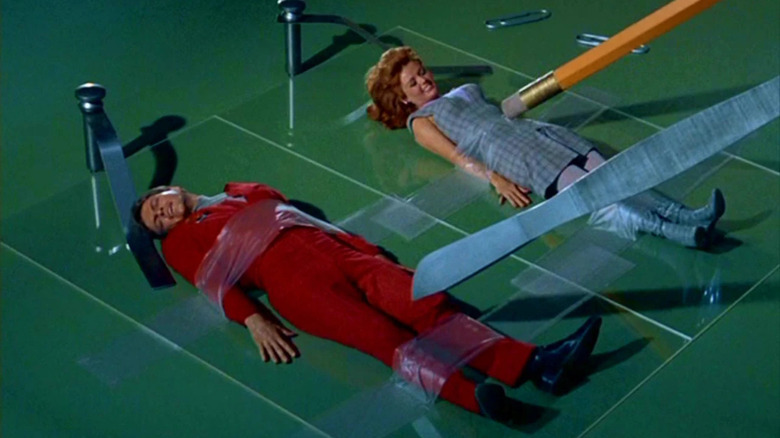
It's another world where giants rule, but this time, rather than lizards or apes, they're people. Irwin Allen's "Land of the Giants" saw a spacecraft crew land on a parallel world where the people are twelve times taller and much more fascist. Some of their technology is far more advanced, but in other areas, like space travel, it's backward. They know about Earth, but cannot yet reach it to dominate. Can our intrepid crew get back home and prevent an invasion?
Nobody ever found out, because the show never filmed a concluding episode. For its time, though, it was one of the most expensive shows ever produced, with state-of-the-art special effects by 1968 television standards and a score by a pre-"Star Wars" John Williams.
Fortunately for the "Monarch" protagonists, the Titans of their world are unlikely to form a coherent government and chase them down. Monsters > giants, at least in that way.
Dark Skies
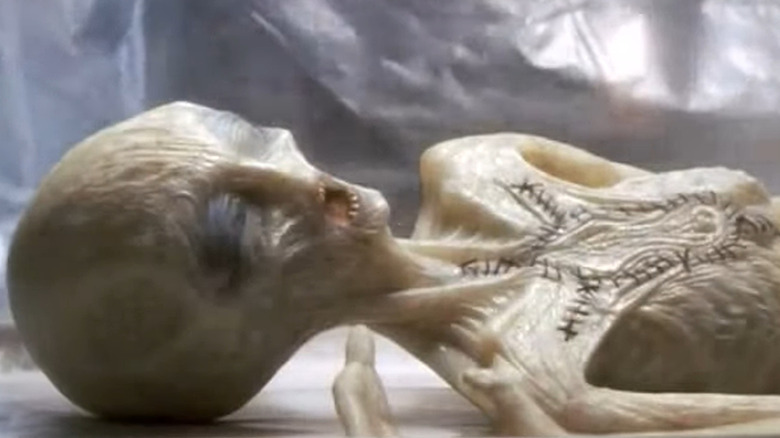
Designed as a competitor to "The X-Files," "Dark Skies" was planned as a five-season period piece, with each season entering a new decade, starting in the 1960s. It would chart the progress of an alien race's attempt to alter the course of Earth's history, while a secret government group dubbed Majestic 12 attempted to thwart them.
It lasted only one season, and thus never made it beyond 1967. In the 19 episodes it did get, that still allowed the show to tie Roswell to the JFK assassination, a young Colin Powell and Carl Sagan, the Watts Riots, a 1960s precursor to the Chernobyl disaster, and the beginning of the Vietnam War, among other events. This is all due to a parasitic race called the Hive who could manipulate both humans and the gray aliens most commonly seen in abductions.
Majestic 12 and Monarch would probably have a lot in common, despite the vast size difference between their quarries. Kaiju, for all their problems, are at least easier to see coming than brain parasites.
Stranger Things
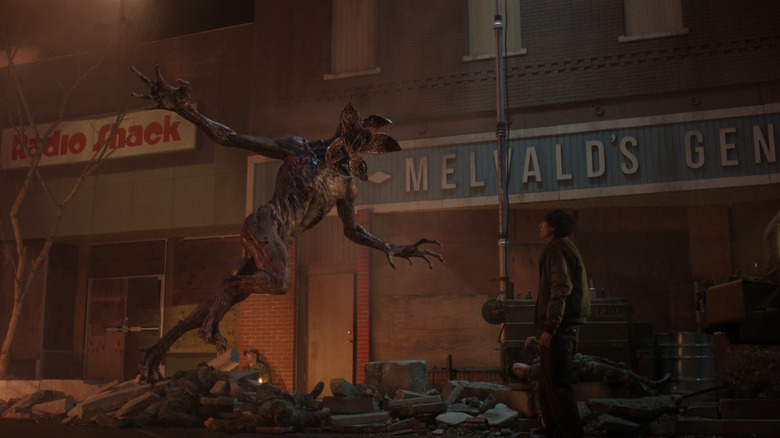
Has there been a more successful series about the government attempting to monitor monster activity than "Stranger Things"? Netflix's pop culture juggernaut is frequently packed to the gills with '80s references, while "Monarch: Legacy of Monsters" is a throwback to much older movies for its source material. Nonetheless, the narrative theme of both shows is the same: monsters are coming, and the organization tasked by the government to study them may not have the best people in charge.
Without psychic powers, how would Godzilla fare against the final giant creature boss of "Stranger Things": the Mind Flayer? Radioactive breath evens the odds, but it would still be a fight. Kong would probably just step on Demogorgons, though he'd quickly have to deal with the fact that they tend to attack in unrelenting swarms.
With the exception of that major excursion to Russia, however, the "Stranger Things" threats mostly just break through the barriers between worlds in Hawkins, Indiana. Monarch has to monitor the whole world. That makes the threat larger in scale, but the story less intimate, so pick your poison.
Mighty Morphin Power Rangers
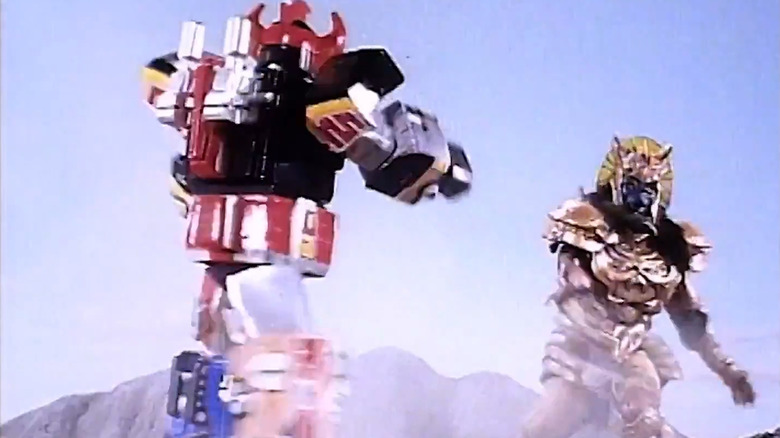
Perhaps no TV show has more city-stomping creatures on it than "Mighty Morphin Power Rangers." While "Monarch: Legacy of Monsters" borrows characters from Japanese monster franchises and recreates them, "Power Rangers" uses actual footage from the Japanese series "Super Sentai" and matches it with newly shot American scenes.
In American footage, human-sized alien monsters engage in martial-arts battles with the Rangers. When the monsters invariably lose, they grow to skyscraper size and the action shifts to the Japanese footage, where they battle heroic robots composed of individual prehistoric beast-shaped vehicles. Naturally, the creatures tend to lose again, for this is a kid's show in which good triumphs over evil, even if the heroes occasionally experience minor setbacks.
Most importantly for kaiju fans, though, they trash nearby buildings while fighting. Thanks to American standards and practices, however, we are always reassured by expository dialogue that they are battling in "the abandoned warehouse district." Luckily, the fictional city of Angel Grove appears to have an endless supply of them.
Jericho
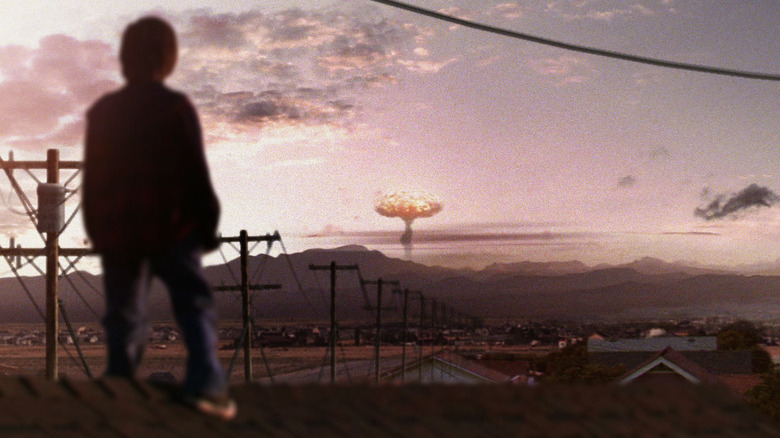
In "Jericho," the metaphorical monsters being tracked down by mysterious operatives (notably a pre-"Walking Dead" Lennie James) are potential nuclear terrorists. At least one nuclear bomb has gone off on American soil, and from the perspective of the eponymous small Kansas town, it's difficult to tell what's going on. Later, we learn there have been 23 bombs; later still, what's left of the United States under martial law begins sliding toward a new Civil War.
That's slightly more grounded than "Monarch," in which nuclear bomb tests have unleashed literal monsters rather than just those among us. Yet shadowy government organizations strive to protect us in both instances, while operating so secretly that they often seem untrustworthy, or even nefarious. It falls to ordinary townspeople, and former delinquent-turned-hometown-hero Jake Green (Skeet Ulrich), to piece things together and survive any further attacks. Like May in "Monarch," he puts that cool renegade energy to use for good.
Primeval
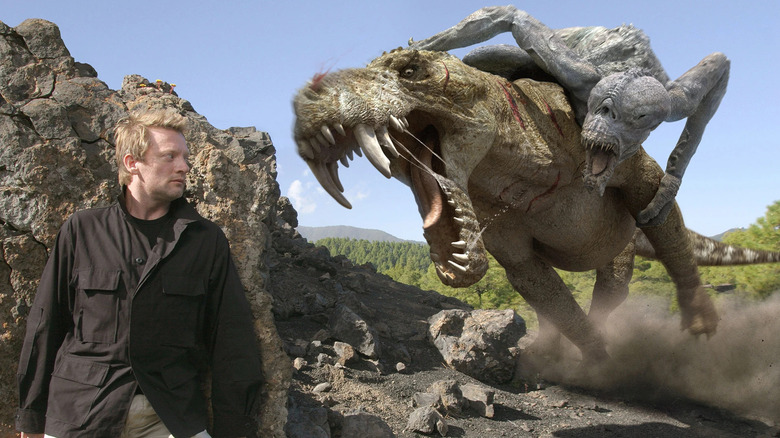
Unlike many other shows on this list, "Primeval" starts mostly at the beginning, with the U.K. government thoroughly unprepared for the appearance of dimensional anomalies that prehistoric creatures pass through to enter the modern world. From dinosaurs to giant bugs, they face a population ill-equipped to face them, though by the second season, the timeline becomes altered, where an Anomaly Research Centre (ARC) is established to deal with such things. Hey, you can't spell "Monarch" without "ARC." The two groups have a lot in common when it comes to busting prehistoric lizards.
Though the show's creator, Tim Haines, previously created the "Walking With Dinosaurs" nature series, he used the freedom of fiction to take some creative license with their depiction in "Primeval." They're certainly more scientifically accurate than Kong or Godzilla, but still somewhat bigger and fiercer than their real-life ancestors. How accurate the shadow government is, we may never know.
Many a young child has walked through a forest imagining dinosaurs hidden behind the trees. "Primeval" takes that as a starting point, and slowly builds to global — or at least U.K.-wide — crisis.
Godzilla himself does make a cameo in the pilot by way of a plastic action figure.
Lost
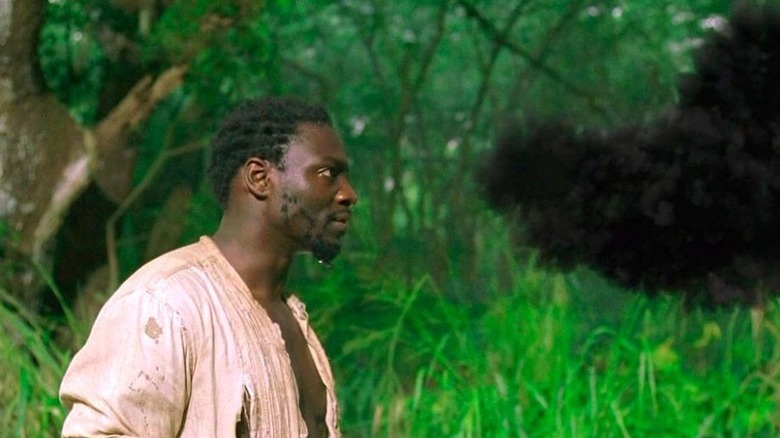
The Monarch organization has one of its many research stations on Skull Island, where it monitors unusual phenomena, under the protection of Kong, the massive ape and guardian of the land. The Dharma Initiative similarly studied strange electromagnetic activity on the island in "Lost," which was under the protection of a giant monster of its own — one that we eventually learned looked like a black cloud. Both "Monarch: Legacy of Monsters" and "Lost" rely heavily on flashbacks to tell the tale and fill in the gaps.
Monarch's investigations are, perhaps, a bit more straightforward. When Titans burst out of the earth, there's not a lot of mystery about what's happening. For Dharma, the riddle was more intriguing; how exactly do you know that when electromagnetic blasts come out of the earth, the best way to stay safe is to enter a particular string of numbers into a computer at regular intervals?
In the case of both TV shows, however, the creators hope you care about the lead characters more than the mysteries and monsters they pursue.