

Before Baywatch Went Hawaiian, The Show Considered A Move To Australia
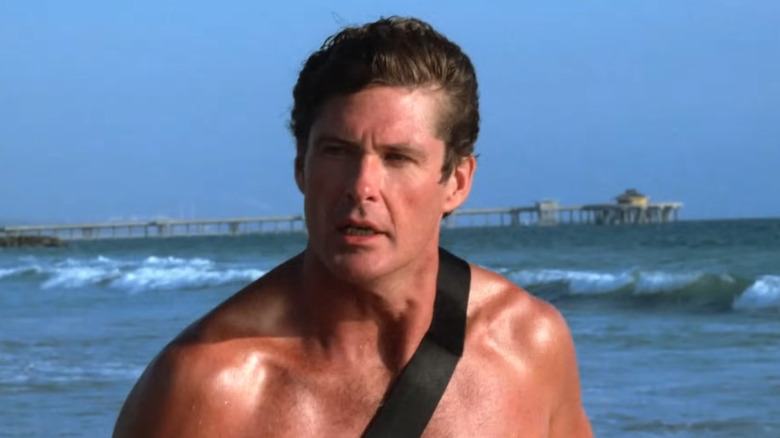
By 1999, "Baywatch" was struggling to stay fresh. The show had been on air for nine seasons and seen the departure of one of its major stars, Pamela Anderson. Viewer interest was on the decline, which made it harder for "Baywatch" to justify filming in the expensive and crowded Los Angeles metro area. The producers wanted a filming location that allowed the show to explore exciting new storylines at a lower cost.
At first the show considered a move to Avalon, a coastal suburb of Sydney, Australia. This was where it'd already filmed the two-episode special "Baywatch Down Under" in Season 9, but the Avalon locals didn't appreciate how the show's first production had restricted public access to their beach. When the "Baywatch" crew raised the idea of returning to Avalon long-term, locals were quick to protest.
Roughly 1,700 Avalon residents attended a town hall meeting to demand that the "Baywatch" producers find another location, the BBC reported in February 1999. The residents complained that not only would the production negatively impact their beach experience, but it would wreak further havoc on the surrounding wildlife. "We've just about lost all our koalas in the area already," one local complained, "and 'Baywatch' will only make matters worse."
Avalon didn't want Baywatch, but other Australian cities did
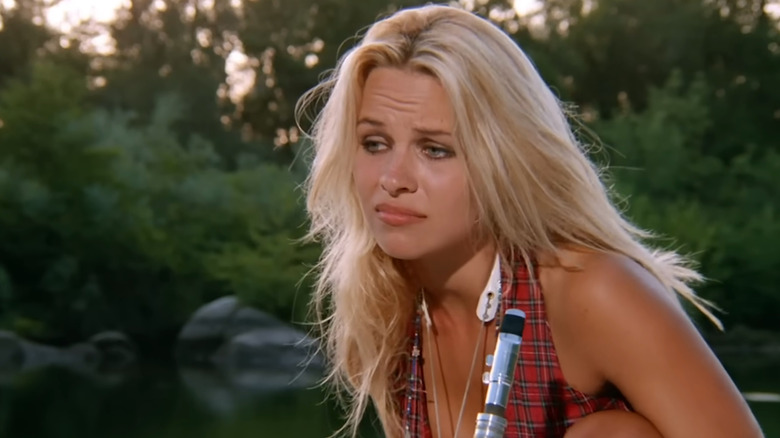
"Baywatch" executive producer Gregory Bonann listened to the locals' complaints. "We will not go where we are clearly not wanted," he told reporters, but he hadn't yet ruled out Australia entirely. Politicians from cities all along the country's coastline had put in their own bids to host the show.
The port city of Geelong, close to Melbourne, promised the "Baywatch" team that they had a "very supportive local population who'd get right behind the show." One council member from Coffs Harbour, a coastal city located between Brisbane and Sydney, offered the "Baywatch" producers an "all-expense-paid" holiday to their town "just to come up and have a look." According to a later report from the New York Daily News, Bonann had considered settling "Baywatch" on one of the beach towns in the state of Queensland.
When "Baywatch" chose Hawaii as its new home, Australian Tourism Minister Bob Gibbs accused the producers of only pretending to be interested in his country. "It's disgraceful," Gibbs told the New York Daily News. "Their coming to Queensland yesterday was nothing but a deceitful charade to panic Hawaii into signing a deal immediately." Bonann, however, maintained that Australia was always under serious consideration; later that same month his deal with Hawaii temporarily fell apart and Bonann told reporters he'd returned to scouting Australian beaches, noting, "I've got to find a home for the show. ... There's more than one spot down there."
Hawaii saw a golden opportunity with Baywatch
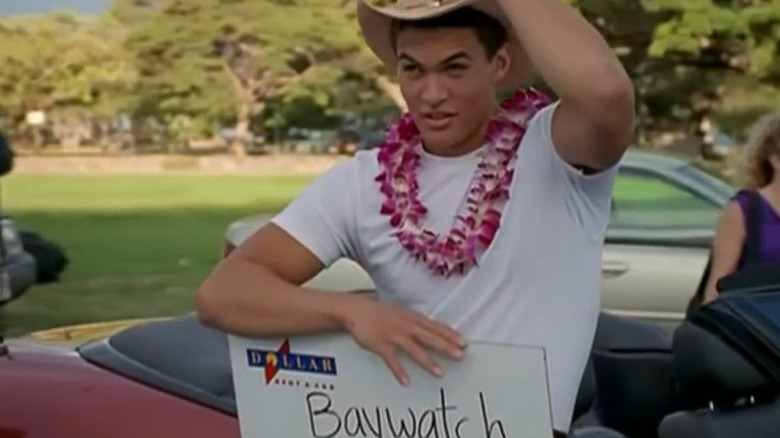
Although Australia is typically cheaper to film in than most U.S. states, the Hawaii state government offered the show a $3 million incentive package. The "Baywatch" producers also appreciated that Hawaii was a shorter flight away from Hollywood than Australia, making it easier to fly in guest stars.
Many Hawaii politicians saw "Baywatch Hawaii" as a priceless advertising opportunity for the state's tourism industry, and they believed the deal would help squash the state's reputation as too expensive for a TV production. It helped the show's case that it rebranded itself with "Hawaii" in the title, and that it was willing to hire up to 150 Hawaiian locals. The series was renamed "Baywatch Hawaii" for Season 10 and 11, and future A-lister Jason Momoa landed his breakout role as a new cast member.
However, the show only lasted two seasons before its cancellation; it disappointed Hawaii officials, in part because Gregory Bonann had told reporters during the initial deal, "We wouldn't make this enormous kind of move just for two years." In the end "Baywatch Hawaii" failed to reach the success of "Magnum, P.I.," a Hawaiian-set show that became a long-lasting hit. It would take a few more years, with the productions of shows like "Lost" and then "Hawaii Five-0," before Hawaii would experience another true Hollywood boom.