

10 Underrated Superhero TV Shows That Deserved Far More Love
Remember how exciting it was when "WandaVision" and "Loki" promised to bring movie-caliber superheroes to TV? Compare that to the relatively subdued reception to the more recent "Wonder Man," a superhero show costarring Oscar-winner Sir Ben Kingsley. Even though the series was well-received enough get renewed for Season 2, nobody's out there wearing TV-inspired "Wonder Man" T-shirts. It seems the era of super-hype has passed for the moment.
That doesn't mean there aren't superhero shows worth seeking out, though. Some, like "Daredevil: Born Again," need no further recommendation. Several others, however, need a little more attention, whether because they're underseen, or have just been forgotten about over the years.
Here are 10 underrated superhero shows that deserve more love.
Swamp Thing
When "The Dark Knight Returns" and "Watchmen" revolutionized comic books in the mid-'80s, "Swamp Thing" was right there with them. Alan Moore's run recontextualized the monster hero with body horror and grand cosmic mythology. A 1982 horror take by a young Wes Craven had a cult following. In 1989, seeing the character's popularity but misunderstanding why, DC approved a campy, low-budget sequel that featured Heather Locklear wise-cracking at the creature.
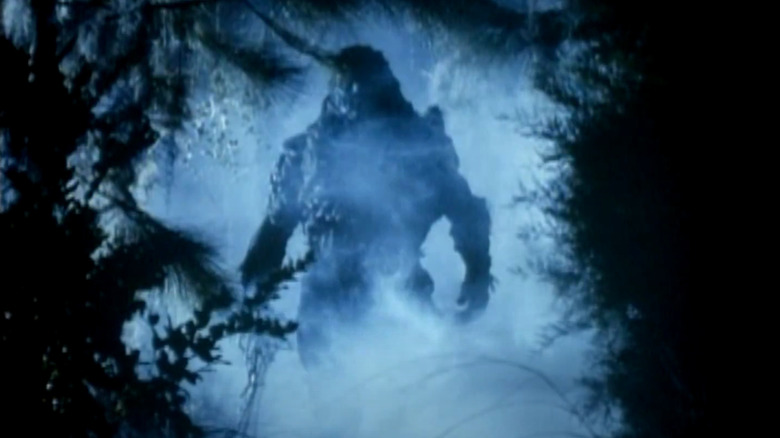
A year later, in 1990, they got it right, with a made-for-cable series that maintained the creeping dread of the comics. Showing amazing flexibility, stuntman Dick Durock played Swamp Thing in both movies and the show, adjusting his tone accordingly, but, most importantly, wearing the rubber suit well.
Eschewing the explosions and action of both movies, "Swamp Thing" on USA Network started off with a a mix of studio and location shots, but after the 13th episode, got revamped with a moodier, studio-created swamp. This enhanced the show's portrayal of Swamp Thing as a dark guardian of a more nightmarish, surreal environment, as he engaged on longer-term power struggles with arch-nemesis, Arcane (Mark Lindsay Chapman), who sought his powers. The show became popular with guest stars, including Tyne Daly, Debby Boone, Ray Wise, and WCW wrestlers Kevin Nash and Terry Funk.
The network frequently aired episodes out of order; Although it was a mistake, it lent the show a sort of discontinuous dream logic that added to the supernatural aura.
She-Hulk: Attorney at Law
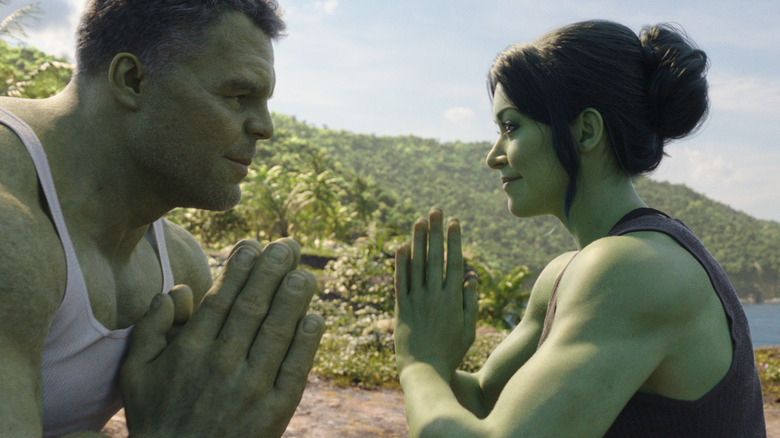
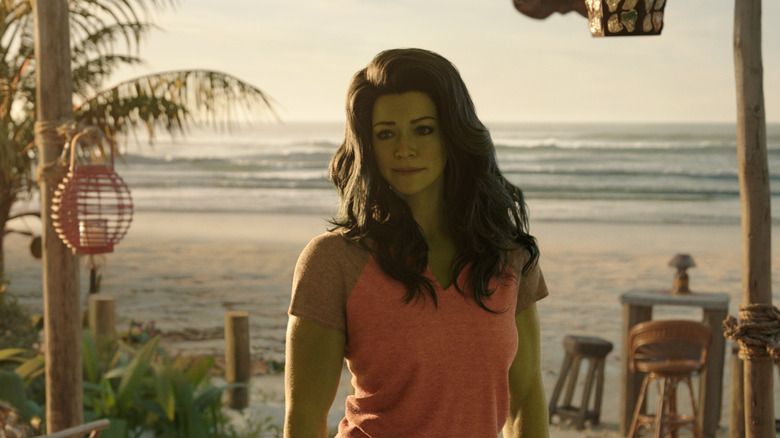
In "She-Hulk," the Marvel Cinematic Universe attempted to do something new: A legal sitcom, with superheroes. Not all viewers got it, with some fans complaining that there was too much comedy in the ... [checks notes] ... situation comedy.
Only a company as deep-pocketed as Disney-owned Marvel would have even attempted a show in which the lead character is frequently in a realistic, size XXL digital body akin to those in "Avatar." It helped to have an acclaimed actress in the lead. Tatiana Maslany, best known at the time for playing multiple roles on "Orphan Black," expertly segued between insecure, human Jen and confident, powered-up She-Hulk.
The show had a little something for all kinds of Marvel fans: Goofy (yet canonical) villains like Leap-Frog, as well as Daredevil in his original yellow and red costume (doing the walk of shame, no less). Patty Guggenheim's savvier-than-she-seems party girl Madisynn became a fan favorite after an unlikely pairing with Doctor Strange's usual partner Wong.
Not everyone could be happy with everything: A scene of She-Hulk twerking with Megan Thee Stallion proved surprisingly divisive, and the show's writers didn't seem as interested in the actual courtroom parts of a courtroom comedy. What they were interested in — female-centric comedy, and depicting a single character with an active sex life in a notoriously chaste universe — came through beautifully.
Naomi
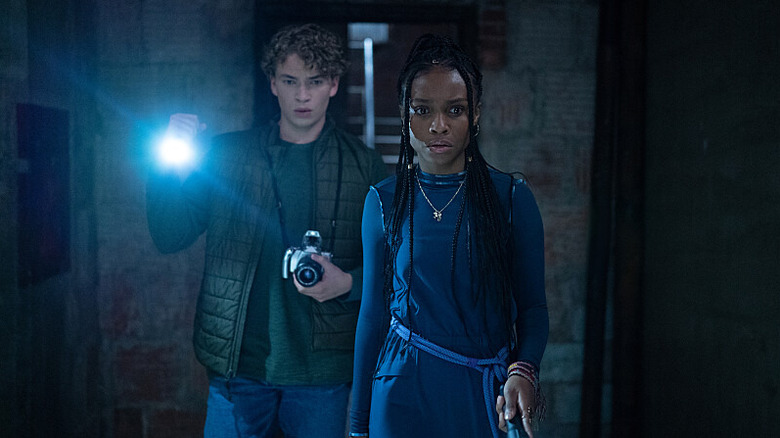
Any time a superhero movie does colorblind or gender-flipped casting, a segment of the fandom will say something like, "Don't change existing characters — make new Black and female superhero characters instead!" Having said that, many proceed not to show up for a show like "Naomi." A member of the Justice League known mainly to comics readers, Naomi was brought to The CW in part by Ava DuVernay, who was also once attached to a possible "New Gods" movie.
Rather than instantly dropping the lead character in the "Arrow" universe, "Naomi" depicts its title character as a fan of "Superman" comics, in our world. She's shocked to discover that not only is Superman real, but she herself is a super-powered alien as well, and her adoptive parents have been keeping her extra-dimensional heritage a secret.
In her first lead role, actual teen Kaci Walfall makes Naomi a compelling, relatable character. Her discovery of her true heritage not only serves as a metaphor for being Black in the whitest parts of America, but being adopted without knowing your birth family history, or being the weird smart kid and/or superhero nerd in school.
Inevitably, this is a story about turning those perceived weaknesses into strengths as one comes of age, but aside from that, it's a twisty story that doesn't follow the usual superhero formulas. Where Naomi is from is only a small fraction of a drama filled with mysterious individuals infringing on our realm. Unfortunately, it only lasted one season.
Todd McFarlane's Spawn
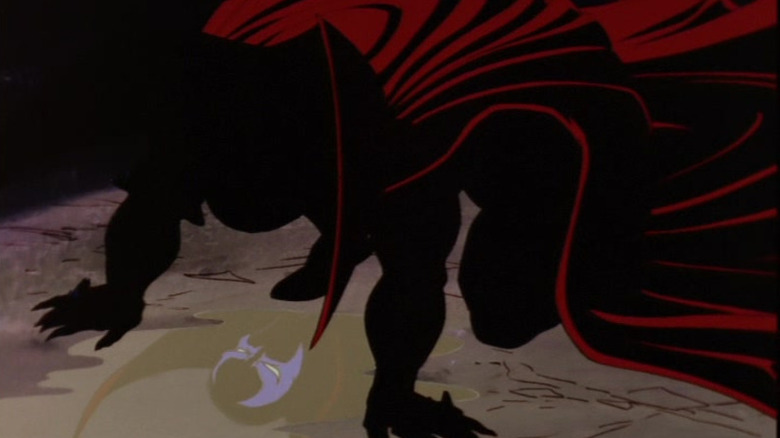
'90s kids who grew up on "X-Men" comics and wanted something angrier in their graphic novels gravitated towards Spawn — a super-powered, homeless zombie assassin from Hell with a Venom-like symbiotic costume, created by popular Marvel artist Todd McFarlane. McFarlane made his own toys based on the comic, which were an instant success, but the 1997 live-action movie was a disaster, with a dumbed-down script and watered-down PG-13 rating.
Meanwhile, on HBO, the animated series "Todd McFarlane's Spawn" adapted the comics faithfully, with equal gore, but extra cartoon nudity. Keith David, who had just come off voicing Goliath on "Gargoyles," provided the perfect pipes for damned anti-hero Spawn, with guest voices including Robert Forster, Ming-Na Wen, James Hong, and Jennifer Jason Leigh. Unlike the movie, the animated series got the rights to use Rob Liefeld's character of Chapel as Spawn's original killer, and hewed generally closer to the narrative and tone comic fans expected, bringing Hell to NYC alleyways without the over-explanation of the film.
Only Todd McFarlane's live-action intros felt tonally off, but now they play almost as period camp, the true origin sequence for years of him being an on-camera hype-man for his products. Back then, he was trying to be scary like the Crypt Keeper, but came off like a cab driver trying to be Vincent Price. McFarlane has promised a new movie for literal decades, but it's not likely to be more spot-on than this slice of '90s goth-superhero perfection.
The Greatest American Hero
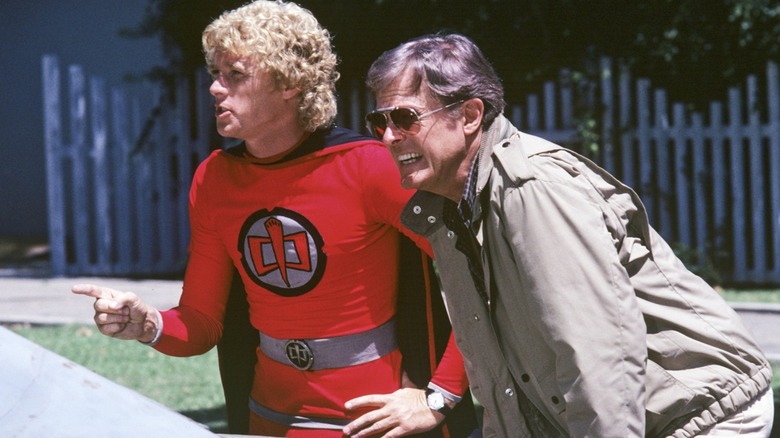
Lots of people love the cheesy theme song, and make fun of the goofy spandex super-suit, but "The Greatest American Hero" has a lot more to offer than that. Because it was deconstructing superheroes before that was even a trope, the show got sued by DC/Warner Bros. for supposedly ripping off Superman! The only real similarities were the cape, tights, and flying — the series was not about some Kryptonian Übermensch, but a regular, flawed human who could gain super powers from an alien suit. Though he meant well, he had lost the instructions, and never quite got the hang of the take-off and landing.
Modern shows that attempt to do "realistic Superman," like "Invincible" or "The Boys," generally assume the character will turn selfish, or even evil. "The Greatest American Hero" is more optimistic, as teacher Ralph Hinkley (William Katt) is a determined do-gooder. When he's paired with FBI Agent Bill Maxwell (Robert Culp), who was originally supposed to get the suit, the show does something remarkable: It regularly depicts a right-wing government gun nut and a left-wing hippie-dippy idealist teacher as best friends, able to work together and complement each other. They disagree on their approaches, but save the day as partners, while the show gently mocks both of their worldviews. It's hard to imagine a series doing that today without a lot of hurt feelings.
As kids embraced the show, later episodes got dumbed down. Its fundamental hope for humanity remained intact, however.
The Flash (1990)
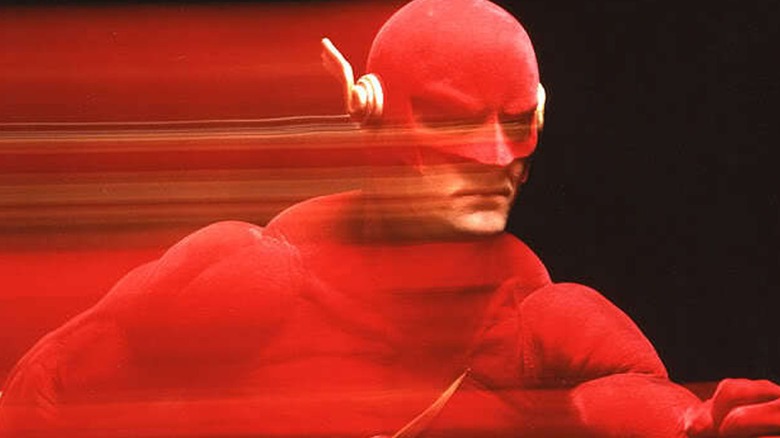
At the movies, the success of Tim Burton's "Batman" in 1989 begat big-budget copycats, not so much based on DC Comics, but on 1930s characters like Dick Tracy, The Shadow, and The Phantom. Only on TV did Warner Bros. specifically try the "Batman" formula — sculpted muscle suit, comic-colored city, grim-dark aesthetic, DC Comics character — with "The Flash." Danny Elfman again provided the score, and "Rocketeer" creator Dave Stevens designed the suit. In the show's biggest departure from "Batman," the series cast a more traditional, square-jawed soap star in John Wesley Shipp as the hero, rather than going weird like the then-controversial choice of Michael Keaton.
In spite of the expensive production values and well-chosen cast — including Amanda Pays, Richard Belzer, M. Emmet Walsh, and Dick Miller — "The Flash" floundered in a poor time slot opposite "The Simpsons" and "The Cosby Show." It deserved better. A serious superhero show with the budget and comic-book style to prove it, it felt epic for TV.
Over the years, though, it has gained enough appreciation that Shipp returned as a multiversal Flash variant on The CW's "The Flash." Its epic scale and practical sets play well today, though as the show goes on, forced budget cuts become evident. Still, those latter episodes feature Mark Hamill as The Trickster, giving a performance that's clearly the original template for all his subsequent super-villain voice roles, from the Joker to the Hobgoblin and Skeletor.
The Maxx
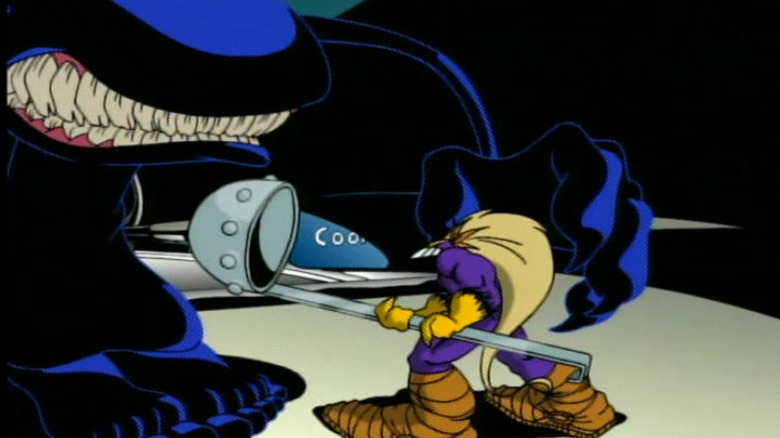
"The Maxx" is quite possibly the weirdest show ever seen on MTV, which is saying something. It also might be the most faithful comic-book adaptation of all time. Animating Sam Kieth's art without ever dumbing down the multi-layered story, the show mixed 2D animation, CG, and live-action footage. It put comic panels on the screen years before Ang Lee's "Hulk," and dealt with female dissociative trauma before Zack Snyder conceived of "Sucker Punch." MTV oddly decided to pair it with a more conventional alien hero show called "The Head," under the banner of "MTV's Oddities," but it's not a series that's really comparable to anything else.
The villain was a predator and abuser named Mr. Gone. The protagonist, Julie, created an alternate reality called the Outback to escape her PTSD. In this fictionalized, fantasy version of Australi,a she also encountered the Maxx, a purple spandexed superhero in her world, and a homeless man in his. Mr. Gone utilized an army of predatory creatures, named Iszes, that looked like smiley faces with hands and feet. Before Emojis were a thing, they effectively served as icons of his id.
How much of what we saw was real? Was the Outback a shared delusion, or a real place? The cartoon seldom tipped its hand, inviting the viewer instead to experience the fragmented minds of its characters. The show was correctly acclaimed at the time, but it's been forgotten since, and could use a 4K restoration.
Jupiter's Legacy
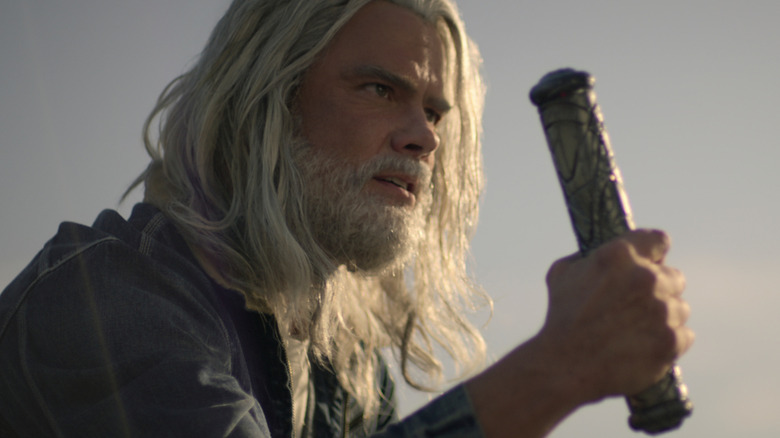
Netflix saw the success of the Marvel Cinematic Universe and wanted one of their own. They tried to strike a deal with Deadpool creator Rob Liefeld, but eventually settled on Mark Millar, creator of "Wanted" and "Kick-Ass." He kicked things off with "Jupiter's Legacy," a grand, sprawling, expensive multi-generational superhero saga. It gained massive initial viewing numbers, beating out "The Handmaid's Tale," but the big budget and a change of leadership at Netflix led to its cancellation, along with other entries in the planned Millar-verse.
Millar has a formula that he likes, one that involves a misfit finding their place in a top-secret, all-powerful group that helps to run the world. "Jupiter's Legacy" is the least cynical iteration of his template to be adapted, with a split timeline between the origin of the heroic Utopian (Josh Duhamel) on a "Lost"-like mysterious island, and the problems his children face in the modern era. This allows Millar to riff on classic superheroes and modern comics, as the Utopian must question his old-fashioned moral code in the face of his son killing a villain. The kids have Millar's familiar snark, and the adults his higher ideals, but there's definitely some crossover.
There are also super-villains all around, and the conclusion features a telepathic battle literally inside one character's mind. Though it ends in a cliffhanger never to be resolved in live-action, it's precisely what a super-team movie with no limits — and no forced tie-ins to spoil who dies — ought to be.
Ironheart
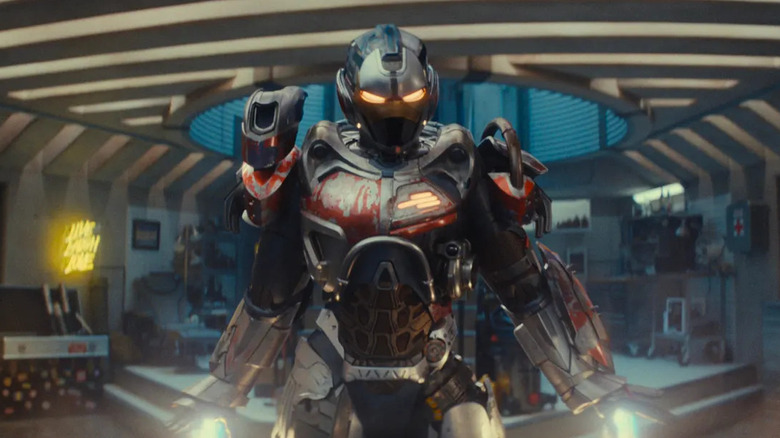
Fans of Riri Williams from "Black Panther: Wakanda Forever" probably didn't foresee the direction her spin-off would go. It's "Iron Man" with class issues, but then, in a wild swing, come the demons. Riri (Dominique Thorne) doesn't have the money to build the tech she wants, and thus winds up helping a gang of criminals led by The Hood (Anthony Ramos), who wears a supernatural cloak. She also engages in a scientific form of necromancy, bringing back her dead best friend, Natalie, as an AI. Thorne plays Riri as genuinely conflicted, to the point of sometimes being unlikable, which is pretty bold for Marvel.
Alden Ehrenreich makes for an amusingly versatile frenemy, who turns out to be the son of Jeff Bridges Obadiah Stane from the first "Iron Man," turning full villain after Riri pretty blatantly breaks a promise to him. But she's just getting started. It's the end of the series that might be Marvel's biggest swerve. Sacha Baron Cohen shows up as the cloak's real owner, Mephisto, who is basically the Marvel Universe's version of Satan. That much was spoiled by casting leaks, but not the part where he offers to bring Natalie back to life for real if she'll serve him ... and she takes it! A Marvel superhero show ends with the hero effectively selling her soul to the devil.
With no further "Ironheart" on the horizon, that's a massive cliffhanger for the rest of the universe, and a bold, cautionary downer of an ending.
Freakazoid!
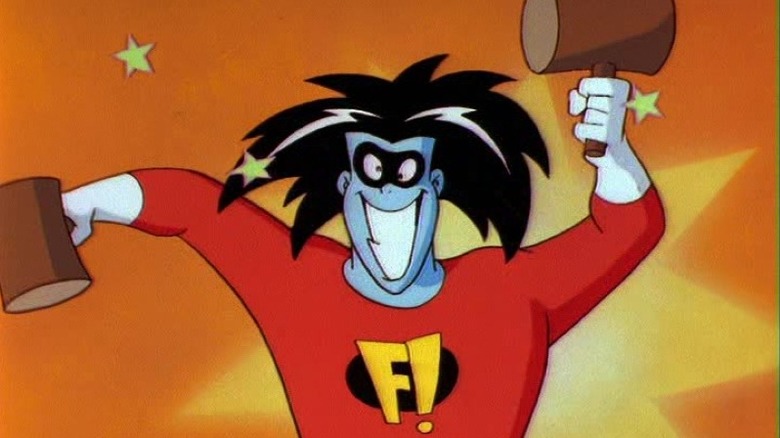
Before Harley Quinn and Deadpool regularly broke the fourth-wall and commented on their stories in a meta way, another unlikely hero in red and black was doing it on TV. This was Freakazoid, a high school teenager transformed into a superhero by a computer bug accidentally activated by his cat.
Made by Harley Quinn's creators Paul Dini and Bruce Timm, "Freakazoid!" was intended to be a more straightforward superhero with a touch of comedy; Instead, like its Amblin sister-shows, "Animaniacs" and "Tiny Toons," it went full zany and postmodern. Slightly silly superhero cartoons like "The Tick" and "Earthworm Jim" were popular at the time. Unlike them, "Freakazoid!" had no source material to be based on, and blazed a wild new path. Its title hero could become electricity or know everything on the Internet, yet he was weirdly and arbitrarily vulnerable to ionized graphite bars. Equally strange opponents included the likes of Cave Guy, The Milk Man, and one-eyed Newt Gingrich parody, Eye of Newt. Other heroes featured in mini-segments included The Lawn Gnomes, and Fatman and Boy Blubber.
Mixing pop culture references aimed at adults with goofy hijinks for kids and pure silliness to amuse everyone, "Freakazoid!" was a unique TV superhero series, fondly remembered by those who watched him at the time, but rarely talked about for reboots or remakes the way a show like "Animaniacs" is. Over 20 years after his cancellation, however, the character appeared on "Teen Titans GO!" He's long overdue for a bigger comeback.