

The First U.S. Sitcom Aired On Three Different Networks And Shot More Than 300 Episodes

Before "I Love Lucy" hit the scene, America's first television sitcom had a wealth of major TV landmarks in industry history, including the fact that it aired on three different networks and shot over 300 episodes.
"Mary Kay and Johnny" was a 1947 show that centered around the exploits of Johnny Stearns, an employee at a bank, and his eccentric wife, Mary Kay. Often taking place in the newlywed couple's New York City apartment, the show's episodes were broadcast live in 15-minute and 30-minute formats and actually starred a real-life married couple who had a direct hand in the creative process.
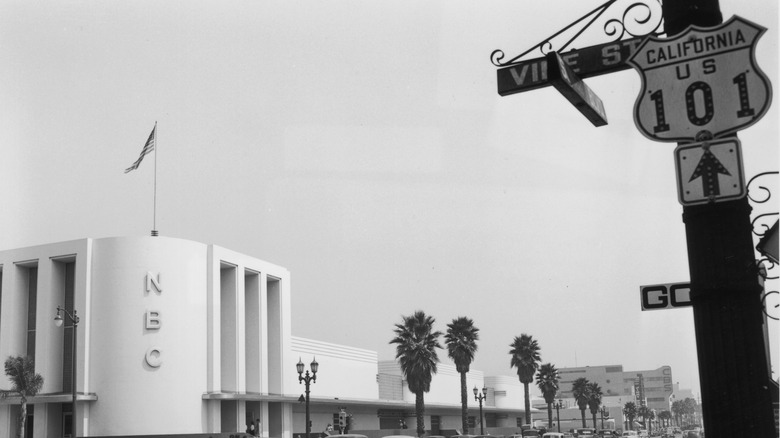
The sitcom became a hit, though it was actually only the first TV sitcom; radio sitcoms had already existed for years by the time the Stearns came around, and they caught some flack for relying on tropes of the genre. The series initially kicked off on the DuMont Television Network before moving to CBS, an undeniably bigger network. It would air there for some time before transferring yet again, this time to another major player: NBC. "Mary Kay and Johnny" debuted there in 1948, where it would stay until its final episode in October 1950.
Mary Kay and Johnny Stearns made modern moves on their show
During its run, "Mary Kay and Johnny" achieved some other major milestones for television, ones that seem very commonplace in the modern era of entertainment. Because the sitcom focused on a real-life relationship, "Mary Kay and Johnny" became the first series to show a married couple sharing the same bed. A year into the show's run, Mary Kay tried to hide her pregnancy with Johnny while shooting the show — but when that became too difficult to manage, it was written in, making it the first series to depict a woman's pregnancy on TV. After Mary Kay gave birth in real life, her and Johnny's son, Christopher, was integrated into the show's cast.
Both of these TV landmarks were major because of the chokehold that the Hays Code had on Hollywood from the 1930s to the 1960s. The Hays Code dictated television standards when it came to decency and obscenities, and it tamped down or banned nearly all expressions of what it deemed to be profanity. That included benign references to sex, like sharing a bed or an on-camera pregnancy.
Ultimately, very few episodes of the series have survived over the years. But the impact "Mary Kay and Johnny" had on situational comedy and early modern television cannot be understated.