

Sons Of Anarchy's Kim Coates Played A Real Historical Figure In A Netflix Western Series
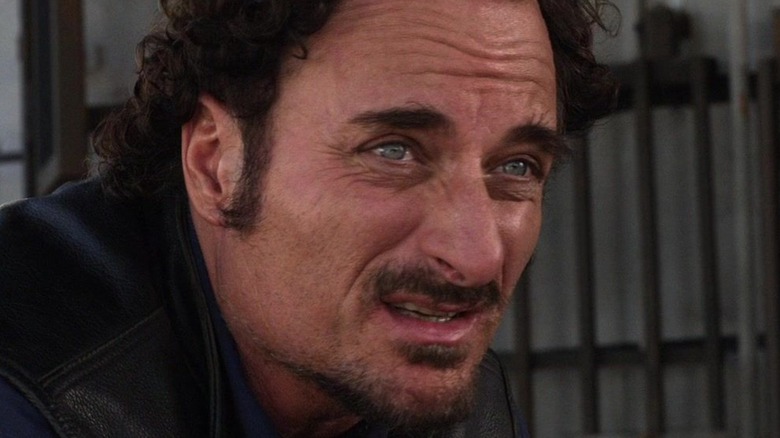
Kim Coates is best known for playing Alexander "Tig" Trager on FX's gang series "Sons of Anarchy," as well as its spin-off, "Mayans M.C." Tig is one of the most ruthless, violent, and morally complex characters in the "Sons of Anarchy" universe — and all these qualities put Coates in good standing for the role he went on to play in 2019's "American Primeval."
A hugely underrated Netflix series that consisted of just six episodes, "American Primeval" charts the birth of the American West. Though its storylines are largely fictionalized, featuring several original characters conceived by the series' creator, Mark L. Smith, it also deals with real historical events. As such, the original characters intersect with real figures from history. Coates appeared in the series as Brigham Young, an early leader of the Church of Latter-day Saints and the first governor of the Utah Territory. The real-life Young played a key role in several conflicts that involved the Latter-day Saints, other American settlers, and various Native American tribes.
Young serves as the primary antagonist of "American Primeval" and the driving force behind the Mountain Meadows Massacre, a true historical event that occurred during the Utah War. Though the show draws on historical evidence for its narrative, some modern Latter-day Saints have taken issue with the depiction of Young on "American Primeval."
How accurate was Brigham Young in American Primeval?
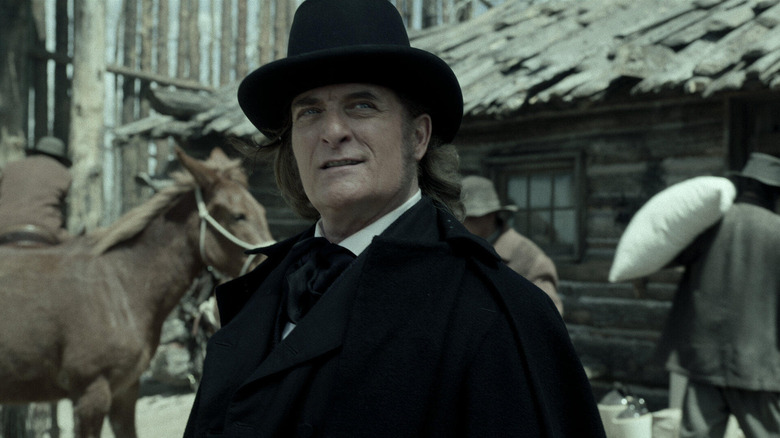
While Netflix's Western miniseries portrayed a morally ambiguous world, Kim Coates' Brigham Young was undeniably its villain. The character's portrayal on "American Primeval" provoked accusations of inaccuracies from the managing director of the Church History Department of the Church of Jesus Christ of Latter-day Saints.
Writing about the series in an article for Deseret News, Matt Grow described the notion that Young was accurately portrayed on "American Primeval" as "deeply misguided." Grow acknowledged the complexity of relationships and occasional violence between the Latter-day Saints and Utah's Indigenous tribes, but asserted that Young's faith taught him to treat Indigenous peoples with dignity.
While it's true Young eventually took a peaceful approach to relations with Native Americans, Grow's assessment ignores some important historical details. In 1850, for instance, Young pursued a policy of selective extermination of Timpanogos men, resulting in the Fort Utah Massacre conducted by Young's militia. While sources disagree on whether Young was aware of the later Mountain Meadows Massacre, which "American Primeval" portrays as his chief crime, one of the massacre's key perpetrators, John D. Lee, later wrote in his memoir (via Smithsonian Magazine) that it took place "by the direct command of Brigham Young." It should also be noted Young was also a white supremacist and a staunch supporter of slavery. So, although "American Primeval" took some artistic liberties with history, Coates' brutal portrayal of Young is probably a fair representation of the first Governor of Utah Territory.