

65 Years Ago, A British Sci-Fi Spy Series Launched And Became A Global Hit
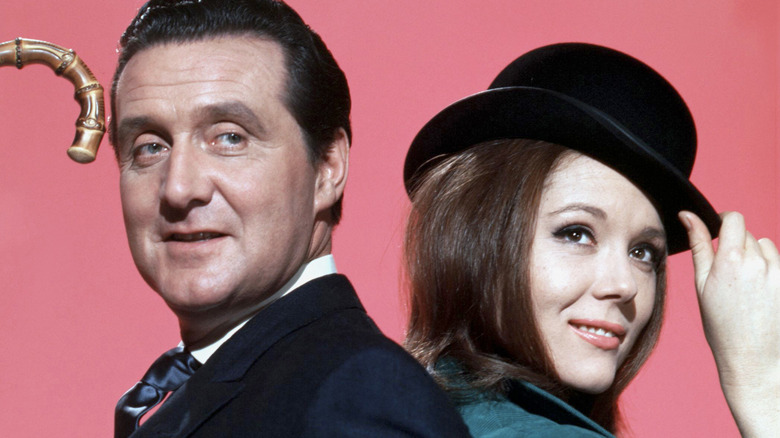
Two years before Marvel's team of the same name debuted in the comics, the British espionage series "The Avengers" premiered, quickly establishing itself as one of the best TV shows of the 1960s. The cult spy-fi series made its bow in the United Kingdom 65 years ago, with its first episode, "Hot Snow," beamed into households on January 7, 1961. It didn't arrive in the States until 1966, when ABC picked it up, but once American viewers started watching it, they couldn't get enough of "The Avengers."
Created by Sydney Newman, a Canadian screenwriter who would go on to co-create "Doctor Who" in the next few years, "The Avengers" follows secret agent John Steed (Patrick Macnee) as he and a series of partners fight crime and go on elaborate spy adventures. Steed was actually intended as more of a sidekick to David H. Keel (Ian Hendry), a medical doctor who turned vigilante after witnessing his fiancée's death, but he proved more popular with audiences and was retooled as the main character as a result.
While early seasons were relatively grounded, eventually "The Avengers" embraced more science fiction elements. The heroes used high-tech gadgets and fought robots or killer plants. Steed was joined by a series of female sidekicks over the course of the show's six-season run, including anthropologist Cathy Gale (Honor Blackman), martial arts expert Emma Peel (future Bond Girl and "Game of Thrones" star Diana Rigg), and spy Tara King (Linda Thorson).
The Avengers were fashion icons
"The Avengers" came to be known for its fashion almost as much as its action. John Steed wore a distinctive bowler hat and traditional but sharp suits, a style that's been dubbed neo-Edwardian. This was all down to Patrick Macnee: Steed wore a trench coat to begin with, but the actor brought his own flair to the character, making him a wry spoof of a typical proper Englishman. "Steed is pretty much me," he told TV News in 1967. "I feel I'm satirizing my own class."
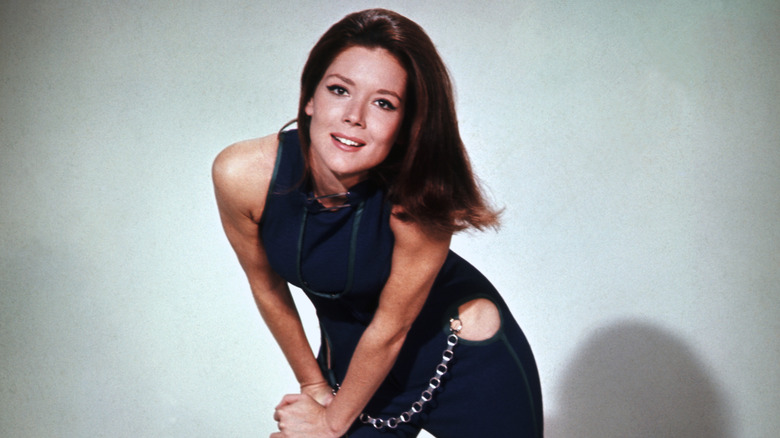
The women on the show, meanwhile, wore mod dresses, leather catsuits, and other avant-guard clothing. The catsuits (which were actually faux-leather because the real material was too restrictive for the hand-to-hand combat scenes) were initially a practical consideration. Dresses got in the way of the fighting Honor Blackman's Cathy Gale did each episode, so designer Michael Whittaker was brought in to design the show's catsuits and the rest is fashion history.
Diana Rigg's Emma Peel continued the show's trend of influencing fashion. Designer John Bates helped create a bunch of outfits that would influence '60s styles, including the miniskirts Peel wore. Other members of the production team were initially aghast at the short hem. "They pulled their hair, said, 'You can't do that, it's impossible,'" Rigg told TV Times (via The Guardian). "I argued that one must look forward and not back, and by wearing these brief skirts, one was looking forward."
The risqué fashion and violence gave The Avengers some trouble in America
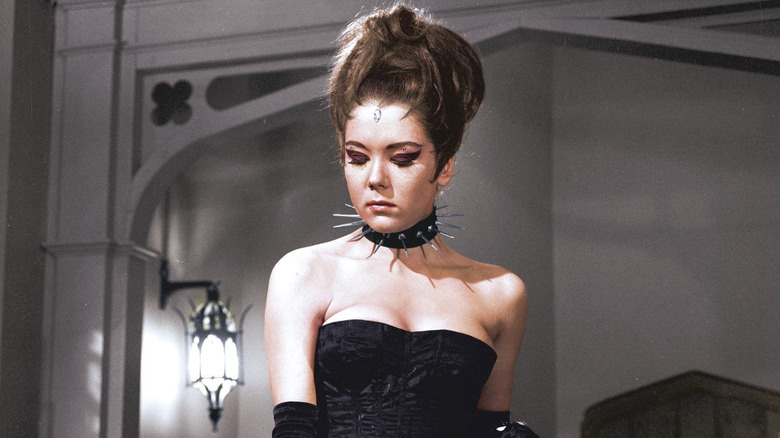
"The Avengers" was a hit in the States, but it initially ran into some problems due to its content. Standards on American networks in the '60s were a bit more conservative than in the United Kingdom, and ABC initially refused to air five episodes of the series: "A Surfeit of H2O," "Silent Dust," "Quick-Quick Slow Death," "Honey for the Prince," and "A Touch of Brimstone," with the latter proving particularly problematic.
In "A Touch of Brimstone," John Steed and Emma Peel investigate a modern-day version of the Hellfire Club, whose members are plotting to assassinate foreign leaders. Peel ends up wearing a very skimpy outfit (designed by Diana Rigg herself) complete with a spiked collar to dress up as the Queen of Sin, with guest star Peter Wyngarde threatening to whip her. It was all too much for ABC execs at the time, though all of the aforementioned episodes were restored when "The Avengers" entered syndication.
The show ended in 1969 but a sequel series called "The New Avengers," which also starred Patrick Macnee, began airing in 1976 and was shown in as many as 120 countries. In 1998, Hollywood remade "The Avengers" as a film adaptation starring Ralph Fiennes and Uma Thurman as Steed and Peel. Viewers and critics were aghast at the content for a different reason: it's awful. It holds a telling 5% rating on Rotten Tomatoes and is without a doubt one of the worst movies based on TV shows.