

15 Years Ago Today: FX Changed Horror Television With An Ambitious Anthology Series
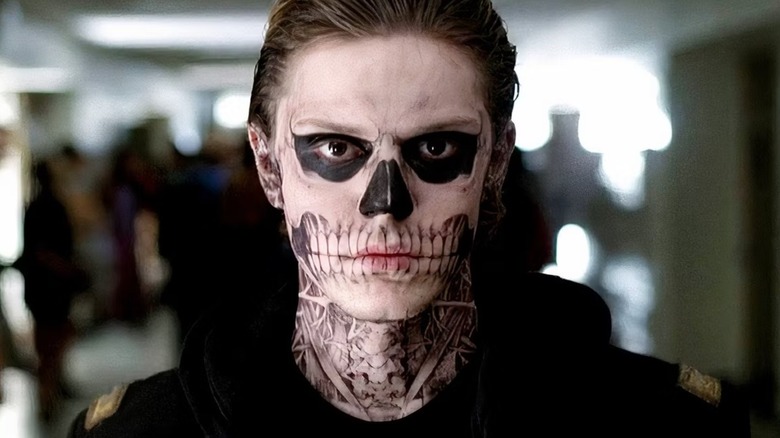
The best of the horror genre has traditionally been the domain of feature-length films, designed to be viewed in a dark movie theater, but FX wrestled the mantle back on behalf of television producers everywhere 15 years ago on this day. The seasonal anthology series "American Horror Story" debuted on October 5, 2011 with a tale about a haunted house that subverted expectations and laid the foundations for the franchise.
Creators Ryan Murphy and Brad Falchuk assembled a pool of core performers, with many of them playing several different roles within the "American Horror Story" universe. Evan Peters, Sarah Paulson, Angela Bassett, and Lily Rabe are among the most-used "American Horror Story" actors, as is Jessica Lange, who has won two Emmys for her work on the anthology show: one for playing Constance Langdon in the first season and another for playing Fiona Goode in the third season, the popular "American Horror Story: Coven."
FX took a risk with American Horror Story and it paid off
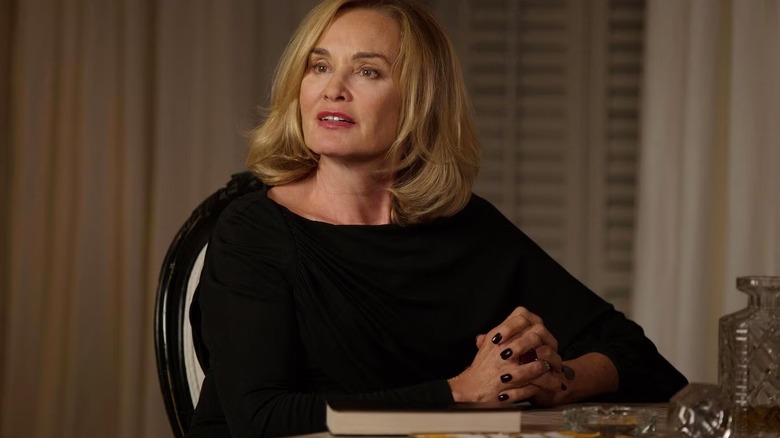
While anthology shows that leaned into horror existed and thrived long before "American Horror Story" (watch the best episodes of "The Twilight Zone" for all the proof you need), they all offered brand new stories every week. Seasonal anthology shows weren't really a thing until "American Horror Story" came along and grew into a mammoth hit for FX, leading to the likes of "True Detective" and "Fargo" following suit. It's a fairly common approach to TV these days, but FX was actually taking a big risk at the time.
Nick Grad, who became co-president of FX Entertainment in 2022, says he put his faith in series producer and co-creator Ryan Murphy from the start, noting that the format brought one unexpected bonus from the business side: "You're not asking anyone to sign up beyond one commitment," he explained to The Wrap. "It's like doing a movie." Grad also said that many of the most memorable TV shows became hits because they took risks. "I think every great success has taken some bold stance and broken some kind of 'rule' in the rule book," he said. "If you let the creative dictate the way, I think the people will respond."