

Happy Days Debuted As An Episode Of A Romance-Themed '70s Anthology Sitcom
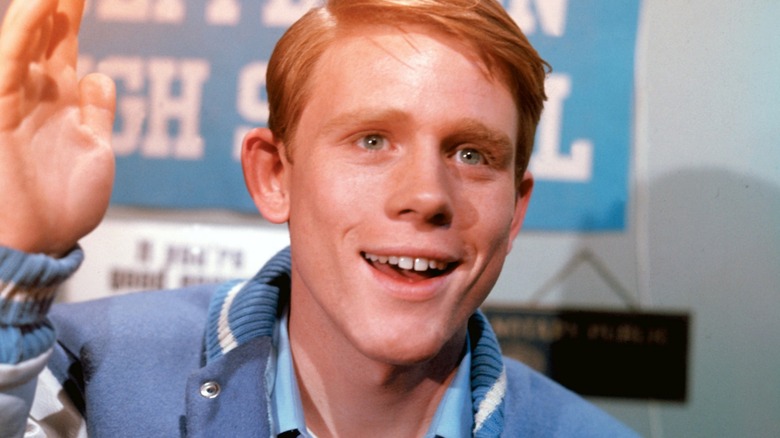
The ABC sitcom "Happy Days" is widely regarded as one of TV's biggest success stories — but it might never have reached the small screen without the help of an anthology show: "Love, American Style."
When "Happy Days" creator Garry Marshall first pitched his now-legendary series to ABC in the early 1970s, the network initially passed on it, failing to understand the appeal that a show set in the '50s might hold for '70s audiences. Although "Happy Days" seemed destined for obscurity, Marshall managed to get the pilot for the unsold show to air as a 1972 episode on "Love, American Style," a rom-com anthology produced by Paramount. After the 1972 Broadway premiere of the musical "Grease" prompted an explosion of cultural interest in the 1950s, the executives at ABC would come to see new value in turning Marshall's episode on "Love, American Style" into its own series. "Happy Days" finally hit ABC airwaves in 1974.
Although now largely forgotten, "Love, American Style" ultimately left multiple impacts on pop culture. The series was one of the earliest television acting credits for actors such as Diane Keaton and Harrison Ford, and even earned six Emmy nominations over the course of its five-year run on ABC. It also served as the foundation for more shows than just "Happy Days." A 1972 episode was the pilot for the Hanna-Barbera animated sitcom "Wait Till Your Father Gets Home," which ran for two years after its debut.
Fonzie wasn't in the Happy Days pilot that aired on Love, American Style
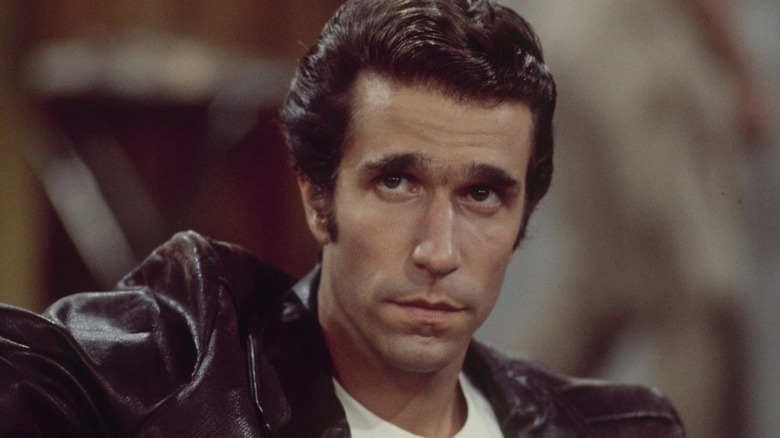
Now one of the most iconic faces in sitcom history, Henry Winkler's iconic Arthur "Fonzie" Fonzarelli was never part of Garry Marshall's original vision for "Happy Days." But after the sitcom found a second life on ABC, the network determined that the revived show was in need of a new and more rebellious character. "[Michael Eisner, then an executive at ABC] went and saw "American Graffiti" and he said we need a gang, they got a gang in there ... we need bad guys," Marshall told the Television Academy Foundation in a 2000 interview. "I maneuvered around and I remembered guys in my neighborhood, and I said, 'I got one guy who'll be the gang ... the rest will come and go.' And we created this character, Fonzie."
Even after "The Fonz" officially joined the "Happy Days" ensemble, Marshall revealed that he had initially envisioned the catchphrase-slinging greaser as a strong, yet silent type who "just ... [pointed] and [did] gestures and [said] very little." In the end, after Winkler's casting and subsequent performance "won [Marshall] over," the character slowly began to "[work] his way up" after "[starting] out with no lines." Fonzie's growing popularity with "Happy Days" viewers eventually warranted Winkler's promotion to a lead role: A decision that cemented its legacy as one of the best shows of the '70s and immortalized one of television's suavest characters.