

5 Best Family Ties 'Very Special Episodes,' Ranked
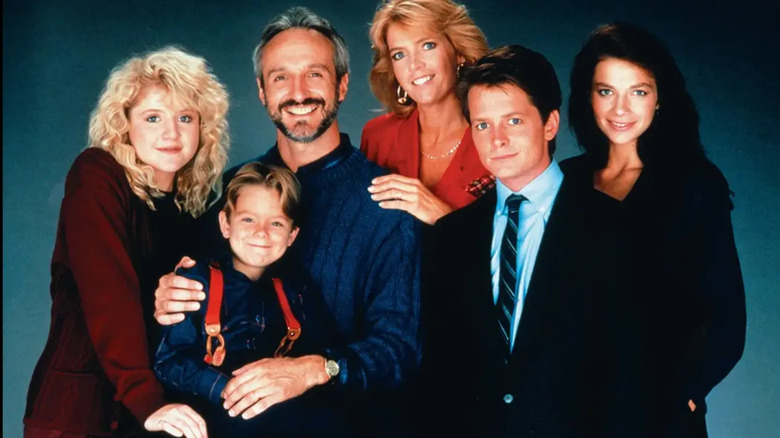
At its peak, "Family Ties" was the second most-watched television show for the fourth and fifth seasons (via EBSCO), meaning that it reached millions of homes. Although it seems somewhat archaic now, the sitcom was once a major part of a family's evening, bringing them to the couch to watch other families navigate humorous situations.
The family sitcom was a platform to not only entertain audiences, but also to impart some important lessons, especially for its younger viewers. Sitcoms can sometimes be very serious, addressing heavy and real-world issues such as racism, abuse, and alcoholism. This was the "Very Special Episode," a type of episode that often stepped outside a show's usual tone to address difficult subjects, sometimes with surprising sensitivity, yet often not very subtly. They can be cringey to modern eyes, but they were designed to start conversations. "Family Ties" has several memorable "Very Special Episodes," and we've ranked five of the best ones.
5. Speed Trap (Season 2, Episode 6)
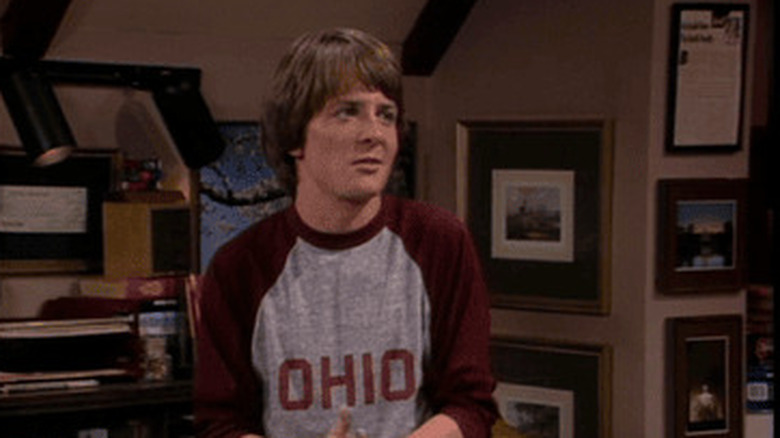
No one can forget Jessie Spano's freakout on "Saved by the Bell," when her caffeine-pill addiction comes crashing down in "Jessie's Song." But years before that episode aired in 1990, Alex P. Keaton had already tackled almost the exact same storyline — only he was taking actual amphetamine diet pills instead. Just like Jessie, Alex needs the pills to keep up with his schoolwork in "Speed Trap."
Despite the serious subject, the episode still approaches the subject with plenty of silly humor, like when Alex confronts a framed photograph of Richard Nixon about whether he should take the pills, or when Alex torpedoes a family game of Monopoly by aggressively and speedily moving his piece around the board.
Michael J. Fox is brilliant at dialing Alex's usually zippy energy up to an 11. As he gets higher, Fox makes Alex increasingly frantic, moving faster, talking faster, and practically vibrating with excitement. The message of this episode is that teenagers face a lot of pressure with their schoolwork, and it's easy to get tempted to find a solution to get it all done, even if that solution is bad for your body and mind.
4. Have Gun, Will Unravel (Season 1, Episode 10)
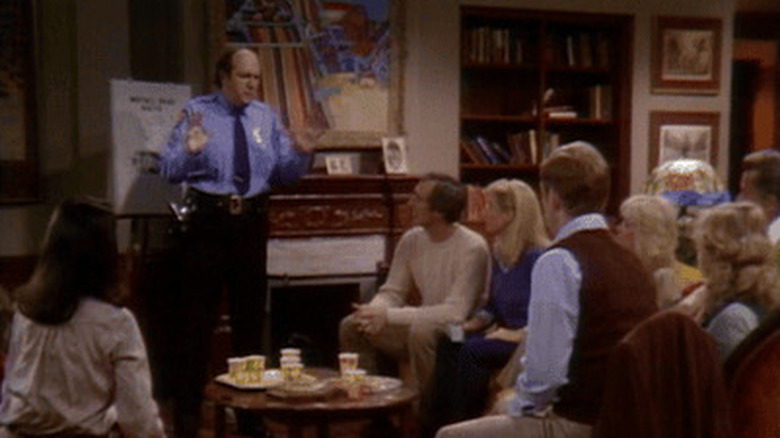
One of the best things about "Family Ties" is that it constantly challenges the values of its characters. Its premise of grown-up flower children raising a little Republican and capitalist creates no shortage of awkward and comical situations for Steven and Elyse to navigate. "Have Gun, Will Unravel" is one of the many episodes that forces the ex-hippies to rethink what they believe in. After their house is burglarized, they question whether or not they should buy a gun. When they do, Steven is afraid to even touch it.
"Have Gun, Will Unravel" faces the gun debate, which has become a hot topic in the over forty years since the show originally aired. Is the right to bear arms a fundamental right? Does owning a gun offer protection, or create new dangers? Is violence ever the answer, even in self-defense? These are some of the important questions the episode asks. What makes "Have Gun, Will Unravel" so interesting to revisit today is how something that begins as a simple question in the Keaton household, whether buying a gun might make the family safer, could now ignite a much larger political debate.
3. Give Your Uncle Arthur a Kiss (Season 1, Episode 6)
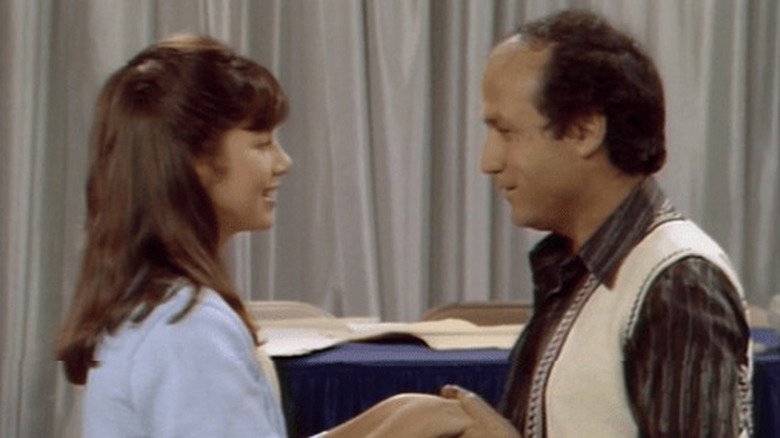
"Give Your Uncle Arthur a Kiss" addresses one of the most fundamental truths of being a woman, especially a young woman: You will be objectified by a man in some form or another. A longtime family friend, Uncle Arthur, visits the Keaton family. He seems fascinated with Mallory, in awe that she is 15 and has grown into such a beauty.
Their innocent hug turns into something much more uncomfortable when he touches her bottom. When Mallory approaches her brother Alex for some help, he just blames it on the era's "ambiguous sexual roles" and says the interaction was probably harmless: "He used to bathe you when you were a baby." "I think he wants his old job back," Mallory retorts. It's dark, but funny, touching on something that is very important when it comes to women and sexual assault: Most men have a limited understanding of consent and sexual boundaries.
The episode reveals another uncomfortable truth: When it comes to sexual harassment, it is often perpetrated by someone you're close to, even a family member, and typically someone much older. This type of storyline sadly remains prevalent in our post-#MeToo world.
If you or anyone you know has been a victim of sexual assault, help is available. Visit the Rape, Abuse & Incest National Network website or contact RAINN's National Helpline at 1-800-656-HOPE (4673).
2. Say Uncle (Season 2, Episode 14)
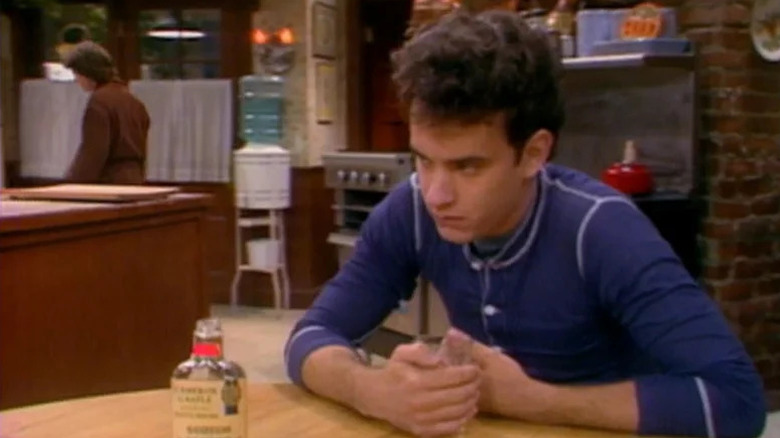
Before he was a two-time Oscar winner and one of America's sweethearts, Tom Hanks popped up on "Family Ties" as Elyse's troubled brother, Uncle Ned. Hanks' "Family Ties" appearance is short but memorable, beginning with the Season 1 two-parter "The Fugitive: Part 1" and "Part 2." Ned's life is falling apart after embezzling money from his company, which was going to fire thousands of employees.
By the second season, we see him again in a "Very Special Episode," frustrated by the fallout of those actions. The episode, "Say Uncle," warns of the dangers of alcoholism, and one of its saddest moments comes when Ned literally can't stop himself from rifling through the pantry, looking for absolutely anything to satisfy his alcohol cravings. He finds and downs a tiny bottle of vanilla extract.
Hanks, being the dramatic powerhouse that we've come to know him as, really elevates the episode and makes Ned's spiral feel devastating and authentic. Hanks brings so much desperation to Ned that you can see how badly he wants to stop, even as he can't seem to — to the point that he even lays his hands on his own nephew. It's a lesson that during difficult times, even when our lives have blown up and everything feels like it's broken, turning to alcohol will only make it worse and pull us even further down.
If you or anyone you know needs help with addiction issues, help is available. Visit the Substance Abuse and Mental Health Services Administration website or contact SAMHSA's National Helpline at 1-800-662-HELP (4357).
1. A, My Name Is Alex (Season 5, Episodes 23–24)
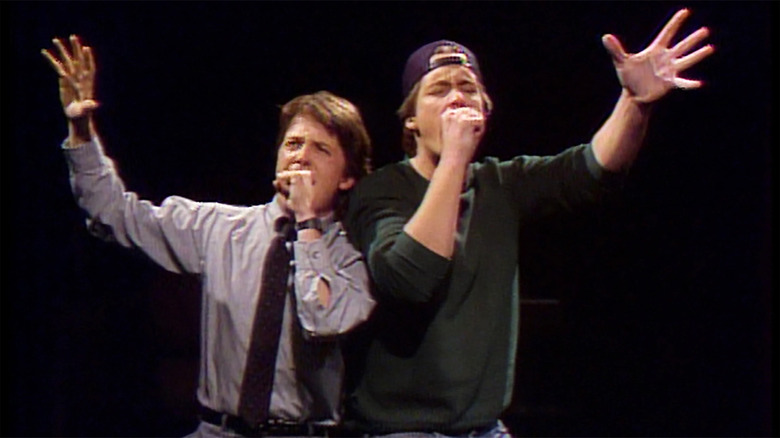
"A, My Name Is Alex" is one of the most renowned episodes of "Family Ties." It's more than just your average special episode with a moral lesson, but one that experimented with the entire form of sitcom writing and directing. The episode won two Primetime Emmy Awards, one to series writer Alan Uger and series creator Gary David Goldberg for outstanding writing in a comedy series, and another for outstanding technical direction. Michael J. Fox won the second of his three back-to-back Emmys for outstanding lead actor in a comedy series.
It's some of Fox's best acting to date, a chance for him to flex his dramatic chops while still having Alex's snarky charisma. It's something his current role on "Shrinking" is also letting him show off. Having Alex go to therapy is out of character, signaling just how much he is struggling to cope after his childhood best friend, Greg, dies in a car accident. The staging of the episode is unique, set in a black box theatre like a production of "Our Town." The visual device creates an eerie distance between the reality of Alex's life and the memories as he takes stock of his choices, treatment of others, and his own mortality.
In addition to its unique staging, Parade reports that the episode pushed the boundaries of what sitcoms typically aired on television, with an hour-long runtime and a commercial-free second half that made it feel even more like a play. "A, My Name Is Alex" isn't about drugs, drinking, or any other pressing social problems. It's about the randomness of a car accident, which serves as a poignant reminder to young viewers that death is still possible. It reminds them to be careful while living life to the fullest, and that is one of the most important lessons of all.