

5 Best Twilight Zone Episodes From The '80s Revival, Ranked
Television revivals can be hit-or-miss. Recreating a show's feel while updating it for the current time period is a tricky dimension. Still, it's one that the 1985-89 revival of "The Twilight Zone" daringly stepped into, giving the fans great moments. Rod Serling's original anthology aired from 1959 to 1964 on CBS, and the network purchased the rights to the show from him after it ended. CBS later decided to resurrect it, bringing on sci-fi writer Harlan Ellison as a creative consultant in the mid '80s.
The result was a three-season anthology that used the creative talents of directors and writers like George R. R. Martin and Wes Craven. Sadly, the revival was not as popular as the original series. But with the combined efforts of many talented writers across three seasons, there are plenty of episodes to enjoy — and the first two seasons had some particularly stellar stories. Here are five of the best episodes that stood out during the series' four-year run.
5. Shelter Skelter (Season 2, Episode 9)
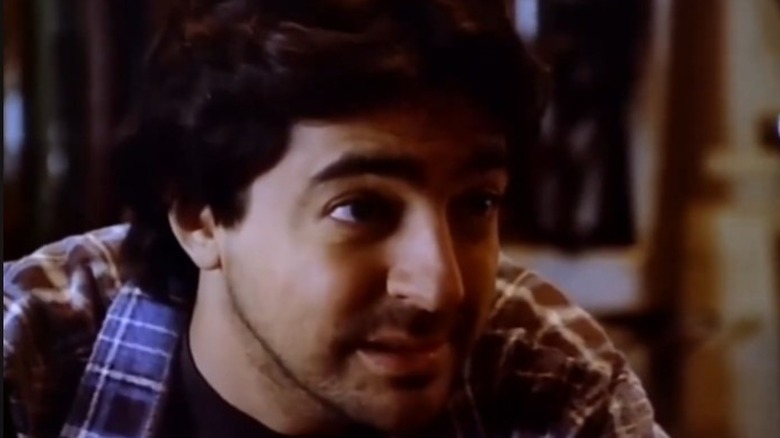
Unstable characters helped make "The Twilight Zone" great. While the series was known for showcasing supernatural and sci-fi elements, it also explored humanity and the madness of ordinary people. This is the case for season two's "Shelter Skelter."
Harry Dobbs (Joe Mantegna) is a paranoid gun shop owner with a fallout shelter in his basement. One night, while his family visits relatives, his employee Nick Gatlin (Jon Gries) comes to his house with store receipts, and the two have a few beers. After watching a news broadcast about a "red alert," a nuclear blast goes off, and the two men lock themselves in the shelter as the house is incinerated. As weeks go by, tensions rise between them.
Mantegna — known for playing the not-as-paranoid Rossi on "Criminal Minds" (who was actually named after a real person) — does some top-notch acting here. He effortlessly portrays a sleazy and fanatical hothead who feels validated after he's forced to live the life he's spent years preparing for. Gatlin is devastated by their situation, while Dobbs continues to exercise and clean his guns, indifferent to Gatlin's emotional collapse.
4. Shatterday (Season 1, Episode 1)
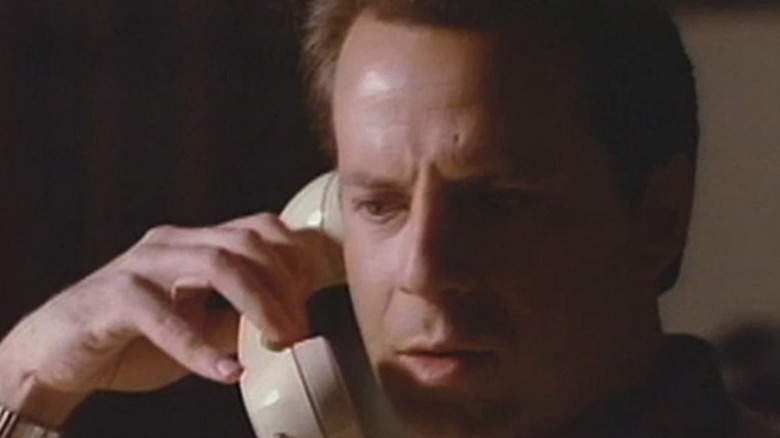
Many episodes in "The Twilight Zone" were thought-provoking, and viewers could often reflect upon existential themes in the stories. "Shatterday," the revival's inaugural episode, features someone in the ultimate existential crisis. Peter Novins (Bruce Willis) is sitting in a crowded bar waiting for his date. While trying to call her, he accidentally dials his own apartment phone and hears himself answer it. What follows is a battle of wits as they argue over who the true Novins should be.
Willis, who was already familiar on TV thanks to "Moonlighting," shines in this episode. He essentially talks to himself for most of it, but he impressively makes each Novins into a separate character and argues with himself as if he's arguing with his own conscience. While the Novins who initially dials is selfish and nervous, the one who answered the phone is empathetic and calm, and the latter frequently confronts the former over his past manipulations.
3. Profile in Silver (Season 1, Episode 20)
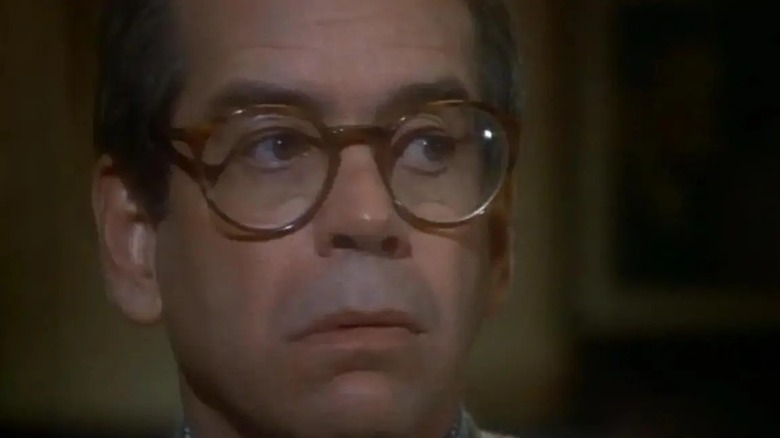
One of the biggest sci-fi topics "The Twilight Zone" explored was time travel. Stepping into the past, altering the present, or glimpsing into the future allows for some interesting stories. And that's the premise season one's "Profile in Silver" focuses on.
Joseph Fitzgerald (Lane Smith) is a time-travelling historian who's been tasked with recording the assassination of John F. Kennedy (Andrew Robinson). He dreads his mission, primarily because the president is his ancestor. When he finds himself at the scene of Kennedy's motorcade, Fitzgerald yells for him to take cover, and the shots miss. This drastic change in history leads to immediate global consequences.
While the plot fits a standard time travel formula, it is executed brilliantly. The result feels like a mini sci-fi thriller film. It also plays with time travel tropes, such as predeterminism, without being predictable. And the cosmic ending keeps with the show's tradition of twists.
2. Toys of Caliban (Season 2, Episode 5)
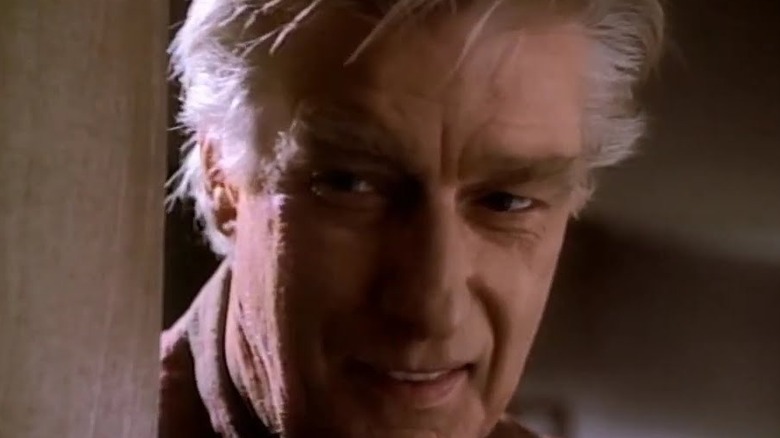
Many episodes of "The Twilight Zone" share the same elements, and their familiarity brings a certain comfort to audiences. As surprising as the twists are, one of the episodes, written by George R.R. Martin, had an ending that was more like a tragedy. Season two's "Toys of Caliban" centers on the Ross family — Ernie (Richard Mulligan), his wife Mary (Anne Haney), and their son Toby (David Greenlee). Toby, who is mentally disabled, has the power to conjure things from images. His parents keep him inside, limiting his exposure to pictures. Things get messy after they discover Toby no longer needs to see an image of something to manifest it.
While the episode's depiction of mental disabilities — and its use of outdated terms — is problematic, "Toys of Caliban" stands out as a gut-wrenching story. The Rosses clearly love their son, but are fearful of his inability to use his power safely. At one point, Ernie recounts the horrific results of Toby conjuring a puppy he saw on television. It ends with a powerful display of what parents will do to both protect their child from the world and to protect the world from their child.
1. To See the Invisible Man (Season 1, Episode 16)
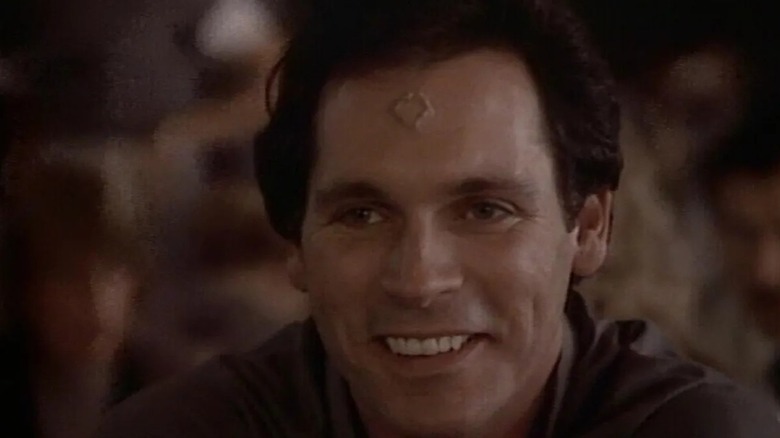
While "The Twilight Zone" was not a horror anthology in the traditional sense, it carried dystopian themes that were often terrifying on their own. Season one's "To See the Invisible Man" does exactly that. Mitchell Chaplin (Cotter Smith) is an emotionally distant man found guilty of "coldness" who gets sentenced to one year of invisibility. He receives a distinctive surgical scar on his forehead that signifies his invisibility, and no one can acknowledge him without being sentenced to the same punishment. Even those who already have the scar must ignore others with it. Initially indifferent, Chaplin falls into a depression from the isolation and stigma.
"To See the Invisible Man" paints a daunting picture of the deprivation of basic human acknowledgment. Chaplin's consequences are not only psychological, but also physical. He's not even allowed medical attention after being hit by a car. Some of the best elements of "The Twilight Zone" are displayed here: dystopian societies, philosophical themes, and subtle terror. The ending, while not the traditional twist that marks many episodes, is powerful and hopeful.