

Chuck Lorre's First Sitcom Is A Forgotten Show That's Impossible To Watch Today
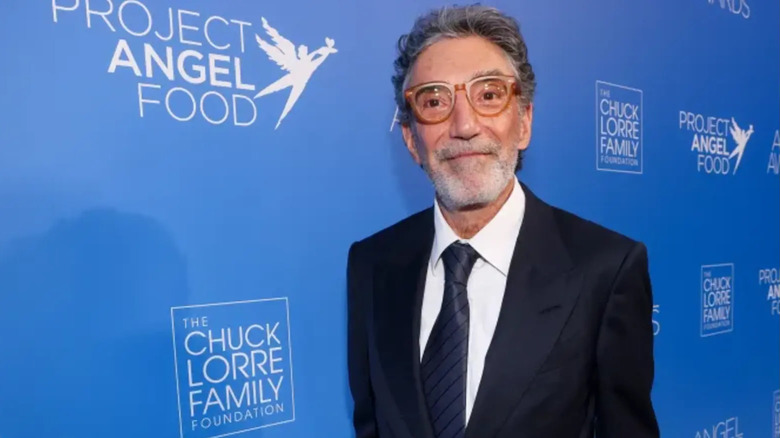
Before he was the "King of Sitcoms" (per Reuters) behind the television juggernauts "The Big Bang Theory" and "Two and a Half Men," one of Chuck Lorre's first jobs — besides working on several kids' cartoons you didn't know Lorre worked on — was as a staff writer for "Roseanne." According to The New Yorker, his work impressed the producers enough to earn him the opportunity to create his own show: "Frannie's Turn." It premiered on September 13, 1992, and was canceled just five short weeks later. Not only was the sitcom short-lived, but it has also become impossible to watch today.
Given its brief run, the show has never received a DVD or Blu-ray release, and you won't find it on any streaming services or legitimate (or even illegitimate) digital platforms. The only footage on YouTube is some CBS promos.
"Frannie's Turn" is about, as Lorre says, "a fifty-year-old middle-class woman coming into her own" (via The New Yorker). Similar to "Roseanne" or "Mama's Family," it focuses on a matriarch with a chaotic home life trying to keep it all together. Miriam Margolyes stars as Frannie Escobar, a Staten Island seamstress who clashes with her old-fashioned and misogynistic Cuban-American husband, played by Tomás Milián, while she balances her deadbeat son (Stivi Paskoski), strong-willed daughter (Phoebe Augustine), and, of course, a zany mother-in-law (Alice Drummond).
Themes like female independence, generational and cultural differences, marital tension, and family dysfunction were meant to unfold over the course of the show. But CBS never gave it much of a chance, and it disappeared soon after it arrived. Of course, this was only a mere setback in what would become Chuck Lorre's storied career.
Only two episodes' plots survive
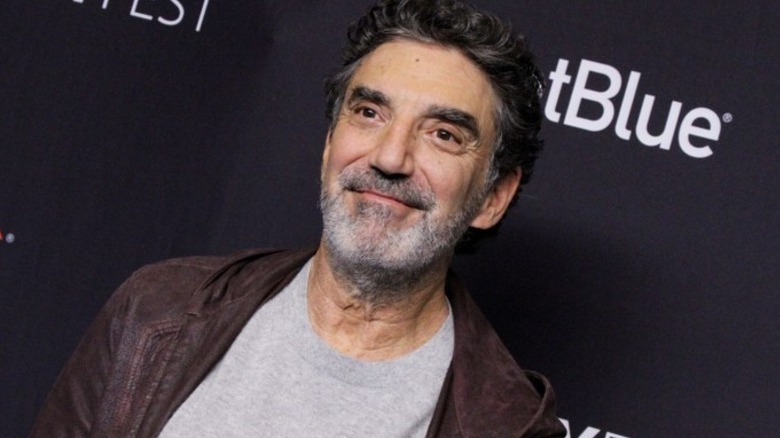
If you're trying to find anything else about "Frannie's Turn," it will be incredibly difficult. Only a few of the plot summaries are available on IMDb. "Sex and Saints," episode three, was about how "Rosa claims to have encountered St. Monica, and though Frannie and Joseph dismiss her, they are unable to rule out divine intervention to improve their less-than-heavenly love life," while "Frannie and the Kitchen Sink," episode six, featured a much more mundane domestic dispute: "Frannie and Joseph fight over a leaky kitchen sink."
For the rest of the episodes, "The Pilot," "Money Talks," "Olivia Walks," "How Do You Say Death in Spanish?," and "Gentlemen, Wrap Your Guava," we will just have to dream up our own plots and guess what might have happened.
Frannie herself, actor Miriam Margolyes, believed that "Frannie's Turn" had so much more to give. She protested the cancellation of "Frannie's Turn," asking CBS to announce the cancellation because "it deserved some fanfare" (via the Los Angeles Times). She still felt that the cast and crew never got the proper chance to develop the show and showcase their talents, believing that "it's much too early" to cancel it and that "Every show gets better as you get into the swing of it" (via the Los Angeles Times).
"Frannie's Turn" might not have become a hit, but its near-total disappearance makes it a fascinating curiosity in Chuck Lorre's resume. While it definitely ranks among his Lorre's worst shows, "Frannie's Turn" remains a minor misfire lost to time in a career that would go on to make him one of the most prolific sitcom creators of all time.