

5 Kids' Cartoons You Didn't Know The Big Bang Theory Showrunner Chuck Lorre Worked On

Chuck Lorre is best known as the creator of "Two and a Half Men" and "The Big Bang Theory," but before he became the king of sitcoms, he wrote for cartoons. When Lorre first set out for Hollywood, he wanted to become a songwriter. He played bar gigs during the late-'70s, but it wasn't panning out. In an interview with the Television Academy, he recalled being insulted when somebody told him he should consider comedy writing instead of music. "I said, 'I'm a musician, man! What are you talking about?' I'll never forget that moment, because it really angered me. I wasn't a comedy writer. I was a musician!"
Lorre certainly has some musical talent (as evidenced by the last entry on this list), but the person who inadvertently angered him by suggesting that he change direction was right: he's a natural comedy writer. His career in this field started in the '80s when he wrote for various cartoons, though he quickly fell out of love with the job because a lot of them existed purely to sell toys. There's no denying that a lot of cartoons back then were basically long commercials, but some of the ones Lorre worked on were actually pretty good.
From forgotten video game adaptations to iconic, generation-defining shows, here are five of the most notable cartoons that Chuck Lorre wrote for.
Heathcliff and the Catillac Cats
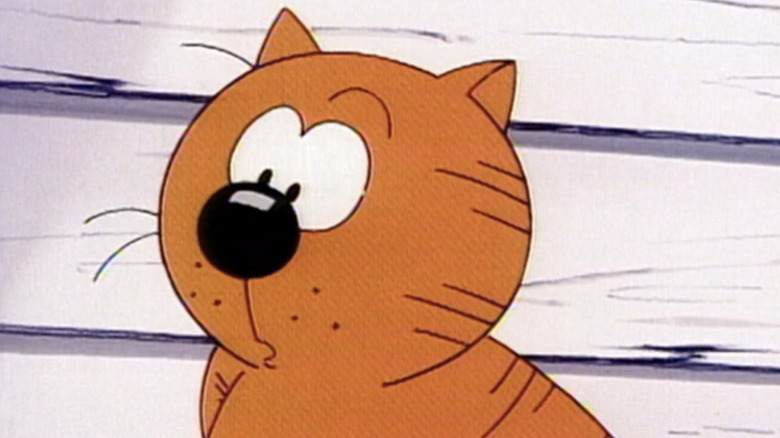
Chuck Lorre first came to DIC Entertainment, the production company behind cartoons like "Heathcliff and the Catillac Cats," as a door-to-door FM radio salesman. He sold them some radios, but that wasn't all. After buying a book about screenwriting and learning how to format a script, Lorre sold them his first TV script, an episode of "Heathcliff" called "An Officer and an Alley Cat," which had the titular orange feline sent to military school to learn discipline. He kept selling them scripts and before long DIC decided it would be cheaper to hire him than pay him as a freelancer.
During an interview with the Television Academy, Lorre revealed that it was only three or four months before he was bumped up to story editor. "I have no idea what I'm doing," Lorre recalled. "There was always a low level of anxiety because I'm completely faking it and trying to pretend that I know what I'm doing." Lorre certainly faked it until he made it. "Heathcliff and the Catillac Cats," an adaptation of the old comic strip that boasted Mel Blanc voicing the title character, premiered in September 1984 and ran for two seasons. Lorre is credited on all 86 episodes.
Pole Position

At the same time as Chuck Lorre was cranking out Heathcliff scripts, he also worked on another cartoon created by DIC, the same production studio. Lorre wrote for "Pole Position," a very loose adaptation of the Namco arcade game of the same name. The video game, which became the most successful arcade release in North America in 1983, was a pretty straightforward Formula One racing simulator. The series was far more wacky.
Premiering on CBS in September 1984, the "Pole Position" cartoon followed the Darret siblings, two young adults and a kid sister whose stunt car driver parents had been killed in a suspicious accident. When the Darrets weren't racing, they were fighting crime with the help of their high-tech, computerized cars, which could talk and had all sorts of sci-fi gadgets. They also had a genetically engineered monkey-raccoon hybrid pet named Kuma. We told you it was wacky.
"Pole Position" only ran for a single 13-episode season. It's not one of the better cartoon shows that Lorre worked on, and it's certainly not one of the best TV shows based on video games, but it's still remembered fondly by those who watched it at the time, especially for its catchy theme tune. "It's a banger," one Reddit user said, with another adding, "It's been stuck in my head for 40+ years."
Muppet Babies
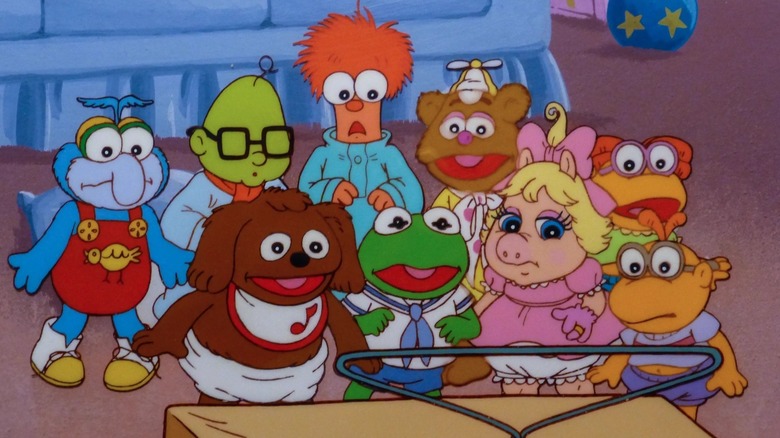
A few years after he worked on "Pole Position," Chuck Lorre was drafted in to write an episode of "Jim Henson's Muppet Babies," which ran from 1984 to 1991 on CBS. Lorre penned the Season 2 finale, "When You Wish Upon a Muppet." In an interview with the Television Academy, he recalled meeting Jim Henson when he and some other writers got flown out to New York City. After getting some criticism from Marvel, the animation studio behind the cartoon, Henson defended Lorre and the other writers.
"Well, they're pretty stupid and you wrote them pretty stupid, so I guess that's pretty good," Lorre recalled Henson saying. It made an impression. "For a guy who had mastered his craft, he had no ego in the game. He wasn't trying to impose his ego on the work. It was just the work. If it's funny, it's funny." As memorable as that moment was for him, in other interviews, Lorre looked back on the experience a bit less fondly, revealing that he had to write as many as 14 drafts before his script for "When You Wish Upon a Muppet" was deemed acceptable.
Defenders of the Earth
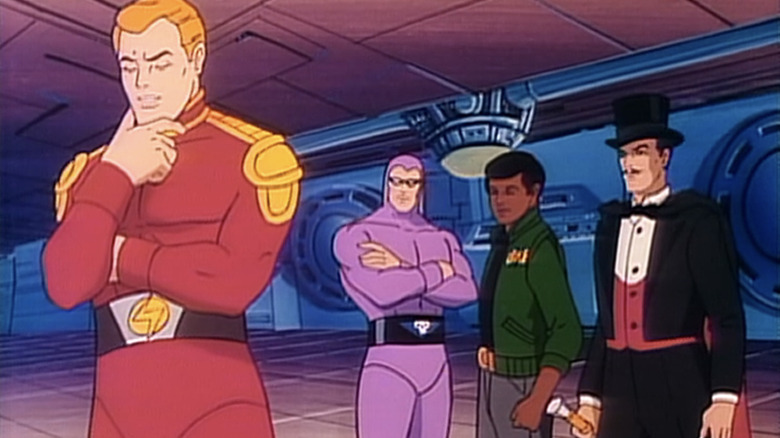
Despite the frustrating experience he had on "Jim Henson's Muppet Babies," Chuck Lorre worked with Marvel again for a comic book crossover cartoon series called "Defenders of the Earth." This was not the same Defenders that featured in a series of Marvel TV shows on Netflix. "Defenders of the Earth," which ran in syndication at the end of 1986, brought together three classic comic strip characters: Sci-fi adventurer Flash Gordon, pulp superhero the Phantom, and Mandrake the Magician. The three joined forces against Flash's archenemy Ming the Merciless.
"Defenders of the Earth" ran for 65 episodes but was largely regarded as not being an especially successful series, with lackluster animation and a tendency to rip off other, more popular science fiction franchises like Star Trek and Star Wars. Lorre is credited with writing four episodes for the first and only season. Of course, superhero media would go on to play a big part in Lorre's hit show "The Big Bang Theory," just as it does in the spin-off "Stuart Fails to Save the Universe," which follows the owner of the comic book store that Sheldon Cooper and his friends would often visit.
Teenage Mutant Ninja Turtles
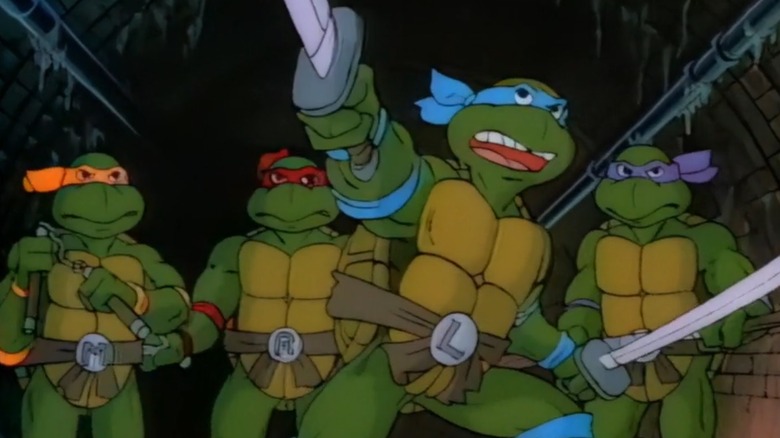
Chuck Lorre didn't pen any episodes of the successful cartoon "Teenage Mutant Ninja Turtles," which premiered in 1987 and ran for ten seasons, but he wrote something that was arguably more important than any storyline: the show's iconic theme tune. It was a way for him to scratch the songwriting itch that he'd had since entering showbiz. "Whenever there was an opportunity to write music as opposed to just scriptwriting, I jumped at it. I lobbied for it, I annoyed the producers, I begged, I pleaded," Lorre told the Television Academy.
The opportunity to write the theme for "Teenage Mutant Ninja Turtles" came late. Originally, the rock band The Turtles had been offered the gig, but, in Lorre's recollection, they didn't follow through. Lorre had just 48 hours to put a theme song together. He recorded a demo at a Los Angeles studio very early in the morning, because the midnight to 8AM slot was the cheapest to book. Singer James Mandell did the lead vocals, but Lorre's voice can be heard during the spoken parts of the theme. The result was one of the best ever theme songs from an animated show.