

'70s TV Shows That Redefined What Sitcoms Could Be
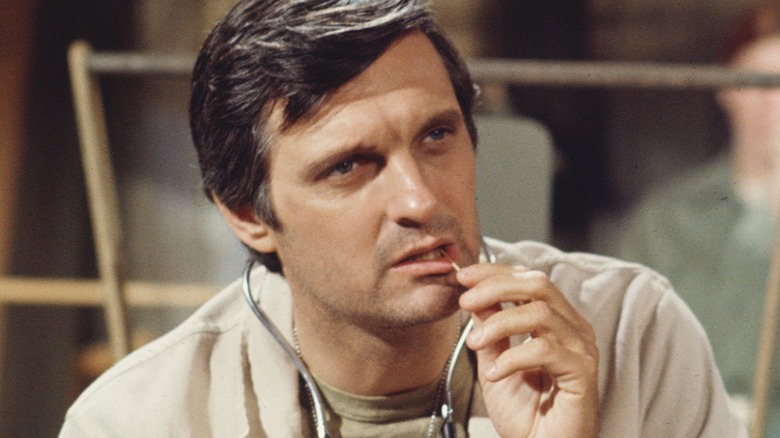
The 1970s was a tumultuous decade, with societal discourse dominated by topics like the Vietnam War, oil inflation, and civil rights. It makes sense, then, that audiences would turn to the witty, humorous worlds of sitcoms. But not every sitcom was pure escapism — some of them used comedy to explore the turbulent and controversial topics of the era, rather than shy away from them.
Despite sitcoms accounting for some of the best TV shows of the 1970s, they'd existed for a long time before then. Yet the decade saw a shift from the 1960s' wholesome, escapist portrayals of domestic life to something much bolder and edgier. For both television and the world at large, this was a transformative time.
From showcasing strong, independent women to examining the brutal realities of war, these sitcoms delivered poignant and powerful — but still funny — views on the issues of the day. Here are five shows from the 1970s that redefined what a sitcom could be.
All in the Family
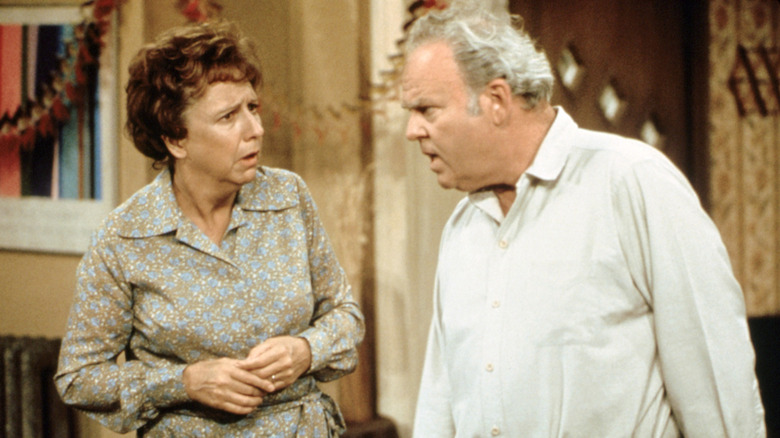
At a time when a flushing toilet could make television history, "All in the Family" stood out for changing the landscape of sitcoms. The series centered on the Bunker family, headed by crass patriarch Archie Bunker (Carroll O'Connor). His wife, Edith (Jean Stapleton), is an eternal, and somewhat naive, optimist, and their left-leaning daughter Gloria (Sally Struthers) is married to bearded liberal Michael Stivic (Rob Reiner).
This sitcom was one of the first to take an unapologetic look at serious, real-life events of the era, and it did so via the jokes themselves. Many of the running gags involve Archie's frequent political clashes with Michael, whom he often calls "meathead." He also constantly bickers with his Black neighbor George Jefferson (Sherman Hemsley). Archie's perpetual bigotry was used to lampoon some of the common prejudices of the time.
In one episode, Michael invites his friend, David (Renny Temple), a Vietnam draft dodger, to the Bunkers' for Christmas dinner. Archie, a conservative WWII veteran, is outraged by David. In a surprising turn of events, though, Archie's visiting friend, Pinky (Eugene Roche), whose son died in Vietnam, sympathizes with him, providing a surprisingly nuanced angle on one of the most contentious topics of the day.
The Mary Tyler Moore Show
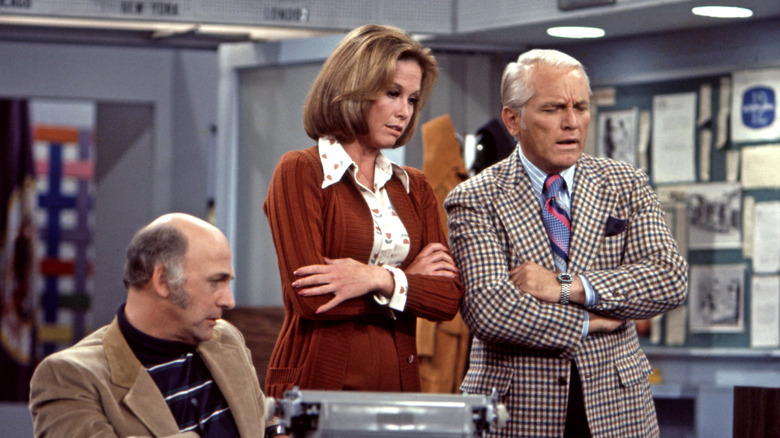
The 1970s saw the high point of second-wave feminism, while female independence in general was beginning to become part of the status quo. And one of the most prominent television shows to portray this shift in the gender imbalance was "The Mary Tyler Moore Show."
Airing on CBS from 1970 to 1977, the series starred Mary Tyler Moore as Mary Richards, the associate producer of a Minneapolis news program. Unmarried and without children, Mary's central focus is her career, and her independence is supported by her single neighbor, Rhoda Morgenstern (Valerie Harper).
The show was a smash hit. As a sitcom, it proved that a female character does not need to depend on a male character to make viewers laugh. While the cast included plenty of funny men — including Ed Asner, who won three Emmy awards for his portrayal of Lou Grant – the humor certainly didn't rely on gender dynamics, and each character stood out in their own right. Not only that, but "The Mary Tyler Moore Show" also explored and normalized controversial topics such as divorce and contraception.
M*A*S*H
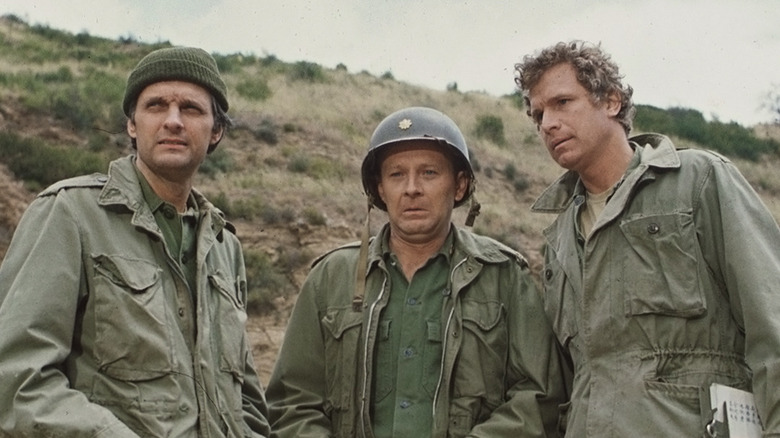
As well as managing to stretch the three-year Korean War into 11 seasons of TV, "M*A*S*H" also managed to successfully balance sitcom hijinks with the horrors of war.
This iconic CBS series, set in Uijeongbu during the Korean War, centered on the doctors and soldiers of the 4077th Mobile Army Surgical Hospital. The show landed a monumental achievement in balancing the tragedies of the conflict with so much warmth and humor: In one instance, Hawkeye (Alan Alda) breaks down after failing to save his childhood friend during surgery; in another, Corporal Klinger (Jamie Farr) wears a dress in a hilarious attempt to get a Section 8 discharge.
At the time of the show's 1972 premiere, the U.S. was still actively fighting in the Vietnam War. It wasn't until March 1973 that the last of the American troops were pulled from the conflict; at that point, the show had just concluded its first season. No surprise, then, that the show resonated across the nation, with the trauma of Vietnam still very much on audiences' minds.
Good Times
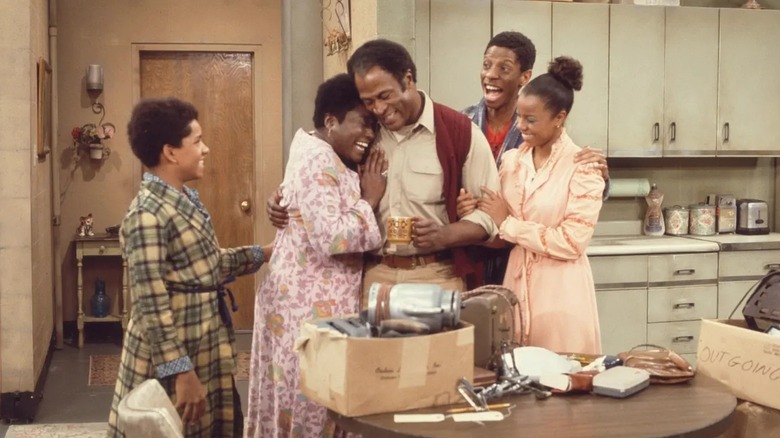
In addition to having one of the best TV theme songs of all time, "Good Times" was also one of the first to depict a Black, working class family living in a public housing project.
"Good Times" follows Florida (Esther Rolle) and Henry (John Amos), who live in Chicago with their children, J.J (Jimmie Walker), Thelma (Bern Nadette Stanis), and Michael (Ralph Carter). Throughout the series, the family navigates poverty and employment issues prevalent in Black communities, all the while maintaining a comedic overtone. Characterization was a major source of the laughs, such as the banter regarding characters like "Weeping" Wanda Williams (Helen Martin) and superintendent Nathan "Booger" Bookman (Johnny Brown).
One of the darker issues tackled during the show's course was child abuse. One subplot involves the Evans' independent neighbor, Willona Woods (Ja'Net Dubois), adopting a local girl named Penny Gordon (Janet Jackson) after she's abandoned by her abusive mother, Linella (Chip Fields).
Maude
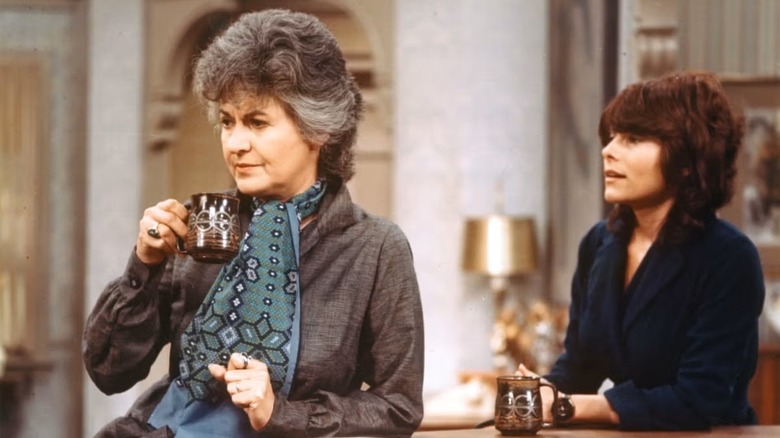
A spin-off of "All in the Family," "Maude" starred Bea Arthur as the titular Maude Findlay, a thrice-divorced liberal woman living with her fourth husband, Walter (Bill Macy), in New York. The sitcom is often identified as one of the most political of the decade. Maude is fiercely outspoken about her political beliefs, and much of the show's humor comes from the constant conflict that results with the people around her.
Like "The Mary Tyler Moore Show," this show centers on an independent woman. But what helped set it apart was the fact that Maude was still independent even as a wife; notably, she was also older than Mary Richards. She was much more outspoken in her beliefs, too, even running for New York Senator in Season 4.
The show's biggest achievement, though, might be that it was the first sitcom to tackle the topic of abortion. In the Season 1 two-part episode "Maude's Dilemma," Maude becomes pregnant at age 47. After contemplation, and having discussed it with Walter and their adult daughter, Carol (Adrienne Barbeau), she decides to terminate the pregnancy — a decision, and a plotline, that was practically unheard of in the world of sitcoms before this.