

10 Major Stars Who Appeared On Gilligan's Island
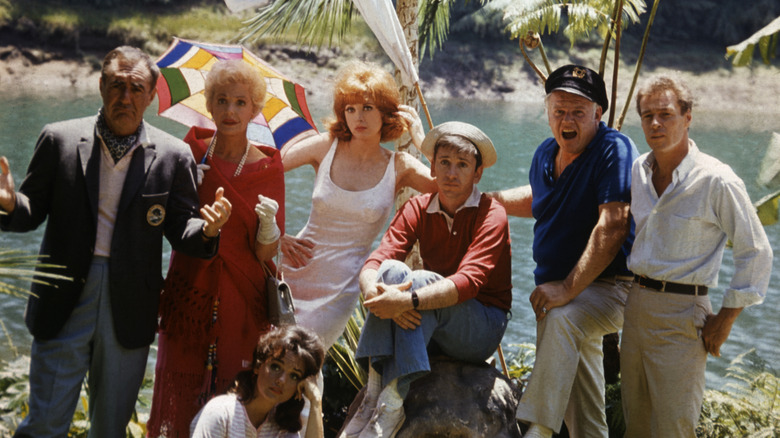
For such an isolated place, "Gilligan's Island" sure saw a lot of guest stars. Of course, that was the joke (along with the nigh-unlimited supplies) and central conceit of the iconic TV show.
The castaways – Jim Backus as Mr. Howell, Natalie Schafer as Mrs. Howell, Dawn Wells as Mary Ann, Tina Louise as Ginger, Bob Denver as Gilligan, Alan Hale Jr. as The Skipper, and Russell Johnson as The Professor — couldn't get rescued. Yet, virtually everyone under the sun could somehow happen upon their island, successfully leave, and somehow botch any attempt to convey a message to anyone who might matter. Many of the guests were, or are, quite familiar; some were huge stars at the time, and others became so later. Despite running only three seasons, and three subsequent TV movies, "Gilligan's Island" was a cultural phenomenon — it even spun off two animated shows — one whose theme song you can probably hear in your head as you read this.
So sit right back, and we'll tell you a tale of the biggest stars to cross Gilligan's path. Note that in Hollywood terms, guest-star billing is considered an "appearance" even if your physical body does not actually appear, so some of these names manifested as mighty voices only.
Vincent Schiavelli
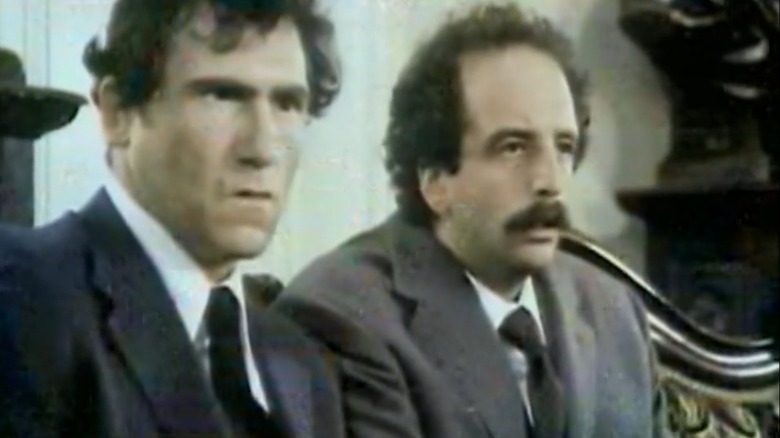
A character actor discovered by Milos Forman for his 1971 film "Taking Off," Vincent Schiavelli appeared in "One Flew Over the Cuckoo's Nest" in 1975 before the 1978 TV movie "Rescue From Gilligan's Island." As the castaways finally leave the island, Russian-ish spies Ivan (Art LaFleur, above left) and Dimitri (Schiavelli, above right) realize the group is in possession of a top-secret data disc that has fallen from a spy satellite. Inevitably, even the oblivious Gilligan unwittingly outmaneuvers them before the FBI steps in.
Schiavelli has an instantly recognizable face due to the genetic condition Marfan syndrome, which among other side effects makes people tall and thin, and gave him distinctive bags under his eyes. He is perhaps best known as the Subway Ghost in the movie "Ghost," who teaches Patrick Swayze's Sam how to manipulate matter from the spirit realm. Other notable credits include "The Crow," "Batman Returns," "Fast Times at Ridgemont High," and many more Forman films including "Amadeus," "The People vs. Larry Flynt," and "Man on the Moon." He died of lung cancer in 2005 at the age of 57.
June Foray
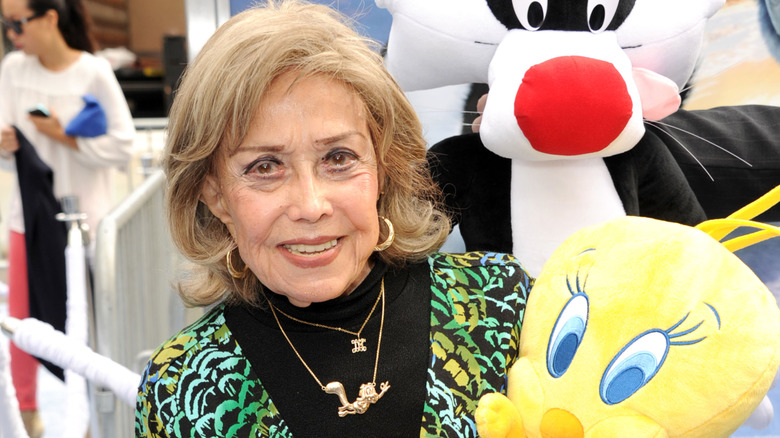
June Foray is perhaps the greatest female voice actor of all time. In a career that lasted from the 1940s to the 2010s, she voiced such classic animated characters as Rocky (of "Rocky and Bullwinkle"), Cindy Lou Who, Natasha Fatale, Lucifer the cat in Disney's "Cinderella," Magica De Spell from "Ducktales," Betty Rubble, Raggedy Ann, "Twilight Zone" doll Talky Tina, and many, many more. Living until just shy of her 100th birthday, she began in the age of radio, and remained active in the era of video games.
On "Gilligan's Island," her character — an Amelia Earhart-like aviatrix named Alice McNeil — is only ever heard on the radio as a voice. As she circumnavigates the world, the Skipper and Professor try to communicate with her, but she ends up talking to Gilligan instead. Alas, when Gilligan tries to prove it was really her, he ends up breaking the transmitter. Yet even as a voice briefly on the radio, Foray felt like a full-on guest star, and was billed as one, too.
"Gilligan's Island" came between "Twilight Zone" episodes for Foray — after Talky Tina, she also looped some of the dialogue in the show's final episode, "The Bewitchin' Pool." Two years later, "Dr. Seuss' How the Grinch Stole Christmas!" would ensure her being heard on TV sets every holiday season since.
Sterling Holloway
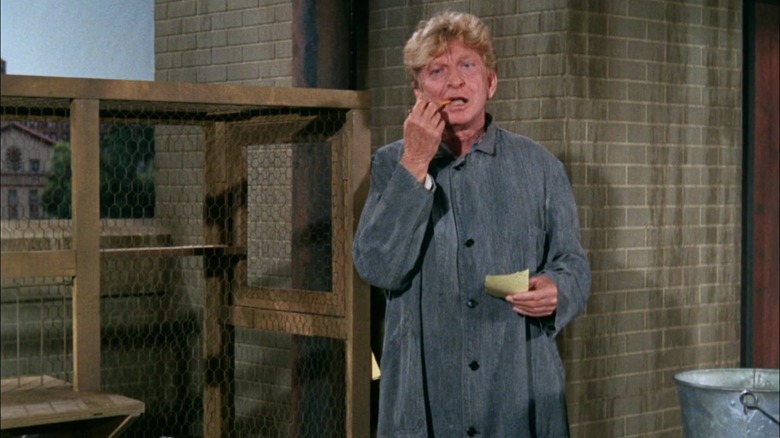
Sterling Holloway's best-known roles were in the voiceover field, originating Disney's voices for Winnie the Pooh and Kaa, among others. Jim Cummings, known for those roles today, is ultimately doing an impersonation of Holloway. Yet Holloway appeared on camera regularly as well, in feature films like "The Merry Widow" and "Meet John Doe," and live-action TV shows like "The Life of Riley" and "Adventures of Superman." "Gilligan's Island" came during a stretch in the '60s when he was a frequent TV guest star, on programs varying from "The Andy Griffith Show" to "Daktari."
His "Gilligan" episode, "The Pigeon," is a riff on "Birdman of Alcatraz," which had been a hit movie starring Burt Lancaster five years prior. The castaways discover a homing pigeon, and begin exchanging messages with its owner, who is unbeknownst to them a prisoner in Los Angeles. They try to communicate their situation, but before they can, the convict (portrayed by Holloway), named "Birdy," is paroled, and Gilligan forgets to send a final message via pigeon anyway.
Right about the time the episode aired, Holloway's career as Winnie the Pooh started really taking off, with a series of three much-loved animated shorts. In 1991, he became the first voice actor to achieve the Disney Legend award. He died a year later from cardiac arrest.
Mel Blanc
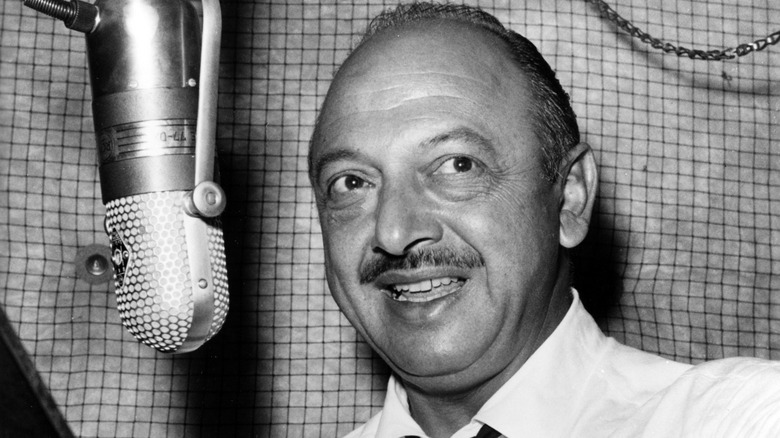
Even in the unlikely event you are reading this and don't know Mel Blanc's name, you know his voices. He originated almost every major Looney Tunes character, and even two of the big ones he didn't — Porky Pig and Elmer Fudd — he took over. He lent his voice to Tom and Jerry, Woody Woodpecker, Barney Rubble, Captain Caveman, Secret Squirrel, and Heathcliff the cat. In live-action, he voiced Buck Rogers' robot pal Twiki. On "Gilligan's Island," he voiced several animals, sometimes credited — most notably Sam the parrot. Ironically, Blanc never did any voices for the actual animated Gilligan spin-off shows from Filmation.
Blanc did at least five episodes, but his most notable was "New Neighbor Sam," in which the voices of gangsters turn out to all be coming from the eponymous bird, who leads the castaways to a treasure stash... not that it does them much good in their situation.
Blanc continued to voice multiple characters for Warner Bros. and Hanna-Barbera, and a few for Disney, until his death in 1989.
Hans Conried
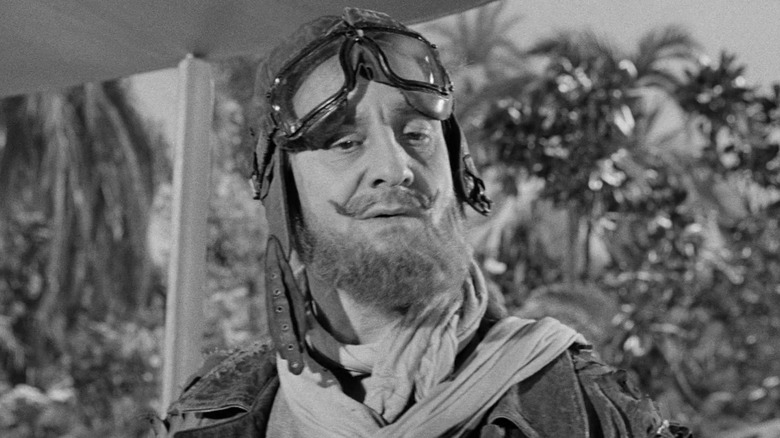
Hans Conried famously voiced both Disney's Captain Hook and Jay Ward's villain Snidely Whiplash; in live-action, he's the titular villain in the Dr. Seuss-scripted cult hit "The 5,000 Fingers of Dr. T." Though the film flopped upon release, it's better-liked today, and the relationship with Seuss continued through multiple animated specials. His first lead film role was in 1953's 'The Twonky," about a sentient killer TV set. Throughout the '60s, he did many TV guest spots, including "Gilligan."
As incompetent World War I aviator Wrongway Feldman, Conried appeared in two episodes. In the first, he is discovered living on the island, secretly sabotaging his own plane because he's afraid to try flying away, though by the end, he does. In his second episode, he returns to the island after becoming dissatisfied with civilization and wanting peace and quiet. When the castaways finally persuade him to leave again, hoping he'll get help, he instead gets lost again, and finds another island on which to settle.
Post-"Gilligan," Conried continued to land high-profile animation roles like Thorin in the Rankin-Bass "The Hobbit" and Chameleon in "Spider-Man and His Amazing Friends." In live-action, he frequently scored Disney roles in movies like "The Shaggy D.A." and "The Cat From Outer Space." His final role was in the animated "Miss Switch to the Rescue," and he died in 1982.
Phil Silvers
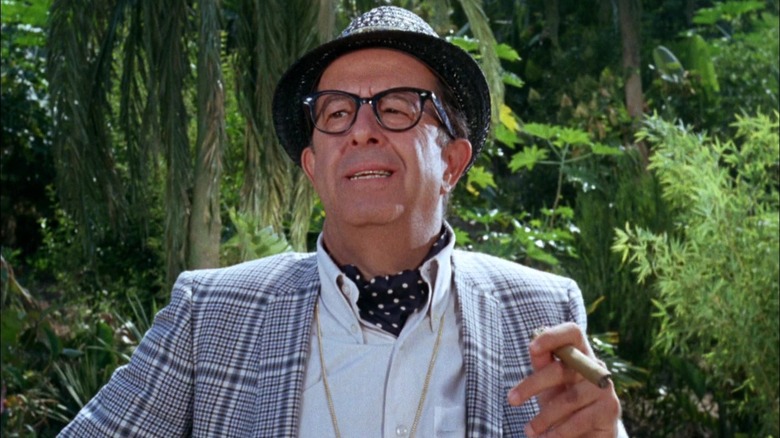
Phil Silvers became best known for "The Phil Silvers Show," a sitcom originally titled "You'll Never Get Rich" and later simply renamed "Bilko" in reruns (after Silvers' character, Master Sergeant Ernest Bilko, who would rather indulge in get-rich-quick schemes than do his actual military work). The popular TV show led to movie work in the '60s like "It's a Mad, Mad, Mad, Mad World" and "A Funny Thing Happened on the Way to the Forum." Silvers had originally turned down the lead role in the latter when it was a Broadway production, but agreed to play a secondary role in the film version. He would have been a household name by the time he encountered Gilligan & Co. in 1966.
In Season 3's "The Producer," Silvers plays an eccentric Hollywood producer named Harold Hecuba who washes ashore and promptly starts bossing everyone around. To try to impress him with Ginger's acting talent, the gang puts on their version of a "Hamlet" musical. Hecuba first insists on playing all the roles himself, then sneaks off the island with the intent to steal the play and pass it off as his own.
Ironically, in 1972, Silvers finally accepted the lead role in a Broadway revival of "A Funny Thing Happened on the Way to the Forum." He became the first person to win a Tony Award for Lead Actor in a Musical Revival.
Zsa Zsa Gabor
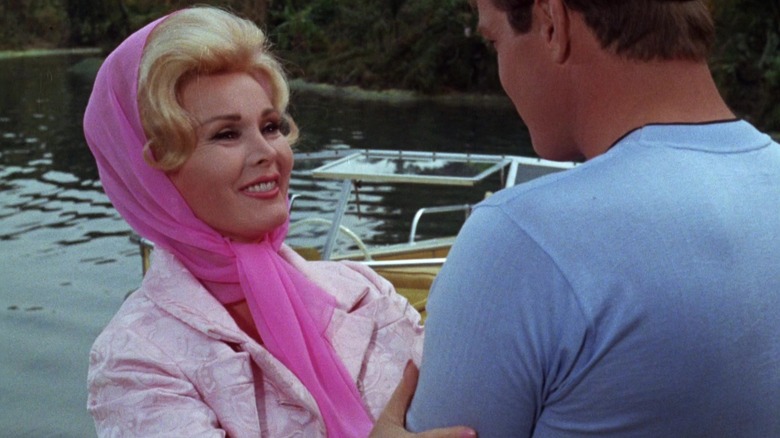
Zsa Zsa Gabor's path to "Gilligan's Island" may well have been prompted by her sister Eva Gabor, who had just begun to star on another CBS sitcom, "Green Acres." A socialite and an actress, Zsa Zsa began her path to fame as second runner-up in the 1933 Miss Hungary pageant, and went from there to a stage career in Europe. She moved to the U.S. during World War II and appeared in several movies, most notably "Moulin Rouge" (1952). Famous as much for her multiple marriages and public extravagance as for her acting, she managed to find success doing serious work in "Touch of Evil" and as a regular talk show personality.
The character of Lady Erika Tiffany Smith on "Gilligan's Island" wasn't much of a stretch, with Zsa Zsa playing a wealthy Hungarian socialite looking to build a tropical resort. She falls for the Professor, but he's only interested in talking math to her. After a storm takes her away from the island again on her yacht, her notes prove unhelpful to any rescue attempts, as they've been translated into English from Hungarian without latitude or longitude numbers.
Zsa Zsa continued to live in the public eye for decades, gaining new notoriety in 1989 for slapping a police officer during a traffic stop. She lost a leg to infection in 2011, and died in 2016 at the age of 99 while planning to move back to Hungary.
Don Rickles
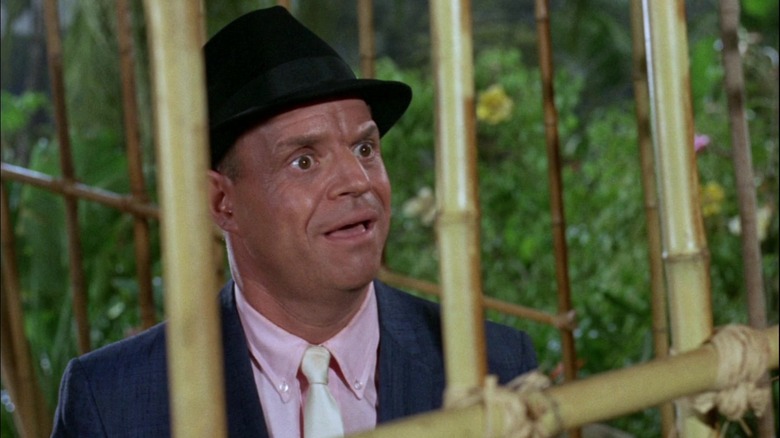
While younger audiences may remember Don Rickles best as the grumpy yet lovable voice of Mr. Potato Head in the "Toy Story" movies, he was the king of insult comedy and roasts in his heyday. Ergo, it makes sense he'd play a villain on "Gilligan's Island": an apparent kidnapper who turns out to be a con man named Norbert Wiley. Ginger thinks she can reform him, but inevitably that turns out to be a bluff, and he escapes.
In actuality, the reverse was true of Rickles — rather than a thief pretending to be nice, to his friends he was a nice guy who only performed as a jerk, one of the few who could get away with insulting pal Frank Sinatra to his face, in public.
Sinatra liked Rickles so much, he helped him become a Las Vegas headliner. Rickles transitioned into movies and sitcom guest spots like "Gilligan's Island" in the '60s. Johnny Carson had him as a regular guest on "The Tonight Show," and by the '70s and '80s, he was frequently appearing on celebrity roasts and specials. Though he continued to act, he remained best known for his insult comic persona, and he still toured in that capacity up until his death in 2017.
Kurt Russell
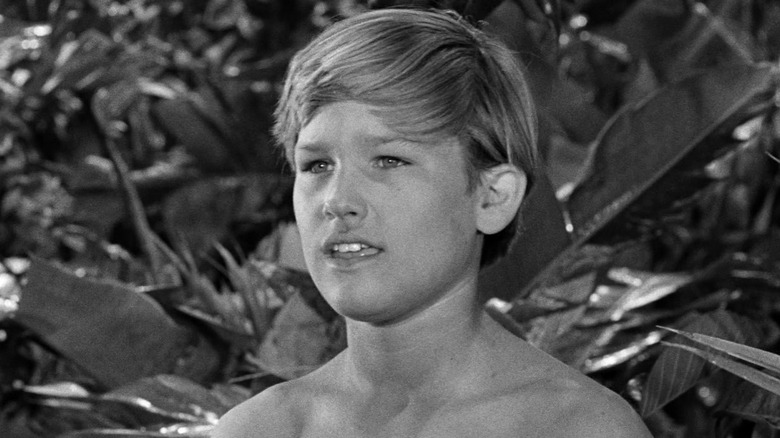
In 1965, Kurt Russell wasn't yet a huge star, nor was he a complete rookie, either. Having made his big-screen debut in a scene with Elvis Presley in "It Happened at the World's Fair," the then-13-year-old had already been on several ABC shows, including "Our Man Higgins" and "The Fugitive," before landing the role of Jungle Boy on "Gilligan's Island." The following year, he would sign a decade-long contract with Disney, which would lead to movies like "Guns in the Heather" and "The Computer Wore Tennis Shoes." In 1968, while still a teen, he'd make "The One and Only, Genuine, Original Family Band," also featuring a newcomer named Goldie Hawn. It took a while, but in 1983 they began a relationship that has lasted to the present day.
Russell, who may be the biggest star on the list nowadays, is known for heroic and comedic roles, and "Gilligan Meets Jungle Boy" showcases his skills in that area, as he plays a sort of junior Tarzan who can only speak in repetition. How he got on the island, or made a leopard-skin loincloth, is just one of many high concepts we take for granted. Eventually, though, he escapes the island using a hot air balloon for which the other castaways are too heavy. He makes it safely to civilization; however, since the only speech he is capable of is repeating words he has just heard, he can't tell anyone about the wacky bunch of characters who helped him.
Martin Landau and Barbara Bain
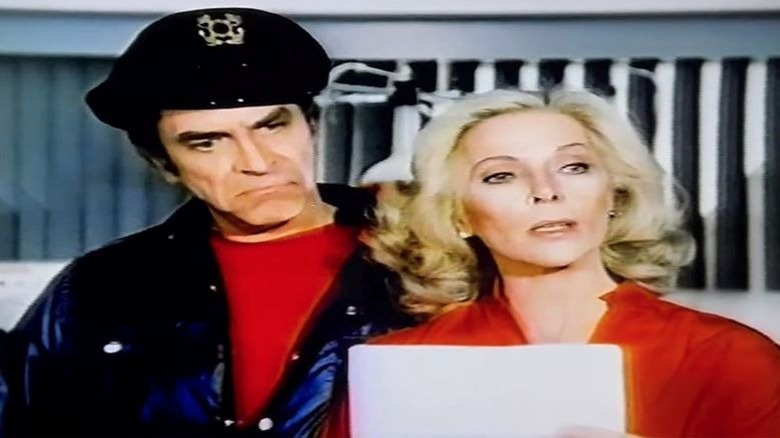
Husband and wife team Martin Landau and Barbara Bain often appeared on TV together, as cast members of both "Mission: Impossible" and "Space 1999." So it only seems fair to put them on this list as a partnership in their villain roles from the final "Gilligan's Island" TV movie, 1981's "The Harlem Globetrotters on Gilligan's Island."
Landau plays J.J. Pierson, arch-nemesis in the business arena of Thurston Howell III. With the island now a resort owned by the castaways, Pierson tries to swindle them out of it when he discovers an energy-rich ore called Supremium. Through deceit, and the help of his sexy scientist Olga (Bain), he gets most of the group to sign his contract, but there's a catch: The deal can be overturned if the Harlem Globetrotters can defeat Pierson's team of robot players. Since this is TV and not real life, the robot players are in fact better than humans. Well, most humans. The Globetrotters, who end up with the very non-Harlem Gilligan and Skipper on the team as substitute players, use their signature trick plays to throw off the calculations of their opponents.
Pierson and Olga's greed naturally catches up with them. The Supremium they steal during the game, and escape with on their boat, is highly unstable and blows up the yacht, leaving the duo broke, broke, broke. As for the actors, Bain and Landau would divorce in 1993. In 1995, Landau won the Oscar for Best Supporting Actor, playing Bela Lugosi in "Ed Wood."