

10 Sci-Fi Shows Every Star Trek Fan Needs To Watch
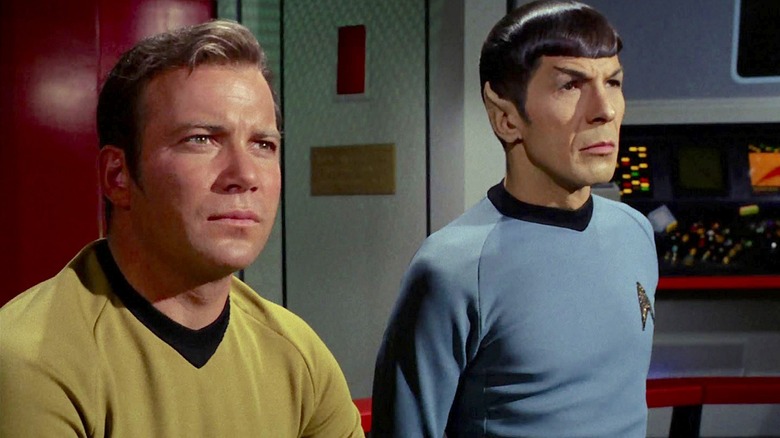
While sci-fi shows had existed before the "Star Trek" franchise, the original "Trek" series from the '60s left an indelible mark on the genre that's only endured for decades. But even as "Star Trek" sees a resurgence on Paramount+, there are still plenty of other sci-fi shows worth a fan's time. The genre has flourished on television in the wake of "Star Trek: The Original Series" and continues to thrive.
Whether a viewer wants to follow a tight-knit crew cruising the cosmos or learn about some heavy interstellar politics, there are countless "Star Trek"-adjacent series. Sometimes played for laughs and sometimes deadly serious, these shows have their own legacies with dedicated fans. Audiences looking for something like "Star Trek" are in luck because there is no shortage of spiritually similar projects to the iconic franchise. Here are 10 sci-fi shows that every "Star Trek" fan needs to watch to keep those genre thrills coming.
1. Red Dwarf
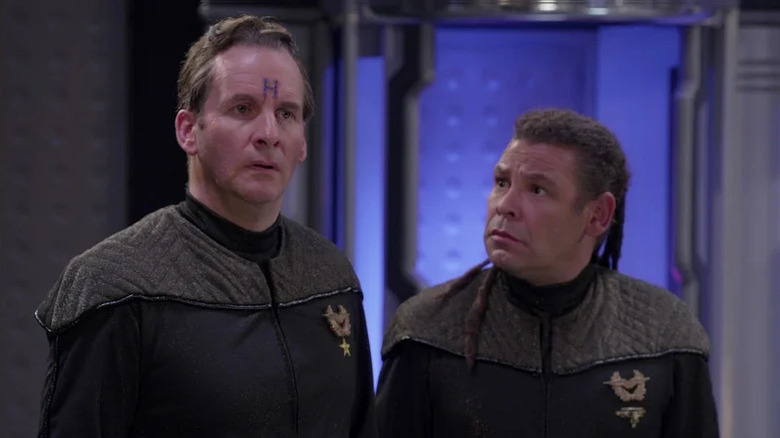
One of the longest-running sci-fi comedies ever is "Red Dwarf," a British spoof on the genre which started in 1988. The series follows unassuming technician Dave Lister (Craig Charles), who is kept in suspended animation for three million years on the spaceship the Red Dwarf. Lister awakens as the last known surviving human in the universe, joined by a holographic program of his bunkmate Arnold Judas Rimmer (Chris Barrie). The duo are accompanied by Cat (Danny John-Jules), a humanoid who evolved from the ship's cat and the ship's senile computer program Holly.
"Red Dwarf" has all the campy trappings of a sci-fi show like "Star Trek," although the comedy is intentional this time. This is a sitcom first and foremost, with the genre elements providing inventive ways to keep the gags rolling in. The show has intermittently resurfaced over the years, featuring new adventures for Lister and his companions on the Red Dwarf as they cruise the cosmos.
2. Babylon 5
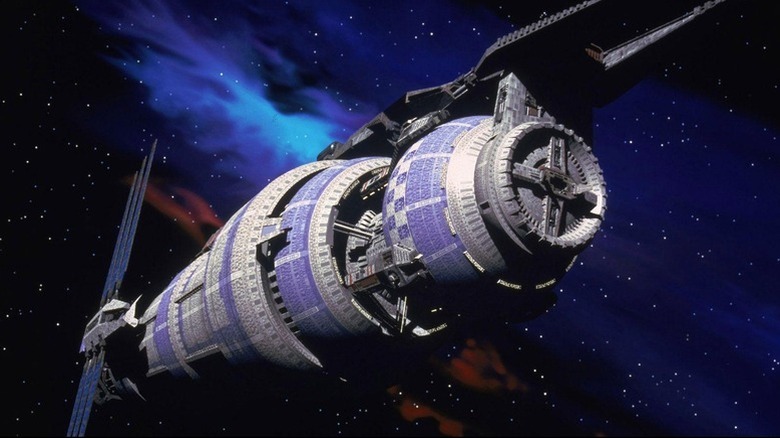
A show for "Star Trek: Deep Space Nine" fans in particular, "Babylon 5" (which debuted in 1993) is a story also centered on a strategically important space station. The series is set in the 22nd century, with humanity barely surviving a harrowing war against the technologically superior Minbari civilization. As Earth's government regresses into a more totalitarian and isolationist society, hostile towards alien life, the personnel on Babylon 5 chafe against the change in policy. This comes as war erupts around the station between other races before the military leaders move to restore democracy on Earth.
"Babylon 5" is a very maturely told sci-fi epic, built from the ground-up with a depth in world-building and scale that few other genre properties can match. This is matched by a steady escalation as the main characters play an increasingly important role in the unfolding conflicts throughout the universe. "Babylon 5" creator J. Michael Straczynski was developing a reboot for The CW before the project was shopped to other parties, but any continuation would have to meet the ambitious scope set by the original series.
3. Stargate SG-1
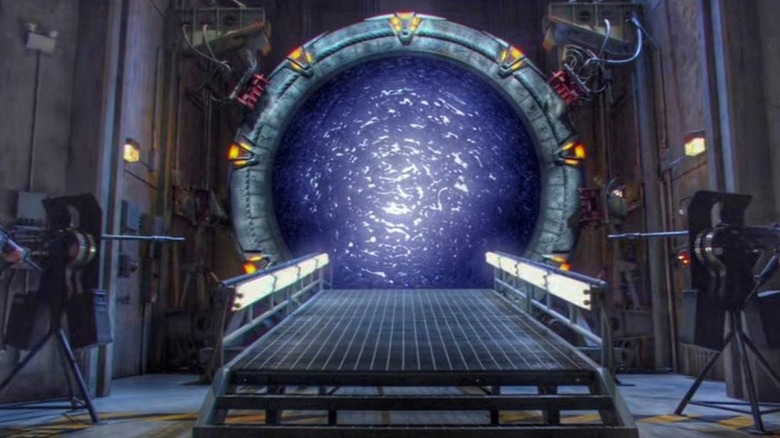
After the successful release of 1994's "Stargate," the movie received a line of television spin-offs, starting with 1997's "Stargate SG-1." The show expands on the movie's concept of an ancient extraterrestrial portal on Earth providing gateways to other planets. The American military forms Stargate Command to explore the universe through a portal in its possession in a subterranean base, gathering allies and defending against enemies. The SG teams also learn that, using these portals, Earth's mythology and early religions were shaped by visitors from other worlds throughout the planet's history.
Really, quite a few "Stargate" shows could make this list, with the spin-off "Stargate Atlantis" being another fan favorite. For the sake of variety, we're sticking with the show that started it all and ran the longest, producing an impressive 10 seasons. Another "Stargate" TV show is currently in the works at Amazon, underscoring the longevity of this sci-fi franchise. For a crew-focused, exploration-oriented sci-fi show like many "Star Trek" series, "Stargate SG-1" provides the otherworldly thrills.
4. Farscape
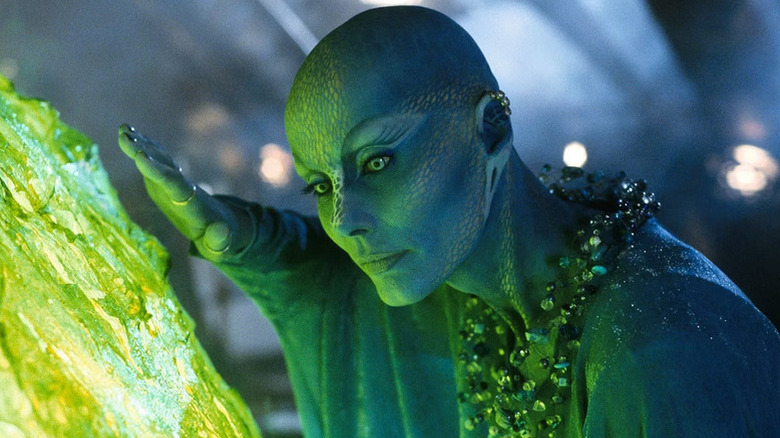
As the "Star Trek" resurgence started to slow down in the late '90s, "Farscape" was among the shows to fill the void. The show follows astronaut John Crichton (Ben Browder), who accidentally is transported to the other side of the cosmos through a wormhole. Crichton is picked up by the Moya, a living spaceship on the run from the Peacekeepers, a private military corporation that are hired to brutally maintain order on several worlds. Crichton leads an eclectic crew, initially searching for a way home before becoming embroiled in various interstellar conflicts that require his expertise.
The definition of a cult classic, "Farscape" weaved its own wacky sci-fi universe, full of creative extraterrestrial species and galactic dynamics. Initially an episodic series, the show steadily built its own mythology that led to more ambitious sci-fi storytelling taking advantage of its character arcs and narrative developments. Browder and co-star Claudia Black grounded the proceedings, while the creature effects were vibrantly brought to life by The Jim Henson Company as a colorful counterpoint. An enduring favorite, "Farscape" is a TV show that fans want back, exploring its quirky sci-fi tropes and inventive world-building.
5. Firefly
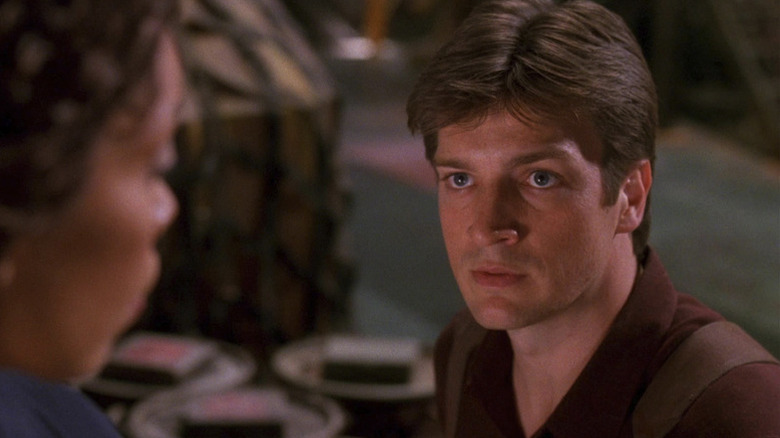
Consistently named among sci-fi TV shows that were cancelled way too soon, 2002's "Firefly" only ran for a single season, though it did receive a continuation movie with 2005's "Serenity." The show stars Nathan Fillion as Mal Reynolds, the captain of a small freighter taking jobs on loosely maintained colonies on the fringes of human-settled space. This often involves the crew's mercenary skills putting to use defending others or pulling off daring heists on backwater planets. Mal and his crew have to evade the dictatorial Alliance and other deadly enemies around the cosmos as they try to make a hardscrabble living.
With "Firefly," Joss Whedon essentially created a space Western, complete with saloons and isolated, working-class small towns. The action reflects these genre influences too, going as far as including a train heist in the series' second episode. This makes for a fun set of 14 episodes easily binged over the course of weekend, reliving the adventures of Mal and his memorable crew. Though Whedon has since been accused of creating a "toxic" work environment on his shows, the overall quality of "Firefly" endures beyond his challenged reputation.
6. Battlestar Galactica (2004)
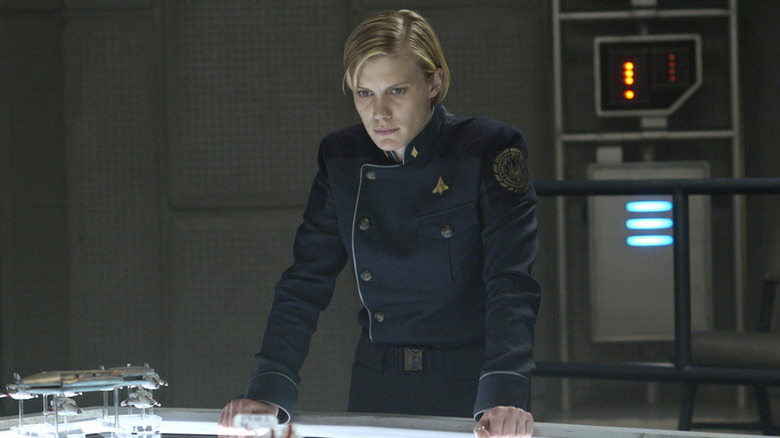
After helping galvanize "Star Trek" in television and film throughout the '90s, screenwriter and producer Ronald D. Moore revitalized a different sci-fi property: "Battlestar Galactica." A new take on the '70s series, the 2004 reboot opens with humanity standing on the brink of annihilation after enduring a devastating surprise attack by the Cylons, a rogue cybernetic race that they created.
The aging military vessel, the Battlestar Galactica, leads a flotilla of civilian ships to establish a new home on Earth. Across this prolonged interstellar voyage, the Cylons continue their pursuit, determined to eradicate humanity completely even as they experience their own internal conflicts.
Moore took "Battlestar Galactica" and turned it from a campy "Star Wars" pastiche into a story firmly within the accolades of prestige television. This modernized version reflected war fueled by ideological fundamentalism and post-Cold War paranoia, particularly with Cylons taking on biological forms. But for all the wartime intensity, Moore never loses sight of the story's core characters, especially as they grow closer together through their arduous journey. And with a new "Battlestar Galactica" reboot no longer in development at Peacock and the prequel series "Caprica" canceled way too soon, the 2004 series remains the franchise's best show.
7. Dark Matter (2015)

Not to be confused with the Apple TV series "Dark Matter" which premiered in 2024, 2015's "Dark Matter" goes in a very different direction with its sci-fi. The Syfy and Space series follows a group of strangers who emerge from stasis on a traveling spaceship known as the Raza. Initially suffering from amnesia, the ensemble learns that they're actually spacefaring mercenaries, some of whom are notorious criminals in their own right. Faced with this knowledge, the characters debate if they should seek redemption for their dark histories or embrace their past identities.
"Dark Matter" is a twisted subversion of the typical spacefaring crew archetype that "Star Trek" popularized decades ago. This premise informs a lot of the narrative, with complicated and contentious moments from the characters' past coming back to haunt them as they regain their memories. The series ran for three seasons before concluding in 2017, leaving behind a passionate fan base genuinely invested in its main characters' complex quest for atonement.
8. The Expanse
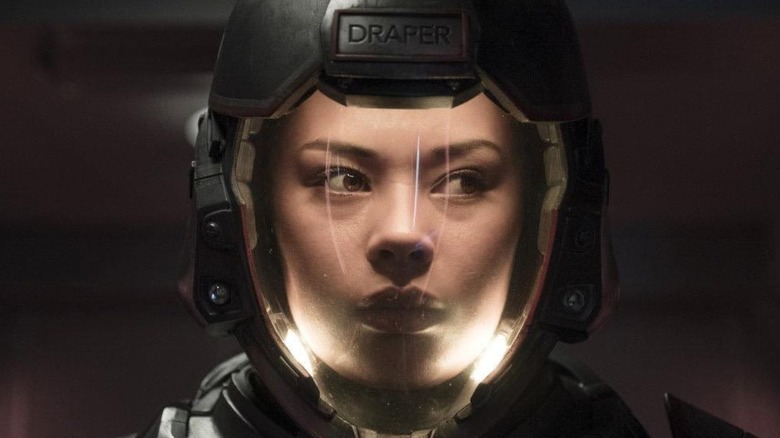
The sci-fi novel series written by James S.A. Corey received a thrilling television adaptation with "The Expanse," which ran for six seasons from 2015 to 2022. The series is set in a future where humanity has colonized the solar system, though tension exists between the governments on Earth, Mars, and colonies in the system's asteroid belt.
As the story progresses, this explodes into an all-out war, with a small freighter captained by James Holden (Steven Strait) and Naomi Nagata (Dominique Tipper) caught in the middle. Amid the conflict, evidence of extraterrestrial life, including rings allowing transportation beyond the solar system, add new dimensions to humanity's ongoing struggle.
Originally airing on Syfy, "The Expanse" was rescued by Prime Video, which renewed it for three additional seasons. This allowed a satisfying story to unfold, escalating in scope as it detailed its interplanetary conflict with an accompanying sense of mystery. As with the literary source material, the show has a bleaker look at humanity exploring the cosmos than "Star Trek," but its tight-knit spacefaring crew brings a similar perspective. Boasting the talents of Naren Shankar, a former writer for "Star Trek" shows in the '90s, "The Expanse" definitely evokes narrative sensibilities in line with "Deep Space Nine."
9. The Orville
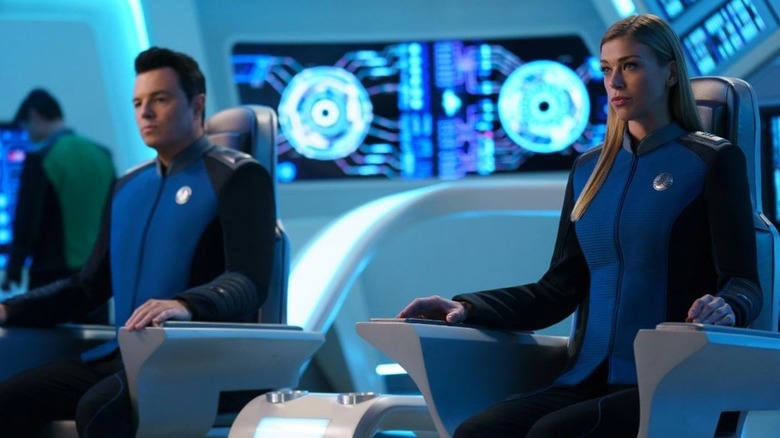
While Seth MacFarlane may be best known for his animated comedies, including two of the longest-running shows on American TV, he also created the live-action sci-fi show "The Orville." A clear homage to the early "Star Trek" series, MacFarlane stars as Ed Mercer, the commander of a mid-level exploratory vessel for the Planetary Union, an interstellar alliance. Ed's first officer is his ex-wife Kelly Grayson (Adrianne Palicki), while the ship's helmsman is his best friend Gordon Malloy (Scott Grimes). Joined by the rest of their quirky crew, the ship explores and investigates the new frontiers across the cosmos, with their own wonders and perils.
Like "Star Trek: The Next Generation," "The Orville" is a show that improves significantly as it progresses across its three-season run. After the first season's tendency to focus on lazy gags, the following seasons really lean into the emotional development of its main characters without sacrificing laughs. MacFarlane's love of "Star Trek" is at the forefront of the series, subverting and alluding to classic moments in the franchise's history. As fans hold out for updates from MacFarlane on a possible Season 4, the three seasons that currently exist are among the writer's best work in any medium.
10. For All Mankind
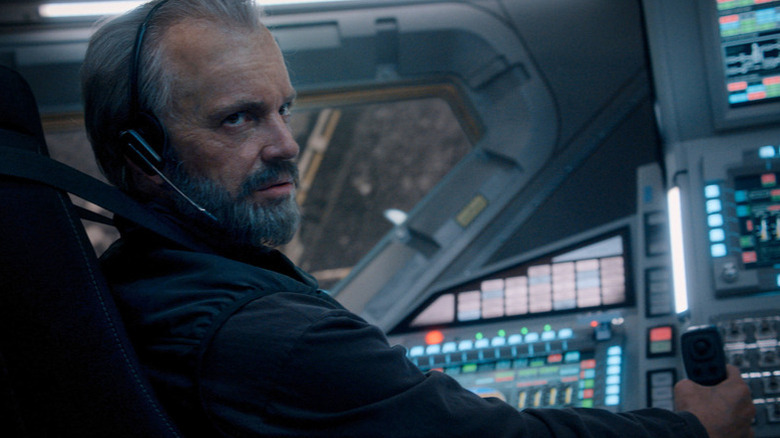
Ronald D. Moore teamed up with co-creators Matt Wolpert and Ben Nedivi for the alternate history sci-fi show "For All Mankind." In this version of the Space Race, the Soviet Union beats the United States to successfully land a man on the Moon in 1969. This leads to a prolonged Space Race for decades, as well as the continued existence of the Soviet Union, through to the early 21st century. With political tensions remixed to fit this altered timeline, humanity takes steps to set up facilities on the Moon and Mars as it continues looking to the stars.
"For All Mankind" was among the first wave of Apple TV original series when the streaming service launched in 2019 and is one of its longest-running to date (along with "The Morning Show"). This distinction is well-deserved because it provides an engrossing look at what humanity's place in the solar system could've been if the Space Race continued. But beyond the spectacle, the show is a character-driven drama spanning decades, with an increasingly generational aspect to the story. "For All Mankind" has been a solid, grounded sci-fi series, with a spin-off series, "Star City," also ordered by Apple TV, expanding its alternative history scope.