

Why Vecna Is So Afraid Of The Cave In Stranger Things Season 5
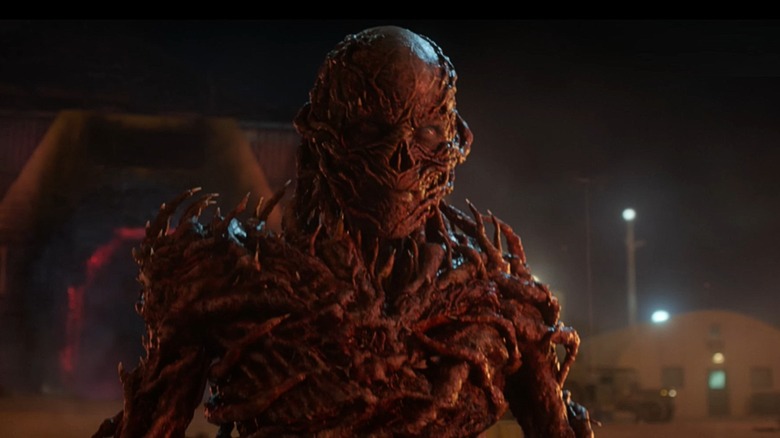
In the first four episodes of "Stranger Things" Season 5, Jamie Campbell Bower's Vecna, aka Henry Creel, traps Holly Wheeler (Nell Fisher) and Max Mayfield (Sadie Sink) in a psychic realm made up of his own memories. The two captives find refuge in a cave where, it seems, Vecna won't or can't follow them. Max and Holly don't know why this cave is apparently Vecna-proof, but theatergoing fans might have an idea.
In the stage play "Stranger Things: The First Shadow" — a canonical prequal to the Netflix series — Henry explored these caves during his childhood in the Nevada desert. One such spelunking expedition ended in tragedy — experimental military tech left behind by a fleeing Soviet spy transported young Vecna to Dimension X for 12 excruciating hours. Upon his return to the normal world, Henry was changed forever — the experience permanently altered his personality and his blood.
As of this writing, "Stranger Things: The First Shadow" is running in London's West End and on Broadway.
How The First Shadow impacts Stranger Things Season 5
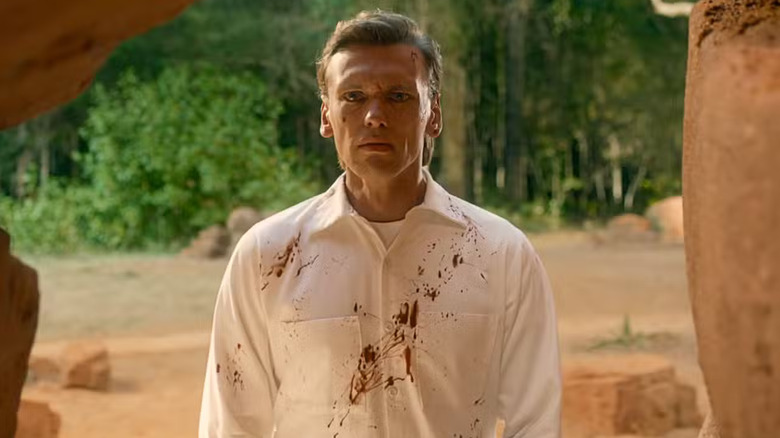
Speaking to Cosmopolitan, Matt Duffer — co-creator of "Stranger Things" along with his brother Ross Duffer — said that they established Vecna's full backstory before starting the writing process for Season 5 or the stage play, which enabled the play to tell a story that exists on the same timeline as the streaming series.
"There was always a balance that we had to find in terms of how much we were going to put in the play," he said. "[The director] Stephen [Daldry] and [the producer] Sonia [Friedman] were always pushing for more and we were pushing back and saying, 'Well, we have to wait to reveal that in the show.' You'll see, especially as you reach the final episode, there's more overlap with the play."
Matt also assured "Stranger Things" fans who hadn't been able to make it to London's Phoenix Theatre or the Marquis Theatre in New York that the play is not essential viewing for "Stranger Things" Season 5. He explained: "You absolutely do not have to have seen the play to understand. [References to the play are] Easter eggs more than anything."