

Every Season Of Stranger Things, Ranked From Worst To Best
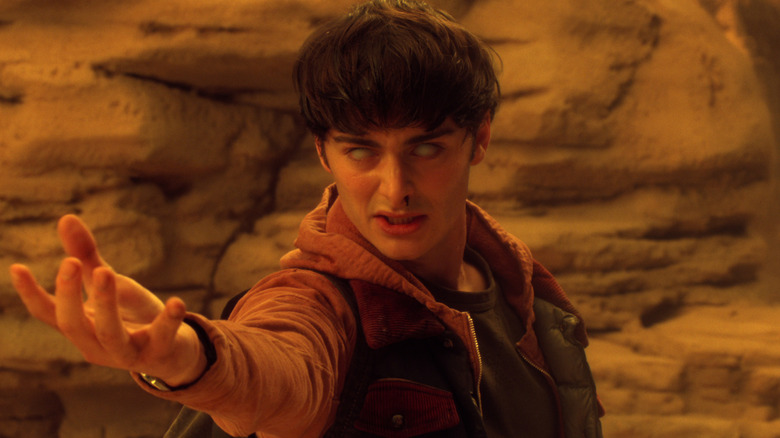
After nine years serving as arguably Netflix's signature original series, "Stranger Things" concluded its five-season run right before the new year. As each season dropped, the Duffer Brothers' hybrid genre tribute to the pop culture of the 1980s snowballed into one of the most dominant franchises of the last decade, with one of that decade's cinematic icons, Winona Ryder, even bringing her bona fides to the series to help attract an audience. In the meantime, much of its ensemble of mostly unknown younger actors and actresses became household names in their own right.
Ultimately "Stranger Things" became one of the most popular series of the century for a myriad of reasons. Sure, its blending of genres, 1980s iconography and soundtrack, plus the presence of Ryder helped entice the earliest viewers, but its endearing characters made it resonate with its audience for nearly a decade. In particular, seeing characters like Mike Wheeler (Finn Wolfhard) and Eleven (Millie Bobby Brown) grow up before our eyes served as a delightful reflection for similarly-aged viewers, similar to the effect that viewers had watching the cast of the "Harry Potter" films grow up. Let's look back at the last nine years exploring Hawkins, Indiana, and the Upside Down, as we rank each season from worst to best.
5. Season 5
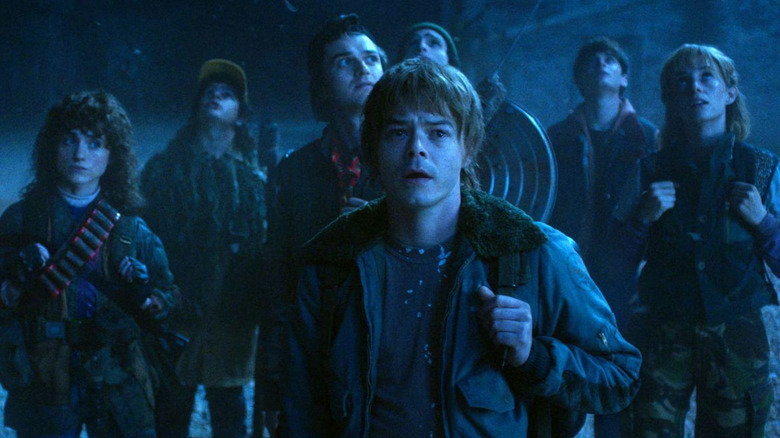
The final season of "Stranger Things" has been subject to a somewhat mixed reception from fans. Released in three volumes over the course of the 2025 holiday season, Vol. 1 received mostly positive buzz, including from TVLine. The biggest highlight from Vol. 1 was undoubtedly the climax of the episode, "Chapter Four: Sorcerer," in which Will Byers (Noah Schnapp) has his ultimate moment of heroism facing the Demogorgons.
Vol. 1 left fans buzzing with its epic cliffhanger. However, Vol. 2 was where cracks in some of the series' most subpar writing started to show. Will was also at the center of Vol. 2's most infamous moment, where he comes out to roughly the entire main cast before they head into battle. While the scene was meant to be poignant, and is mostly carried by the emotional reactions from characters like Will's brother, Jonathan Byers (Charlie Heaton), it is weighed down by the bizarre choice of turning Will's coming out into a larger-scale event in its own right, rather than an intimate, personal moment he could have shared exclusively with his family — and perhaps his crush, Mike.
Thankfully, Season 5 was redeemed with its satisfying finale, "Chapter Eight: The Rightside Up," which stuck the landing thanks to its incomparable scale. Jamie Campbell Bower's Emmy-worthy performance as Henry Creel/Vecna in particular was his best. While the bittersweet climax involving Eleven brought much emotional weight, the episode's epilogue was as cathartic as a series finale could get, particularly the closing vignette in which the core group of children play one last D&D game before passing it on to the next group of misfit kids.
4. Season 2
A little over a year after Season 1 dropped on Netflix, "Stranger Things" returned with a second season set around Halloween 1984. The first season ended with Eleven's supposed sacrifice, leaving her friends, particularly Mike, dealing with that lingering pain for over a year. While Mike still struggles with heartbreak, things are particularly bleak for Will, who is still plagued by his connection to the Upside Down and visions of the Mind Flayer.
Season 2 is notable for the introduction of new characters, including step-siblings Max Mayfield (Sadie Sink) and Billy Hargrove (Dacre Montgomery), as well as the sweet sacrificial lamb who was Joyce Byers' new boyfriend, Bob Newby (Sean Astin). While these new characters helped spice up the main ensemble's dynamic, the second season is significantly brought down by one of the series' worst episodes, "Chapter Seven: The Lost Sister," an Eleven solo adventure in which she connects with Kali/Eight (Linnea Berthelsen) and her group of colorful scheming outcasts. It felt like a backdoor pilot for a potential spinoff series (a longstanding theory that was later debunked), throwing a wrench in this season's pacing and narrative even though it served to further develop Eleven's arc and backstory.
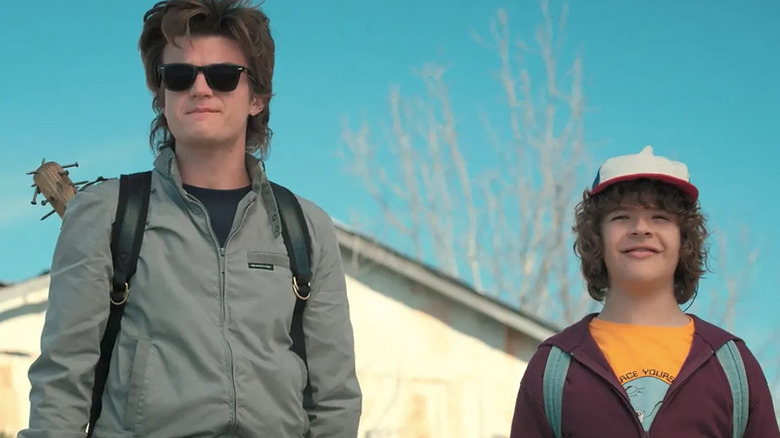
Thankfully, Season 2 is worthwhile for enhancing certain character dynamics. Introducing Max to the boys, each vying for her affection, helps shake up their relationships as they come of age. Elsewhere, Jonathan's romantic tension with Nancy Wheeler (Natalia Dyer) culminates in one of the show's most cathartic moments with their first kiss. But the best relationship explored in this season is between the unlikely duo of Dustin Henderson (Gaten Matarazzo) and Steve Harrington (Joe Keery), which may be the finest decision the creative team ever made for the show.
3. Season 4
Fans waited three years for the fourth season of "Stranger Things." Set in March 1986, the narrative is at its biggest, most ambitious scale to date, with much of the spectacle occurring not just in Hawkins, but in California and Soviet Russia. The season's expanded scale goes beyond its three separate locations, including the longest episode runtimes the series has ever had: the finale, "Chapter Nine: The Piggyback," which was a cinematic epic in its own right, clocking in at 144 minutes and culminating in the most exciting cliffhanger imaginable.
Season 4 deserves much praise for its sheer ambition, but given its three different locations, some elements are more entertaining than others. The California subplot is the weakest: despite the charming addition of Jonathan's new friend, Argyle (Eduardo Franco), it ultimately pales in comparison to the other two stories. Thankfully, the characters in Hawkins have the most compelling story, featuring the enigmatic Hellfire Club leader, Eddie Munson (Joseph Quinn), who has arguably the most heartbreaking death of any character in the series. The subplot in which Joyce and Murray Bauman (Brett Gelman) travel to Soviet Russia to rescue Jim Hopper (David Harbour) is also exciting, featuring some of the season's best action scenes.
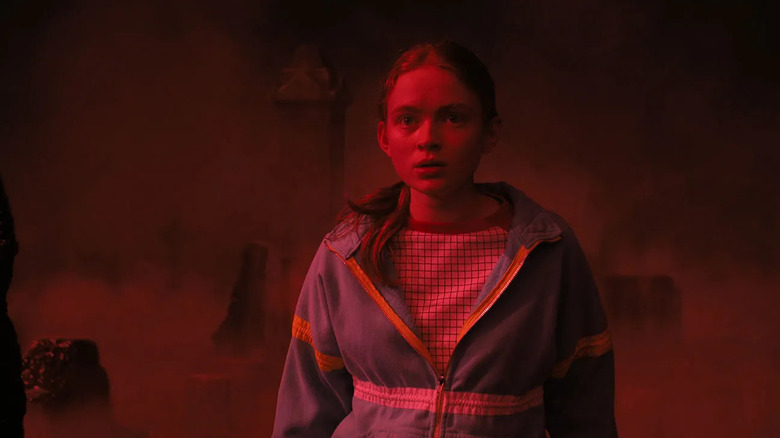
Without question, some of Season 4's most memorable sequences can be found in exploring Eleven's backstory, which introduces viewers to the series' ultimate antagonist, Henry Creel/Vecna, who has been pulling the strings in the Upside Down this whole time. But as enthralling as those reveals are, the season features "Chapter 4: Dear Billy," where Max takes center stage in a sequence that is so legendary, it rocketed artist Kate Bush to No. 1 on iTunes and brought her back into the public consciousness.
2. Season 3
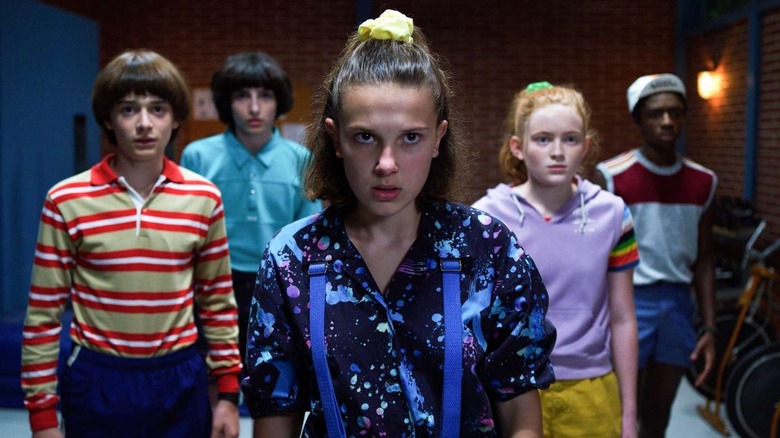
Before the final season dropped, many fans claimed that the third season of "Stranger Things" was the weakest. Some of the cast do not look back as fondly on it either, with Noah Schnapp acknowledging how the awkwardness of puberty affected their performances. Admittedly, criticisms can be lobbed against the way in which Jim Hopper was written, which was a bit of a comedic regression compared to his trajectory in the first two seasons. This is also the season where the comedy is at its most prominent, reaching levels of over-the-top insanity that inch towards campiness, best exemplified in a scene where Lucas Sinclair (Caleb McLaughlin) defends New Coke to his disgusted friends before they prepare for battle.
While some may argue that the comedic tone brings the season down, the lighthearted vibes reflect the humor present in beloved 1980s summer blockbusters. Given that the season is set during the summer of 1985, the young cast is shown enjoying their vacation, with the kids exploring their romantic relationships and the older teens working summer jobs. One standout element is the introduction of Robin Buckley (Maya Hawke), Steve's Scoops Ahoy co-worker and red herring love interest. The season's most tender moment features the duo sharing a heart-to-heart conversation as they come down from their drug-induced reverie, with Robin rejecting Steve's romantic advances and coming out to him.
Season 3 culminates in the finale, "Chapter Eight: The Battle of Starcourt," where Eleven confronts Billy in one of the series' most heartwrenching sequences to date. While Billy was certainly the most unsavory character of the younger cast, his one act of selfless sacrifice helps paint him in a more sympathetic light, especially given his history of maternal abandonment and paternal abuse.
1. Season 1
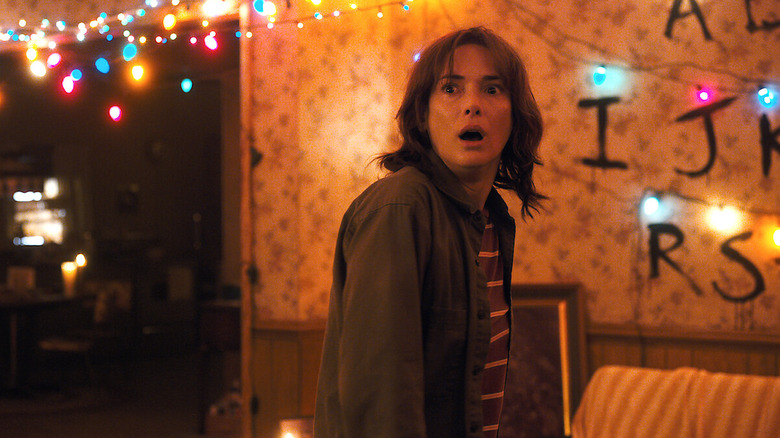
While "Stranger Things" has remained consistently entertaining throughout its entire run, the series became the cultural phenomenon that it is because of its near-masterpiece of a first season. The blockbuster scale of this series began with a story that is ultimately about a small-town mother desperately trying to find her missing son.
Although much of the fan discussion of "Stranger Things" is centered on the young cast, all of whom brought some of the most endearing child performances in modern pop culture, it is easy to forget that the primary narrative and character dynamics orbit around one Joyce Byers. Winona Ryder was already a major factor in what led audiences to initially give the series a chance, but it was her chilling performance as the distraught mother to Jonathan and Will that anchored this entire season. It is a bit unfortunate that Joyce's character trajectory in the following seasons is mostly limited to her romantic relationships and somewhat lacks further exploration into her own internal desires beyond that, because Ryder was worthy of more. Thankfully, the series finale gave her the powerful moment of action she absolutely deserved.
While Joyce and Hopper help anchor the adult storyline, the dual coming-of-age narratives of the D&D-obsessed middle school boys and the teen angst of the high school kids were just as compelling. Because of that, the first season of "Stranger Things" still serves as the best balance of stories and character dynamics, and in a vacuum, still holds up as an enthralling standalone story that could be its own miniseries, rather than the five-season behemoth that it became.