

The Orville's 10 Best Episodes, Ranked
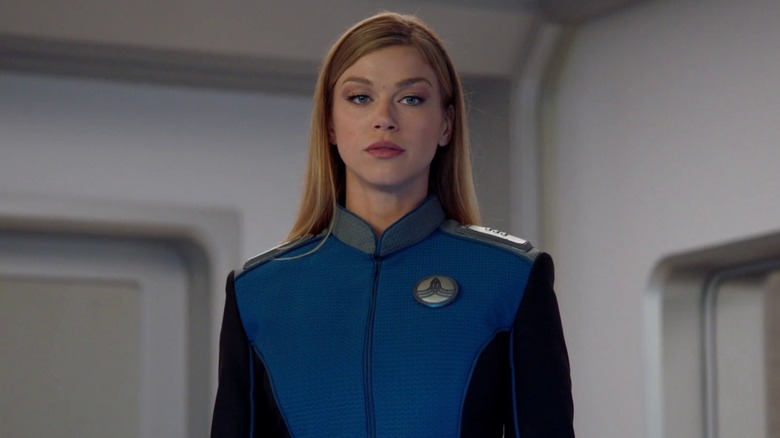
The Seth MacFarlane-created sci-fi series "The Orville," which aired on Fox for its first two seasons and then moved to Hulu for Season 3, is one of the most intriguing artifacts in modern television history.
Originally billed, promoted, and to a certain extent written and directed as a tongue-in-cheek "Star Trek" spoof that brought MacFarlane's abrasive humor to the decks of a wandering spacecraft, the series vacillated between that goofy tone and a more straightforward dramatic earnestness for much of Season 1. It was enough to leave critics and casual viewers uncertain about whether they were watching a parody, a sincere homage to the genre, or both.
From Season 2 onward, however, "The Orville" planted its flag: It was a proper space drama (with healthy quantities of comic relief), and a darn fine one at that. As the show found its groove, its combination of patient, carefully-written character drama, larger-than-life lore, snappy dialogue, and unapologetic political subtext resulted in some of the best sci-fi television we've seen in years. While fans continue to wait for a conclusive update on the still-uncertain Season 4 (Seth MacFarlane said in early 2024 that nobody had told him the show was dead, but we haven't heard much since), this list of the most accomplished "The Orville" installments out of the currently existing 36 will hopefully serve as a testament to the heights of greatness that this series managed to hit after beginning its run surrounded by uncertainty. Here are the 10 very best "The Orville" episodes.
10. Mad Idolatry (Season 1, Episode 12)
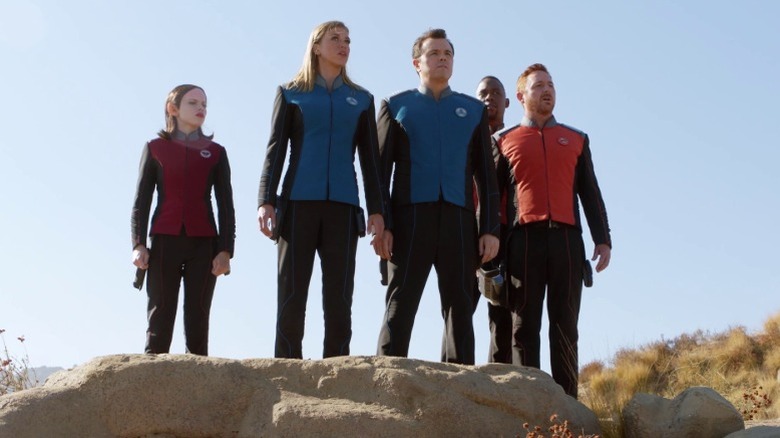
Following a somewhat rocky freshman year in which "The Orville" struggled to define itself tonally and artistically, the final Season 1 episode, "Mad Idolatry," was the moment in which the series really pulled itself together and showed that it meant business. The key to that homestretch success was that "Mad Idolatry" didn't try to be a big hulking finale with cliffhangers or major seasonal climaxes; instead, it preoccupied itself with telling a strong, self-contained story that displayed what the show was capable of.
The story in question, scripted by Seth MacFarlane himself, begins with a planet that seemingly manifests into being out of nowhere. After crash-landing onto it, the crew of the Orville interacts briefly with its small bronze-age civilization, and then leaves the planet to find out that it's caught in a multi-phasic orbit that brings it into our universe every 11 days. The kicker: Each time the planet reappears, over 700 years have elapsed on it. When it comes back, its people are in the equivalent of the Middle Ages, and have become followers of a religion that worships Kelly Grayson (Adrianne Palicki) as a god.
The ensuing conceptual tussle with religion and impermanence finds "The Orville" skillfully splitting the difference between high-concept sci-fi and brainy satirical comedy, in a way that calls to mind the best of freewheeling animated sitcoms like "Futurama" (itself one of the best TV shows like "The Orville") and "Rick and Morty." It's a sweet spot for this show's more humor-minded first season, and represents "The Orville" at its peak prior to the Season 2 dramatic level-up.
9. Nothing Left on Earth Excepting Fishes (Season 2, Episode 4)
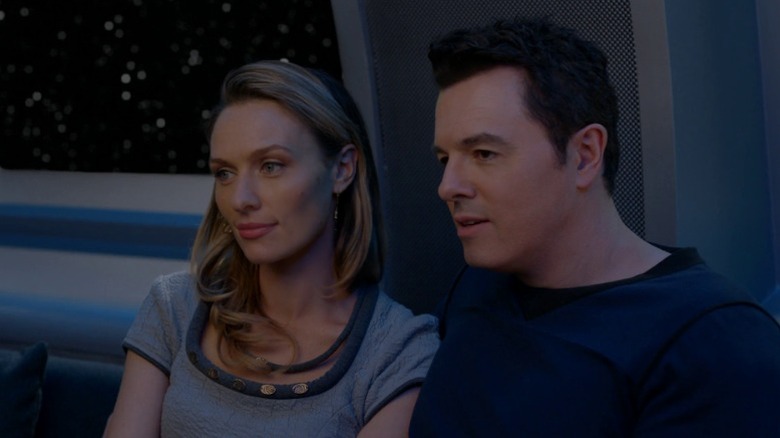
The Season 2 episode "Nothing Left on Earth Except Fishes" showcases the evolution of "The Orville" between its first and second years. It's a sequel to Season 1's "Krill," which honed in on the eponymous warmongering civilization and introduced Krill schoolteacher Teleya (Michaela McManus). And, like "Krill," it's directed by Jon Cassar. But despite its connection to an early "The Orville" installment, "Nothing Left on Earth Excepting Fishes" is a step-up in every way — one that enriches the story told by its predecessor, and decisively demonstrates that "The Orville" isn't just a comedy.
Following the plan in which Ed Mercer (Seth MacFarlane) and Gordon Malloy (Scott Grimes) managed to kill the entire crew of a Krill shuttle while sparing Teleya and her classroom, the chickens come home to roost: It turns out that Ed's new girlfriend, dark matter cartographer Janel Tyler, is actually Teleya in disguise, sent on a mission to gain Ed's trust and seize him for the Krill.
As Ed processes the betrayal of falling prey to an infiltration after having done just that to Teleya, the two are suddenly thrust into working together when another species attacks the Krill vessel and forces them to hop on an escape pod and abscond to a nearby planet. Thus begins one of the strongest stretches of storytelling in "The Orville" history, as two people whose relationship is neither friendly nor entirely hostile size up their uneasy connection, butt heads over the subjects of war and religious zealotry, and work against the odds to survive — thereby adding welcome shades to the Krill's one-dimensional villainy.
8. The Road Not Taken (Season 2, Episode 14)
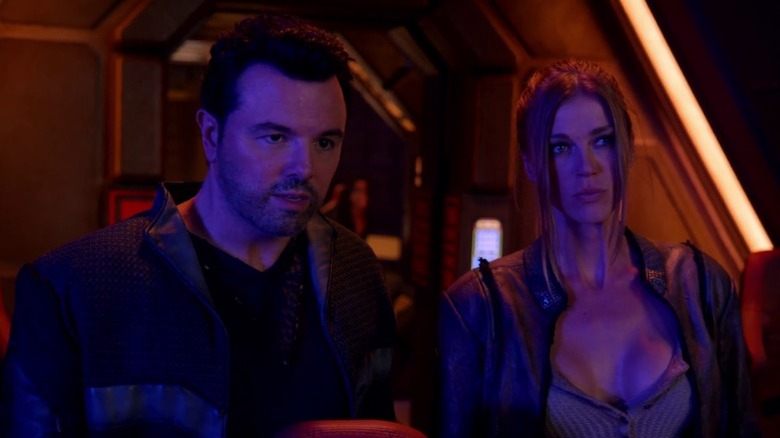
On the Season 2 finale "The Road Not Taken," "The Orville" used an alternate timeline plot to imagine itself as a different series. This momentary detour was not only narrative — following on from the previous episode's closing reveal of a failed memory wipe bound to trigger a massive temporal alteration — but also stylistic and methodological: If previous "The Orville" installments drank from the "Star Trek" well of ruminative society-of-the-week sci-fi, "The Road Not Taken" recontextualizes the show as a full-blown, action-packed space opera. It's all in the name of restoring the status quo, ultimately, but talk about a thrilling gear shift in the meantime.
The crux of the episode is that, since the younger version of Kelly was sent back to her time with her memories intact, she never dated Ed and never joined the Orville crew; as a result, neither did Claire Finn (Penny Johnson Jerald), and there was no one to push Isaac (Mark Jackson) to defect the Kaylon and curtail their genocidal campaign against biological lifeforms. Thus begins a tricky mission in which the Orville crew, reunited by Kelly, must track down the ship's whereabouts in this timeline, gain access to Isaac's time travel research, find a protein that will allow Kelly's memory to be wiped, and send someone back in time to do the deed. It's a perfectly-structured step-by-step adventure that writer David A. Goodman and director Gary Rake carry out with maximalist flair, producing some of the series' all-time highest points in terms of sheer entertainment value.
7. Gently Falling Rain (Season 3, Episode 4)
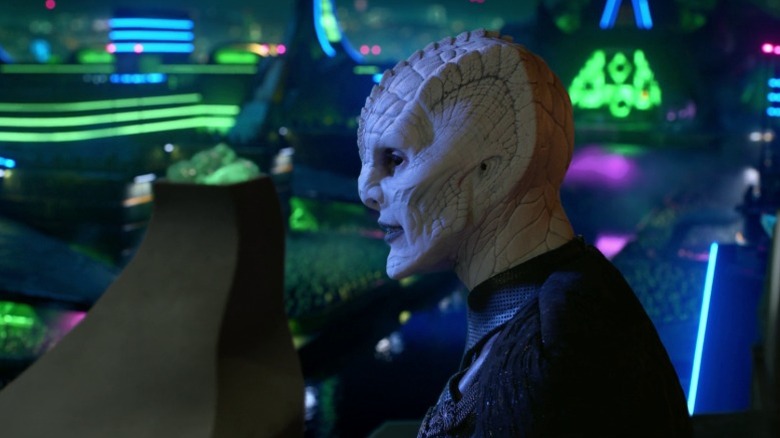
The sincerity and gleaming optimism with which "The Orville" charged into its Hulu-bound, bigger-budgeted third season — aptly titled "New Horizons" — left viewers wholly unprepared for what a bummer said season's fourth episode would be. At first, all seems well on "Gently Falling Rain:" A Planetary Union delegation is on its way to Krill to negotiate a universe-changing peace treaty, and a new, more harmonious era seems to be afoot.
But the episode, which arguably pushes the political undertones further than any previous "The Orville" hour, is not interested in just keeping things running smoothly. Ed learns that, after being freed by him at the end of "Nothing Left on Earth Except Fishes," Teleya became a political leader with a hateful and fanatically pro-war rhetoric, and is now on track to seriously challenge Supreme Chancellor Korin's (Matt Gottlieb) bid for re-election. A plot to thwart the peace negotiations and kill the Union delegates is initiated, ultimately leading Ed to the discovery that he has a half-human, half-Krill daughter named Anaya (Charlie Townsend) that Teleya has kept hidden from him.
With the stage thus set, "Gently Falling Rain" wades through sturdy action-adventure storytelling while keeping a tight focus on the grave interpersonal stakes of the war and its allegorical implications. What emerges is as close to a full-fledged war epic as a 62-minute TV episode can get — a thoughtful and gut-wrenching narrative about the fickleness of diplomacy and the ever-present danger of democratic backsliding that still manages to find time for the kind of sprightly fun and humor that fans come to this show for.
6. From Unknown Graves (Season 3, Episode 7)
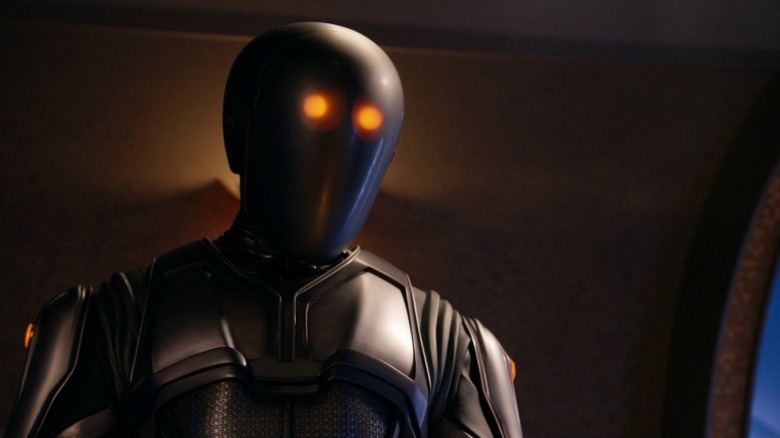
If Season 3 of "The Orville" availed itself of the extra money and freedom supplied by Hulu to leap dauntlessly into the realm of blockbuster entertainment, with nearly every episode making up its own miniature tentpole flick, "From Unknown Graves" brings it back to the series' old method of making its world feel big by centering character, philosophy, and introspection. With no major high-stakes perils to deal with for once, the crew of the Orville takes to pondering the state of things in the universe and the nature of bigotry and hate; the ensuing meditation on those themes ranks among the most intelligent and sophisticated to hail not just from this show but from any recent sci-fi production.
The core of "From Unknown Graves" is the exploration of the Kaylons' origins, in which the show jettisons any audience assumptions about their omnitemporal malevolence and reveals that the merciless expansionist robots were once a consumer brand of servile home assistants. Through flashbacks, we find out about how the Kaylons' creators eventually gave them the capacity for pain and then began to abuse it, thereby producing the Kaylons' deep-rooted belief that biological life forms are inherently cruel and must be eradicated.
It's a plenty gut-wrenching story on its own, but it's the way it interacts with the present-day plot — which includes the discovery of a peaceful Kaylon (Christopher Larkin) who deeply regrets his kind's actions, the continuation of Claire and Isaac's relationship, and a fumbled diplomatic encounter with a staunchly matriarchal civilization — that makes it indelible, thought-provoking sci-fi.
5. Lasting Impressions (Season 2, Episode 11)

The Season 2 episode "Lasting Impressions" is an example of a "The Orville" hour that brings the show's best qualities to the fore even without overt action-adventure thrills. It's essentially a quiet character piece — but that relative smallness in the context of the show is what makes it so affecting. Adding to the quaintness is the fact that the focal character in question is Gordon Malloy (Scott Grimes), who gets a whole episode exploring his lonely, stunted inner life in a refreshingly serious — but still plenty funny — way, by casting it against the (projected) inner life of someone else entirely.
The episode begins with the assignment of a 2015 Earth time capsule to be transported by the Orville crew; inside, they find an intact cell phone belonging to one Laura Huggins (Leighton Meester), an aspiring singer who used to live in Saratoga Springs, U.S., and volunteered her phone as a historical record for future scientists. Gordon uses the environmental simulator to recreate Laura's life based on the contents of the phone, and ends up developing a "relationship" with Laura that only grows sadder and more self-defeating the closer it gets to feeling real.
Not only does this plot allow the episode to get in some sly "Black Mirror"-esque commentary about the messiness that makes up authentic human life, but it also acts as a tender-hearted, quietly yet profoundly touching tribute to "mundane" human existence. And the subplot about Bortus (Peter Macon) and Klyden (Chad L. Coleman) finding cigarettes in the time capsule is a hoot to boot.
4. Sanctuary (Season 2, Episode 12)
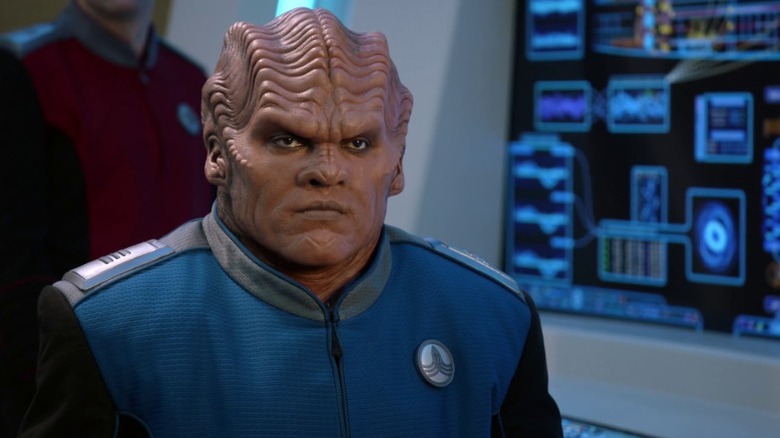
"Sanctuary" illustrates what makes "The Orville" so unique, and such a worthy heir to the compendium of "Star Trek" series. The whole episode is built on the moral and political intricacies of interplanetary diplomacy, and it's absolutely riveting television.
The plot alone is dense and detailed enough to feel like a dispatch from an actual, vivid parallel world: Following Season 2's frequent forays into the complexities of Moclan society, "Sanctuary" sees the Orville take in a Moclan couple (Shawn T. Andrew and Regi Davis), who are smuggling their infant daughter out of Moclus so that they can avoid her being forcibly transformed into a male. They eventually lead the Orville crew to the Sanctuary, a planet hidden in a nebula that acts as a safe haven for a colony of a few thousand female Moclans. They decide to join the Union for protection; in retaliation, Moclus threatens to exit the Union and take its arms production with it.
Because the Union can't do without the Moclans' military might in the midst of the conflict with the Kaylons, a stalemate is created: The cause of the oppressed female Moclans is noble, but the Union cannot support it without sparking a crisis. It's unspeakably refreshing to watch a space sci-fi show come up with such a thoughtful, raw, artfully-written political plot that doesn't oversimplify things for commercial expediency. And "Sanctuary" executes that plot to perfection, layering in tension, drama, and yes, more than a little social commentary. There isn't a minute of it that's anything less than gripping.
3. Twice in a Lifetime (Season 3, Episode 6)
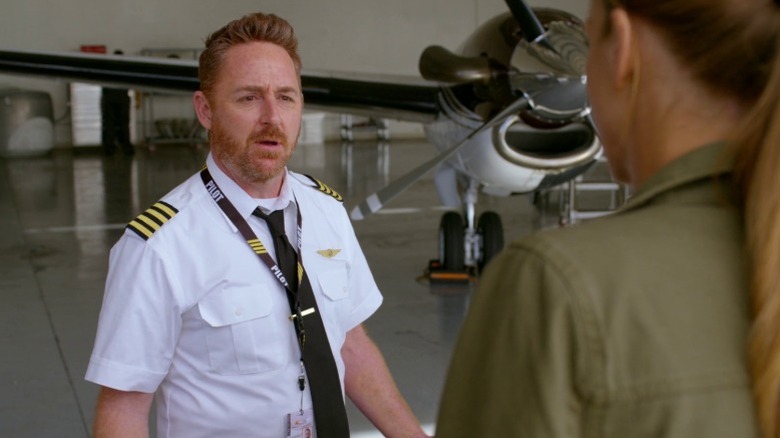
Following on from the disarming, understated poignancy of "Lasting Impressions," Season 3's "Twice in a Lifetime" further pushes the question of what a "regular" human life in our time means, and amounts to, in contrast with the centuries-removed space exploration that takes up most of "The Orville." Amid the high-production, highly political bombast of Season 3, it's another episode that finds greatness by keeping things narrow and character-focused; the results this time are even more heartbreaking, and single-handedly make the case for "The Orville" as an underappreciated emotional powerhouse.
The plot of "Twice in a Lifetime" takes full advantage of this show's willingness to play fast and loose with time travel rules, so long as the outcome is good storytelling: John LaMarr (J Lee) and Isaac discover that it's possible to use the Aronov device to send objects through time, prompting a mission to take the device into a safe containment facility. The mission gets ambushed by Kaylons, and, in the ensuing kerfuffle, Gordon is sent back to the year 2015 — yet, when the Orville crew tries to go back in time to rescue him, they wind up in 2025, a year in which Gordon is happily married with children to the real-life version of his former simulated crush Laura.
Overcome with the consciousness that he has but one life to live, Gordon refuses to go back to his old life, setting off a series of increasingly anguished reckonings for both himself and his former crewmates as everybody struggles with what to do. It's a conundrum with no easy way out, to which the show commits brilliantly, wholeheartedly, and devastatingly.
2. Domino (Season 3, Episode 9)
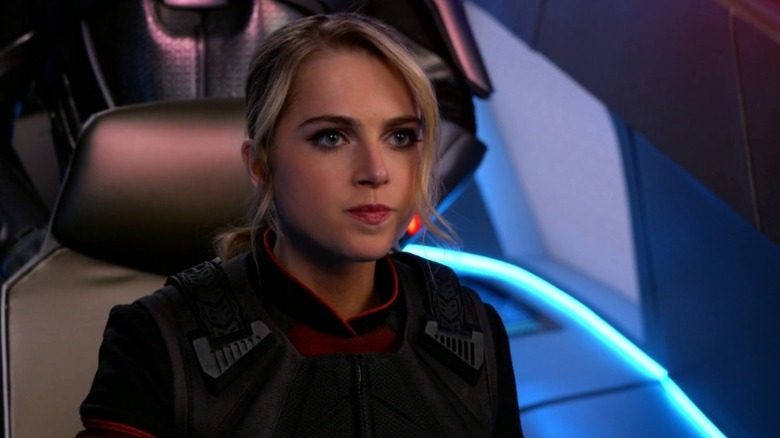
"Domino," the penultimate episode of "The Orville" Season 3, finds every strand of interplanetary conflict spun out across the show finally meshing together. The resulting climax is about as much of a barn-burner as you'd expect — the strongest "The Orville" installment as far as full-blown excitement is concerned.
All told, it's just hard to top an hour-and-change that pits the Planetary Union, the Kaylons, the Moclans, and the Krill all against each other in a standoff of simmering tensions and shifting alliances. At first, the Union is still determined to stop the Kaylons, and intends to use a freshly-minted weapon of mass destruction to negotiate an armistice. But a clandestine plan carried out by Admiral Perry (Ted Danson) ends up landing the weapon in the hands of the brand new Moclus-Krill alliance, thus forcing the Union to call a truce and band together momentarily with the Kaylons.
Cue the single most ambitious, overwhelming, and overall incredible battle sequence on the entire show — and maybe on all sci-fi television of the 2020s so far. It's certainly in the conversation, at least, both for its unflagging technical panache and for the incomparable way it brings the series' various overarching plots into rattling, explosive contact with each other. And the rest of the episode is similarly excellent, a propulsive and elegantly-structured crosspoint between "Star Trek" and "Star Wars" that honors the show's devotion to the former while spotlighting its ability to don the stylings of the latter, every now and then, when it really wants to.
1. Identity and Identity, Part II (Season 2, Episodes 8 and 9)
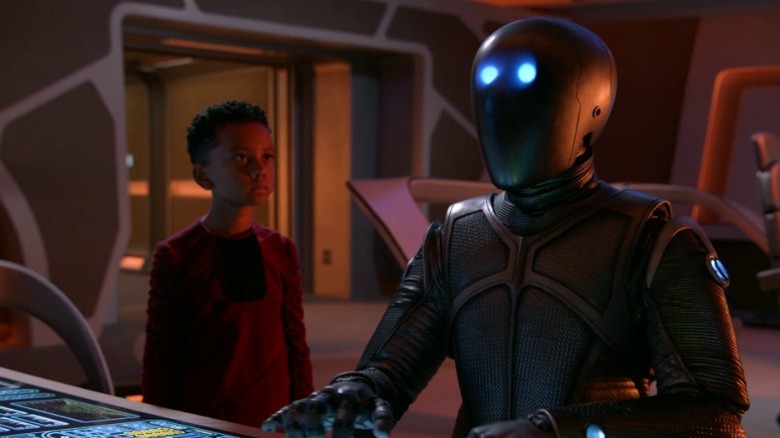
The two-part saga of the visit to Isaac's home planet is the best chapter in the history of "The Orville." At this point on the show, there was no overt indication that the Kaylons were any sort of villainous entity, or that this was a series that would be willing to probe the levels of darkness and seriousness lying dormant within their backstory. Yet "Identity" was confident enough in its storytelling might to spring it all on the viewer without warning. The very dark, very discomfiting twist was both a gut punch and a terribly sobering moment, a decisive swerve away from lighthearted escapism that couldn't be — and wasn't — walked back.
The episodes leading both into and out of this twist make up a case study in the rousing power of a good diptych structure. In the build-up to the revelation of the Kaylons' nature, you've got some of the finest, most textured world-building and mood-setting the show has ever done, with a dose of punchy tension and flashes of uncanny mystery that set the stage for the twist without quite announcing it.
Then, on the second half, "The Orville" shows that its love for a good build-up is a corollary to its love for a good payoff, as the biggest and most impressive spaceship battle sequence of the show up until then unfolds in tandem with masterful exploration of the nuances of Union-Krill relations — all founded in a touching, fascinatingly singular character study of Isaac and his quasi-humanity. Sci-fi doesn't get better than this.