

15 Best TV Shows Like Dexter
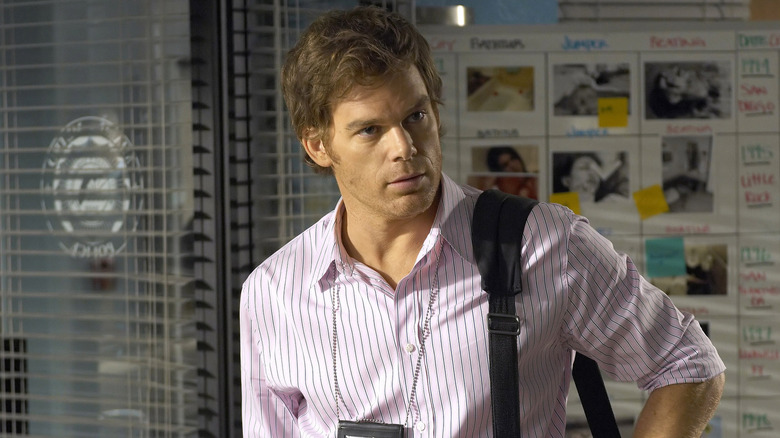
He's back and bloodier than ever. Over a decade after it wrapped an infamously uneven eight-season run on Showtime, audience fervor has revived — sorry, "resurrected" — "Dexter" for a spate of successful new series. The question is, are we really so excited to give the Bay Harbor Butcher a second chance?
"Dexter: Resurrection" has already been renewed for Season 2, a decision that, against the backdrop of the strong critical reception for the first season, certainly makes the case that all the series' original sins have been forgiven and forgotten. But for those former "Dexter" fans who are less enthusiastic — or for those new fans craving more after witnessing Michael C. Hall's serial killer for the first time — there are still plenty of other killer thrillers that will terrify and satisfy. From the greatest dramas from the dawn of Peak TV to hidden gems from around the world, these series confront the same compelling questions "Dexter" did in its best seasons.
Barry
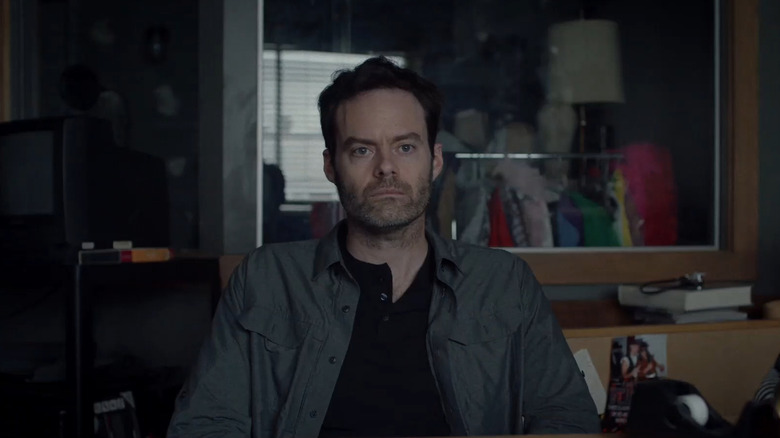
Many shows on this list feel as though they exist in conversation with "Dexter." Of these shows, "Barry" offers the most direct, successful, and hilarious dramatic response by far.
Created by Alec Berg and Bill Hader, it stars the beloved "Saturday Night Live" alum as a marine veteran-turned-contract killer suffering from an identity crisis. As he realizes that his soul is begging him to leave his life as, essentially, a serial murderer behind, he happens upon an amateur acting class in Los Angeles that might just offer him the emotional escape he seeks. After he takes out one of his new classmates for the Chechen mob, of course.
Where "Dexter" often strained to warp the series' world around its hero's warped worldview, "Barry" makes the exact opposite choice with fascinating results. There are no greater evils to rationalize his violence — Barry's greatest foe in his mission to live a normal life is almost always himself. By allowing the character to experience the logical consequences of his actions, each season of "Barry" is imbued with a unique tone that makes it thrillingly unpredictable and chillingly unrecognizable by its series finale.
Bates Motel
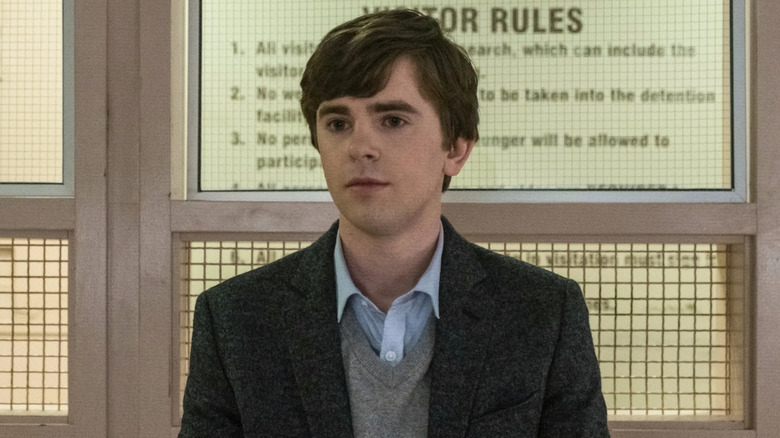
As funny as it is that Timothée Chalamet apparently bombed his "Bates Motel" audition by looking to Patrick Bateman instead of Norman Bates, that misstep quietly underscores how refreshing the A&E series was. Where antiheroic, fantasy-adjacent stories like "Dexter" largely use their protagonists' mental illnesses as the means of explaining their actions, "Bates Motel" digs deeper into the tragedy — and, indeed, the horror — of being psychologically trapped inside a life of compulsive violence.
A loose prequel to the Robert Bloch novel "Psycho" (that, of course, borrows heavily from the visual language of Alfred Hitchcock's seminal 1960 film), it stars Freddie Highmore ("The Good Doctor") as a teenage Norman Bates and Vera Farmiga ("The Conjuring") as his controlling and emotionally demanding mother. Fans of the original film are already well aware of how their relationship ultimately ends. Beyond its 2010s setting, the series isn't interested in subverting your understanding of the canon, but rather in exploring how Norma's "love" ultimately creates the very monster that will kill her. "Bates Motel" beautifully maintains the tense dread of its inevitable dramatic trajectory throughout its five-season run without sacrificing genuine suspense and, surprisingly, sympathy for its central characters.
Death Note
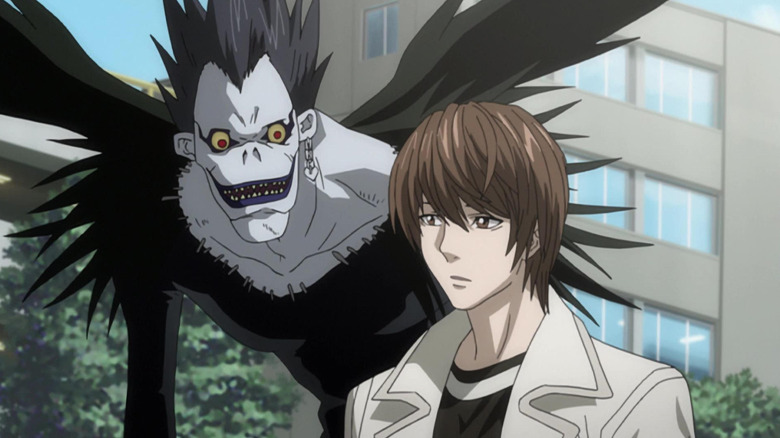
Just before "Dexter" arrived to terrorize the murderers of Miami in 2006, audiences were treated to a similar yet distinct saga in "Death Note." The manga, which ran from 2003 to 2006, was faithfully adapted into an anime series that began airing the same year its source material was completed. Two decades later, it is still regarded as one of the greatest anime series ever produced, as well as an essential watch for new fans of the medium.
The "hero" of the story is Light Yagami, a Japanese high schooler who comes into possession of the so-called "Death Note" — a notebook of demonic power that allows its wielder to take a life simply by writing down the name of their target. Light thus uses the book to kill criminals, attracting the attention of the brilliant detective known only as "L".
"Death Note" is a spectacular, tight crime thriller, but its psychological storytelling is in a league of its own. It cuts through the often laughably cyclical central moral dilemma of "Dexter" and instead uses it as a jumping-off point for a compelling character study that explores the consequences of moral authority.
The End of the F***ing World
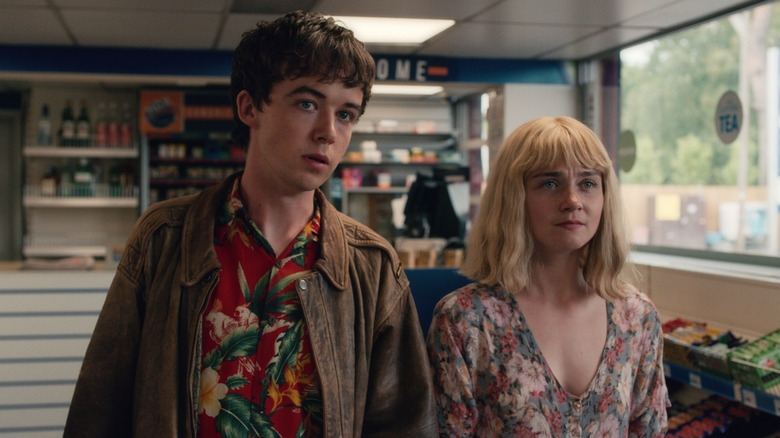
Given that it was hardly promoted and all but buried under Netflix's ever-expanding library of content after two seasons, there's a decent chance many reading this list have never heard of "The End of the F***ing World." It's a real shame, especially since it's one of the best original series the streamer has ever produced.
Based on Charles Forsman's comic book series of the same name, the British black comedy series combines the dark, emotionally bereft sense of humor of "Dexter" (sardonic narrations and all) with the vibe of a coming-of-age romantic comedy. At 17 years old, James (Alex Lawther) has spent much of high school searching for someone who can make him feel, well, anything. When one of his schoolmates, Alyssa (Jessica Barden), begins to take an interest in him, he realizes she could be his perfect match — and by "match," we mean, "first victim."
As the two soon embark on an emancipatory road trip away from their hometown, the series challenges their simple perceptions of each other and their own psychology. It's the closest series to "Dexter" in terms of asking the audience to live inside a fascinating and genuinely uncomfortable brain for an episode at a time.
The Fall
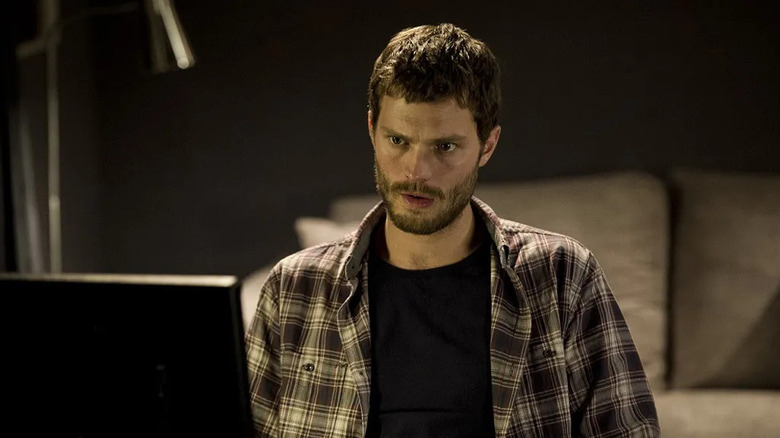
A premium pick for our readers with subscriptions to BritBox, "The Fall" could be described as a more serious, comprehensive companion piece to Season 4 of "Dexter" specifically. That season (defined by John Lithgow's devastating villain, the Trinity Killer) stood out as one of the series' best for confronting the conflict between Dexter's crimes and his newfound identity as a father and husband.
"The Fall" stars Jamie Dornan ("Fifty Shades of Grey") as Paul Spector, a disturbingly plausible family man who nonetheless spends his nights stalking and strangling women in Belfast. Each episode splits its narrative focus between Spector's attempts to keep his two lives separate and the ongoing investigation of Gillian Anderson's Stella Gibson.
While the structure serves to formally subvert the British crime drama subgenre by turning the "whodunnit" into a "whydunnit," it also turns Gibson into something akin to an audience stand-in character. Throughout the series, her investigation must answer the unsettling question of how a man like Spector can disappear into polite society with little trace at all.
Hannibal
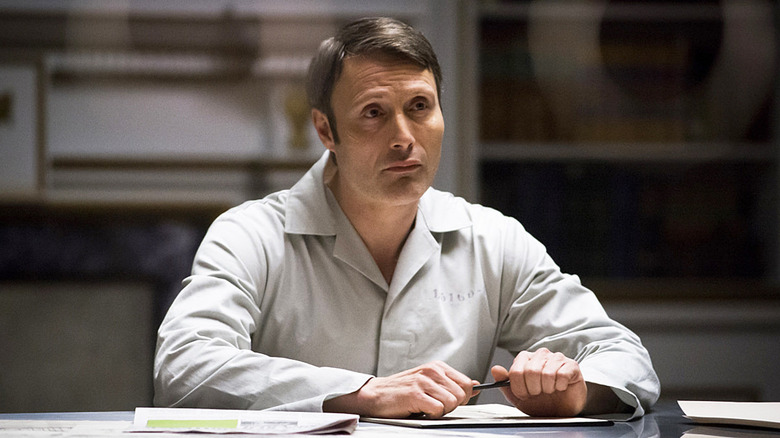
Dexter Morgan might be one of the most famous and beloved fictional serial killers of all time, but Hannibal Lecter is still on another level entirely. That level of popularity doesn't just come down to Ted Tally's screenplay and Anthony Hopkins' performance in "Silence of the Lambs" — Bryan Fuller proved that through his underseen NBC crime thriller "Hannibal."
What compels most of all about both Hopkins' Lecter and that of "Hannibal" breakout Mads Mikkelsen (not to mention Dexter as well) is that they're serial killers who, despite their murderous appetites, desperately crave true connection. Fuller explores this facet of Lecter's psyche far more than the 1991 film by pairing him with Hugh Dancy's Will Graham, an FBI profiler who literally has a dangerous level of empathy for others. The series follows their relationship — from doctor and patient to predator and prey — across three spectacular, disturbing seasons. And with "Dexter" getting resurrected for a proper final season, we're still hoping the same can happen for "Hannibal."
House of Cards
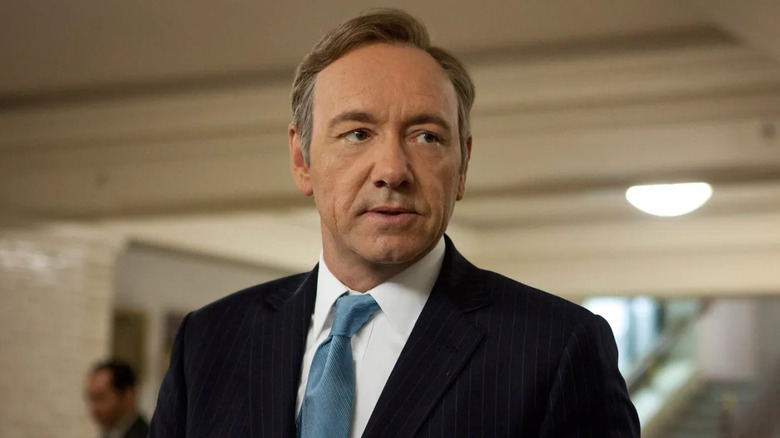
We can absolutely understand why many readers still aren't ready to watch Kevin Spacey in "House of Cards." However, even divorced from the actor's infamous legal battles, the series is one of few that taps into the same disturbing tone as "Dexter."
The former flagship series of Netflix takes viewers away from the sunny streets of Miami to the cold halls of the U.S. Capitol, where the lack of bloodshed on a day-to-day basis hides a predator every bit as amenable to "righteous" violence as the Bay Harbor Butcher.
Spacey's Frank Underwood gives a modern face to the quintessential Shakespearean antihero. After being professionally scorned by the very president he campaigned for, Underwood embarks on a sociopathic, Machiavellian quest for vengeance and power. His defining narcissism is exemplified by constant fourth-wall breaking dialogue that signals his belief in his own detached control over events while implicating the audience in his actions. The latter aspect is what makes it such a fine successor to "Dexter."
Lucifer
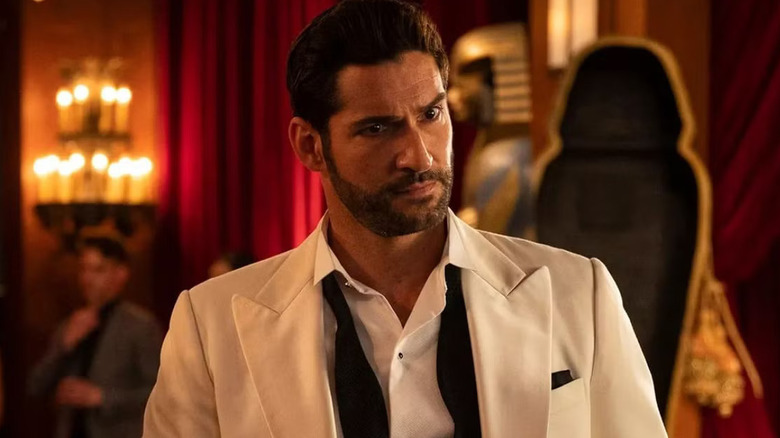
If you want a show that strikes the same balance of cops, crime, and comedy, you'll have to make a deal with the devil himself — which is to say, you'll have to pay for a Netflix subscription.
"Dexter" is the kind of show that certainly benefits from dissection and deconstruction, but we won't fault any readers for wanting a series that feels almost identical, flaws and all. For them, "Lucifer" is the best call. It stars Tom Ellis as God's fallen angel, who has abandoned his post in Hell to indulge in a life of human depravity in Los Angeles. After crossing paths with an intriguing detective (Lauren German), who is somehow immune to his supernatural charms, he becomes a consultant for the LAPD.
It's a simple, tidy premise that, like "serial killer who kills other killers," leads to an overarching story with far more ambitious ideas. Especially after it found an unexpected afterlife on streaming, it became a fantastical exploration of morality, destiny, and freedom. (For that reason, it's also a perfect series for those "Dexter" fans who enjoyed Marvel's "Loki.")
Mr. Inbetween
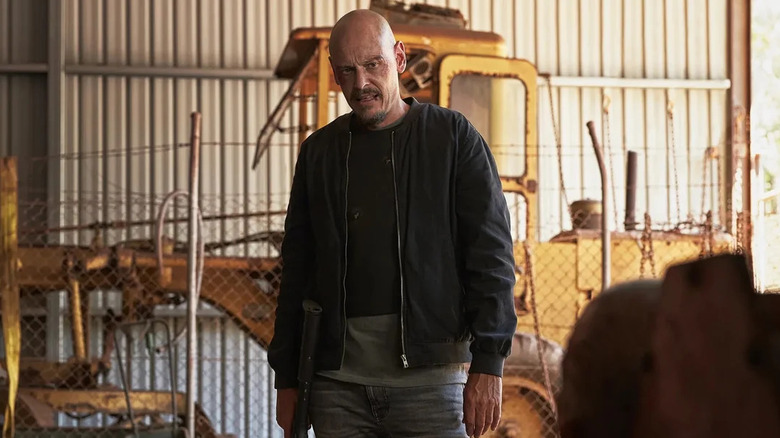
To put it bluntly, "Mr. Inbetween" is a show far too good to be experienced through a procession of YouTube Shorts. If you're a TV fan scrolling through reels-based content, there's a decent chance you've seen at least one scene from the FX series, probably of Scott Ryan's cheeky assassin Ray Shoesmith executing a crime with cool confidence. It's great content for reels — but it isn't what makes the show as a whole one of the best FX has ever produced.
Ryan, who serves as the series' star, creator, and writer, doesn't portray Shoesmith as disaffected to make him seem above it all, but to drive home the banality of it to him. There's no thrill of the kill for Shoesmith — that's where he and Dexter diverge. However, their attempts to build happy lives and families despite their antisocial compulsions (Dexter's being psychological, while Shoesmith's is professional) are equally poignant. "Mr. Inbetween" leans further into comedy as well, making it an especially good choice for fans of the deadpan sense of humor of "Dexter."
Mr. Robot
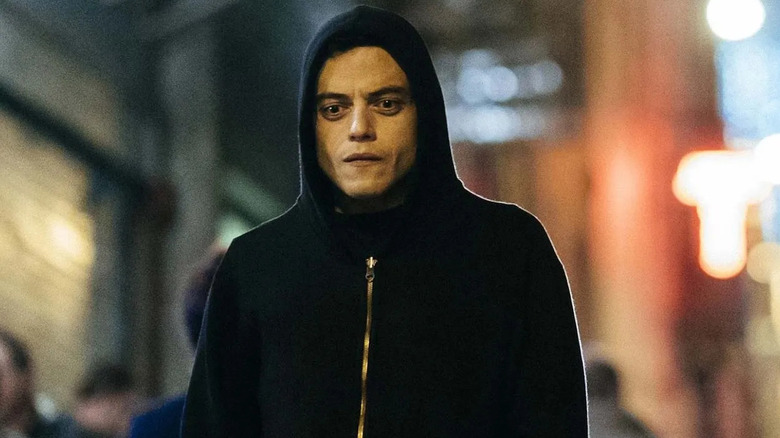
Watching a serial killer avoid accountability for eight-plus seasons can be as thrilling as it is emotionally draining. If you're looking for a protagonist with an equally compelling psychology who you can nonetheless root for wholeheartedly, "Mr. Robot" is the perfect choice.
Especially in its first season, the USA Network psycho-techno thriller could be pitched as a twisted update of the "Robin Hood" mythos. Rami Malek's Elliot Alderson is an antisocial hacktivist who uses his genuinely dangerous skills to punish predators and protect the people he cares about. His activities soon lead him to fsociety, a group of cyber vigilantes who believe that they can upset the global financial order if they follow their enigmatic leader "Mr. Robot" (Christian Slater).
The series has plenty to say throughout its brisk four-season run about economic injustice, social instability, and the moral challenges one might face on the path toward revolution. But what fans of the original "Dexter" series will really appreciate is its handling of Elliot's psychological arc, as "Mr. Robot" arguably surpasses the former series in its ability to seriously reckon with a damaged psyche.
Murderbot

Though "Dexter" largely peaked in its second season, one aspect of the series that got stronger at least through Seasons 3 and 4 was its central moral argument. By putting Dexter in more ethically challenging situations, disrupting the myth of the "Code of Harry," and forcing him to make mistakes that directly undermine the values he felt he was supposed to have as a "good person," the series asked him to choose his destiny. To stop submitting to codes and finally make decisions about who he wants to be. In essence, this is the same idea explored (albeit more literally) in "Murderbot."
Debuting in 2025, "Murderbot" is already one of the best Apple TV shows of all time. Aside from the deeper thematic question described above, it's got plenty to offer "Dexter" fans specifically — a creepy yet comedic leading performance from Alexander Skarsgård (an antisocial robot navigating free will for the first time), sharp social satire, and a narrative style that uses shocking violence and amusing inner monologues. Given that it was renewed for an upcoming second season, there's no better time to boot up "Murderbot."
Prodigal Son
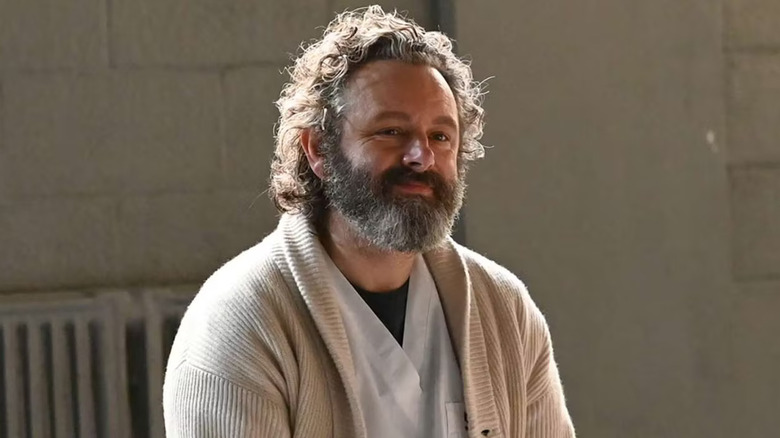
"Prodigal Son" has a modest reputation compared to other shows on this list, especially since it could be dismissed as an inferior rehash of "Hannibal." But while both series feature gifted profilers who are in a constant state of uncertainty about their own sanity, "Prodigal Son" offers a unique twist that "Dexter" fans should consider.
Tom Payne's ex-profiler Malcolm Bright is the son of an imprisoned serial killer, played by Michael Sheen. When Malcolm is forced to make contact with his father for the first time since his arrest (after a copycat killer emerges in New York City), he must wrestle with the fact that his skill for catching killers is the result of being raised by one.
The series is an admirable exploration of how much children really inherit from their parents, whether through DNA or trauma. For all its faults, we'd still argue "Prodigal Son" engages with this question as effectively as the later seasons of "Dexter" – and we'd still love to see a third season.
The Sopranos
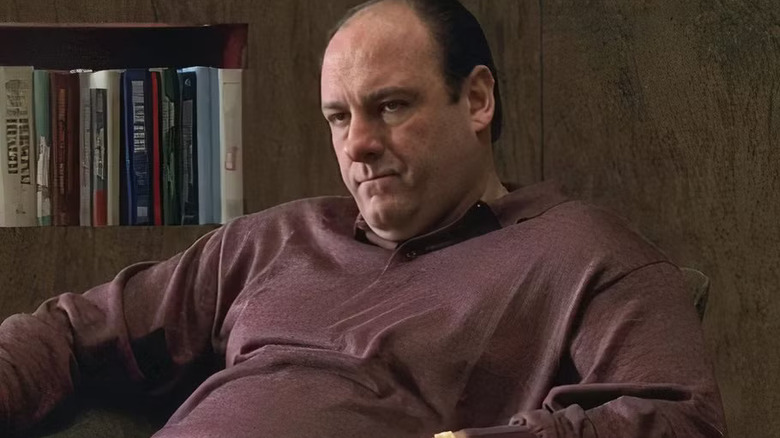
At first glance, it might seem like "Dexter" has little if anything in common with "The Sopranos." The acclaimed HBO drama certainly provided the blueprint for the modern antihero which Showtime at least glanced at, but what does a Miami serial murderer have in common with a mobster all the way up in New Jersey? It's simple — we love them in spite of ourselves.
Tony Soprano (James Gandolfini) and Dexter Morgan are fixtures of the prestige television canon — two men whose charismatic charm, amoral lifestyle, and psychological trauma made for timeless entertainment. It creates an odd kind of parasocial relationship that can only exist through TV, where the viewer roots against the protagonist changing his life for the better because doing so would mean an end to our enjoyment.
This is subtly reflected in the moral arc of Tony Soprano in particular. At the start of the series, he walks into a therapist's office asking to be shown the path toward redemption, then spends six seasons walking in the opposite direction in order to preserve the life he can't admit he loves. "Dexter" echoes this internal tension in its best seasons, and hides from it in its worst. "The Sopranos" thus has a lot to offer to those who felt unsatisfied by the moral arc of the latter series.
Sweetpea
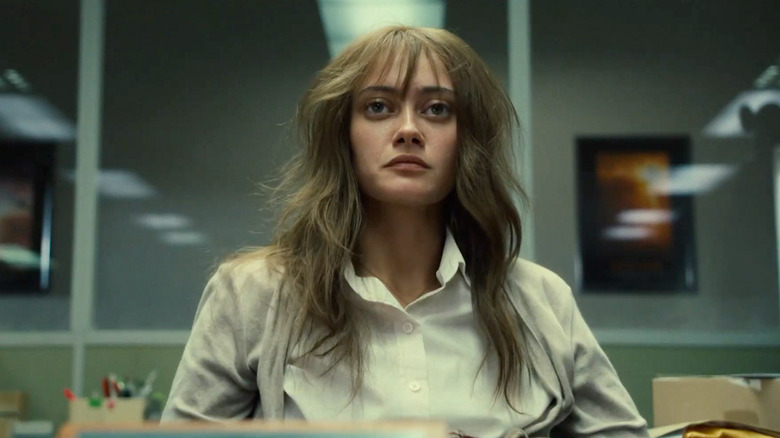
TV has long afforded outsized space for men to behave like psychopaths and for audiences to cheer them on. It's only just that everyone gets the same opportunity ... right?
That observation isn't too far off from the core dramatic question of "Sweetpea," a slick British thriller about a young woman ("Yellowjackets" and "Fallout" star Ella Purnell) whose experiences with sexism, bullying, and tragedy lead her to perceive a world divided into villains and victims. When the series begins, she's only certain that she can no longer stand being the latter.
At a time when most series mentioned above feel understandably compelled to question why audiences rooted for "Dexter" for eight-plus seasons, "Sweetpea" actually comes closest to the truth by embracing the former series' spirit instead of apologizing for it. Before shows had to explicitly state whether or not characters were "good" or "bad," "Dexter" gave audiences an amoral revenge fantasy, then asked them why they watched it. "Sweetpea" does the same.
You
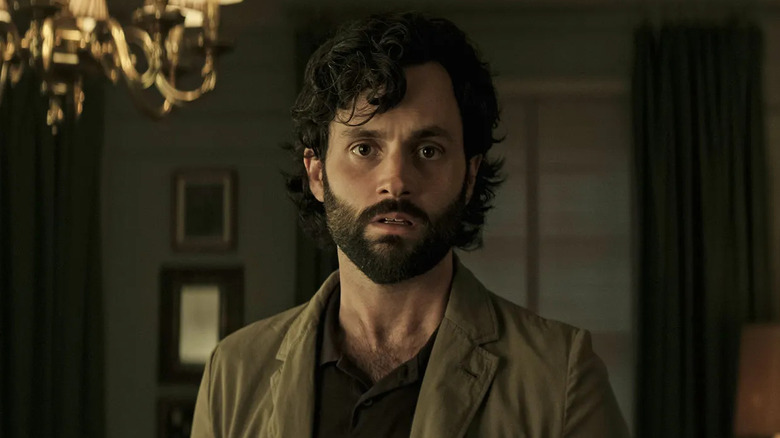
From "Barry" to "Sweetpea," we've already discussed a number of recent shows that feel like they're striving to update "Dexter" for contemporary viewers. None of them are as openly and amusingly combative with the Showtime series as the Netflix thriller "You."
When the show first premiered on Lifetime at the end of the 2010s, it didn't immediately betray its true intentions. Penn Badgley's Joe Goldberg seemed like a sweet, if slightly neurotic and obsessive romantic protagonist the audience would easily cheer for and swoon over. Then he bludgeons a guy with a mallet at the end of the pilot episode.
The story that unravels over the course of the following five ambitiously dynamic seasons works on two distinct registers. One, it explores the psychology of a man like "Dexter" who, despite endlessly writing himself as the hero of his own story, is constantly confronted with the consequences of his pathological behavior. Two, it moves beyond merely implicating the audience through narration (cleverly stylized as "romantic" prose written in the second-person) and actively asks them to reconsider their relationships to antiheroes like Joe and Dexter.
By engaging the audience directly while strategically robbing Joe of the Bay Harbor Butcher's technical precision and sexual mystique, "You" deconstructs the serial killer protagonist rather than merely reinventing him. Suffice it to say, if "Dexter" failed to psychologically satisfy, it might be time to focus on "You."