10 TV Shows To Watch If You Like HBO's Hacks
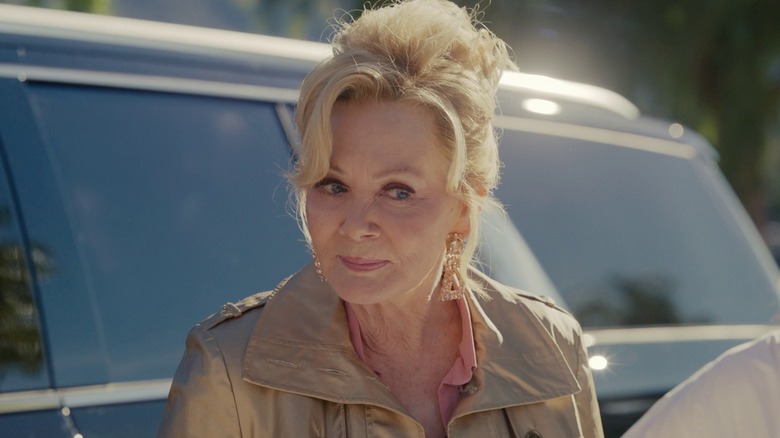
It's safe to say at this point that HBO Max's "Hacks" is one of the defining TV shows of the 2020s. Talked up from early on for its effectiveness as a star vehicle for the great Jean Smart (who has already won four out of four possible Comedy Lead Actress Emmys for her work on the series), this Lucia Aniello, Paul W. Downs, and Jen Statsky-created Hollywood dramedy has gradually revealed itself as a tremendous ensemble piece, in which the punchy precision of the satire intermingles with elite-tier dramaturgy and character psychology to create something unique and inebriating.
The relentless excellence of "Hacks" is once again on display as the show airs its fifth and final season, which brings the story of renaissant comedy legend Deborah Vance (Smart) and her personal writer, instigator, bickering soulmate Ava Daniels (the also Emmy-winning Hannah Einbinder) to a head. And, with Season 5 pulling out all the stops following the wake-up call on the Season 4 finale, any fan of the show can be excused for dabbling in a bit of preemptive blues for the imminent conclusion.
The good news is that, as sui generis as the combination of tense character drama and over-the-top comedy on "Hacks" may be, there are many other series from the past three decades of TV history that offer similar rewards — comedy-wise, drama-wise, or both. Below, you will find a selection of 10 shows that are especially worth watching if you like "Hacks," ranging from other comedies about the backstage bustle of show business to tonally and emotionally kindred stories set in completely different milieus.
The Marvelous Mrs. Maisel
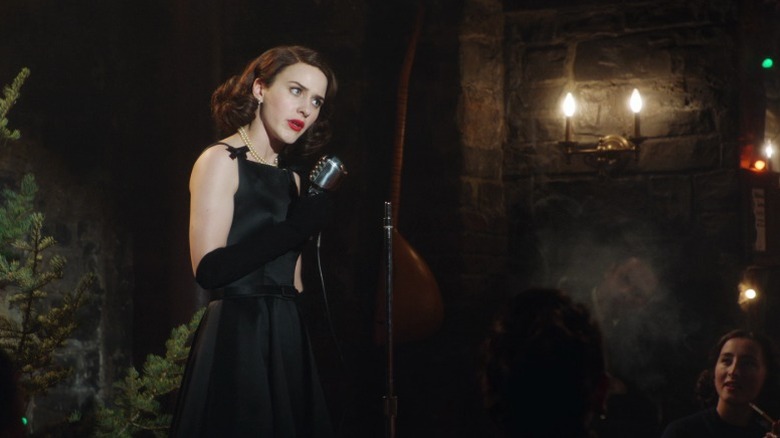
The clearest modern point of comparison with "Hacks" is a show set entirely in another era of comedy and television, but similarly taken with the nuances of navigating showbiz as a strong-willed female creator. Aired between 2017 and 2023, Prime Video's "The Marvelous Mrs. Maisel" follows Miriam "Midge" Maisel (Rachel Brosnahan), a Jewish housewife with a passion for comedy in 1950s New York City, who reinvents herself as a stand-up comedian after her husband Joel (Michael Zegen) ditches her.
Midge is fictional, but she might as well not be: "The Marvelous Mrs. Maisel" imagines her erratic but spectacular rise so vividly that it feels like watching the world's most interesting and sharp-tongued biopic. Much like Deborah Vance on "Hacks," her persona and biography are largely inspired by Joan Rivers and other glass-ceiling-breaking comedy pioneers, but her artistry on stage has an electric charge all its own. Also like "Hacks," the series largely hinges on a knotty central relationship between two women — in this case, between Midge and Susie Myerson (Alex Borstein), the surly barkeep who becomes her manager.
Created by Amy Sherman-Palladino and infused with her trademark zippy dialogue, "The Marvelous Mrs. Maisel" is also a precursor to "Hacks" in the way its coruscating satire belies profound, carefully-assembled, and frequently anxiety-inducing character drama. Midge's enormous talent and indefatigable work ethic burn through the '50s comedy scene like a blast of fire, but, along the way, she has to contend with tough questions about the nature of fame, success, expression, and creative fulfillment. Thankfully, she can joke about it all — and the show's stand-up scenes are consistently a thing of beauty.
The Larry Sanders Show
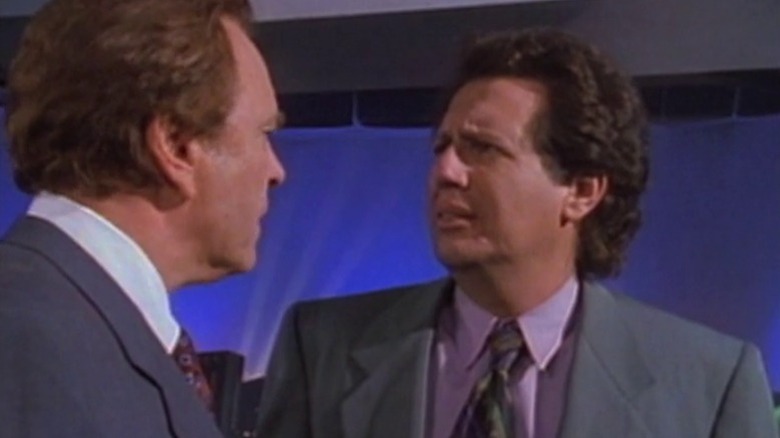
One of the shows responsible for ushering in the contemporary era of fast-paced single-camera sitcoms is "The Larry Sanders Show." This '90s HBO show is to some degree a hovering influence on every comedy series of the 21st century, just for having led the way in proving that TV comedy didn't have to be based around laugh tracks and theatrical staging. But, in the specific case of "Hacks," its shadow looms even larger than that: "The Larry Sanders Show" is also the pioneering dark comedy about the experiences of a TV comedy star and the behind-the-scenes folks who have to manage his massive ego.
Garry Shandling, who also co-created the series along with Dennis Klein, stars as Larry Sanders, the host of a fictional American late-night talk show that routinely brings in celebrity guests. With the budget and lack of content restrictions afforded by its HBO home, "The Larry Sanders Show" (the real-life series, not the show-within-a-show) plunges into the dark side of the entertainment world with morbid gusto, having A-list guest stars play malevolently exaggerated versions of themselves, and pitting the regular crew of the talk show in petty and vicious wars for power and prestige.
While the show rarely veers into outright earnest drama like "Hacks" does, it produces a similar kind of friction by casting cartoony sitcom antics against a backdrop of dry, unglamorous, and uncannily perceptive showbiz realism. It was one of the best sitcoms of the '90s, and still remains a laugh riot three decades later — a trailblazing show that never feels burdened with the weight of changing TV history.
Loot
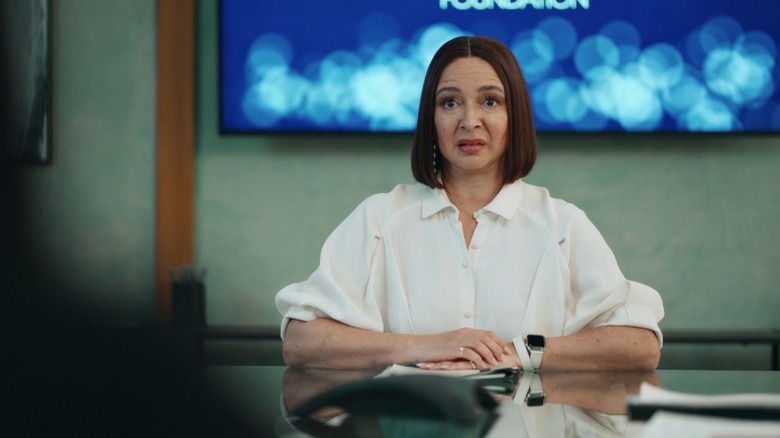
TV writers Alan Yang and Matt Hubbard have established a fruitful creative partnership with Maya Rudolph, first by creating the underrated, one-of-a-kind Rudolph fantasy dramedy vehicle "Forever" for Prime Video, and then by giving Rudolph the utter gift of a comedic role that is "Loot." Molly Wells, the once happy wife of tech billionaire John Novak (Adam Scott), finds out on the day of her 45th birthday that John is having an affair, and the ensuing divorce settlement leaves her as the world's second-richest woman with an $87 billion net worth.
After burning through a good few of those billions in a spree of globetrotting hedonism, Molly is left in a deep existential crisis — and crawls out of it by taking an active role in the charity foundation that she co-founded decades later and forgot about. "Loot" follows the awkward reckoning that ensues as Molly acclimates to her new "job" and mingles with the foundation's workers, striving to actualize herself and figure out what she wants out of life in the process.
It's a larger-than-life role that Rudolph attacks with all the pep, resourcefulness, and sense of fun that you'd expect, crafting what may at once be the funniest and most complex character of her career. For "Hacks" fans, the show offers the delight of another tense, freewheeling, glossily-produced comedy about a very rich and powerful woman embarking on a journey of self-discovery after decades of complacent existence, and the sparkling ensemble of employees forced to navigate her whims — here also including Michaela Jaé Rodriguez and Joel Kim Booster.
Broad City
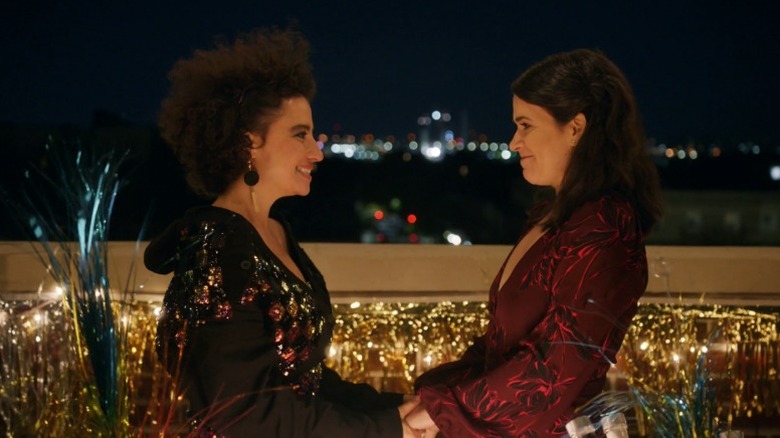
Before creating "Hacks," Lucia Aniello, Paul W. Downs, and Jen Statsky had already established themselves as major names in 2010s television comedy by way of producing "Broad City." One of the best Comedy Central shows of all time, this cult favorite buddy sitcom was created by Ilana Glazer and Abbi Jacobson, who star as New York City best friends Ilana Wexler and Abbi Abrams.
Abbi is an aspiring visual artist struggling to get a professional breakthrough; Ilana is a freewheeling, marijuana-loving slacker who lives from moment to moment. Although their tempers and ambitions differ significantly, they are each other's unshakable support system in the battle against the archetypal millennial life troubles: Untenable rent prices, Kafkaesque career paths, a discombobulating gig economy, a sanity-defying political landscape, an endlessly frustrating dating market.
One of the shows that defined and helped shape internet culture in the early-to-mid-2010s, "Broad City" tackles each of these intimately familiar and timely generational woes with a sense of humor as sharp and disciplined as it is perennially irreverent, and an easy chemistry between its two stars that rightfully became the stuff of TV legend. It's a hilarious, unmissable show for anyone who has ever experienced the onset of adulthood in the 21st century as a foot race up a hill made of pudding. And, if you love "Hacks," you will be especially smitten with the droll, quasi-surreal absurdism that Aniello, Downs, and Statsky honed here as writers and directors. As on "Hacks," Downs even has an acting role as Trey Pucker, Abbi's well-meaning boss at the gym in which she works as a cleaner.
The Comeback
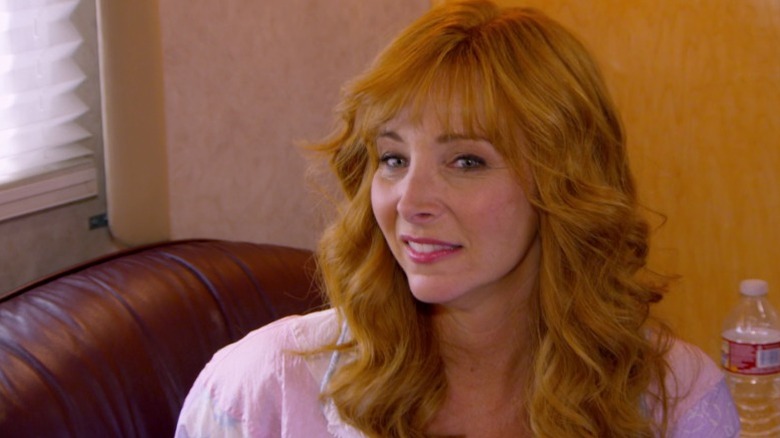
The clearest precursor to "Hacks" in HBO history is arguably "The Comeback," a scathing, formally audacious, highly metafictional cringe comedy series that originally ran for a single poorly-received season in 2005, before taking on cult favorite status and going on to air two additional seasons in 2014 and 2026. Created by Lisa Kudrow and Michael Patrick King, "The Comeback" stars Kudrow as Valerie Cherish, who begins the series as a washed-up sitcom actress with little in the way of career movement since the end of her star-making show "I'm It!" in 1993.
Each season of "The Comeback" explores Valerie's attempted career resurgence through a different mockumentary frame: First, she agrees to have her life filmed for a reality series as she prepares to star on the new sitcom "Room and Bored." Then, a decade later, she stars as a fictionalized version of herself on an HBO series about the making of "Room and Bored," and simultaneously becomes the subject of an extensive documentary film shoot. Finally, on Season 3, she is documented again by her longtime producer Jane Benson (Laura Silverman) as she gets cast in an entirely AI-written sitcom.
These Charlie Kaufman-esque layers of self-reflexiveness are further augmented by the fact that "The Comeback" presents the raw, unedited "documentary" footage, giving us a glimpse into the reality (however performed) of Valerie's life before it's been edited for the public. Kudrow, King, and the other writers explore this setup with devastating satirical prowess, making an ugly, spellbinding, and hysterically funny spectacle out of the vapid amorality and reality-bending deceitfulness of reality TV production. No wonder the show was ahead of its time.
GLOW
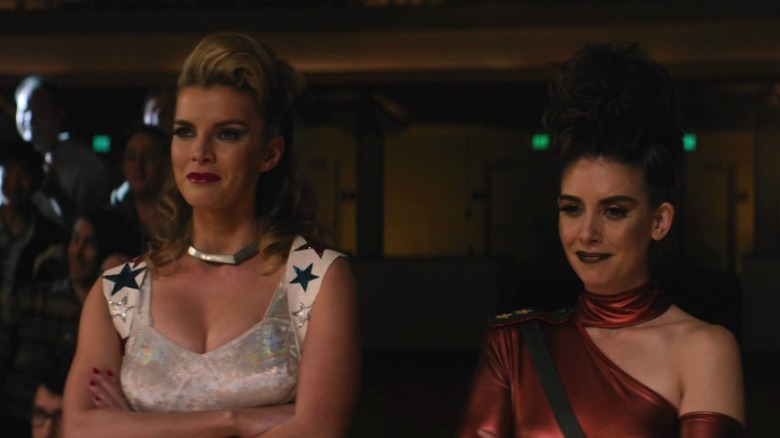
Created by Liz Flahive and Carly Mensch, the series fictionalizes the workings of the '80s wrestling promotion Gorgeous Ladies of Wrestling (GLOW), a notorious real-life syndicated circuit that featured numerous actresses and models looking to get a career breakout.
On the Netflix series, Alison Brie plays the fictional Ruth Wilder, a struggling actress who lands an audition and then finds out it's for GLOW. Despite initial trepidation, she gets the gig and throws herself into the promotion's campy, bright-colored universe, gradually honing her persona until she emerges as Soviet-inspired villain Zoya the Destroya. Along the way, she butts heads with the show's grumpy director Sam Sylvia (Marc Maron), and bonds with her various eccentric co-stars — though the social air is made a bit heavy by the casting of Debbie Eagan (Betty Gilpin), Ruth's former best friend with whose husband she had an affair.
"GLOW" banks primarily on the richness and multifaceted hilarity of its large female ensemble, and that alone makes it highly recommended viewing for anyone who loves "Hacks." But the two shows' similarities don't stop there: Both balance serious, frequently heartrending consideration of the challenges and sexist indignities of working in entertainment with a healthy dose of goofiness; both center a fraught professional partnership between two women who waver between friends and sworn enemies. And both frequently resolve their emotional tension through the sheer, self-explanatory euphoria of the performance sequences — here driven not by tight stand-up writing, but by dazzling fight choreography. Even though "GLOW" Season 4 was devastatingly barred from existing by the COVID-19 pandemic, the show's three existing seasons are must-watch TV by any estimation.
The Other Two
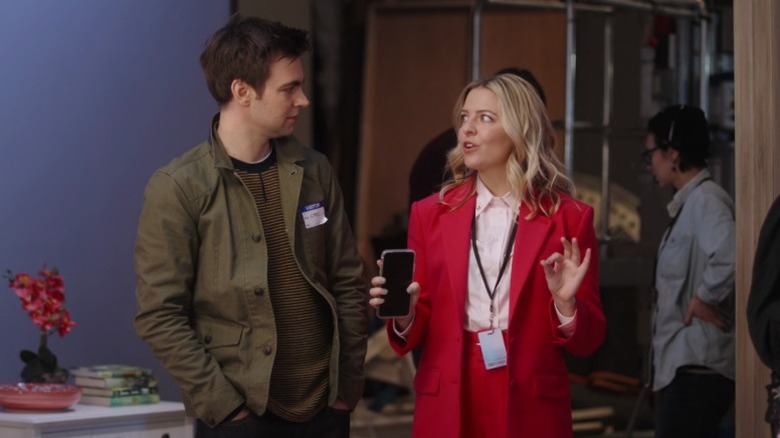
As a fellow 2020s HBO Max TV show about the follies of the entertainment industry in the era of streaming and internet virality, "The Other Two" is a close cousin to "Hacks." The main difference between them is that "The Other Two" is even more outlandish and outrageous, taking place not so much in a comically exaggerated version of reality as in a loopy cartoon-world dimension. The show's genius is that, even as it departs more and more wildly from the ostensible semi-realism of most TV comedy, its satire still manages to be as cogent and authentic as anything on a show like "Hacks."
Originally aired on Comedy Central for its first season before moving over to HBO Max for its (ahem) other two, "The Other Two" follows underachieving thirtysomething siblings Brooke Dubek (Hélene Yorke), a former dancer facing career uncertainty, and Cary Dubek (Drew Tarver), an unsuccessful actor trying to make ends meet. Their lives change overnight when their 13-year-old brother Chase (Case Walker) goes viral on YouTube and becomes a teen music sensation.
As Brooke and Cary try to make the most of the opportunities opened up by their proximity to fame, "The Other Two" charts a savagely clever path through the absurdities and inanities of the contemporary pop culture landscape, and scores some of the biggest laughs of any sitcom in the 21st century. It's not a sneaky dramatic powerhouse like "Hacks" — it never takes itself seriously enough for that — but it's arguably even more effective in turning the lives of the rich and (sorta) famous into a rambunctious circus show.
Killing Eve
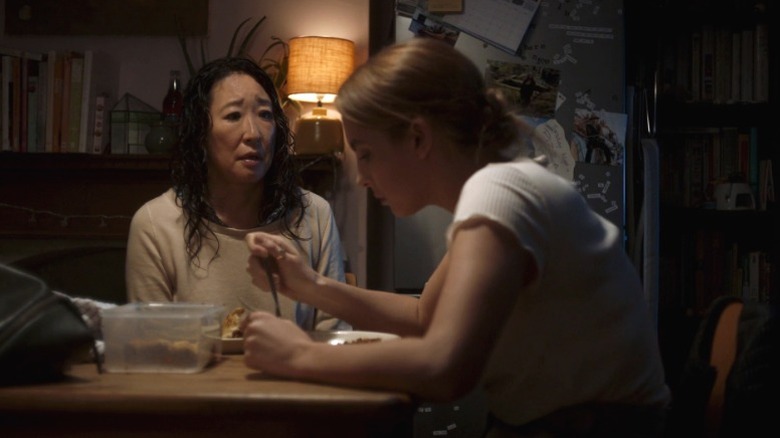
At first blush, BBC America's "Killing Eve" may not look like a show that would fit the same bill as "Hacks." It is, after all, an ultra-violent spy crime thriller that competed in "Drama" award categories for all of its four seasons. But it's no coincidence that both shows share a large contingent of fans in online communities. Even though their approaches differ massively in terms of genre, narrative direction, and tone, when it comes down to it, "Hacks" and "Killing Eve" are fundamentally about the same thing: The mutual fascination, hostility, understanding, and obsession shared by two women who can't seem to escape each other's orbit.
To be sure, the relationship between Eve Polastri (Sandra Oh) and Villanelle (Jodie Comer) is a lot more toxic, in much more dangerous and destructive ways, what with one being a U.K. intelligence operative and the other being a sadistic assassin. But the strange electricity that develops between them in spite of their better judgment, increasing in voltage as they try to convince themselves that their interest in one another is strictly professional, will be familiar to anyone who's been following the saga of Deborah Vance and Ava Daniels.
As unspooled by a rotating roster of female showrunners — with the first, Phoebe Waller-Bridge-penned season being the strongest, but every season holding interest in its own way — the story of Eve and Villanelle pushes the theme of life-altering codependent rapture to even more delirious extremes than "Hacks," while partaking in a similar predilection for wry social observation, ritzy vicarious living, and very, very dark comedy.
Search Party
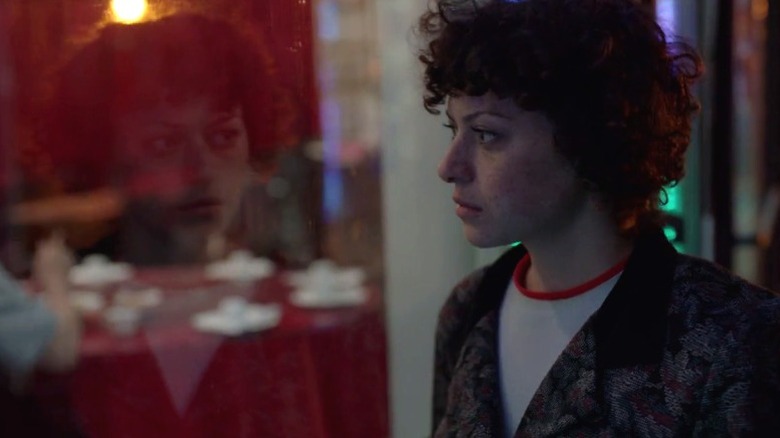
Although its latter three seasons share an HBO Max home with "Hacks," "Search Party" may otherwise be the most offbeat show on this list — if not the most offbeat show of the past decade of television, full-stop. Starring Alia Shawkat as unremarkable Brooklyn resident Dory Sief, the first season follows the metamorphosis of Dory's morose life into an amateur detective story, as she tries to untangle the mysterious disappearance of her college acquaintance Chantal Witherbottom (Clare McNulty).
That season alone is riveting, one-of-a-kind TV, enlivened by the unlikely contrast between the tense procedural framework and the shaggy millennial-sitcom antics of Dory's friend group. Then, in Season 2, with the original narrative loop seemingly closed by a shocking twist, the show improbably transforms into a paranoia thriller. "Search Party" subsequently dons the garments of a courtroom drama in Season 3, a close-quarters abduction thriller in Season 4, and a bizarre cult-themed sci-fi narrative with Season 5, parlaying each season's conclusion into a whole new narrative focus. And, through it all, it remains fundamentally a comedy series about the ridiculousness of contemporary life.
It's an utterly brilliant show, in which the unbound quasi-genrelessness allows for satirical commentary — on everything from media sensationalism to internet frenzies to the sociopathy of 21st-century individualism — that might not be facilitated by more conventional narrative frameworks. And, if you like "Hacks," you may especially enjoy the acrid sense of humor "Search Party" boasts, the thorny psychology of its characters, the sharpness of its outlook on social media, and the tact and sensitivity with which it handles truly dark dramatic material when it needs to.
30 Rock
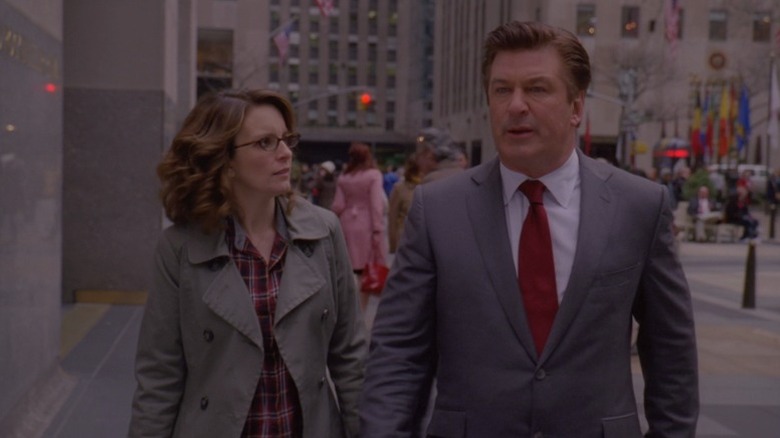
Arguably the most iconic and era-defining showbiz sendup sitcom of the 21st century, "30 Rock" raised the satirical gumption to levels that once seemed impossible for any other TV show to achieve — and "Hacks" is among the select few works that have managed to do it justice in the line of succession.
Created by Tina Fey and loosely inspired by her experiences as a head writer on "Saturday Night Live," "30 Rock" stars Fey herself as Liz Lemon, the showrunner of a flailing NBC sketch series titled "The Girlie Show." When microwave exec Jack Donaghy (Alec Baldwin) takes over as the new Vice-President of East Coast Television for General Electric, he gets Liz to hire loose-canon comic Tracy Jordan (Tracy Morgan) and retools "The Girlie Show" into the ostensibly more male-friendly "TGS with Tracy Jordan" — much to the chagrin of longtime "TGS" prima donna Jenna Maroney (Jane Krakowski).
"30 Rock" — thusly titled after 30 Rockefeller Plaza, the iconic New York City skyscraper that hosts NBC Studios — mines the havoc behind the scenes of "TGS" for all it can offer in terms of gag generation, delivering so many jokes of such stunning variety per minute that it often feels like it's operating on a whole different level from any extant live-action sitcom. But what really bridges it and "Hacks" is the singular feeling of ecstatic comic recognition that both shows elicit, getting in observations about contemporary media, culture, big-city lifestyle, American politics, and the bitter grind of professional comedy that can just as well provoke guffaws or gasps at their sheer nervy accuracy.