

10 TV Shows To Watch If You Like Netflix's Beef
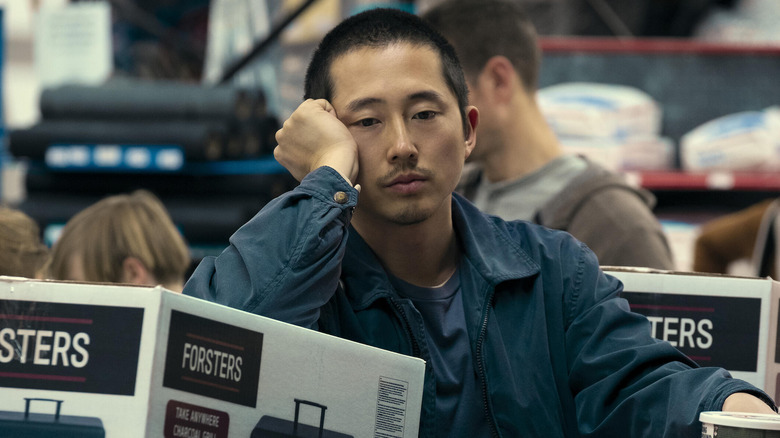
Three years after its Emmy Award-winning debut, Netflix has finally served up a second season of "Beef." While it may not fully match the infectious, mean-spirited, chaotically cathartic energy of the road-rage feud between Steven Yeun and Ali Wong, Lee Sung Jin's sophomore outing still delivers the tension and powerhouse performances fans had hoped for.
Those fans who devoured Season 2 are, once again, left wanting more. When it first premiered, "Beef" felt different from everything else on TV. It didn't rely on sci-fi concepts like bifurcated personalities or collective consciousness — instead, it stood out by charting two strangers' self-destruction with a singular voice. As upsetting and dark as it often was, it also earned several moments of humor, hope, and humanity that elevated it far beyond a mere nihilistic tragicomedy.
That brand of drama is hard to come by, and there likely won't be a perfect successor unless "Beef" gets a third season. Still, a handful of series tap into that same volatile mix of character study and emotional fallout. So until we know what the future holds for "Beef", these 10 shows will have to hold us over.
Bad Sisters
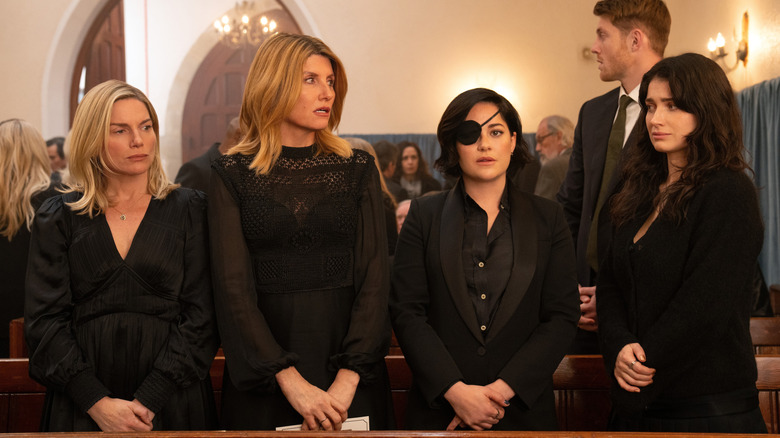
One of the most common beefs anyone will have in their adult life is with their in-laws. We can only hope tensions go no further than snide comments at Thanksgiving and a skipped Christmas — as opposed to, well, murder.
In the Apple TV+ black comedy crime thriller "Bad Sisters," an Irish family is thrown into chaos when their reviled in-law, John Paul (Claes Bang), turns up dead under suspicious circumstances. In life, John had been a monstrous husband, physically and psychologically abusing his wife, Grace (Anne-Marie Duff). His actions were so disturbing to Grace's sisters — Ursula (Eva Birthistle), Bibi (Sarah Greene), Becka (Eve Hewson), and Eva (series co-creator Sharon Horgan) — that the four of them had begun plotting his murder.
In the recent tradition of such bingeable streaming mystery series, "Bad Sisters" is all at once a whodunnit and a whydunnit. Its non-linear plot structure allows the narrative to move through the relationships between all five sisters and John "The Prick" Paul, exploring why and how they might have killed him to protect one another.
The series garnered an overwhelmingly positive critical reception in its first season, earning three Emmy Award nominations, including Outstanding Lead Actress in a Drama Series for Horgan. Sadly, it never achieved mainstream popularity and has yet to be renewed following a relatively disappointing second season. "Beef" fans will nonetheless be hard-pressed to find a series that manages to balance laugh-out-loud black comedy and emotionally challenging drama as effectively. The first season could honestly be enjoyed as a one-off miniseries in the same vein, with a satisfyingly messy conclusion you need only expand upon in your mind.
Barry
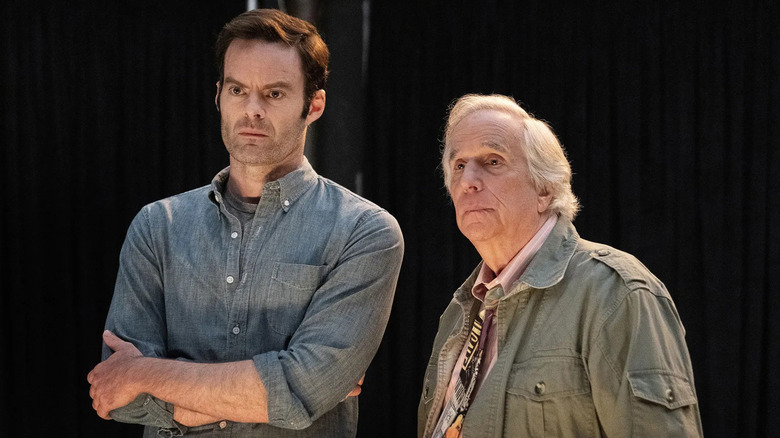
When "Barry" first premiered in 2018, there was little telling where the series was going to go. Bill Hader co-created, co-wrote, directed, and starred in this bizarre Hollywood fable about an emotionally bereft hitman searching for meaning in Los Angeles. After being sent to the city to execute an aspiring actor who ran afoul of the local Chechen mafia, he unexpectedly gets swept up in the passionate community of a small acting class.
Like "Beef" and many of the other series on this list, "Barry" is a comedically heightened but logically grounded series driven relentlessly by the consequences of the title character's actions. A lesser crime comedy might have tried to keep Hader's Barry Berkman in the acting class as long as possible to maintain a sense of continuity from season to season — instead, "Barry" felt like an entirely new series every time it returned to HBO because Hader and co-creator Alec Berg dared to pull at loose ends rather than tie them up. In the same way that the first season of "Beef" steers Danny and Amy everywhere from the suburbs of LA to the isolating wilderness nearby, "Barry" forces its characters to perform in a variety of settings — each of which disrupts the lies they attempt to tell themselves and the world about who they really are. The arcs of Barry Berkman and Danny Cho mirror each other in a particularly striking way.
Both men are existentially depressed, seeking answers in unfulfilling work they don't actually want to do. They share a conflict between their shameful pasts and lack of meaningful effort (Danny, in running his construction company honestly; Barry, in atoning for his past crimes) and a desire to be embraced by their community in spite of their actions.
The Bear
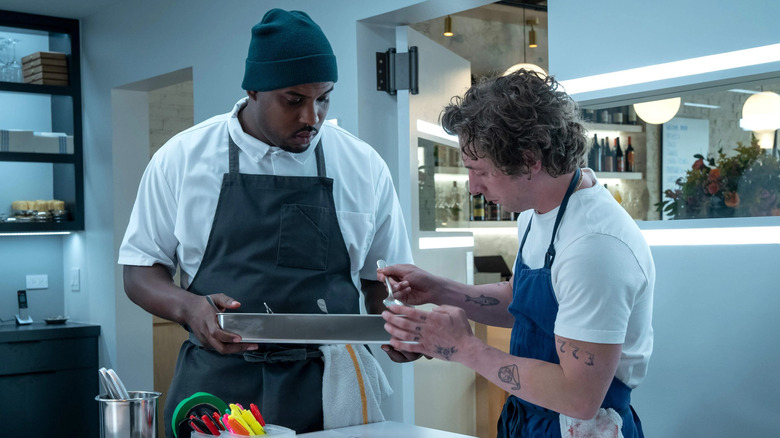
We can't talk about shows like "Beef" without getting to The Original Beef of Chicagoland. "The Bear" might not seem like it has much in common with the former show, at least to anyone who's only seen one or the other. Those who've had the pleasure of seeing both, however, will immediately understand why we're making this recommendation.
The FX series follows the personal and professional drama of a struggling yet exceptionally gifted chef (played brilliantly by Emmy Award-winner Jeremy Allen White) who abandons the high-stakes, high-stress world of fine dining to take over his late brother's (Jon Bernthal) neighborhood sandwich shop. As he becomes increasingly obsessed with transforming the eatery into a Michelin-star-worthy fine dining restaurant, "The Bear" explores the traumatic roots of his desperate quest for culinary perfection. His brother's mental health struggles, his family's inability to communicate, and the abusive atmosphere of the culinary world all play a role in both his talent and his psychological pain. Carmen's prolonged refusal to seriously address these issues, instead seeking salvation in professional success, creates the same tension as Danny Cho's own avoidant behavior toward his family's struggles. Their shared faith in the dignity of the hustle — a false ideal that leads inevitably to frightening public meltdowns — negatively impacts the lives of everyone around them.
Like any great dish, "Beef" and "The Bear" are made with the understanding that we eat first with our eyes. Especially in the latter series' resurgent fourth season, it finds ways to incorporate lavish sequences of culinary artistry at work that wouldn't feel out of place in a docuseries like "Chef's Table." Both series demand narrative and visual excellence in equal measure, a quality they share with shockingly few contemporary series.
Dead to Me
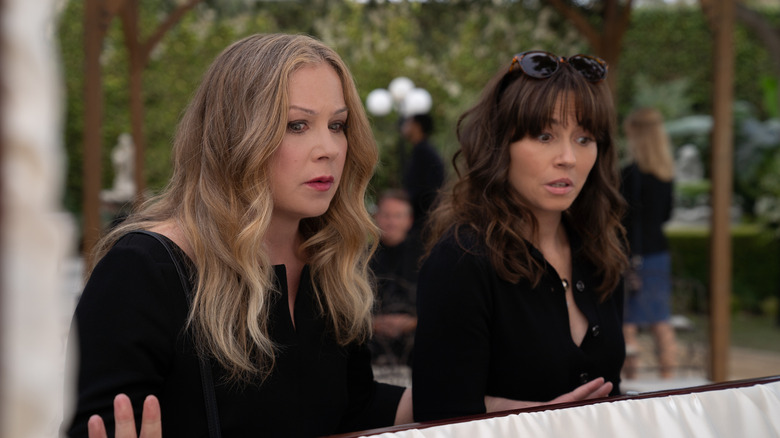
"Dead to Me" is, in most respects, the closest series to "Beef" on this list. The structural DNA is nearly identical to the first season of the latter series — two strangers are brought together by a dangerous vehicular incident and develop a volatile, mutually destructive relationship that nonetheless transcends love and hate. They ultimately come to know one another in that complete, existentially vulnerable way humans rarely, if ever, do. Later seasons even explore the same relationship challenges as "Beef" Season 2 — most notably, the struggle to love someone while still keeping parts of yourself from them. Suffice it to say, "Dead to Me" is an excellent series and a near-perfect follow-up for fans of "Beef." It's best experienced with as little plot info as possible — unless you need more convincing, you might want to scroll past the Season 1 spoilers below.
Christina Applegate and Linda Cardellini star as Jen and Judy, two women who gradually become inseparable after meeting in a grief counseling group. But there's something immediately off about Judy — Jen starts to recognize this fact when she learns Judy entered their support group under false pretenses. Though they find each other's presence to be mutually therapeutic (Jen copes with the loss of her husband, and Judy works through feelings of guilt by being there for someone in need), the shaky foundation of their friendship takes a dark and violent turn as fault lines begin to reveal themselves.
"Dead to Me" carries the same twin energies of domestic dramedy and imminent danger throughout its run, escalating the stakes from season to season. The only major point of divergence is its occasional drift into self-aware soap territory.
Fargo

Noah Hawley's "Fargo" is as consistent as anthology series come. Each season of the FX crime thriller (inspired by, but not narratively linked to, the Coen brothers' film of the same name) explores a rural town's unusual yet strangely inevitable descent into extraordinary bloodshed, largely driven by political and corporate corruption, organized crime, and random acts of passionate cruelty. Those are qualities that "Beef" fans will appreciate on the surface.
What season of "Fargo" you'll enjoy the most is arguably dependent on which season of "Beef" you preferred. The two-handed drama of the arguably superior Season 1 can be found in "Fargo" Season 5, which stars Jon Hamm and "Ted Lasso" alum Juno Temple as a corrupt sheriff and his estranged ex-wife, who escaped his abuse. Meanwhile, "Fargo" Season 1 focuses closely on the idea of repressed emotions from an unfulfilled life manifesting in sudden violence — Martin Freeman plays an insurance salesman whose chance encounter with an enigmatic hitman (played by Billy Bob Thornton) unravels his life entirely. Freeman's character behaves similarly to Danny Cho throughout the season, even to the extent that he can only use the life he wanted as a facade to mask the selfish, criminal past he took to get there.
For fans of "Beef" Season 2, "Fargo" Season 2 is the strongest option. Though it follows the aftermath of a car accident, its central theme is the moral complexity of romantic partnerships. Additionally, Season 3 — in which Ewan McGregor plays brothers on opposite sides of the wealth gap — will likely satisfy viewers with its dissection of class dynamics.
Fleabag

More than five years after the end of its brief run on Amazon Prime Video, "Fleabag" remains one of the most cherished treasures of the peak TV era. The two-season tragicomedy was written by star Phoebe Waller-Bridge, who originally conceived it as a one-woman stage show for a fringe comedy/theater festival. It's a wonder it was turned into an internationally acclaimed prestige drama – it's almost unbelievable that "Fleabag" took home the Emmy for Outstanding Comedy Series in 2019.
While "Beef" strips its performative characters to the bone by trapping them in deeply revealing feuds, "Fleabag" achieves the same level of intimacy by making the title character's only honest outlet the audience. Waller-Bridge plays the so-named protagonist, an impulsive cafe owner who copes with tragedy and trauma through casual relationships. Sex and comedy act as defense mechanisms that keep the world at bay from Fleabag — and, by extension, keep Fleabag from an inevitable reckoning within her own conscience.
"Beef" and "Fleabag" both explore what happens to people when they're trapped inside their own guilt. The latter show was particularly groundbreaking in that regard — Fleabag is the rare female antihero who is granted the same level of complexity as her counterparts, the story offering her humanity and empathy while denying easy absolution. It isn't hyperbolic in the slightest to suggest that it has had the most influence on 2020s TV of any show on this list — "Dead to Me" creator Liz Feldman has cited "Fleabag" as a key inspiration for her series.
I May Destroy You
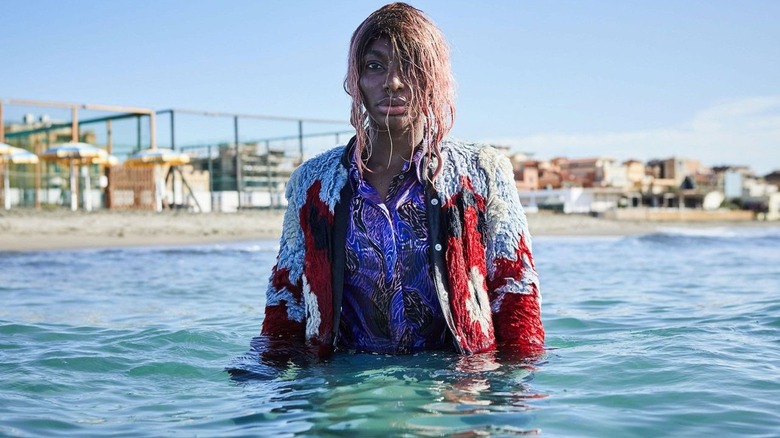
Many casual TV fans first heard of "I May Destroy You" in a consequential and combative context. It was notably snubbed by the Golden Globe Awards despite being one of the most critically acclaimed series of 2020, leading to outcry across the television industry.
While it helped spark a necessary conversation about what stories Hollywood champions, the controversy also threatened to overshadow what makes "I May Destroy You" one of the best miniseries of the decade so far. Creator-star Michaela Coel wrote the quasi-autobiographical tragicomedy after sharing her own story of surviving sexual assault while working in the entertainment industry. In "I May Destroy You," she plays a writer who is assaulted while trying to finish her next book. That artistic vulnerability alone is striking — what's even more remarkable is Coel's handling of such heavy, personally intimate subject matter.
"I May Destroy You" has a level of moral clarity that "Beef" lacks, but Coel's story is far from simple. She strives to create the same level of flawed, psychological complexity in her self-styled protagonist that "Beef" creates in its central characters, while also employing a comedic edge that prevents the viewer from settling into a single perspective. The series is also subversive formally and stylistically, exemplified by its deconstructive series finale. The work as a whole is unpredictable and audacious, brimming with authenticity that only makes its indictment of a culture of sexual violence all the more damning.
If you or anyone you know has been a victim of sexual assault, help is available. Visit the Rape, Abuse & Incest National Network website or contact RAINN's National Helpline at 1-800-656-HOPE (4673).
Patriot

Though it's one of the best series on Amazon Prime Video, there's a solid chance you haven't heard of "Patriot" outside of a list like this. It's the kind of cult series diehard TV fans are constantly trying to convince others to try — even though it was canceled after just two seasons. But if there was ever a time to give it a chance — whether because of its tonal proximity to "Beef" or its chilling relevance to real-world geopolitical conflicts — that time is now.
Set in the months before the second Obama Administration, "Patriot" follows John Tavner (Michael Dorman), a depressed intelligence agent tasked with helping the U.S. influence an Iranian presidential election. His boss and father, Tom (Terry O'Quinn), is convinced that the rival nation is mere months away from nuclear capability, making the installation of a friendly leader crucial to world peace. Of course, a significant amount of real, immediate violence stands between John and this hypothetical peace, a prospect that disturbs him in the aftermath of a botched assassination and his subsequent torture at the hands of the enemy.
"Patriot" is an admittedly absurd show at times, not least of all because it's essentially written as a folk musical. That might make it a tough sell for some "Beef" fans. But where the two align more closely than other series on this list is in how they explore radical empathy. Both shows vividly depict what it's like to have your worldview changed — perhaps in existentially troubling ways — by putting yourself in the position of someone you consider an enemy. The tragedy of "Patriot" is that John's empathetic awakening only makes him a more dangerous, if tortured, killer.
The White Lotus
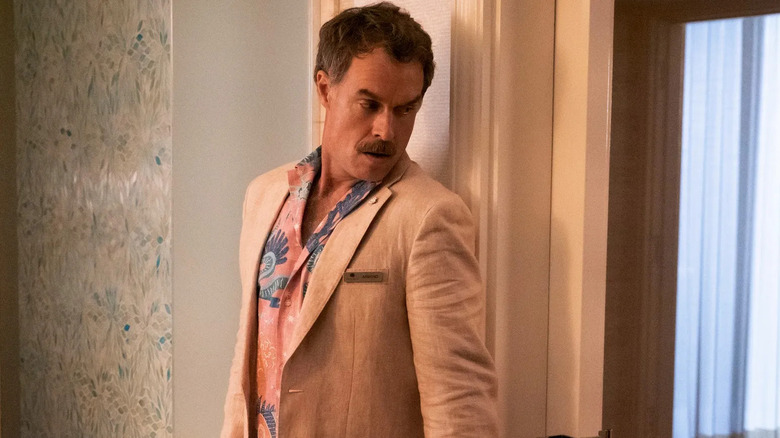
"Beef" fans who especially enjoyed the themes of class, romance, and spirituality in Season 2 should prioritize "The White Lotus" as their next watch. The HBO series was something of a sleeper hit when it premiered in 2021 and was originally intended to be a one-off miniseries. It became a cultural and critical sensation, dominating the Emmy Awards and making its continuation inevitable.
As of this writing, HBO has released three seasons of the now-anthology series, each of which takes place at a luxurious resort within the fictional White Lotus franchise. The best of them all is Season 1, which also happens to be the closest match to either season of "Beef." The ensemble cast is anchored by breakout star Murray Bartlett, who plays the attentive manager of the Hawai'i White Lotus hotel. Though he maintains a congenial composure, his simmering resentment toward the rich, entitled, and abusive clientele comes to the surface in shocking ways. His feud with a honeymooning trust fund brat (played by Jake Lacey) evokes the extreme and absurd pettiness of Danny's feud with Amy in Season 1 of "Beef." Meanwhile, the plot by vacationers Paula (Brittany O'Grady) and Kai (Kekoa Scott Kekumano) to exploit the rich family that sponsored Paula's getaway evokes Austin (Charles Melton) and Ashley's (Cailee Spaeny) naive desperation in Season 2.
The most recent (and divisive) third season of "The White Lotus" explores the moral and spiritual corruption that comes with amassing wealth and is worth watching for Sam Rockwell's deeply and hilariously unsettling cameo. Season 2 has less in common with "Beef," but will be undeniable for the vast majority of audiences entranced by Jennifer Coolidge's work in Season 1.
You
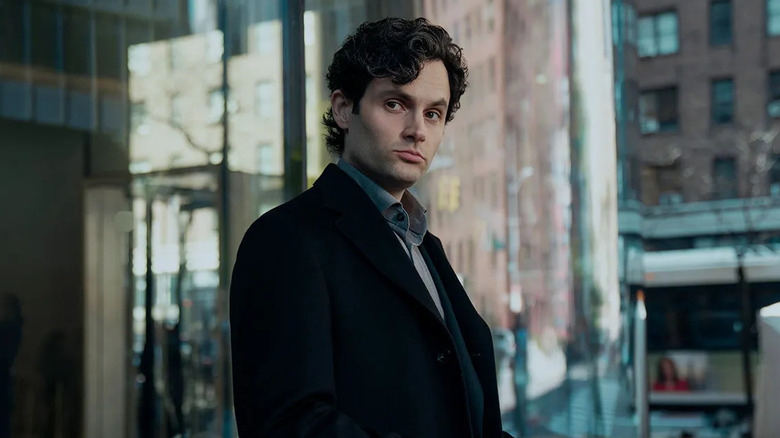
If self-destructive obsession is all you're looking for after finishing "Beef," you need not look too far for your next watch. Netflix's "You" indulges in the darkest qualities of the former series — stalking, compulsive violence, repressed rage, personality as performance, and unresolved trauma form the foundation of one of the most popular and polarizing character studies in recent TV history.
Even those who haven't seen the series yet are likely aware of its deceptive premise. Penn Badgley plays Joe Goldberg, a charismatic, soft-spoken romantic who, judging the proverbial book by its cover, appears to be the perfect gentleman. Of course, once anyone starts to flip through his pages, they'll find a calculating, manipulative narcissist whose single-minded desperation for love makes him more dangerous than most would imagine at first glance.
Season 1 of the series closely resembles the first season of "Beef." Danny and Joe lie to themselves in similar ways and are equally hard to root for, despite how painful it is to watch them struggle. Fascinatingly, for fans of "Beef," the following two seasons explore the same questions of romantic compatibility, commitment, and compromise that "Beef" Season 2 does — except, in the case of "You," you get to track the connection between self-hatred and love through the eyes of a single character.
The final two seasons of "You" were genuinely divisive. Whether or not "Beef" fans will have the patience to stick around for its navel-gazing series finale will depend on their stomach for soap-level schlock. But the first three seasons remain solid and provide a cohesive emotional journey that "Beef" fans are uniquely poised to appreciate.