

10 Superhero TV Shows That Define The Genre
When you think of genre-defining comic book adaptations, your mind probably goes to films like Sam Raimi's "Spider-Man," Christopher Nolan's "The Dark Knight," Patty Jenkins' "Wonder Woman," and Ryan Coogler's "Black Panther." However, some of the best superhero TV shows of all time have also reinvented iconic characters and redefined what audiences expect from superhero storytelling.
In this day and age, there are few genres in film and TV that are seemingly as overcrowded as superhero adaptations, thanks to some misguided projects from both Marvel Studios and DC. However, superheroes have a long history on television that predates many major film adaptations by decades, with some classic shows even influencing how characters were portrayed in comic books. What's even more surprising is that some of the best superhero TV shows focus on lesser-known characters rather than icons like Spider-Man or Captain America.
For these ten shows spanning the entire history of television, in both animation and live-action, superhero projects were simply never the same. They're the creme de la creme of superhero television, often representing comic book characters in ways that rival or even surpass their blockbuster movie counterparts.
Batman (1966)
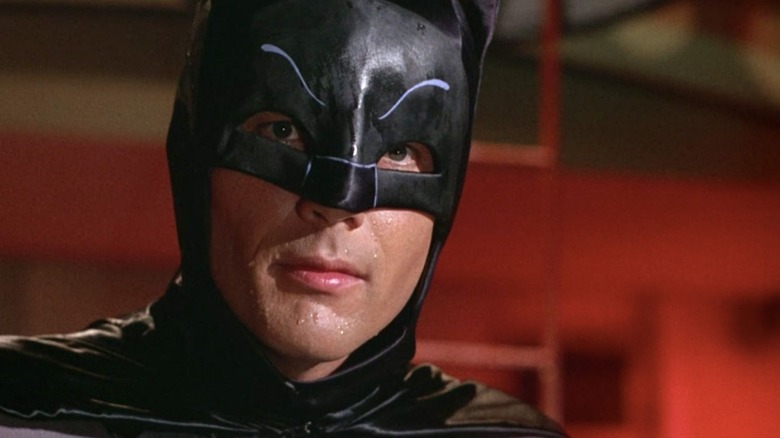
The version of Batman from the ABC series, which ran from 1966 to 1968, is almost unrecognizable compared to the version most modern audiences know today. "Batman" was campy from head to toe, packed with comic book-style action sequences, absurd gadgets, and, of course, a wildly catchy theme song ("Bananananana Batman!"). However, we simply don't get the gritty, grounded take on Batman without this wacky, cartoonish adaptation first.
The Dark Knight had already existed in comic book form for more than two decades by the time "Batman" began airing, but audiences primarily recognized the character for his rogues' gallery of villains and detective-style crime solving. These attributes carry over to the series, which features a rotating cast of supervillains, including Cesar Romero as the Joker, Burgess Meredith as the Penguin, and several different actresses as Catwoman, including Eartha Kitt and Julie Newmar.
When Adam West died in 2017, TV's Batman was fondly remembered for being one of the first faces to don the cape and cowl. Ultimately, it's hard to imagine classic farcical comedies like "The Naked Gun" existing in quite the same way without the influence of "Batman," which helped define how the general public viewed superhero stories: silly, campy, and largely free of real stakes (at least until comics like "The Amazing Spider-Man" #121-122 changed the conversation).
Wonder Woman (1975)
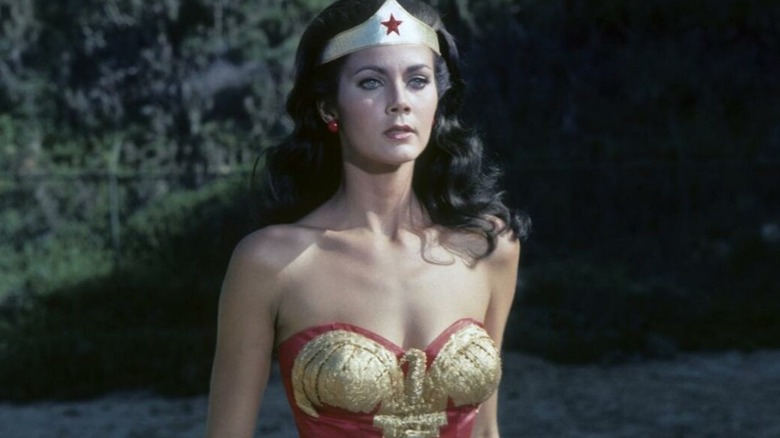
It's frankly astonishing that Wonder Woman didn't receive another major live-action portrayal between Lynda Carter's '70s television series and the 2017 film starring Gal Gadot. That being said, Carter's portrayal of TV's Wonder Woman is a tough act to follow, defining the character's World War II-set origin story over 40 years before Patty Jenkins did it from behind the camera.
"Wonder Woman" not only served as the primary adaptation of one of DC's most popular characters for several decades, but it was also heavily influential on the character's future comic book appearances. Lynda Carter herself had a lot of input into how the character was visualized, including her outfit and iconic spinning transformation. Ultimately, though, "Wonder Woman" did more for Carter than she did for the character, turning the actress from an unknown USO performer into one of the most recognizable television stars of the 1970s.
Whereas "Batman" helped bring comic book storytelling to television, "Wonder Woman" proved superheroes could become cultural icons beyond the page or screen. Carter's portrayal of Wonder Woman turned the character into an idea, something larger than life. And in return, the role made Carter a bona fide movie star, proving that if great power comes with great responsibility, then there's no greater power than playing a superhero.
X-Men: The Animated Series
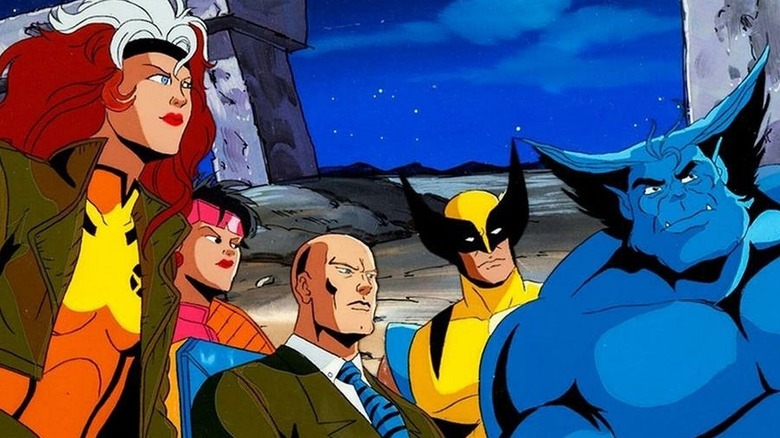
"X-Men: The Animated Series" wasn't the first on-screen appearance of Marvel's mutant heroes, but from the moment it premiered in 1992, it became the benchmark for adapting the comic book team. The five seasons of the show not only popularized the team but also directly led to Fox green-lighting a live-action film franchise that began in 2000 and continues to this day, with "Avengers: Doomsday" set to reunite members of the team from that original movie.
Beyond its importance in Marvel Comics canon, "X-Men" also redefined the Saturday morning cartoon, proving that serialized narratives were possible in a format often reserved for "adventure-of-the-week"-type stories. Additionally, many episodes tackled topical political and social issues in ways that still feel remarkably forward-thinking today, especially for a mid-'90s cartoon.
As further proof of the show's legacy as one of the most beloved superhero cartoons of all time, Marvel Studios created a confident, kinetic follow-up to the original animated series with "X-Men '97," a Disney+ exclusive that continues the story from where it left off in the season 5 finale, featuring several voice actors reprising their roles after more than 20 years. With another season on the way, "X-Men: The Animated Series" remains a landmark superhero series that continues setting a high bar for Marvel's mutant storytelling.
Batman: The Animated Series
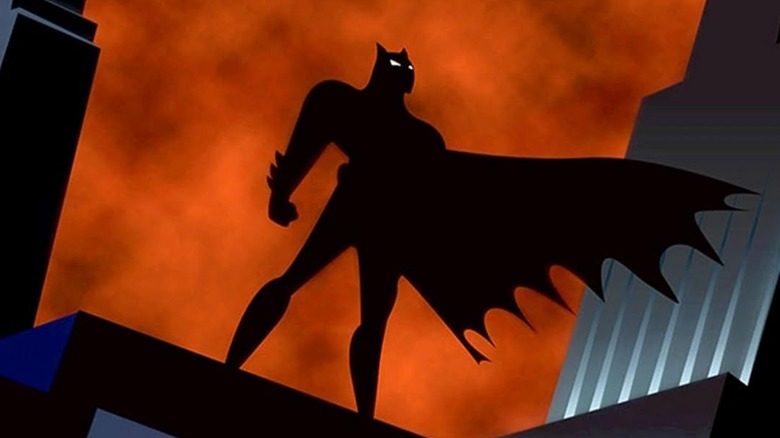
Ask anyone what the definitive version of Batman is, and you'll probably get mixed responses. Some may cite the more serious takes from Christian Bale or Robert Pattinson, while others may prefer the heightened portrayals by Michael Keaton or Ben Affleck. However, real fans of the Dark Knight know who the real definitive Bruce Wayne is: Kevin Conroy, the iconic voice of Batman in "Batman: The Animated Series," which ran from 1992 to 1995.
Not only was "Batman" acclaimed enough to win several Emmys throughout its run, but it may also be the most influential piece of media involving the character. Take, for instance, the fact that Harley Quinn originated in the animated series before later appearing in comics and live-action films, eventually becoming one of DC's most recognizable characters through performances by Margot Robbie and Lady Gaga.
Furthermore, "Batman: The Animated Series" is partly responsible for redefining the character as more than just a quirky, circus-like superhero story. Its portrayal of Bruce Wayne and his rogues' gallery was notably more grounded, taking cues from darker comic book storylines by creators like Frank Miller. The fact that voice actors from the series, including Conroy and Mark Hamill, continued to voice their characters in other "Batman" media, proves that most fans echo the sentiment that this animated series and its spin-offs have been arguably more influential on the character's image than even Christopher Nolan.
Smallville
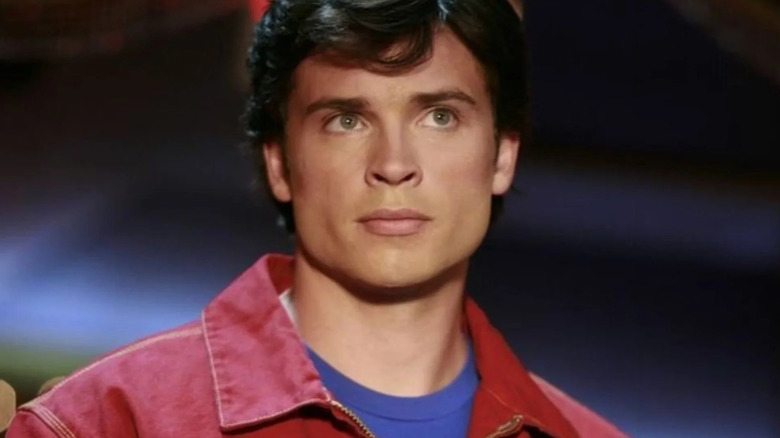
If you were to pitch today the concept of a series following the life of Clark Kent years before he ever dons the iconic cape and boots, you'd probably get laughed out of any room. Even the show's creators have admitted "Smallville" probably couldn't be made today, which makes its impressive 10-season run between 2001 and 2011 even more remarkable. The slow burn was clearly worth it, however, with Tom Welling's donning of the iconic Superman logo feeling like a well-earned fist-pump moment.
Nevertheless, part of what makes "Smallville" work is how unconcerned it is with the wider "Superman" comic book continuity, instead choosing to highlight his inner turmoil at living a life as an Earthling while being from another planet. Though the series still features Clark creating the Fortress of Solitude and crossing paths with iconic villains like Lex Luthor, Zod, and Darkseid, it was a bold move for a superhero show to avoid many of the campier elements of its source material.
Though you could argue James Gunn's "Superman" is steering the character back in the opposite direction, "Smallville" was hugely influential in pushing superhero TV away from the standard "villain-of-the-week" format and toward more grounded storytelling. If anything, we probably wouldn't have gotten the CW's "Arrowverse" of DC adaptations were it not for a show as successful as "Smallville" moving to the network when it was first created in 2006.
Daredevil
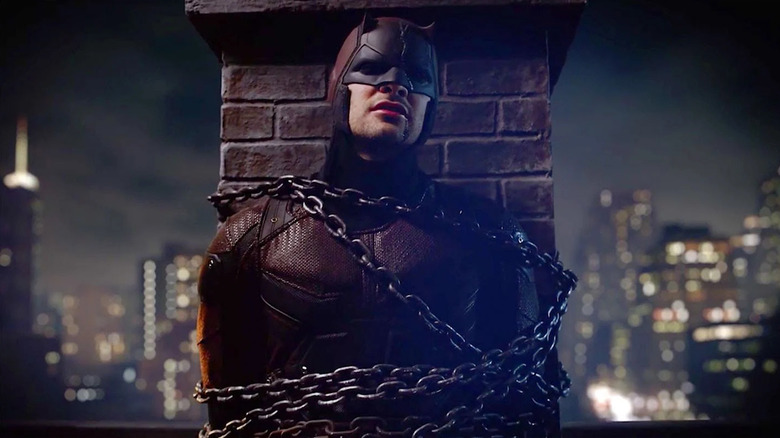
The Marvel Cinematic Universe didn't heavily intertwine with television until Phase 4, when shows like "The Falcon and the Winter Soldier" and "Ms. Marvel" began directly feeding into Marvel Studios' theatrical releases. However, some of the MCU's best television predated that more formal initiative, with Netflix producing a slate of shows centered on Marvel's street-level heroes, beginning with "Daredevil" in 2015.
Across three Seasons — as well as crossover appearances in shows like "Jessica Jones," "The Punisher," and "The Defenders" — Charlie Cox delivered what many fans consider the definitive portrayal of Marvel's blind lawyer-turned-vigilante, backed by an excellent supporting cast that includes Vincent D'Onofrio, Deborah Ann Woll, and Jon Bernthal. It's no surprise that years after its cancellation in 2018, Marvel revived the series as "Daredevil: Born Again," which has run for two seasons so far and is already renewed for season 3 at Disney+.
Whereas the MCU could be, at times, painfully PG-13, "Daredevil" took a much more mature approach to depicting the same cinematic universe. In turn, fans have responded much more positively to this grittier, violent type of Marvel television than to most of the other series Marvel has created. But maybe that's just because "Daredevil" and "Daredevil: Born Again" are just that good that it raises the bar for what Marvel fans expect from other shows.
She-Ra and the Princesses of Power
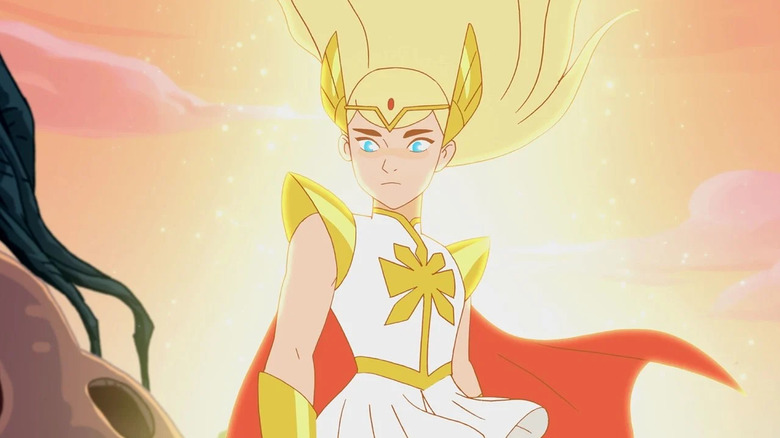
How do you take a franchise like "Masters of the Universe," which was essentially created in the 1980s to sell action figures, and retool it to be one of the most progressive animated shows of the 21st century? Look no further than "She-Ra and the Princesses of Power," a reboot of the 1985 series following the female counterpart to He-Man, which aired for five seasons between 2018 and 2020. Though "She-Ra" owes a lot to animated predecessors like "Steven Universe" and "Adventure Time," it carved out its own standard for diversity in children's animation.
Namely, the creators took strides to make the relationship between Princess Adora (the teenage girl who transforms into She-Ra) and Catra explicitly romantic, rather than settle for queerbaiting audiences with tension that never gets addressed. In addition to "She-Ra and the Princesses of Power" becoming a landmark in LGBTQ+ representation on TV, it also happens to be one of the rare spin-offs that's better than the original series.
It may be overstating things to say television has never been the same because of "She-Ra," but the series helped normalize queer love in mainstream superhero storytelling without making it feel forced or performative. More importantly, it reinforced what great superhero stories are supposed to do: remind audiences that even the most powerful beings imaginable still struggle with deeply human problems.
Watchmen
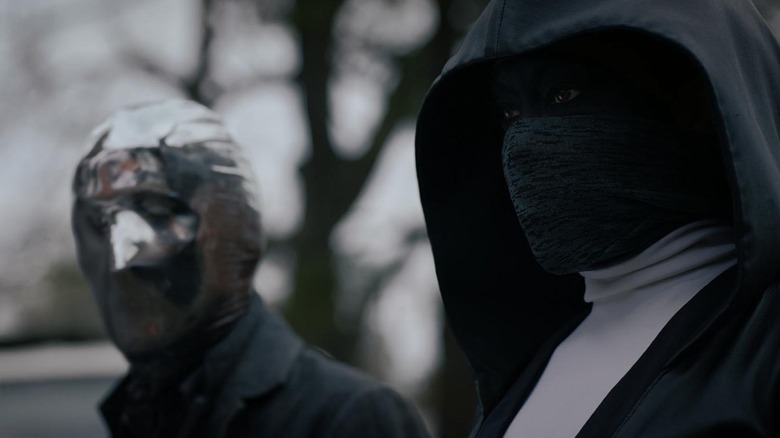
Though graphic novel writer Alan Moore detests any adaptations of his work, HBO's superhero drama, "Watchmen," merely uses its source material as a jumping-off point for a compelling story about America's complicated history with racial violence. Airing as a limited series in 2019, Damon Lindelof's take on "Watchmen" is set firmly in the present day, following a masked squadron of detectives in Tulsa investigating the lynching of their chief, whose own connections to racial violence are uncovered throughout the series.
In addition to this story with completely original characters, including Regina King's Sister Night and Tim Blake Nelson's Looking Glass, the series also features returning characters from the iconic graphic novel, including Jean Smart as Laurie Blake and Jeremy Irons as Ozymandias. The series also recontextualizes major pieces of "Watchmen" lore, providing new backstories for Hooded Justice — the vigilante who inspired the Minutemen — and Doctor Manhattan, whose presence remains a mystery until late in the series.
Whereas previous superhero shows gained acclaim for staying true to the comic books they're adapting, "Watchmen" proved that, at the end of the day, these superhero stories are meant to be rewritten and retold again and again for a new era. Still, HBO's "Watchmen" redefines the goal of superhero adaptations as not one-to-one recreations of the comics but completely new, relevant stories altogether.
Harley Quinn
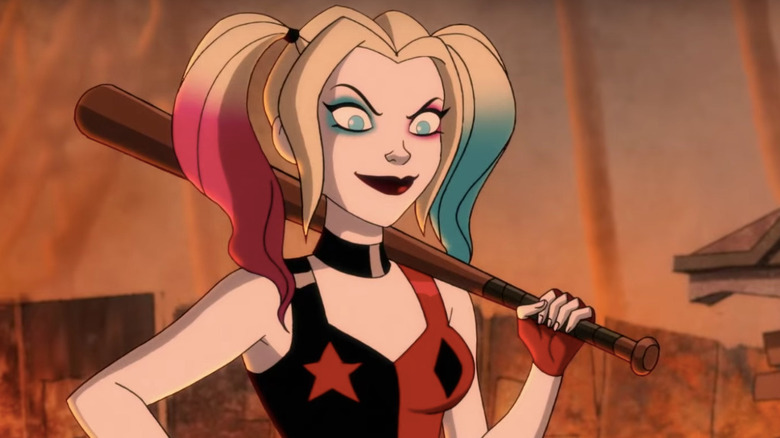
After debuting in "Batman: The Animated Series," Harley Quinn has risen to become one of DC's most popular comic book characters. After films like "Suicide Squad" and "Birds of Prey," it was only natural that Harley Quinn would eventually get her own animated series. What nobody expected, however, was a sitcom in which Harley (voiced by Kaley Cuoco) breaks up with the Joker and forms her own criminal crew alongside Poison Ivy, Clayface, Doctor Psycho, and King Shark.
Like "She-Ra and the Princesses of Power," "Harley Quinn" also made big strides in LGBTQ+ representation, depicting a romance blossoming between Harley and Ivy, whose relationship had always been reinterpreted throughout the comics by different writers. Nevertheless, what could've been just a mediocre adult animated series set in the DC Universe instead feels like a sharp response to superhero fatigue altogether, whilst simultaneously providing audiences with a truly heartfelt story about found families and true love, however toxic it may be.
Though the DC comedy's future is up in the air after season 5's finale, as a whole, it feels a lot bolder and riskier than a lot of superhero TV is, especially nowadays. Releasing in a time when DC's film output was receiving mixed results, having a show like "Harley Quinn" that was consistently pushing the franchise forward was exactly what superhero fans needed.
WandaVision
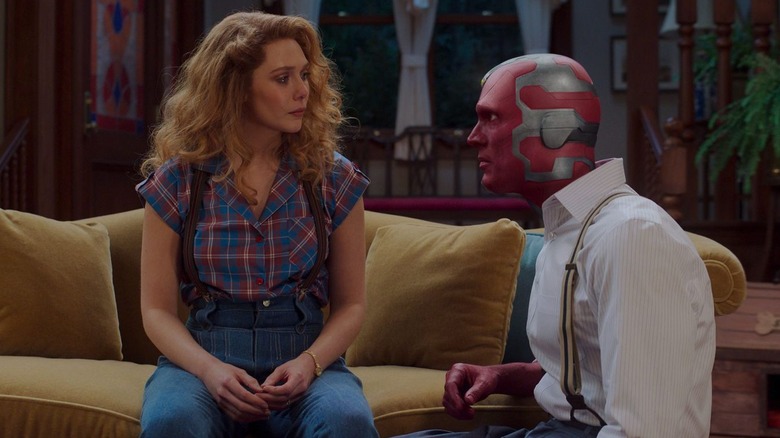
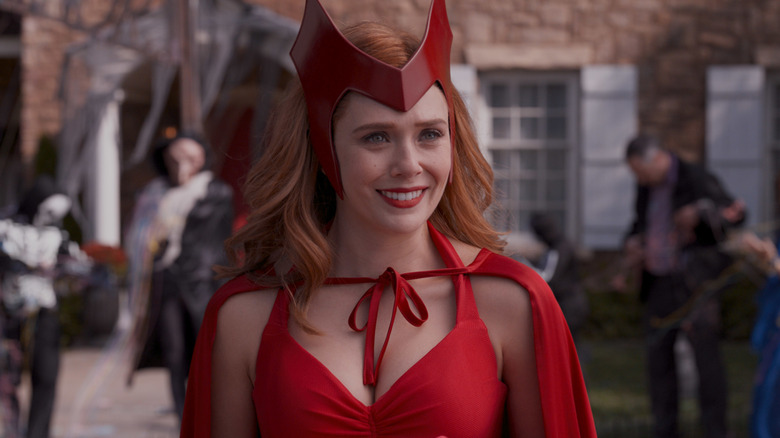
If there's any glaring flaw to the Marvel Cinematic Universe's television output in the past few years, it's that they peaked really early on with "WandaVision." As the first Disney+ series centered on characters from the MCU films, "WandaVision" felt like a perfect use of the television format, with Elizabeth Olsen's Wanda Maximoff reshaping reality in a small New Jersey town to create the sitcom life she wanted with Paul Bettany's Vision.
Not only is "WandaVision" a continuation of the characters' love story from "Avengers: Infinity War" and "Avengers: Endgame," but it's a love letter to sitcoms throughout the decades, paying homage to "I Love Lucy," "The Twilight Zone," "The Brady Bunch," and "Modern Family" throughout its episodes. Most of all, you can enjoy "WandaVision" even if you don't watch Marvel movies, since the show primarily focuses more on Wanda's grief and emotional turmoil than on setting up the next "Doctor Strange" film.
With other MCU shows feeling like the movies chopped up into six parts, "WandaVision" feels like a roadmap to what the franchise should be doing with TV. It's not only become one of the most critically-acclaimed entries in the MCU thus far, but it's essentially a standard for the Disney+ shows, with the most successful ones being those that lean into the episodic nature of TV, like "Agatha All Along" and "Loki."