

10 Forgotten '60s TV Shows That Are Still Worth Watching Today
Following early decades in which it largely broadcast live programs, with most scripted drama and comedy playing out as something closer to theater than film, American television charged into a new age with the consolidation of the Big Three networks in the 1950s. This new, transformative period — generally dubbed the Network Era, in contrast with the Golden Age of the '40s and early-to-mid-'50s — found filmed TV series finessing their popular appeal and sponsor attractiveness, largely on a trial-and-error basis.
And, while the networks' early eagerness to bite out as much viewership as possible did put some constraints on the dramaturgical sophistication that TV boasted in its theater-adjacent era, there are also plenty of early filmed series that still hold up as thoughtful, ambitious, and finely-crafted works of art. In the '60s, in particular, numerous productions managed to transcend the period's relatively rigid commercial demands and push the medium forward; many were the shows in which the paucity of trusted parameters encouraged boldness rather than caution, and the rapidly-changing times provided dramatic thrust instead of being conveniently smoothed over for the sake of a soothing time.
Not all of those shows, alas, became hits. Several of the very best series of the '60s, in fact, have all but faded into obscurity in the intervening decades. Below, you will find a list of 10 mostly forgotten '60s TV shows that are still very much worth watching today; many were so ahead of their time that they never quite got their cultural due, so we might as well help give them their due now.
East Side/West Side
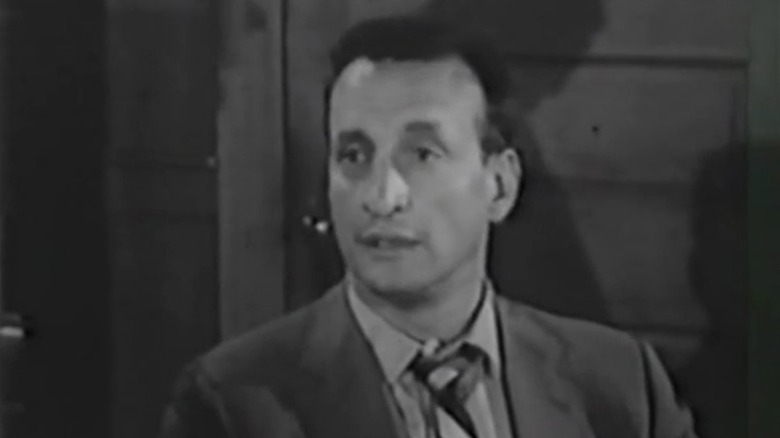
Although the '60s saw a general TV production shift towards escapist, apolitical, safely idealized mass entertainment, it didn't take long for shows in the new era to start tentatively stepping away from that format, and using the intimacy and immediacy of weekly filmed storytelling inside people's living rooms to contend with the harsh, hot-button realities of the world. One of the most emblematic of all shows to exemplify those new artistic frontiers was CBS' short-lived "East Side/West Side."
Created by David Susskind and largely intended as a star vehicle for then-up-and-comer George C. Scott, "East Side/West Side" follows Neil Brock, a social worker in a New York City private agency occupied with providing solutions for the various problems faced by the city's downtrodden and marginalized. The framing alone was quietly progressive: In addition to Scott, "East Side/West Side" starred Elizabeth Wilson as his female superior Frieda Hechlinger, and Cicely Tyson as fellow worker Jane Foster, who went down as one of the most influential Black TV characters of all time.
Episodes went straight in on topics that few shows or movies of the time would dare broach, from racial segregation to labor disputes to societal ableism; even more impressively, those topics were discussed with a level of sensitivity and dramaturgical resourcefulness that preserves them as fresh, urgent watches all these decades later. The boldness and modernity of "East Side/West Side" landed it in hot water with sponsors and led to a premature cancellation after just one 26-episode season, but those 26 episodes still rank among the most extraordinary ever produced for broadcast TV.
Then Came Bronson
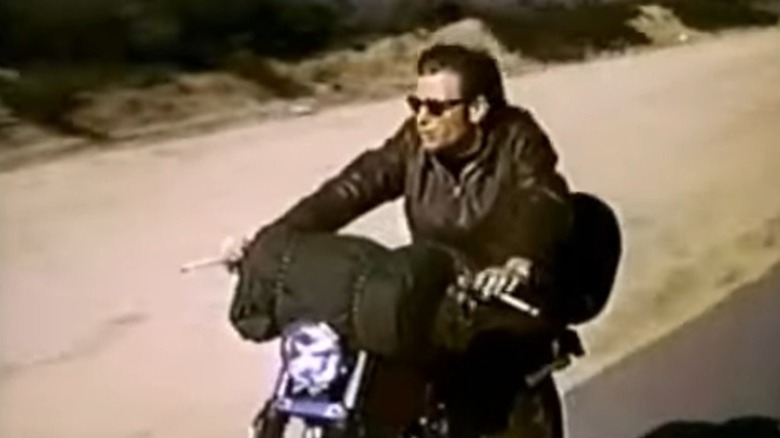
By the late '60s, it wasn't so much a matter of whether movies and shows would acknowledge the sociocultural turmoil taking shape among the United States' youth, but in what way they would choose to inevitably respond to it. The legendary New Hollywood movement began in this period, pushing American movies into gritty, grimy uncharted territory — and, on TV, "Then Came Bronson" is notable as a kind of extension of the New Hollywood ethos into film's sister medium.
"Then Came Bronson" began in March 1969 as a two-hour NBC television film starring Michael Parks as Jim Bronson, a journalist who is moved to reassess his life after the suicide of his best friend Nick (Martin Sheen). Bronson ultimately decides to quit his job, buy back from Nick's widow Gloria (Sheree North) the motorcycle he'd previously sold to Nick, and hit the road in pursuit of meaning. With the premise thus established by that two-hour pilot (which screened in some countries as a theatrical film), the show proper began officially in September of the same year.
Manifesting the hunger for freedom of a generation caught in the weeds of unfulfilling societal norm, "Then Came Bronson" takes on a kind of loose anthology format, with Bronson visiting various towns and cities around the U.S. and profoundly impacting the lives of successive strangers with his detached, unencumbered, rebellious perspective. The Denne Bart Petitclerc-created series ultimately ran for only one season and isn't widely remembered nowadays, but its brief run offers an indelible snapshot of a time when the whole country was asking itself what really matters in life.
The Defenders
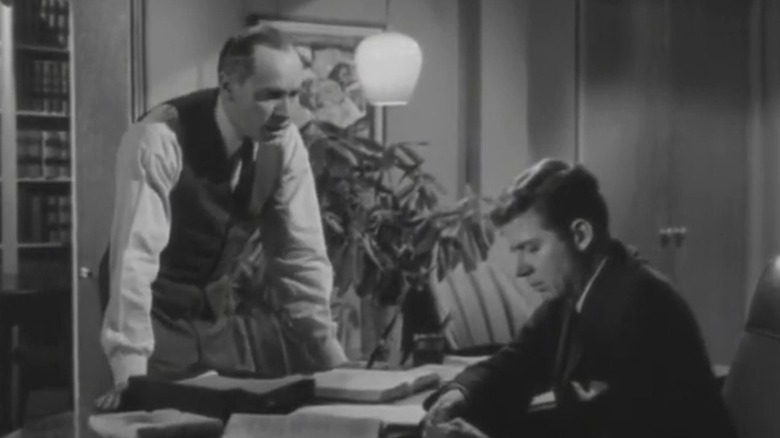
A few years after CBS' iconic anthology series "Studio One" wrapped up its legendary run in 1958, Reginald Rose, who'd created one of its most iconic episodes in "Twelve Angry Men," was also the author of an enthralling new spin-off project: From Rose's 1957 "Studio One" teleplay "The Defender" came "The Defenders," a show that revolutionized American courtroom dramas.
E. G. Marshall and Robert Reed star as Lawrence and Kenneth Preston, a father-son duo who run a legal practice specializing in thorny, challenging criminal cases. True to the spirit of sweaty, exacting judicial realism that Rose had already demonstrated with "Twelve Angry Men" and its 1957 theatrical film adaptation, "The Defenders" sidesteps the morally straightforward whodunit template of most legal dramas of the day, and grapples with the harsh complexities of work as a defense attorney: The Prestons don't always win, their clients aren't always sympathetic or deserving of acquittal, justice isn't always served, and even victories have a way of leaving behind a sour taste.
With the door thus opened to depict the legal system as it really was, "The Defenders" also made a point of taking on touchy political issues of the '60s — and wasn't afraid to use storytelling to loudly and effusively state its positions, many of which were radically progressive for the time, to the point of stirring trouble with sponsors and CBS local affiliates. It may not be as well-remembered as other, more conventionally rousing genre contemporaries, but it was a brilliant, trailblazing show that still echoes through every modern-day courtroom drama series that takes it upon itself to be topical.
He & She
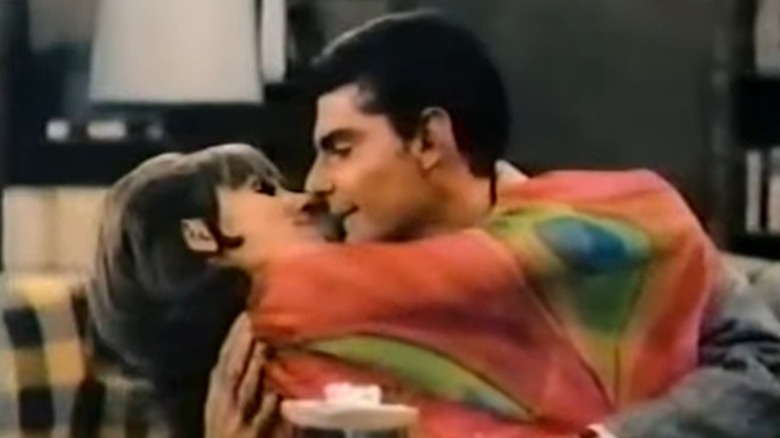
The '70s were a period of artistic and philosophical upheaval for television comedy, in which broadcast series got a boost in depth and sophistication from creatives eager to do new and interesting things, and networks eager to capture young, hip, sponsor-friendly urban audiences. Of course, every revolution has its forgotten precursors — and the sitcom new wave of the '70s probably couldn't have happened without "He & She," a 1967-68 show that barely made a blip in ratings.
Created by Leonard Stern and broadcast on CBS at a time when it didn't really slot in comfortably anywhere on the network's schedule, "He & She" follows married couple Dick and Paula Hollister — played by the real-life husband-and-wife duo of Richard Benjamin and Paula Prentiss. Dick is a big-name cartoonist, whose character Jetman is now the hero of a TV adaptation starring the boisterous Oscar North (Jack Cassidy); Paula is a devoted and fulfilled social worker. They're childless, career-driven, happy, and deeply in love.
Although much of the appeal is vicarious, "He & She" continually finds clever ways to inject mayhem and mishap into Dick and Paula's romantic bliss. The show's 26 episodes were ahead of their time in the most literal way; their punchy, fast-paced, culturally savvy big-city comedy served as a direct inspiration for staff writer Allan Burns to co-create "The Mary Tyler Moore Show" a couple years later, with all that entailed for the sitcom industry. Seen today, "He & She" is as fresh and hilarious as ever — the kind of show that leaves you in disbelief at its release date.
Law of the Plainsman
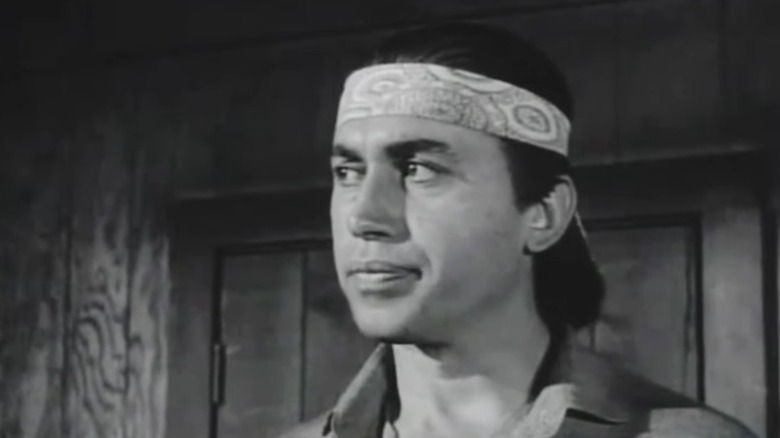
As a pioneering midcentury U.S. TV series with a Native American main character, NBC's "Law of the Plainsman" has aged considerably in a number of expectable ways — beginning with the fact that Michael Ansara, who played protagonist Sam Buckhart, was not actually Native American, but Syrian. Even so, and with all the grains of salt that must go along with praise for such flawed strides in "representation," the show deserves plaudits for the matter-of-factness with which it structured a sturdy, solid conventional Western around a protagonist who would have been a rarity even in movies.
Originally introduced on ABC's "The Rifleman," Sam Buckhart is a late-19th-century Apache man with a peculiar backstory: He once saved the life of a U.S. Cavalry officer, who funded his Harvard education in return. The show finds Sam at the point in which he's back home in New Mexico, living in a boarding house managed by Martha Commager (Nora Marlowe) and working as a Deputy U.S. Marshal under Andy Morrison (Dayton Lummis).
The show's 30 half-hour episodes, of which 14 aired in 1959 and 16 in 1960, followed typical lawman-centric Western plots carried off with aplomb and confidence. And what "Law of the Plainsman" lacked in narrative originality, it more than made up for in the characterization of Buckhart himself, who went down as one of the most singular, compelling, and charismatic TV protagonists of the '60s despite the series' limited success. His layered, stereotype-breaking presence — brought to life by Ansara in an admittedly excellent, if ethnically incongruent, performance — is reason enough to watch if you're a vintage Western fan.
Coronet Blue
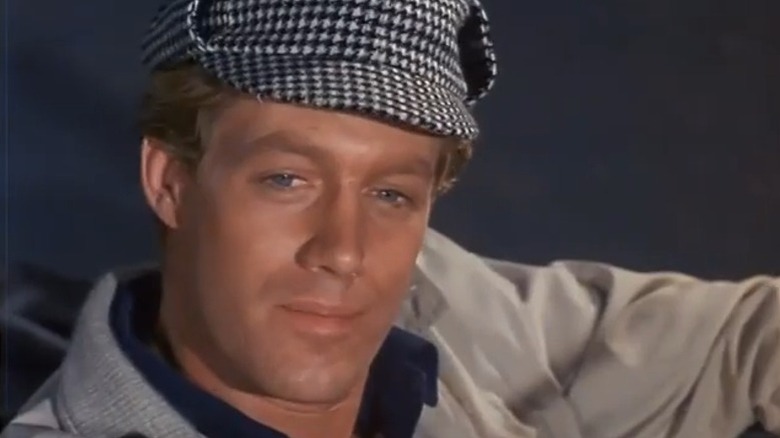
Mystery shows that get axed before they have the chance to deliver explanations are not a new phenomenon at all; in fact, they've been around since the early years of television, as illustrated by the Larry Cohen-created "Coronet Blue." Evolved from Cohen's stint as a writer on "The Defenders" — and specifically from his penning of the 1963 episode "The Traitor" — this one-hour puzzle-box thriller begins with beguiling vagueness, and only gets more intriguing from there. But its years in post-production limbo, coupled with its belated airing as a 1967 summer replacement on CBS, drove a wrench through the possibility of longevity, and led to an open-ended denouement after just 13 episodes — the last two of which didn't even air originally.
Frank Converse plays a nameless man who gets drugged and thrown in a river in New York City, washing up with no recollection of who he is or what led him to this situation. Taking up the name "Michael Alden," he begins to look for pieces of his past, with his memory of the words "Coronet Blue" as the only extant clue. The show's overarching design is such that the unlikely characters and situations encountered by "Michael" during his investigation are plenty engrossing by themselves regardless of where they're leading, with a blunt, assertive weirdness that calls to mind everything from "Twin Peaks" to "Lost" to "Utopia." If you can abstract the fact that the big question mark hanging over it will never get directly addressed, "Coronet Blue" remains an enthralling WTF-is-happening watch, which at its best recalls the dizzy pungency of Cohen's legendary film work.
My World and Welcome to It
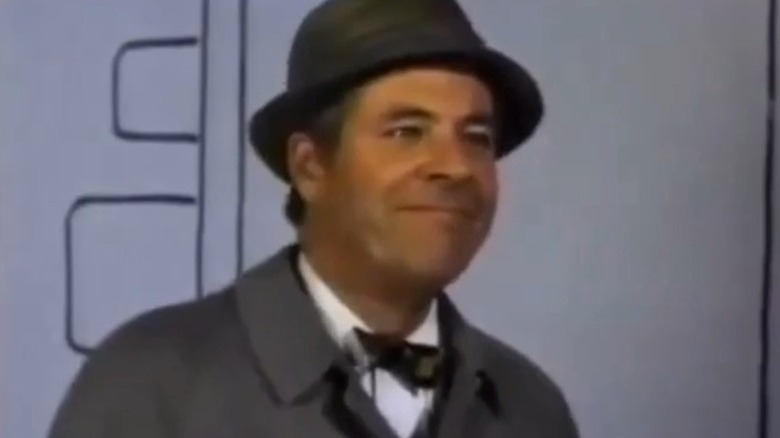
You'd have to go all the way back to 1970 to find the last time — as well as the only time, excluding variety series — that a freshman show won the Comedy Series Primetime Emmy and then went on to produce no new seasons after that. This tidbit alone attests to the blazing, hard-to-accommodate brilliance of "My World and Welcome to It," a rare sitcom that could genuinely be described as wholly unlike anything else.
Or so it could at the time, anyway, before its innovative, medium-bridging combo of dour mundanity and wily surrealism echoed through numerous postmodern tragicomedy series in the 21st century. As futuristic as "My World and Welcome to It" was in its artistic ethos, however, it was also deeply, unmistakably of its time: A 1969 series about 1969 frustrations, drawing from the work one of the great chroniclers of midcentury neurosis.
The chronicler in question was James Thurber, the celebrated cartoonist and writer upon whose work "My World..." bases its style, its black-linework-on-white-paper animated interludes, and many of its weekly plots. William Windom stars as John Monroe, a grumpy Thurber analogue who draws cartoons for a suspiciously The New Yorker-esque magazine while constantly bickering with his wife Ellen (Joan Hotchkis) and trying to understand his genius daughter Lydia (Lisa Gerritsen). The show is a sitcom in the sense that it mines comedy from the family's various exasperating situations, but its approach is unusually light on big ha-ha punchlines and heavy on tartness and introspection. With decades of foresight, it fully visualized the limitlessness of what TV comedy could be.
87th Precinct
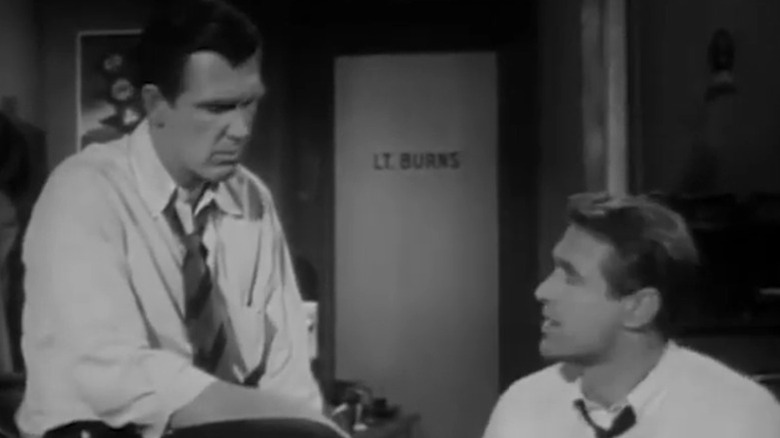
Just as "The Defenders" helped network-era courtroom shows get serious, NBC's little-remembered "87th Precinct" paved the way for all the gritty, realistic, socially and morally complex cop dramas of subsequent decades, from "Police Story" to "Hill Street Blues" to "Homicide: Life on the Street" to "The Wire" to "Southland" to pretty much anything else you could name. Robert Lansing, Norman Fell, Gregory Walcott, and Ron Harper star as four detectives in the titular New York City precinct, whose daily lives balance police grunt work with a number of winding, high-risk cases.
Uniquely for the time, "87th Precinct" also follows its four protagonists outside the station, incorporating their home lives and off-work hours into each episode. The writing takes advantage of the dense foundation laid by writer Evan Hunter a.k.a. Ed McBain in his eponymous novel series: Each of the detectives is a fully-rounded human before being a crimefighter (with none other than Gena Rowlands showing up occasionally as the wife of Lansing's character), and cases are often complicated by sociological intricacies.
Although the portrayal of the main characters and of the police as an institution skews unambiguously heroic (this is a subversive show for its time, but not that subversive), "87th Precinct" also punctures any sort of Hollywood idealization by dutifully observing the trifling, unglamorous community service that's usually left out of most cop media despite being central to the job description. Add in the perceptive, nonchalantly progressive depiction of New York City in all its ethnocultural diversity, and you've got yourself a rare midcentury crime drama that can still be thoroughly enjoyed through a contemporary lens.
T.H.E. Cat
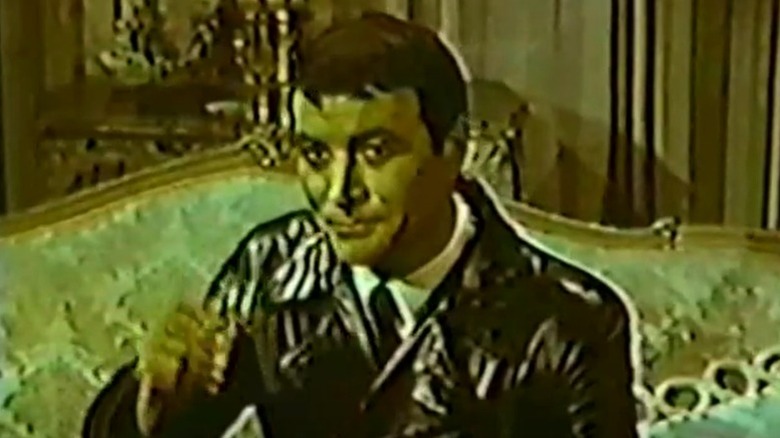
You may have noticed by now that this list is teeming with series that sported some measure of audience-alienating eccentricity — but "T.H.E. Cat" is something else entirely. Created by Harry Julian Fink, this bizarro mélange of smoky noir, ritzy "James Bond"-esque action bombast, martial-arts-flick-style acrobatics, stately Shakespearean pontification, and quietly avant-garde cinematography didn't manage to find an audience during its brief 1966-77 NBC run, and remains largely overlooked today. But talk about a show that begets fascination.
A rare half-hour drama, "T.H.E. Cat" follows the adventures of Thomas Hewitt Edward Cat (Robert Loggia), a one-time circus acrobat and cat burglar who now works as a highly skillful bodyguard, taking on clients supplied by his police captain friend (R. G. Armstrong) or lending a hand to old acquaintances. Plots generally begin and end at Casa del Gato, a stylish San Francisco nightclub co-owned by Cat, and can zigzag any which way around California in the meantime.
As fun as the scripts' sped-up pastiche of noir tropes and archetypes can be, however, the real attraction of "T.H.E. Cat" is the stunningly vivacious craftsmanship that brings those scripts to life. With consistently moody and evocative direction (supplied, on one episode, by the legendary Jacques Tourneur), still-impressive action choreography and stunt work, a sleek and elastic central performance by Loggia, and an all-timer musical score by Lalo Schifrin, each 25-minute installment is a blast of concentrated, physically jolting excitement. Even at just 26 episodes, "T.H.E. Cat" offers up higher quantities of entertainment than most shows do over the course of years.
Slattery's People
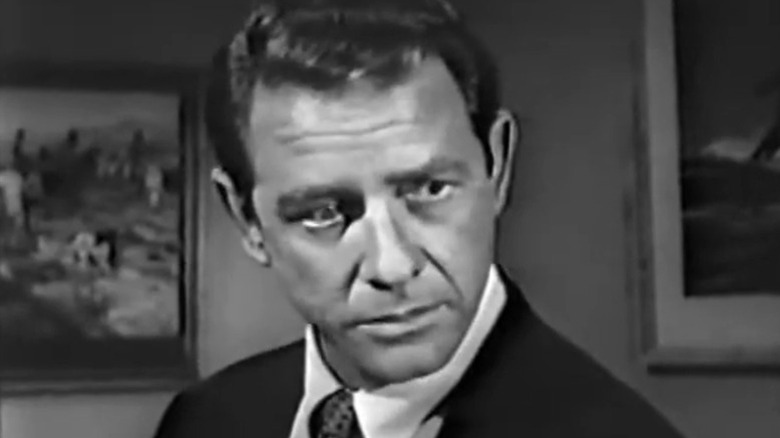
For as political as mainstream American television started getting in the '60s, the actual topic of institutional politics — as in, the nuts and bolts of government, legislature, party dynamics, and democratic representation, later tackled by beloved shows like "The West Wing" and "Parks and Recreation" — remained something of a mainstream non-starter for some time. But that didn't stop "Slattery's People" from giving it the old college try in 1964, and the result was one of the best, most underappreciated political dramas in TV history.
"Slattery's People" was created by James E. Moser and ran on CBS for two seasons, with the second being abbreviated to just 10 episodes (compared to the first season's 26) in the wake of a premature cancellation. Richard Crenna stars as James Slattery, an idealistic, well-meaning, hard-working U.S. state legislator. We don't learn the specifics of what state Slattery is in, what party he belongs to, or what district he represents, but we know that he is the minority leader, and that he is politically opposed to, but on friendly personal terms with, House Speaker Bert Metcalf (Tol Avery).
The show follows Slattery's daily efforts to enact positive change on behalf of his constituency, and all the difficulties he comes up against — from bureaucracy to power disputes to the intrinsic jam-ups of representative democracy. Despite the willful, allegory-skirting vagueness of the framework, the show is shockingly cogent and down-to-earth in its depiction of the reality of U.S. local politics; by drawing on fine-grained detail and recognizable social realities, it concocts gripping drama without any need for fantasy or theatrics.