

M*A*S*H Was Nearly Canceled After One Season, But A TV Exec's Spouse Saved It
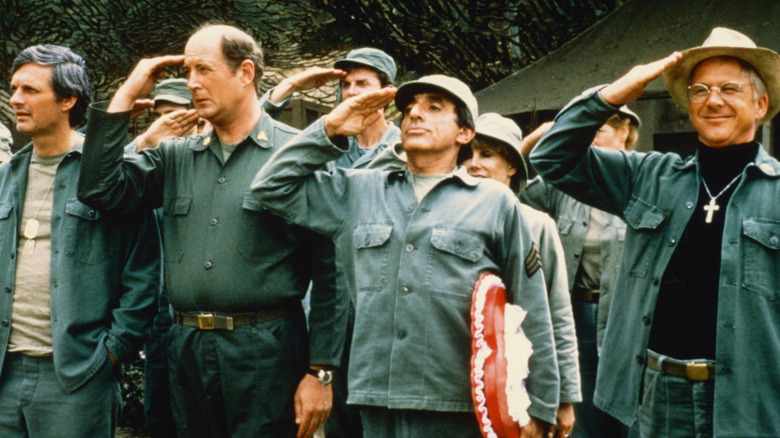
"M*A*S*H" is one of the longest-running scripted shows of its era, but low ratings nearly ended it early. Season 1 was a rough start for the medical dramedy, finishing as the 46th most watched show for the year in 1972. Thankfully, the wife of the network's CEO reportedly came to the rescue.
"M*A*S*H" premiered in the Sunday 8 p.m. time slot, which had a weak lead-in and put the series head-to-head with the very popular "Wonderful World of Disney." It also didn't help that CBS wanted the show to be a more traditional sitcom, which didn't work for the actors. Gary Burghoff, who played "Radar" O'Reilly, said the cast spoke up. "We went to [creators] Gene [Reynolds] and Larry [Gelbart]: We're not a situation comedy," Burghoff said in an interview with the Television Academy. "We're talking about a real war. It's not about funny ha-ha."
While that led to a change in tone for "M*A*S*H," it didn't help the ratings. According to Jamie Farr, who played Max Klinger, the show seemed doomed until it received unlikely support from former Vogue fashion editor Babe Paley, who happened to be married to the CEO of CBS at the time. "Babe Paley supposedly saved us by telling her husband that 'M*A*S*H*' could be the crown jewel for the network," Farr told the Hollywood Reporter. "By the end of the third season, [series co-creator] Larry [Gelbart] came up to me and said, 'You know what, I think we're the next 'I Love Lucy.'"
A few changes in approach and time slot catapulted M*A*S*H to history
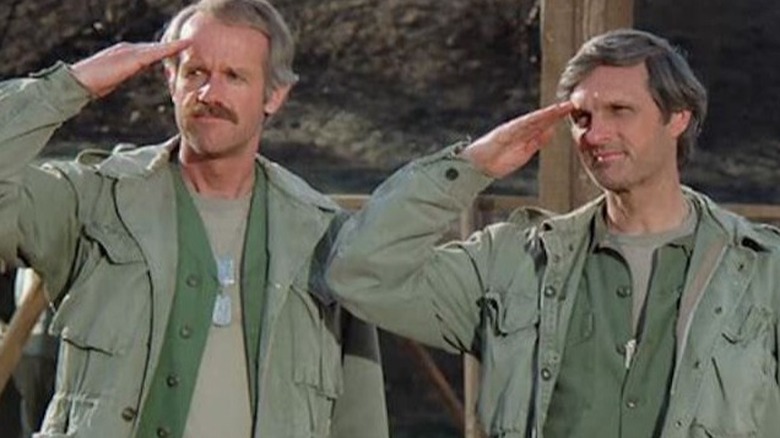
Starting in Season 2, CBS moved "M*A*S*H" to Saturday night, which was a huge shot in the arm. It ran between "All in the Family," which was the highest-rated show that year, and "The Mary Tyler Moore Show," forming one of the all-time great TV lineups. Suddenly "M*A*S*H" had a captive audience and it flourished from there, never falling out of the top 15 and spawning multiple spin-offs.
Those involved with the show also point to co-creators Larry Gelbart and Gene Reynolds as driving forces behind the show's success. In the same interview with the Hollywood Reporter, writer Dennis Koenig said the two consistently fought against the network's desire to lean too heavily into the comedy. "Gene and Larry were at a point in their careers that they were going to do things their way or not do it," said Koenig. "They believed, what's the point of doing the show if it's going to be like every other one?"
The show also became a mirror for what America was experiencing with the Vietnam War. Alan Alda, who played "Hawkeye" Pierce, told the Television Academy he thought the show's message went even further. "As far as I was concerned, 'M*A*S*H' was specifically about the Korean War but, in a way, stood in for all wars."