

5 Beloved '80s Sitcoms That Don't Hold Up Today
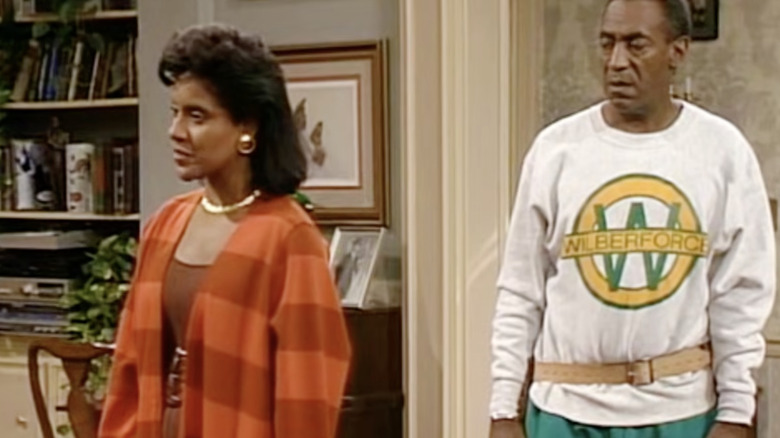
Changes in popular culture are a reliable way to measure how societies evolve, so it's not surprising that TV shows from past generations often don't click with modern audiences. Gen Xers (born between roughly 1965 and 1980) looking to revisit favorites from our youth and teen years can still watch classic shows from the 1980s thanks to streaming, syndication, and physical media. However, like the bodies of said Gen Xers, some of these series haven't fared well with the passage of time.
Most '80s shows feature fashion or technology that was cutting edge back then but now looks hopelessly out of date, and plenty of content from the era is as outdated as the production design. It was typical of the era for shows to "punch down" for humor's sake; stereotypes of marginalized groups were standard joke fodder. Common targets included women, people of color, the LBGTQ+ community, and people with developmental disabilities. The five shows below were popular back in their day (and some still are), but they're all a bit cringe-worthy to watch as we move further into the 21st century.
Three's Company
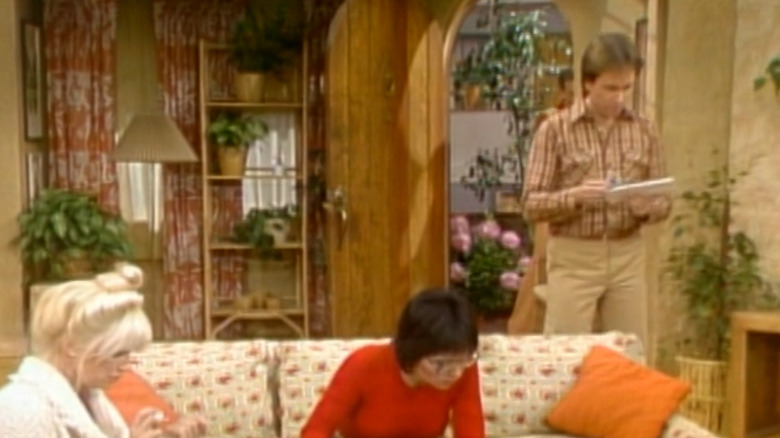
"Three's Company" was the top-rated comedy on TV for the 1979-80 season, but it probably wouldn't make it past the elevator pitch stage today. John Ritter stars as Jack Tripper, a womanizing bachelor who shares an apartment with two single women. His new roommates, Chrissy (Suzanne Somers) and Janet (Joyce DeWitt), tell their prudish landlords, the Ropers (Norman Fell and Audra Lindley), that Jack is gay so as not to scandalize the older couple, and Jack's attempts to keep this ruse going lean heavily on dated cliches about gay men.
Stanley Roper (Fell) uses frequent anti-gay slurs to refer to his new tenant, and Ralph Furley (Don Knotts) brings a different flavor of homophobia when he takes over as building superintendent in Season 4. Ralph is nowhere near as mean-spirited as Stanley, but he lets loose a few slurs of his own and tries to "convert" Jack to heterosexuality. Although Ritter played Jack to stereotypes that seem archaic today, a straight man pretending to be gay was more LGBTQ+ representation than on most shows.
Poet Michael Montlack says Jack Tripper helped him make sense of the world as a gay preteen. In a 2017 column for the Advocate titled "Three's Company Made Me the Gay Man I Am Today," Montlack called Ritter's performance "not completely unfamiliar to a boy pretending to be straight in order to live peacefully in an unwelcoming world." What passed for groundbreaking comedy when Ronald Reagan was in his first term lands somewhere between campy and offensive today; the show is most enjoyable when Jack isn't masquerading for the Ropers or Mr. Furley. Ritter was a master of physical comedy, and many of those moments hold up well, even though that kind of merrymaking is less familiar to modern sitcom audiences.
Bosom Buddies
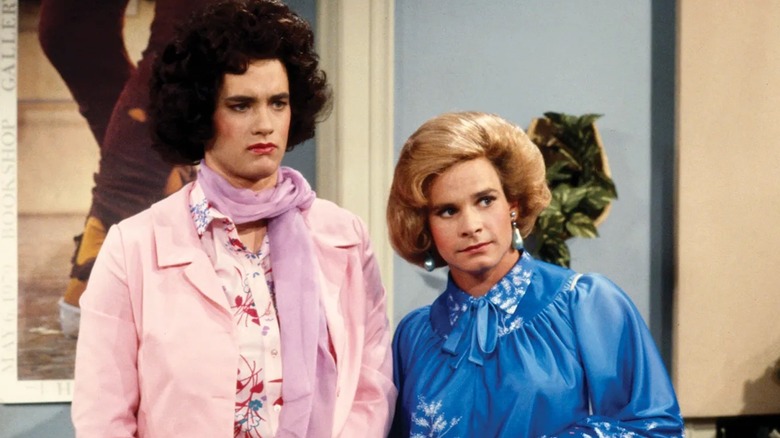
Instead of faking their sexual orientation, "Bosom Buddies" characters Kip (Tom Hanks) and Henry (Peter Scolari) pretend to be women named Buffy and Hildegard to qualify for affordable single-sex housing. It's a cringe-worthy premise that would be scuttled immediately today, even though some buildings still provide rental housing exclusively for women.
The premise is all but invalid in the modern information age; it would be nearly impossible for any Kips or Henrys to make it through the rigorous vetting process at modern single-gender housing facilities. Hanks and Scolari make a great friend pair, but their female alter egos are entirely unconvincing. The show's writers milk their masculine awkwardness for far more than it's worth; the well of jokes ran dry long before the 37-episode run of "Bosom Buddies" ended in 1982.
"Bosom Buddies" is also the least "beloved" show on this list. It never ranked among the top 30 in its day, although it helped launch Tom Hanks' career. The starring role was one of his first jobs on TV, and Hanks beat up Henry Winkler's Fonzie on "Happy Days" about eight months after "Bosom Buddies" went off the air.
Married... With Children
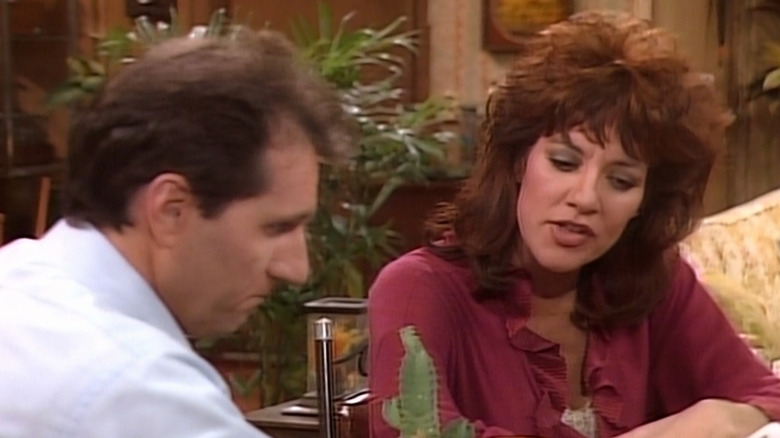
In 1987, Fox smashed the family sitcom mold with a sledgehammer of a show called "Married... With Children." The brash, adult-oriented humor made it an instant hit, but a lot of the jokes seem hostile or crude in retrospect. Most strikingly, watching "Married... With Children" through a modern lens reveals how horribly women on the show were treated. Al Bundy (Ed O'Neill) slouches through his day as a shoe salesman and comes home to make old harpie jokes at the expense of his wife, Peg (Katey Sagal).
Sagal was nominated for four straight Golden Globes for Peg's perfect mix of downtrodden resignation and confident defiance, but the only other major female characters are one-dimensional. Peg and Al's daughter, Kelly (Christina Applegate), is mocked by her family for being promiscuous and dumb, and neighbor Marcy (Amanda Bearse) exists purely to antagonize Al.
"Married... With Children" is a part of TV history; it helped the fledgling network take flight when Fox was known as the "wire hanger" network. "Married... With Children" is proudly a reflection of its era and was never meant to be timeless or sophisticated, but its core humor has aged like mayonnaise left in the sun for 40 years.
Cheers
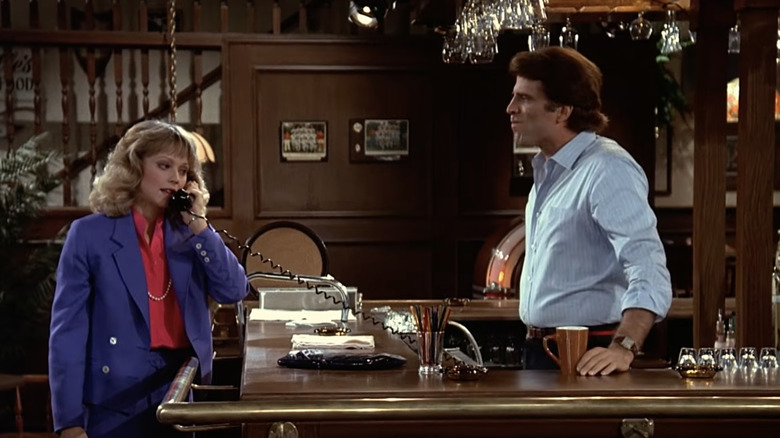
"Cheers" won 28 Emmy Awards out of over 100 nominations during its 11-season run that began in 1982, and the concluding episode placed ninth in our rankings of the best TV series finales ever. Some of the humor still lands well 44 years after Diane Chambers (Shelley Long) first wandered into the titular Boston bar, but the show is another that didn't treat its women very well. Perpetually horny bar owner/bartender Sam Malone (Ted Danson) is revered by his patrons and friends for behavior that would be regarded as boorish and immature by today's standards, but at least the fleeting targets of his affection are occasionally given some depth.
The major female characters on "Cheers" are either disagreeable, like Lilith (Bebe Neuwirth) and Carla (Rhea Perlman); incompetent, like Rebecca (Kirstie Alley); or both, like Diane. Sam is a cad into his mid-40s, and his romantic dalliances with co-workers would have drawn attention from a 21st-century labor rights attorney or corporate human resources department. There are other outdated aspects to the goings-on in Sam's bar as well. George Wendt was nominated for six Emmy Awards for playing Norm Peterson, but Norm's body type and dependence on alcohol are played for easy jokes instead of points of empathy.
The "where everybody knows your name" bar culture at the heart of "Cheers" has also lost some of its relevance today. The number of bars in the U.S. is slowly decreasing as bars close down, and those that remain open are seeing major changes. One manager of a New York bar that has been open since before "Cheers" was on the air told the Times Union, "We are no longer competing with other bars; we are collectively competing with the couch."
The Cosby Show
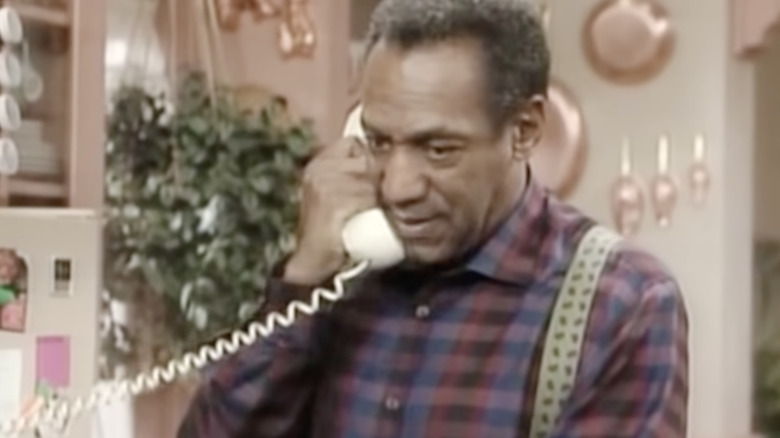
"The Cosby Show" was undoubtedly one of the most popular shows of the 1980s, topping the Nielsen ratings from 1985 through 1989. However, after dozens of women came forward to accuse Bill Cosby of sex crimes against them, his "America's dad" schtick became instantly unpalatable. Cosby was sentenced to three to ten years in prison in 2018 for drugging and assaulting Andrea Constand, but was released in 2021 because of a procedural error. By that point, most streaming outlets had stopped carrying "The Cosby Show." If you hunt down what's on YouTube, it's jarring to see Cosby playing this lovable, huggable father. The contrast between his crimes and his public persona was such that a federal court allowed the unsealing of testimony from Constand's case, saying it was important for people to know the real Bill Cosby.
Furthermore, although "The Cosby Show" was celebrated for centering a wealthy, happy Black American family when such portrayals were rare, some scholars feel it reinforced anti-Black stereotypes. In his 1992 book "Enlightened Racism: The Cosby Show, Audiences, and the Myth of the American Dream," University of Massachusetts communication professor Sut Jhally noted that the Huxtable family experience wasn't typical of Black Americans.
An article in the Florida State University Undergraduate Research Journal also explained "enlightened racism" in relation to the show: "An example of successful black individual or individuals suggests that the majority of African Americans who are of the working class have failed in comparison. According to this vein of thought, audiences view African Americans as facing no institutionalized obstacles due to race and that perceived inequalities stem from inherent laziness or ineptitude." Cosby's crimes are probably keeping more people away from "The Cosby Show" than this lingering bit of prejudice, but we doubt there's much interest left.