

The Marvel Comics That Inspired X-Men '97's Surprisingly Sympathetic Take On Apocalypse
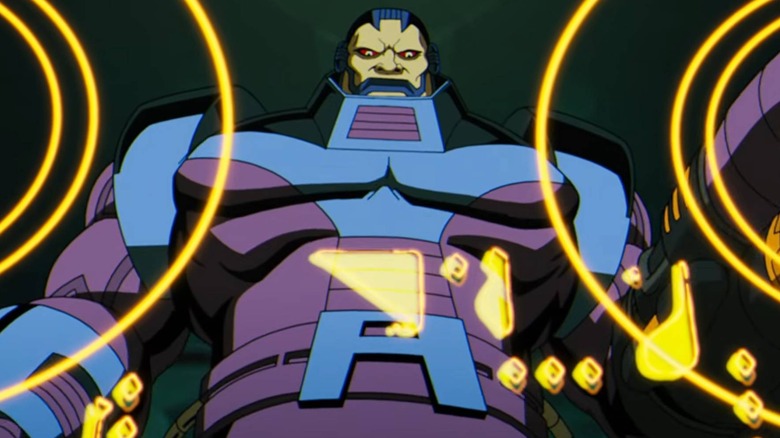
This week on "X-Men '97," Apocalypse beats up an elephant. Under most circumstances, we could assume that one of the most murder-crazed global threats ever encountered by Xavier's School for Gifted Youngsters is the unsympathetic aggressor, while the elephant — whose species associates him with beloved children's characters such as Babar and Dumbo — is an innocent victim. However, this extra-large elephant fights on behalf of nefarious despot Rama-Tut (John de Lancie), while Apocalypse — who goes by En Sabah Nur (Adetokumboh M'Cormack) at this point in the timeline, 3000 B.C.E. — battles to end slavery across Ancient Egypt.
Season 2 of the acclaimed Disney+ series fleshes out Apocalypse's origin story, lifting some key elements from the 1996 comics miniseries "Rise of Apocalypse" by Terry Kavanagh and Adam Pollina. When cartoon fans first meet the immortal butcher in "X-Men: The Animated Series" Season 1, Episode 9, "The Cure" (1993), Apocalypse preaches hyper-violent Darwinism and brainwashes folks into servitude. According to "X-Men '97," he didn't start out that way. Without the malign influence of Baal (Michael Dorn) — and, okay, fine, maybe also without the well-intended meddling of a time-displaced Magneto (Matthew Waterson) — Apocalypse might've been a chill dude.
"I can do more than just conquer the world," says Nur, having an optimistic moment in Season 2, Episode 3, "Rise of Apocalypse: Part I." "I can save it."
Is Apocalypse more interesting as a villain or as a hero?
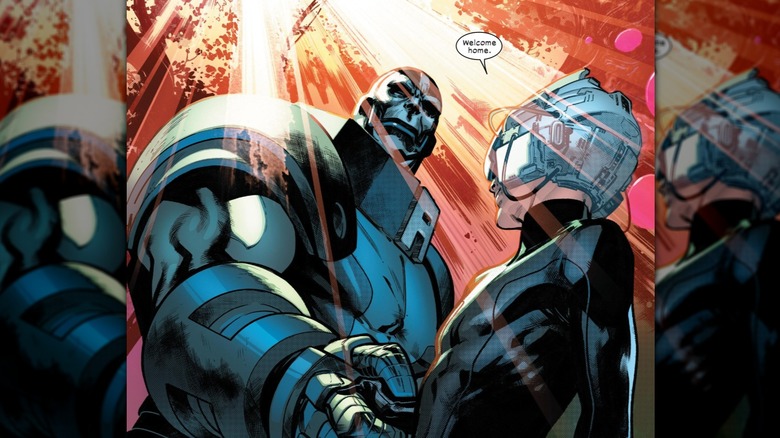
Created by Louise Simonson and artist Jackson Guice in the mid-'80s, Apocalypse has been making life difficult for Marvel heroes ever since. But despite his repeated attacks on existence itself, he doesn't always resonate as an omega-level menace.
The version of Apocalypse from "X-Men: TAS" — arguably the definitive take on the character — lacks the distinctive inner conflicts associated with cape-clad Stan Lee and Jack Kirby creations like Dr. Doom and Magneto. Apocalypse is not an avatar of elemental darkness allegedly lurking inside all living beings like William Stryker, Dark Phoenix, and other existential antagonists from Chris Claremont's immeasurably influential "Uncanny X-Men" run. Apart from Apocalypse's dogmatic insistence that the fittest must survive, not a ton differentiates him from the numerous Darkseid knock-offs scattered across the Marvel and DC universes.
However, as "X-Men '97" Season 2 suggests, maybe Apocalypse has more to offer. At the onset of the Krakoan Age — an era of "X-Men" comics launched in 2019 initially overseen by writer Jonathan Hickman — Apocalypse becomes a grim, enigmatic hero with the immortal gravitas of an Anne Rice vampire. In the spin-off book "Excalibur" (2019) by Tini Howard and artist Marcus To, En Sabah Nur operates as the team wizard on an X-squad alongside Rogue, Gambit, and Jubilee. In Rick Remender and Jerome Opeña's near-universally beloved "Uncanny X-Force" (2010) — which also provides the version of Apocalypse's Horsemen Cyclops and Jean Grey encounter in "Days of Past Future" — a clone of Apocalypse grows up into the good-natured but awkward teenager Evan Sabahnur.
Are X-Men baddies predisposed to goodness?
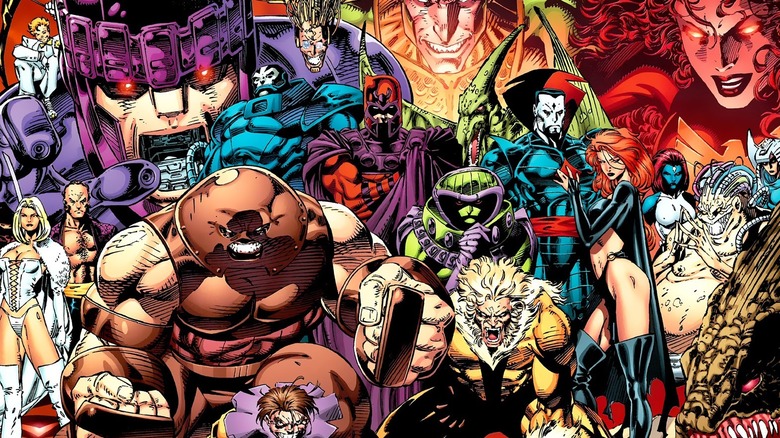
If Apocalypse does, in fact, make a more compelling hero than a villain, he's in good company. The list of onetime X-Men adversaries who become comrades in service of Xavier's dream includes Magneto, Scarlet Witch, Quicksilver, Emma Frost, Rogue, Mystique, Juggernaut, Sabretooth, Pyro, Toad, Kid Omega, Greycrow, and Frenzy. Villains realizing the error of their ways isn't unique to "X-Men" lore, but evil mutants (and evil-mutant-adjacent individuals) do seem to find their way to righteousness with more frequency than, say, the super criminals of Gotham City.
Then again, the face turns don't always stick — Apocalypse resumes evil activities in "X-Men" comics following the conclusion of the Krakoan Era; likewise, the benevolent En Sabah Nur we meet in "Rise of Apocalypse: Part I" is chopping heads off by the end of the episode. But if "X-Men '97" can fully rehabilitate Magneto, perhaps it's not too late for Apocalypse to realize that peaceful coexistence with humanity is the only viable path toward mutant survival.