

The Prisoner Fans Were So Angry About The Finale That One Star Went Into Hiding
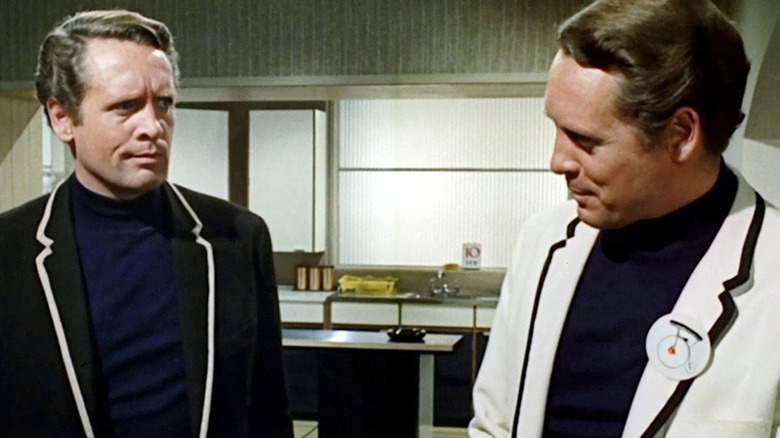
The surreal world of "The Prisoner" brought a radical new kind of storytelling to television, keeping audiences guessing until the very end –- an end that left some viewers so outraged, the series' star had to hide from his fans.
"The Prisoner" was created by Patrick McGoohan, who also starred on the British sci-fi series as Number Six: a former spy, now imprisoned in a strange village. Here, he lived among other numbered prisoners, all trapped under the watchful eye of the villainous Number One, who remained anonymous until the show's final episode. While "The Prisoner" only lasted one season, the series' absurdism kept fans desperate for answers as to what exactly was going on in the Village, and the true identity of Number One.
When the series finale, "Fall Out," aired in February 1968, the mysterious Number One was finally confronted and unmasked by Number Six, only to reveal that he had Number Six's face. The villain fled, never to be seen again, while Number Six finally broke free and returned to a home with the same distinctive sort of automatic door seen throughout the Village.
Audiences were in an uproar. "Everyone wanted to know who Number One was," McGoohan said ten years after "The Prisoner" concluded. "When they did finally see it, there was a near-riot, and I was going to be lynched." In Phil Norman's "A History of Television In 100 Programmes," McGoohan was quoted as saying, "I had to go and hide myself in case I got killed."
Audiences weren't ready for The Prisoner's absurdist world
Since "The Prisoner" aired in the late 1960s, audiences have got used to surreal TV series, relying on mystery and open endings to invite interpretation. In fact, "The Prisoner" would inspire the creation of series like "Twin Peaks" and "Lost," which thrived on mystery and provoking the audience into constant theorizing. In 1968, this was a much bolder direction for a TV show –- one that even diehard fans of "The Prisoner" were clearly not prepared for.
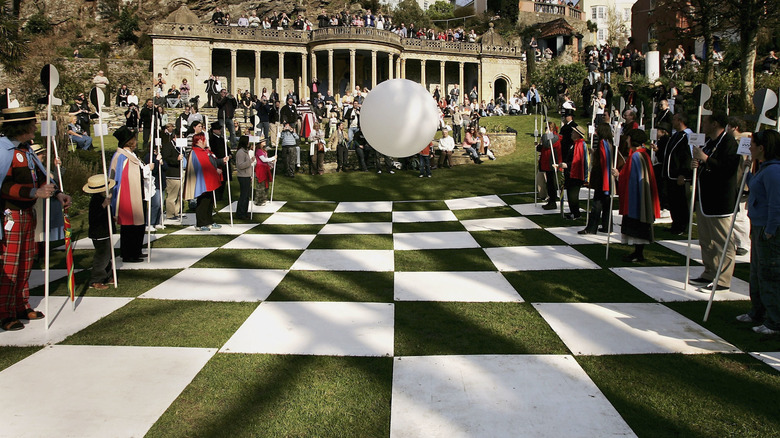
From the outset, "The Prisoner" featured several otherworldly elements. These included a blend of historical and futuristic fashion, unsettling games like chess played with human pieces and abstract battles of wills, and the Village's prison guard — an autonomous white orb called Rover that would consume those attempting to escape. All of these strange elements, as well as the series' ambiguous ending, were explained by McGoohan in an interview with Chris Rodway in 1983.
McGoohan described "The Prisoner" to Rodley as "allegory," dismissing the notion of a "sort of James Bond villain," which was what he believed the audience had come to expect Number One to be. Instead, he argued the series needed "an allegorical ending," with Number One embodying "the evil part of oneself," which he described as "the most evil thing on Earth." Despite this ambiguity, or perhaps because of it, "The Prisoner" remains a genre-defining sci-fi series with a loyal fan following still trying to understand what that ending meant.