

This Forgotten '60s WWII Action Series Became A Controversial TV Hit
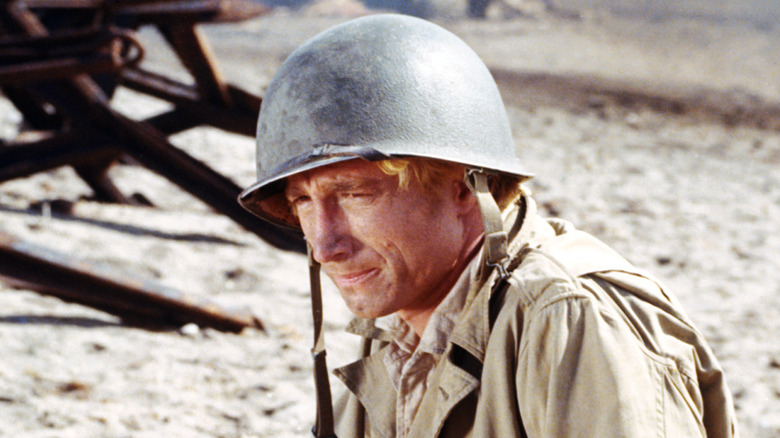
The '60s TV show "The Rat Patrol" boasted plenty of gunfire, explosions, and stunts as the titular unit — three Americans and a British sergeant — gave Erwin Rommel's troops a hard time. Originally airing on ABC, it was a kitschy World War II actioner that was much more concerned with excitement than historical accuracy. American audiences were fine with that; across the pond, less so.
While it was mostly Americans doing the fighting in "The Rat Patrol," the real-life military units that inspired the series, The Long Range Desert Group and the Special Air Service, were Brits. One division of the Eighth Army even had the nickname "Desert Rats." There were similar units of troops from Australia and New Zealand, but no Yankees.
This proved to be an issue for British viewers when the show, which premiered in the States in September 1966, aired on the BBC. The BBC pulled the show after airing just six of the 13 episodes it had already paid for. Australians were also irked, according to news stories at the time, in part because one American character, Christopher George's Sergeant Sam Troy, wore a slouch hat. Such hats were famously worn by Australian troops during the war, not Americans.
One of the stars of The Rat Patrol regretted its revisionism
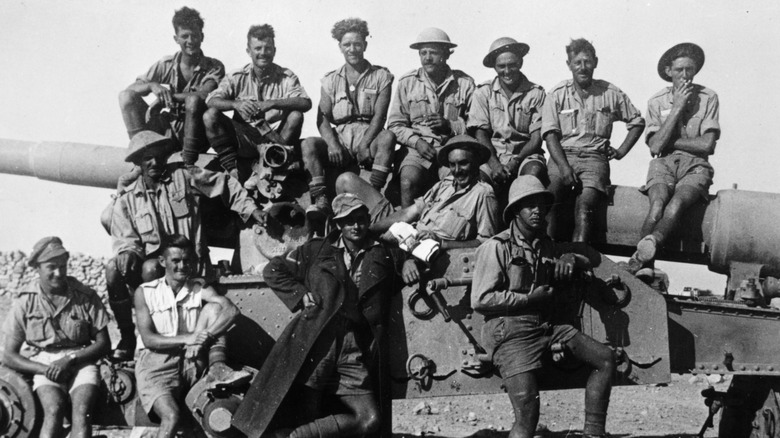
British viewers in the '60s only saw a half-dozen episodes of "The Rat Patrol" before backlash got the show pulled. In America, it was a hit that ran for two seasons with a final episode count of 58 thrilling, historically inaccurate half-hours. The first run of episodes was in the top 10 of Nielsen's Ratings in October 1966, the only new series of the season to place that high.
American audiences might not have minded that the show was stealing British valor, but at least one of the actors in "The Rat Patrol" came to regret it.
Eric Braeden, a German American actor who played recurring Nazi villain Hans Dietrich on "The Rat Patrol," gave an interview to the Television Academy Foundation in 2010 where he lamented the show's portrayal of America's role in World War II. "Hollywood contributed to the notion that we alone won that war," Braeden said, suggesting that such attitudes helped send the country charging into the Vietnam War.