

The Trippy '80s Sci-Fi Series That Was Ahead Of Its Time
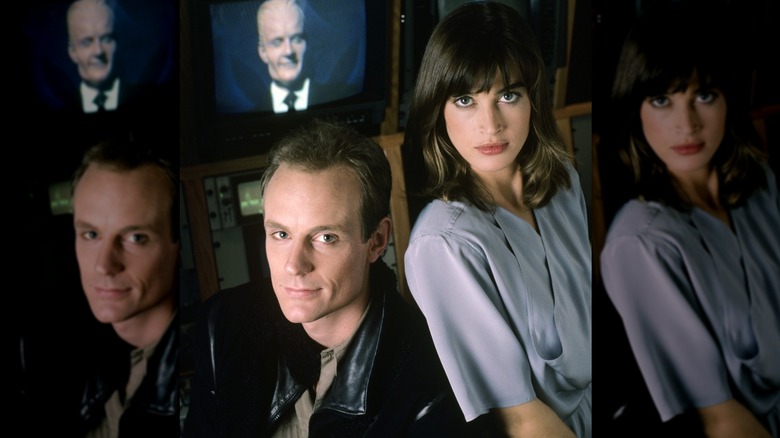
Good science fiction shows know how to balance a wild concept wrapped up in a human story, whether it's the morality debate in HBO's "Westworld," or the warnings about fascism in Disney's "Andor." But there's one trippy forgotten '80s sci-fi show that was ahead of its time. 20 minutes, to be exact.
ABC's "Max Headroom" is set in a twisted, dystopian future and stars Matt Frewer as Edison Carter, a journalist for Network 23. When fleeing from his employer's goons, Carter almost dies by crashing his motorbike into a parking lot gate. To try and salvage the situation, Network 23 uploads his consciousness into a digital TV host. The host calls itself Max Headroom (also played by Frewer), since those were the last words Carter saw on the gate before his accident.
The 1987 series was based on a British TV movie for Channel 4 of the same name, with the subtitle "20 Minutes into the Future." Max Headroom was publicly advertised as an A.I. being, but was actually Frewer dressed in prosthetics. The ABC drama series explored the concept of a virtual presenter in a futuristic world obsessed with consumerism, and made some mind-boggling predictions about the world we live in today.
Max Headroom correctly predicted A.I. replicas, fake news, and micro advertising
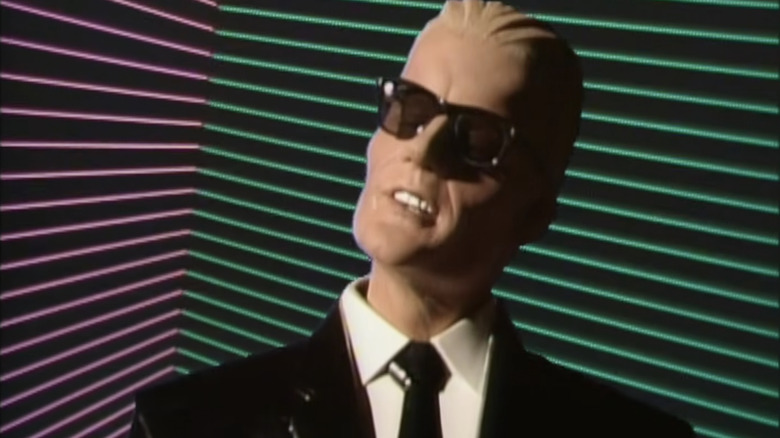
Edison Carter and his team use the success of Max Headroom's TV presence to keep reporting on difficult topics for Network 23. Bizarrely, the sci-fi show correctly foresaw a number of concepts that would become very real in the years following its cancellation in 1988. That means "Max Headroom" pre-dated all those unexpected predictions on "The Simpsons" by one year. For starters, Carter's team video call each other on bulky monitors — it's like FaceTime, but pixelated.
The show's pilot episode kicks off with Carter trying to out his employers for using "blipverts," which advertise products instantly to the viewer. The downside is it makes some audiences' heads explode, and it's harder to monetize corpses! Of course, in the real modern world, social media is rife with micro advertising through short-form videos, Instagram stories, sponsored posts, digital billboards, and ... Well, you get the idea.
Like a Ray-Ban-wearing Nostradamus, the predictions kept on coming. In Episode 5, a series of bombings by a terrorist group is revealed as an orchestrated movement by a rival network solely to get better ratings. Fake news? Never heard of it. Then, Season 2, Episode 2, a "Vu Age Church," claims it can keep its followers alive after death using A.I. duplicates.
While the '80s sci-fi show reveals this is all a sham, A.I. bots acting like deceased loved ones have become a very real issue, per The New Yorker. "Max Headroom" also broke out into the real world in a very meta-way.
TV network hackers impersonated Max Headroom
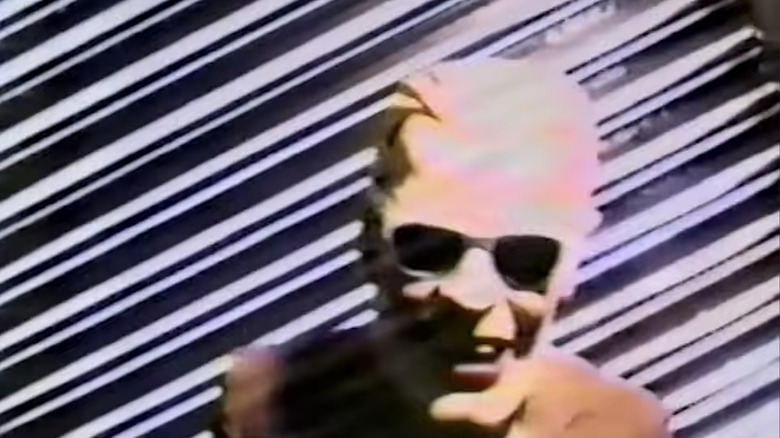
On November 22 1987, hackers took over WGN-TV's sports report in Chicago to broadcast footage of an unknown person wearing a Max Headroom mask (complete with Ray-Bans). It lasted for less than a minute and didn't have any audio. The person moved around in front of a metallic background, seemingly imitating the virtual TV host on "Max Headroom." The network got the signal back, but couldn't work out how it had happened. A few hours later, the hackers struck again, but, this time, they targeted PBS' Chicago affiliate station, WTTW.
The station was airing an episode of "Doctor Who" when the fake Max Headroom returned, now reeling out absurd lines of dialogue. It ended after 90 seconds when the masked individual was hit with a fly swatter on his bare behind. It's surprisingly apt that the virtual host found his way into the real world via hackers, although the mischievous culprits behind the incident were never found.
Since then, both the "Max Headroom" sci-fi series and the hijacking incident have become touchstones of pop culture. The presenter has been referenced in things like the "Ready Player One" novel, the 2015 "Pixels" movie, and even the music video for Eminem's "Rap God." The Marvel Cinematic Universe even riffed on the incident in "Daredevil: Born Again" Season 2 on Disney+, when a character frequently hijacks the airwaves wearing a mask of the Kingpin (Vincent D'Onofrio) to publicly criticize the villain.
All of this is to say that the writers of "Max Headroom" effectively delivered a neon-drenched crystal ball to our screens in the '80s, and the world has never been the same since. Who knows what the series will predict next when the "Max Headroom" reboot finally releases.