

TVLine Pet Peeves: TV Shows That Are So Dark, We Can't See The Action
Welcome to TVLine Pet Peeves, where our editors go to town on TV's bad habits. Tropes, plot details, dialogue tics, continuity issues — if it grinds our gears, you'll see it here.
It's a situation we've found ourselves in way too often: We're watching a TV show, and we turn off all the lights in the room, and we go into our TV's picture settings and pump up the brightness level as far as it can go... and we still can't see what's happening on screen.
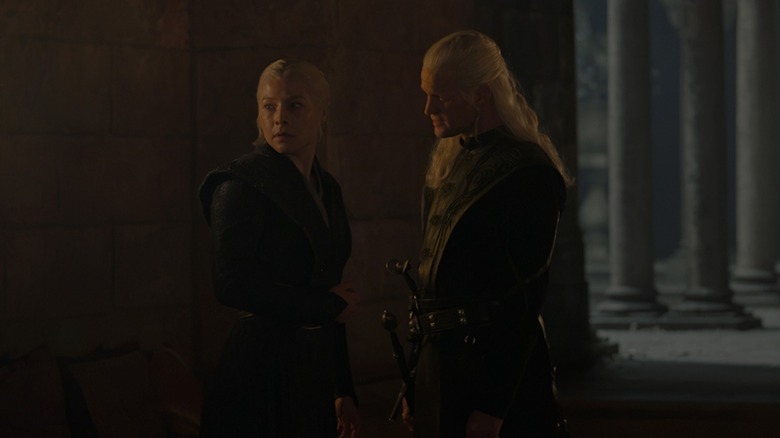
It's a problem that has plagued TV for a solid decade now: shows that are so dimly lit, we can barely make out who the characters are in a scene, let alone what kind of subtle emotions we're supposed to be seeing on their faces. HBO's "Game of Thrones" prequel "House of the Dragon" — currently airing its third season — is a habitual offender in this area, setting scenes in dark, dank castle rooms lit only by the faintest wisp of candlelight and leaving us at home to squint in order to follow the action. (Season 3's fifth episode was especially egregious, with Alys walking through a pitch-black Harrenhal — at least we think it was Alys — and Rhaenyra and Daemon arguing in a castle hallway that may as well have been lit by a single match.)
Dimly lit TV scenes are an industry-wide problem
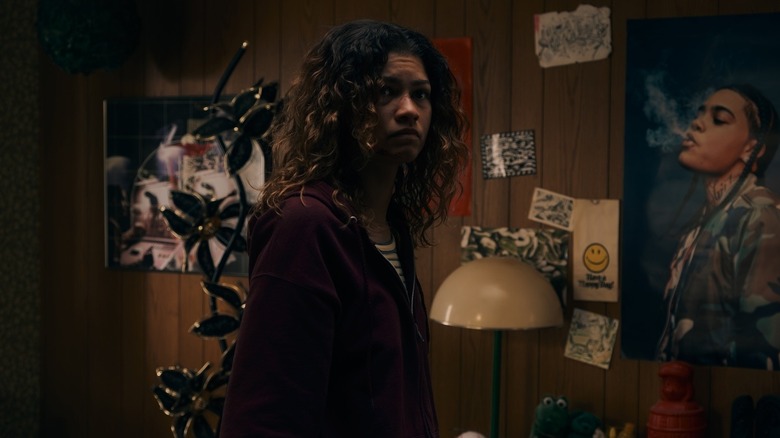
"House of the Dragon" isn't alone: We've also been left squinting by the recent final season of "Euphoria" and Jude Law and Jason Bateman's Netflix thriller "Black Rabbit," to name a few. This is not a new phenomenon by any means, either. We remember complaining for years about past Peak TV gems like "Game of Thrones," "Ozark," and "The Walking Dead" being too dark to see — and we weren't the only ones complaining. In fact, "Game of Thrones" took so much heat for Season 8's infamously murky Battle of Winterfell that cinematographer Fabian Wagner tried to turn the blame around on viewers, huffing that "a lot of the problem is that a lot of people don't know how to tune their TVs properly." (Gee, thanks, Fabian.)
So how far back does this complaint go? We can trace it back to the rise of streaming services and digital cinematography in the mid-2010s, with low natural lighting on set and a compressed bit rate combining to give us a dim, muddled picture. (The pandemic was an especially bad time for this, with fewer people on set to make sure scenes were properly illuminated.) Other contributing factors include the extensive use of digital special effects — it's harder to nitpick a dragon's appearance when you can hardly see it — the artistic shift away from bright colors to a more muted palette, and (yes) new TVs that may not be calibrated to display these shows in their full glory. We do suspect, though, that Hollywood filmmakers are viewing their own work on state-of-the-art video displays and then sending them out to us through the streaming chute, where they arrive looking much less bright and crisp than intended.
Mood lighting has gone way beyond moody
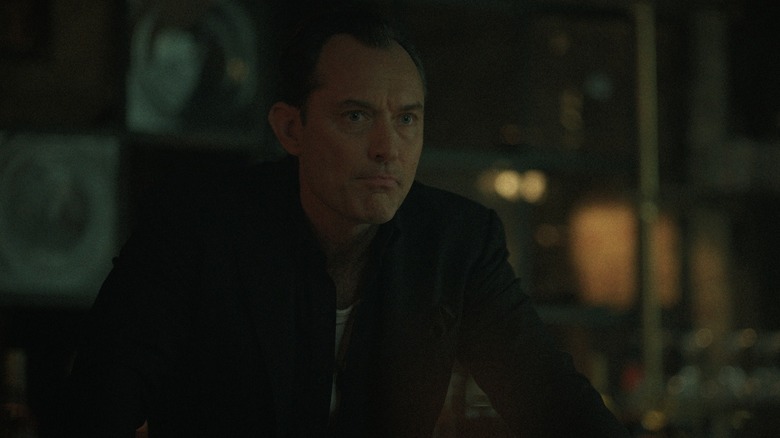
Now we realize nighttime scenes are an essential part of storytelling, and we wouldn't want to see them lit up like a Vegas slot machine, either. We get that the castle rooms on "House of the Dragon" would actually only be lit by a few candles... but that doesn't mean that the actual set should only be lit by a few candles, too. There's an art to all of this, and too often, today's TV lighting is going right past "moody" and all the way to "incomprehensible."
We're just asking our benevolent TV overlords to lighten things up a smidge, please. We love these shows — and we'd love to be able to clearly see what's happening in them, too.
Are you also annoyed by how dark a lot of TV shows are these days? Which ones are the worst offenders? Let us know in a comment below!