

15 Best DC Comics TV Villains Of All Time, Ranked
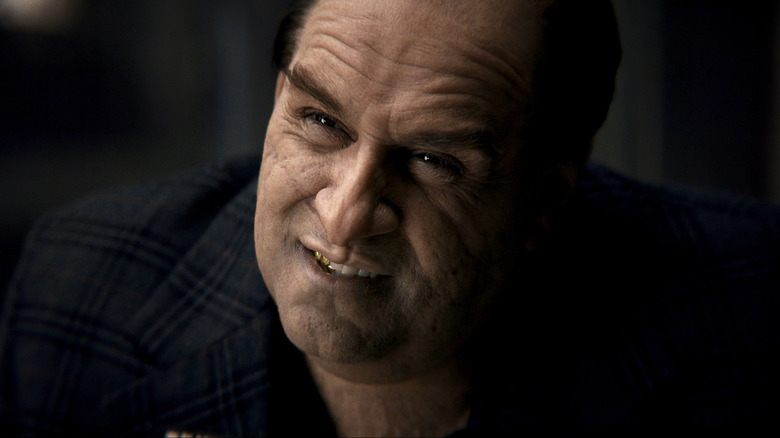
As much as their adaptations have struggled on the big screen, the world of DC Comics has absolutely thrived on television. From the dawn of the DC Animated Universe to the sunset of the Arrowverse, comic book fans have often looked to the small screen for the best adaptations of their favorite characters — especially when it comes to the villains.
Without the benefit of a blockbuster budget, live-action DC TV shows have brought the comics' most iconic bad guys to life by focusing on psychological complexity rather than spectacle. In the realm of animation, writers and animators have practically transformed classic panels into moving artwork, without flattening their complexity or maturity for an ostensibly younger audience. Many of the characters below exist as the definitive versions of villains that have lived in the public consciousness for decades — in some cases, they are even more beloved than the comics that preceded them.
15. Malcolm Merlyn (Arrow)
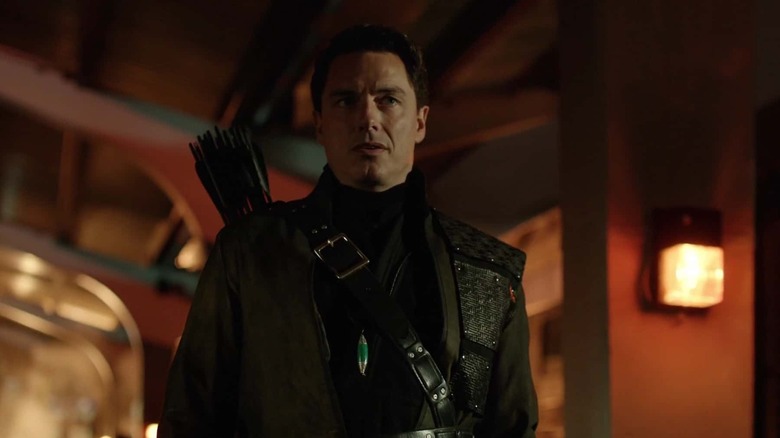
Regardless of your feelings on how it ended, "Arrow" is by far the most successful live-action DC Comics project of the past decade. Not only did its initial success save The CW, but it also launched an entire TV shared universe the likes of which even Marvel Studios hasn't been able to create.
John Barrowman's Malcolm Merlyn was quietly foundational in that success. The Dark Archer set the template for Arrowverse villains. His "secret identity" (known to any comics fan, but undermined just enough by the red herring that was his son, Tommy) and motivations served as the central mysteries of "Arrow" Season 1, culminating in Stephen Amell's titular hero uncovering the truth for himself in Episode 22, "Darkness on the Edge of Town." Their confrontation in the episode (during which Malcolm finally goes mask off in front of the Arrow himself) is a highlight of the series overall.
In a 2013 interview with TVLine, Barrowman described his character as the Lex Luthor of the series. While the comparison stands in terms of Merlyn's charisma, cold corporate sensibilities, and overall ruthlessness, what makes his character uniquely compelling is his genuine love for his children and late wife. Merlyn was at his best when the Arrowverse forced his family to be in conflict with his greater, selfish ambitions.
14. Herr Starr (Preacher)
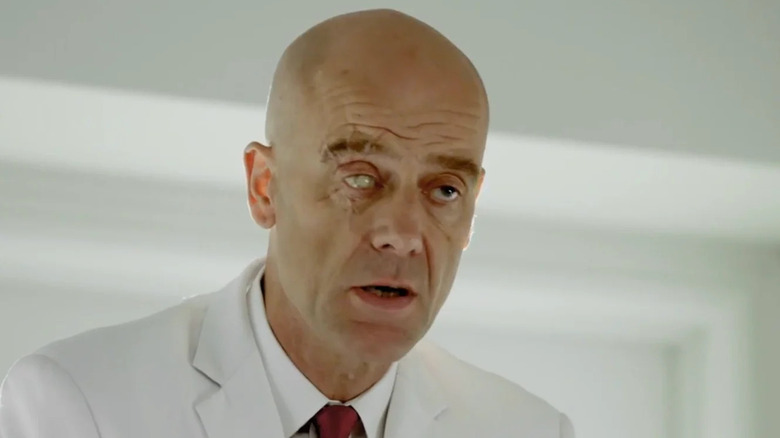
One of the more underrated DC Comics adaptations of the last decade, "Preacher" turned Garth Ennis and Steve Dillon's brutal and arrestingly blasphemous comic book series into a gripping four-season series. The Southern gothic, supernatural Western follows a Texas preacher named Jesse Custer (Dominic Cooper) who miraculously inherits a dangerous spiritual gift that allows him to compel others to obey his commands. In the second season, he begins to be targeted by Pip Torrens' Herr Starr, a hilariously deadpan and awkwardly sociopathic agent of a secret religious cult called "The Grail."
From page to screen, Starr is as terrifying as he is memorable, ranking as the defining recurring human antagonist of both iterations of the story. He's like a cross between a Bond villain and a Coen Brothers character, tasked with investigating and eliminating potential rivals to the Grail's own messianic machinations. Torrens' performance is what truly elevates him above most DC TV villains. As exemplified in Season 2, Episode 7, "Pig" (in an extended flashback where viewers learn how he earned his place in the Grail's ranks), Torrens plays him as brilliant, banal, and wholly committed to securing power by any means necessary.
13. Jerome and Jeremiah Valeska (Gotham)
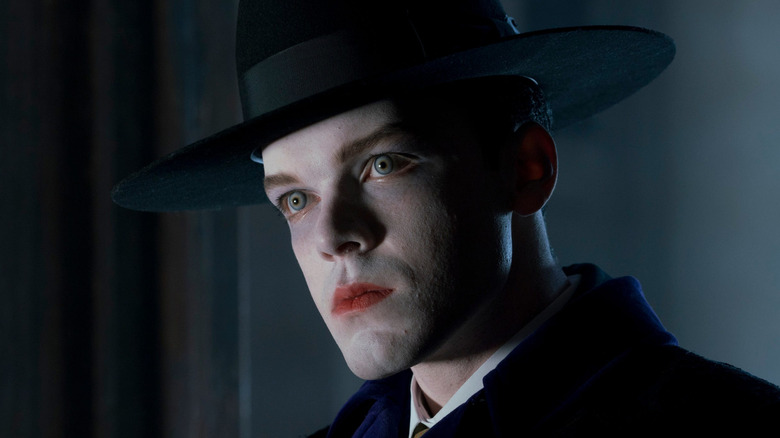
Cameron Monaghan was reportedly only supposed to be on "Gotham" for a single Season 1 episode. He was so captivating in his role that the producers wound up bringing him back for major arcs in every subsequent season — stopping just short of confirming him as an adaptation of the most iconic "Batman" villain of all time.
Even though neither of them were allowed to be fully transformed into the Joker, the Valeska twins have been accepted as two of the finest live-action portrayals of the Clown Prince of Crime. Though Jerome's first appearance in Season 1, Episode 16, "The Blind Fortune Teller," wasn't immediately well-received (with some viewers and critics apprehensive about "Gotham" assigning an explicit and obvious origin to the character), Monaghan's performance was consistently cited as the saving grace. When the series committed more openly to exploring him — and subsequently his brother Jeremiah — as early iterations of the Joker, Monaghan's gleefully villainous take became part of the series' overall appeal.
12. Zoom (The Flash)
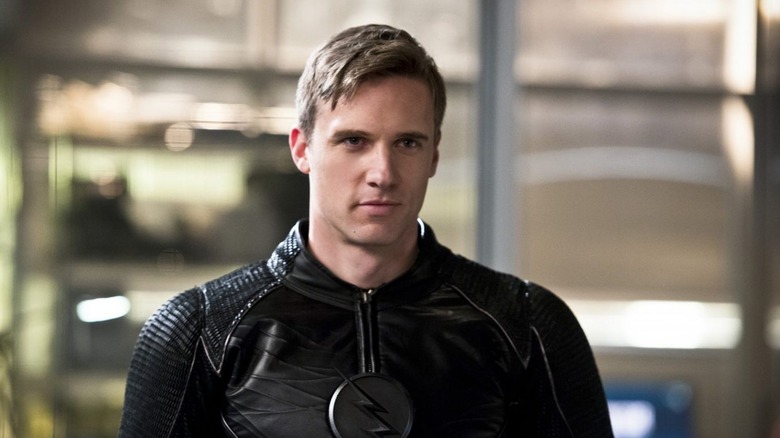
There's no reason Season 2 of "The Flash" should work as well as it does, considering it effectively repeats the same twists and overarching plot as its breakout first season. And yet, because Zoom is so vicious and legitimately terrifying from the moment he enters the series, it's hard not to be hooked.
Zoom is designed around his psychopathic personality in a way other DC TV villains aren't. While they might share the same lethal character traits, that inhumanity is usually just a side effect of their larger ambitions — for Zoom, it's everything he is. He's a speedster serial killer who takes pleasure in being able to manipulate others into believing he's a hero.
The costume design does a lot of the work, with "The Flash" completely overhauling his comic book look — in concert with the voice talents of the late, great Tony Todd, he's the closest thing we've ever gotten to a genuine slasher supervillain. Teddy Sears embodies Hunter Zolomon, who initially masquerades as Jay Garrick. Sears makes the audience instantly buy into him as a quintessential superhero, selling them on the mentor-villain twist for the second time in a row.
11. Amanda Waller (Justice League Unlimited)
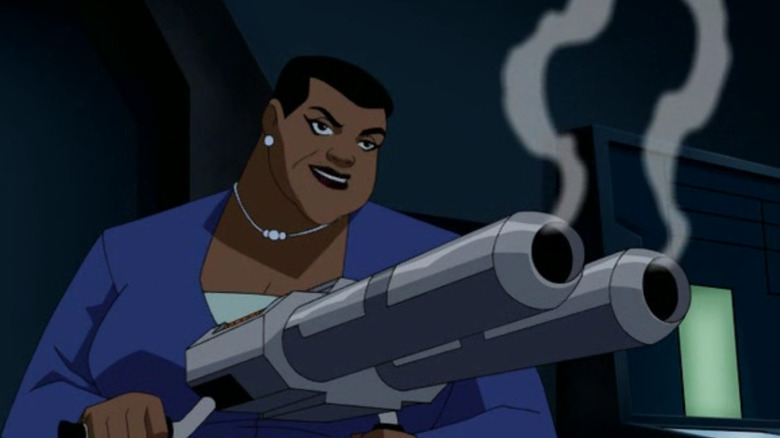
Amanda Waller is such a well-conceived antagonist in the comics that even the DCEU adaptation of her is engaging. Better still is the version seen in "Justice League Unlimited," voiced by "The Shield" actor CCH Pounder.
This iteration of Waller sees the U.S. covert ops director at her most complicated. The preceding series showed (before this became a tired trope in film and TV) what could happen if the unchecked, unsanctioned Justice League ever went rogue. Waller is thus smartly positioned by the story as a logical counter — even though the audience is squarely on the side of heroes like Batman and Superman, Waller's role is hard to dismiss. She's a cunning opportunist who takes advantage of a real anxiety.
Waller's most memorable moment outside the Project Cadmus storyline is in the Season 2 finale "Epilogue," which canonically functions as the endpoint of the entire DC Animated Universe. That she was given such a central role in this episode — wherein audiences are shown how she's subtly changed in the future — underscores how important she was to this continuity.
10. The Corinthian (The Sandman)
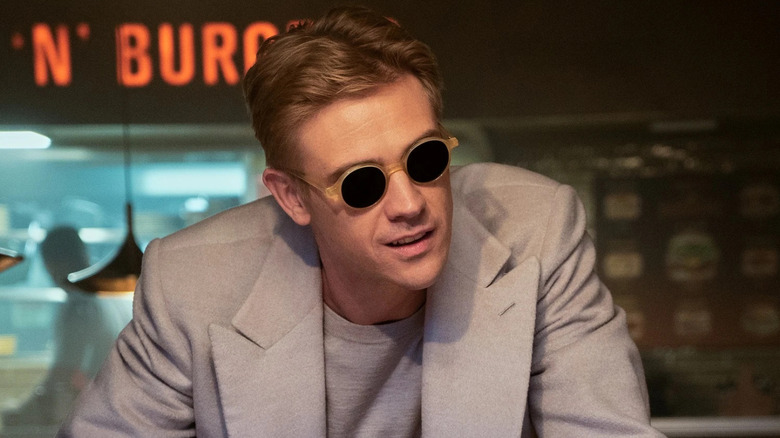
Boyd Holbrook is best known to comic book fans for his role in the "X-Men" film "Logan," but his portrayal of the Corinthian in the Netflix adaptation of "The Sandman" is one of the most underrated comic book performances in recent years. His character is a literal nightmare, originally created by Dream (Tom Sturridge) to reflect the inner darkness of humanity back to them in their dreams. Narratively, this origin has the bizarre effect of giving the Corinthian a strangely sympathetic edge at times — he's simply (in his twisted, inhuman mind) fulfilling the requests of his creator better than his creator could've anticipated.
Holbrook brings this aspect of the Corinthian to light in his scenes with Sturridge's Dream. There's almost an innocence to the way he explains his decision to transgress beyond the bounds of the Dreaming to terrorize humans in the real world. At the same time, Holbrook brings a charming yet sinister sense of amusement at his character's impact that's enjoyably eerie throughout.
9. Mr. Nobody (Doom Patrol)
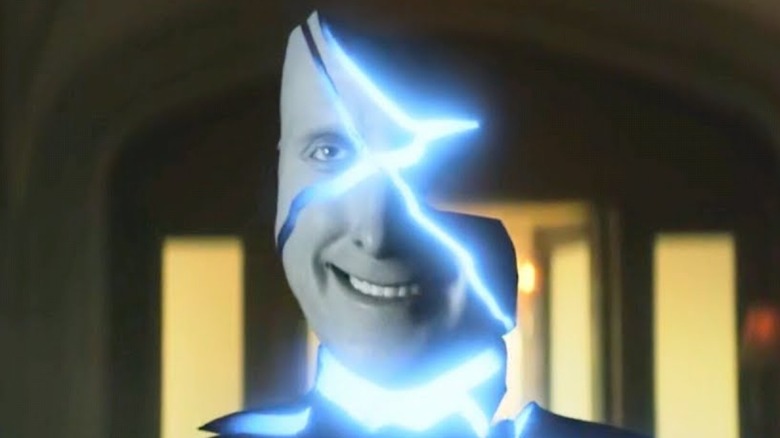
"Doom Patrol" is easily the wildest and weirdest show adapted from a DC Comics property. It's also one of the best.
The DC Universe-turned-HBO Max series seemingly set out to tell the most unconventional superhero story it could, crafting a villain specifically suited to subvert what audiences would expect. Alan Tudyk's Mr. Nobody is a reality warper who is able to treat the world he lives in like a comic book or a TV show. He's able to alter circumstances simply through narration, solve problems in the present by gratuitously altering the past (almost as though he were changing an origin story), and take advantage of explicit, formal storytelling constraints like comic book "white spaces."
He's really only limited by his petty motivations. Mr. Nobody has a pathological need to torment Niles Caulder (Timothy Dalton), a desire that will seemingly escalate no matter how decisive his victory is. Amusingly, the only way he's able to escape this cycle is — canonically — because he (Tudyk) left the series to join the cast of "Harley Quinn."
8. Darkseid (Superman: The Animated Series)
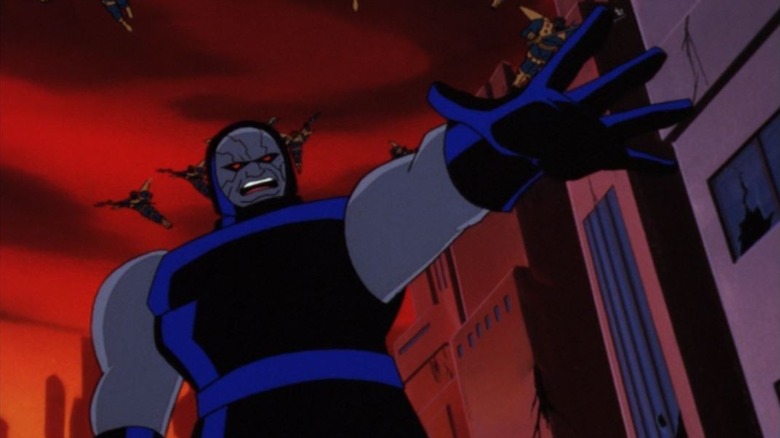
For half a century now, Darkseid has been the premier universal threat of multiple iterations of DC Comics continuity. The DC Animated Universe version is still the best on-screen portrayal we've ever gotten.
In his appearances in "Superman: The Animated Series" especially, the character is an absolute monster in the best way. His introduction is teased a season ahead of time, building anticipation in the audience for Superman (voiced by Tim Daly) to meet his ultimate challenge. He's portrayed as an overarching threat, sometimes operating behind the scenes, sometimes showing up to prove Kryptonite isn't the only thing capable of killing the Man of Steel.
Michael Ironside's voice acting perfectly evokes the character's intimidating apathy toward his targets. His delivery is calm and unaffected, speaking to every being he encounters as though he were being forced to explain himself to an ant. This is the most convincingly god-like portrayal of Darkseid yet, right through to his exhilarating return in "Justice League Unlimited."
7. Mr. Freeze (Batman: The Animated Series)
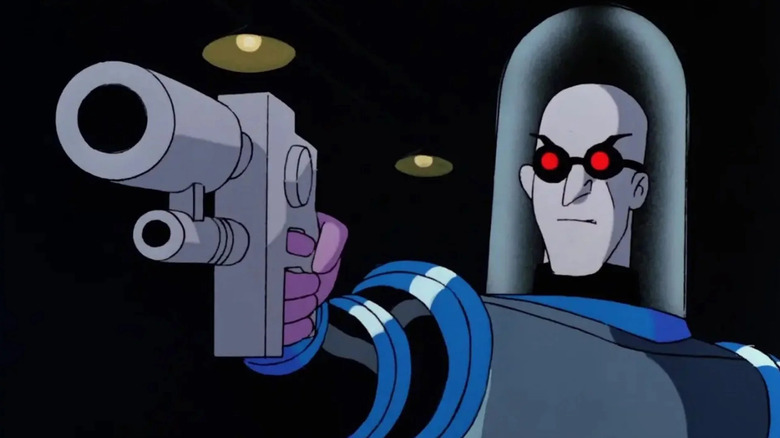
Compared to other DC Animated Universe villains, Mr. Freeze has a tiny amount of screen time — he appears in only two episodes of the original "Batman: The Animated Series." That was all it took to transform this B-list comic book villain into one of the most emotionally moving characters in the entire series.
This iteration of the character is famous for the Season 1 episode "Heart of Ice," in which Freeze (voiced by Michael Ansara) is given a novel, tragic origin story. In the character design and performance, he is depicted as paradoxically robotic, a good man who has been forced by circumstances to render himself cold and inhuman. The most vivid feeling he can process is grief, and Ansara keeps that emotion legible in every action Freeze takes.
Beyond his Emmy Award-winning introductory tear-jerker, Freeze is only brought back for episodes that explicitly center him. Fans wanted nothing less. He's one of the few villains to play a direct role in "Batman Beyond," as well as a feature film.
6. Slade (Teen Titans)
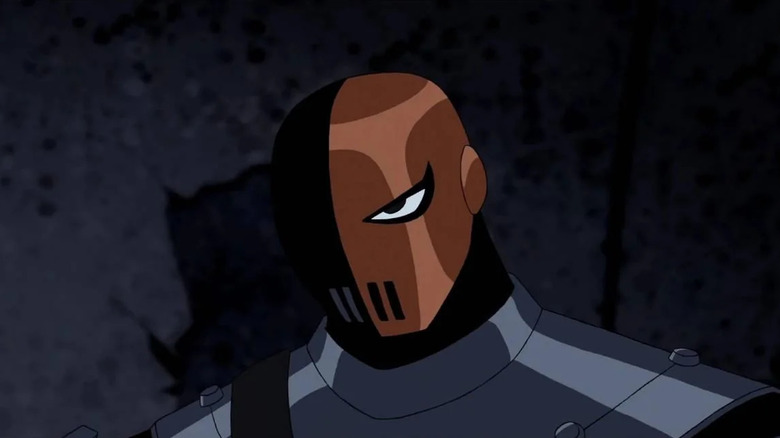
As necessary as it was to include Slade Wilson in what successfully became the definitive on-screen "Teen Titans" adaptation, it's also baffling that the Cartoon Network show was able to make it work. The character is, as he appears in the comics, completely unadaptable for a kid's show in the early 2000s — the writers weren't even allowed to call him "Deathstroke."
Despite having to fit a hired killer into a universe where death could only exist in the abstract, "Teen Titans" made "Slade" one of the most disturbing and important children's cartoon villains. Voiced by Ron Perlman (whose baritone effortlessly exudes the menace concealed behind the character's mask), he feels every bit as dangerous and lethal as he needs to when he's on screen, especially when he's anchoring the series' adaptation of the iconic comic book storyline "The Judas Contract."
Slade's manipulation of Terra (Ashley Johnson) is vile, even within the kid-friendly bounds of the storyline. The writers emphasize how he exploits her shame in order to coerce her to join his cause. Her subsequent redemption (one of the most powerful moments in the series) only works because of how carefully written his character is.
5. The Penguin (The Penguin)
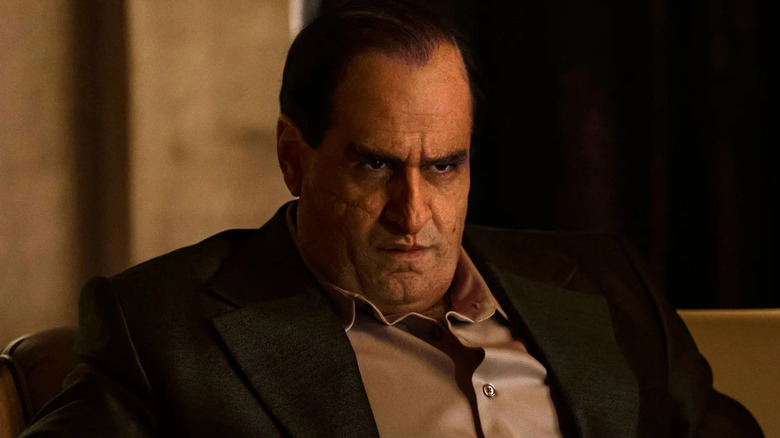
Even though Colin Farrell's Oswald "Oz" Cobb takes center stage in HBO's "The Penguin," he's still the villain of his own origin story. The series as a whole is a masterful crime drama, the titular character's ascent to the top of Gotham's criminal underworld feeling like a horrid psychological loss. In Matt Reeves' "Batman" universe, Cobb is a man who suffers the ultimate tragedy for someone as insecure and vengeful as he is — he becomes exactly who he wanted to be.
Of course, this version of the Penguin is largely defined by Farrell's exceptional performance. The actor gives more of himself to this role than any other DC TV actor has, treating a comic book villain like a prestige antihero. His physical commitment to the performance is total. Much has been said about the extraordinary transformation he underwent via makeup, prosthetics, and costuming, but it's really the voice and movement work that makes him so unrecognizable.
4. Lex Luthor (Justice League Unlimited)
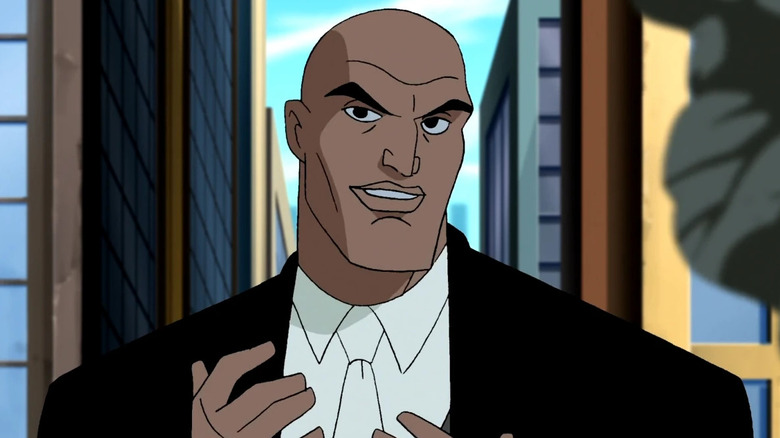
Clancy Brown's Lex Luthor is arguably the best-developed villain in the entire DC Animated Universe project — possibly one of the best-developed in any children's cartoon series ever produced. The character is introduced in "Superman: The Animated Series" as the cool, calculating criminal businessman everyone expects him to be before being showcased as an open evil genius and organized crime lord in "Justice League." The same series allowed him to fake-reform (as the character's often wont to do), only for him to turn into a universal threat by the end of the second season of "Justice League Unlimited." There's no other villain in the DCAU who we get to see as many sides of as Lex.
He's given more variety and growth than most of the supporting heroes. In the series finale, "Destroyer," he plays a key role in the final battle against Darkseid. Coming into possession of the full power of the Anti-Life Equation, Lex is actually the one to vanquish the League's most dangerous foe. He delivers the last great surprise of the franchise — a final, sacrificial double cross that hides a complete character reversal in a perfectly Luthorian act of deviousness. The DCAU Lex Luthor is an all-time great villain, and one of the core reasons why "Justice League Unlimited" still ranks among the best superhero cartoons of all time.
3. The Reverse-Flash (The Flash)
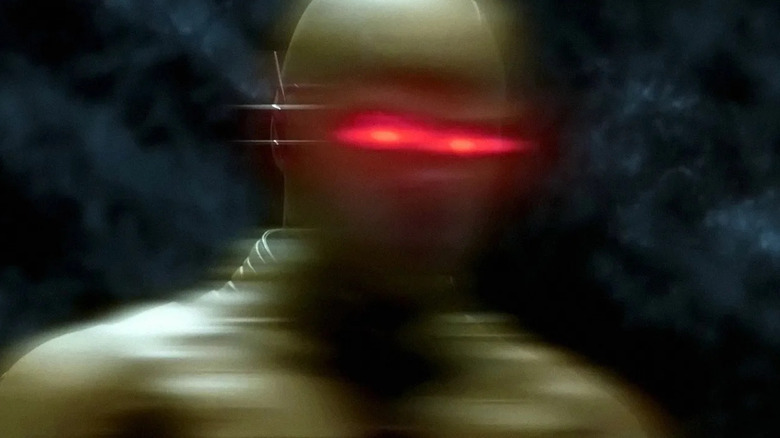
Hopefully, readers will forgive us if we choose to focus on how great this character was at his peak. Putting the series' overall decline aside, the Reverse-Flash deserves to be hailed as the greatest DC TV villain of the Arrowverse era.
Tom Cavanagh is spectacular as Eobard Thawne in the first season, playing a version of the character wearing the skin of another man. His performance alone should give a first-time viewer the desire to rewatch the entire first season after finishing it. Every time Grant Gustin's Barry gets faster, Thawne looks genuinely thrilled — that's the key to the whole character. In both the writing and the acting, he's compelling because he wants to be the best mentor he can be. At the same time, he's the most vengeful man alive. His relationship with Barry has real emotional weight on both ends because of this dynamic.
Matt Letscher also deserves recognition, despite being given mostly weaker material in later seasons (though his season of "Legends of Tomorrow" is an underrated treat). "A New World, Part One" is one of the better episodes of Season 9 because of him, as it adds one final satisfying wrinkle to his paradoxical existence.
2. Lex Luthor (Smallville)
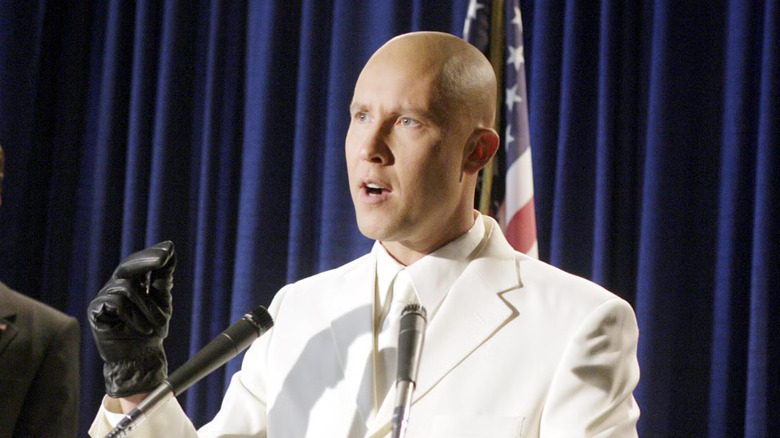
The DC Animated Universe gave us the most comic-accurate version of Lex Luthor. "Smallville" gave us the definitive portrayal.
Michael Rosenbaum's version of the character doesn't fight Darkseid or meld himself to Brainiac. What he does do is give the audience the rare opportunity to actually sympathize with this iconic villain on a deeper, more sustained level. When Lex is first introduced in "Smallville," he's an actually decent human being — a little reckless, a little spoiled, but trying to do the right thing with his immense resources and aware enough of his own flaws to seek out better parts of himself through his friends. The seed of his villainy comes from his father, Lionel (a remarkable DC TV villain in his own right, played by John Glover), who abused and manipulated him from a young age.
This foundation (bolstered by Rosenbaum's pitch-perfect performance, all at once smarmy and irresistibly charming) imbues his obsessive descent with new complexity. Here, Lex's beef is with Clark rather than Superman — the "best friend" hiding half of himself, as he enjoys the love Lex has been denied since birth.
1. The Joker (Batman: The Animated Series)
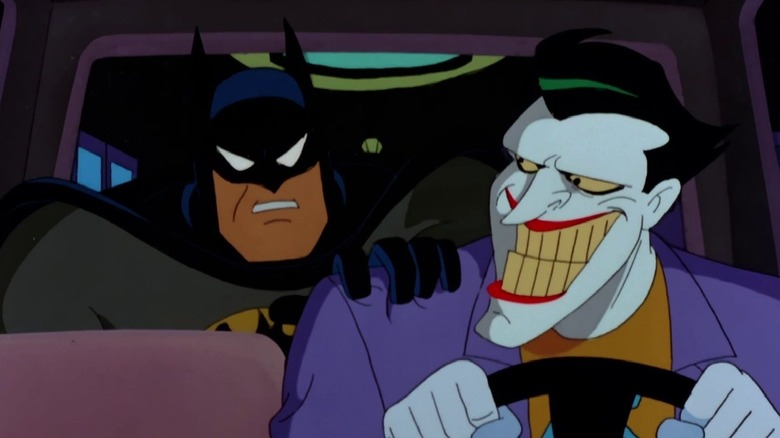
There's a reason Mark Hamill's Joker is still the best version of DC's greatest villain. The character is (at this point, deliberately) confounding in terms of how an adaptation is supposed to approach him — Jack Nicholson's defining on-screen portrayal removes almost all of the inherent mystery that makes the character compelling; Heath Ledger's works only within the context of the grounded crime-thriller universe of Christopher Nolan. "Batman: The Animated Series" is the only instance where the Joker feels like he was lifted right out of the comic.
Hamill's voice work is peerless and stands out as one of the great cartoon voice performances of all time. His take on the Joker is the most distinct and rangy, bringing a whimsical dramatic flair that subsequent performances are afraid to embrace unironically. Credit for this characterization is also due to the show itself. He's given the opportunity to be chaotically vicious in episodes like "Joker's Favor," darkly comedic in "Trial," and even introspective in "The Man Who Killed Batman." He's as three-dimensional as the Joker can get without undermining what makes him fascinating, and remains the gold standard for adapting a DC Comics villain for TV.