

The Twilight Zone Nearly Had A Different Narrator, And Rod Serling Was Not A Fan
We may receive a commission on purchases made from links.
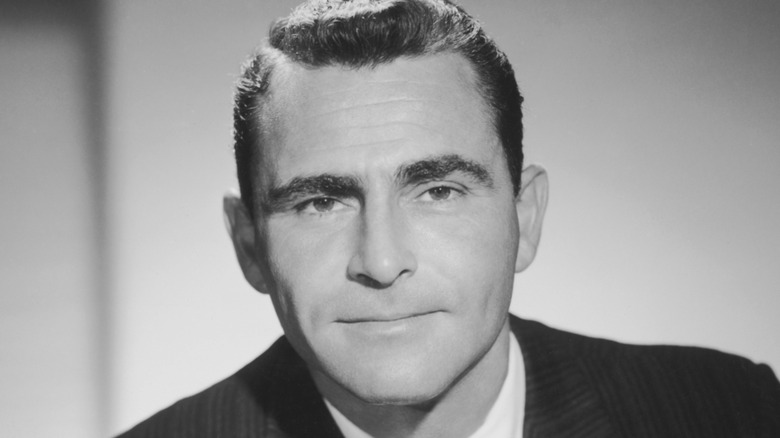
When you imagine "The Twilight Zone," it's hard not to immediately think of its creator and narrator, Rod Serling. His dapper suit, occasional cigarette, and distinct deadpan voice made it one of the best CBS shows of all time. Serling's voice is synonymous with the series, yet he wasn't the studio's first choice. In fact, they had several other options before finally allowing Serling to narrate his own show.
Throughout the early days of television, Serling had built himself a reputation as a writer of screenplays and TV movies, but wanted his scripts to have a message. He decided that writing science fiction scripts might allow him to tackle more hard-hitting topics without attracting any network interference. Eventually, "The Twilight Zone" was born, and with it came the pilot episode — "Where Is Everybody?" — which was narrated by Westbrook Van Voorhis. But as CBS executive William Self told Marc Zicree for the book, "The Twilight Zone Companion," that choice didn't go over well. "When we listened to it we decided it was a little too pompous-sounding"
It wasn't long before almost all of the decision makers turned to Hollywood titan Orson Welles as the next obvious choice. Obvious, that is, for everyone but Rod Serling. "Rod was not at all thrilled with the idea of having Orson Welles narrate 'The Twilight Zone,'" Self said in the same book. "But Welles sat well with the agency, sat well with the sponsor, sat well with the network, except for one little problem." Turns out that problem was not so little, after all.
Serling became the reluctant choice to narrate his show
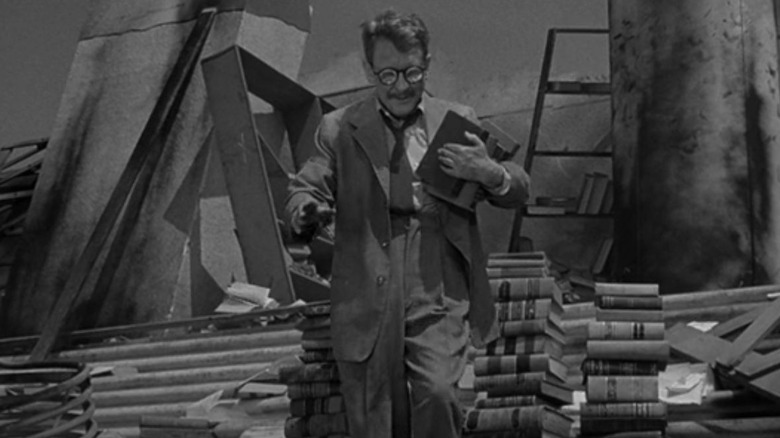
The problem the network faced with bringing on Orson Welles was his asking price: A number that CBS executives said was much higher than they had the budget for. Several other names were thrown around, but no one that everyone could agree on. That's when Rod Serling offered to do it himself and the network agreed. Though everything worked out and "The Twilight Zone" is considered one of the rare sci-fi shows to never have a bad season, Serling was not a fan of becoming the narrator.
In Season 1, Serling delivered all of his narration off-camera, but for Season 2, the decision was made to put him on camera for those now-famous introductions. In "The Twilight Zone Companion," director Lamont Johnson said it wasn't easy for Serling to do. "Rod was a very nervous man before the camera," Johnson shared. "When he had to do his lead-ins, he would go through absolute hell. He would sweat and sputter and turn pale. He was terribly ill at ease in front of the camera."
Serling would get more comfortable as the show wore on and would go on to win two Emmys for his writing on "The Twilight Zone," which is remembered as being one of, if not. the best sci-fi anthology series of all time.