

Why Lanterns Episode 3 Is The Best Sign Yet For The Future Of The DC Universe
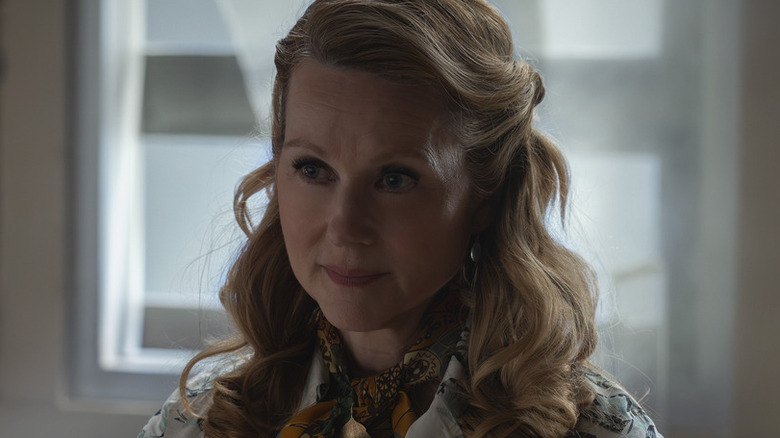
These days, just about all we ever hear about superhero movies and TV shows is how they're screwed. Marvel can shush the fatigue discourse with a ludicrously successful "Spider-Man" film roughly once every decade, but the DCU doesn't have that option. Luckily, it does have Episode 3 of "Lanterns," titled "OutKast" — a shining example of superhero media without superhero media cliches.
Directed by Stephen Williams — who previously collaborated with "Lanterns" co-creator Damon Lindelof on HBO's "Watchmen" and ABC's "Lost" – this origin story for Green Lantern-in-training John Stewart (Aaron Pierre) puts character development and world-building ahead of fan service. The hour foregrounds everyday human beings and their choices while keeping overt sci-fi fantasy elements to a relative minimum — for example, an intergalactic Guardian looks like a normal middle-aged woman instead of a space creature. Its underlying real-world allegory, if heavy-handed, gives the episode something to say beyond, "Here's IP that you, the consumer, presumably recognize from a prior mass media experience." And nobody in this episode of "Lanterns" talks like they were written by a bad Joss Whedon imitator.
Most importantly: After just about a decade of multiverse madness, the whole genre could benefit from a renewed interest in reality. This time around, instead of an impossible cosmic horror, Green Lantern battles the very believable tag team of casual racism and questionable parenting.
Guardians don't have a DEI department
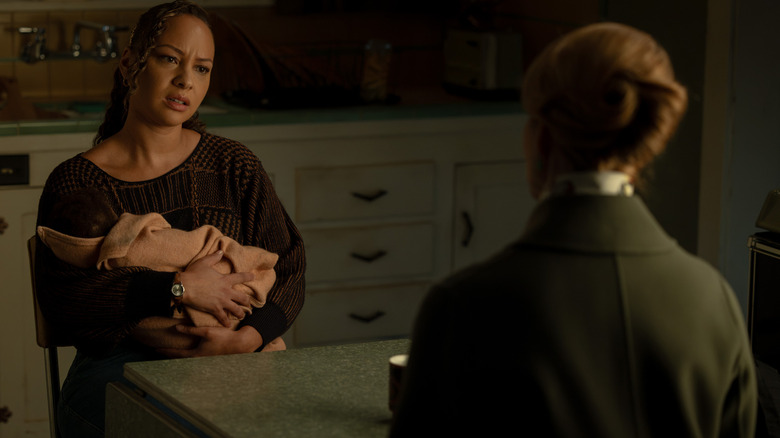
Shortly before the Guardians tap Hal Jordan (Kyle Chandler) to be a Green Lantern back in the 1990s, they subject Sgt. John Stewart Senior (J. Alphonse Nicholson) to their traumatic selection process — and his career and marriage to Bernadette (Jasmine Cephas Jones) suffer as a result.
When a compassionate Guardian (Laura Linney) visits Bernadette to explain that her husband has not, in fact, lost his mind, their exchange plainly illustrates the self-sustaining nature of white privilege. "Do you understand how unfair it is to ask a Black man in America if he's afraid?" asks Bernadette. The confused Guardian replies, "By Black, you mean... brown skin?" By rewarding a limited fear of consequences, the Guardians give dumb white guys preferential treatment without any comprehension of human racial identities at all, much less deliberate bias.
The Guardian suggests that baby John could one day succeed where his father fell short. From there, John's mom and dad devote his upbringing — even going to obsessive, dangerous, destructive lengths — toward preparation for his grand destiny. We don't have superheroes here in the normal world, but we've all seen showbiz parents trying way too hard to raise a pop singer or a movie star, with sometimes tragic outcomes. This episode of "Lanterns" asks: "If the Green Lantern Corps was real, how would regular folks react?" And it offers a way-too-plausible answer.
Does superhero media need a de-MCUification?
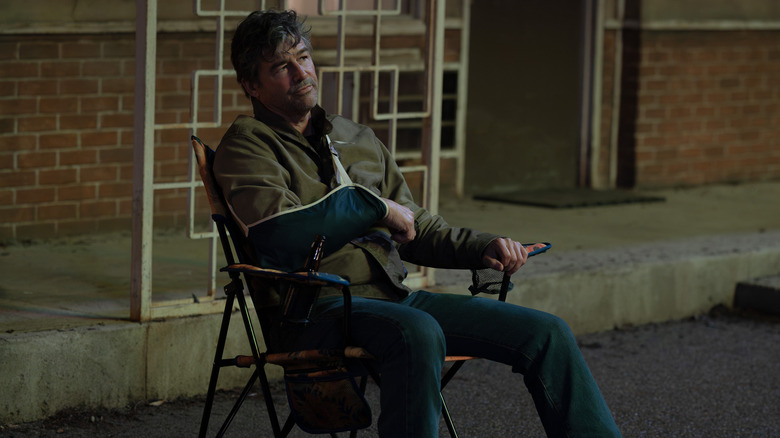
And then there's Hal, who unknowingly reinforces a bigoted status quo via sheer incuriosity. When he meets the Stewarts decades after Bernadette's Guardian encounter, he apologizes for telling the elder Stewarts about his new "backup" before John can break the news himself, and we have no reason to doubt Hal's sincerity. So, presumably, Hal has no idea that he ruined John's military career via unsanctioned, alcohol-fueled mass destruction; nor is Hal likely aware that his superpowers came at the expense of the entire Stewart family and that his Huxtables comment comes across as wildly condescending. Otherwise, he'd apologize for that stuff, too.
Heroes in Marvel movies are hardly ever this clueless and off-putting... they're not usually this nuanced, either.
Since it officially launched in 2023, James Gunn and Peter Safran's DCU has more often than not felt like the MCU with a different set of characters. Granted, Gunn helped establish Marvel's colorful, irreverent house style with his "Guardians of the Galaxy" trilogy — some similarities are unavoidable. But when it comes to parental figures, the MCU tends to reduce them to vehicles for moral messages and-slash-or comedy relief (best example: Aunt May from the Tom Holland "Spider-Man" movies). By zeroing in on deeply flawed, well-meaning, non-superpowered families and how they influence their metahuman offspring, "Lanterns" puts some meaningful tonal and thematic distance between the DCU and its primary competitor. Hopefully it's a sign of things to come.