

5 Ways House Of The Dragon Is Better Than Game Of Thrones
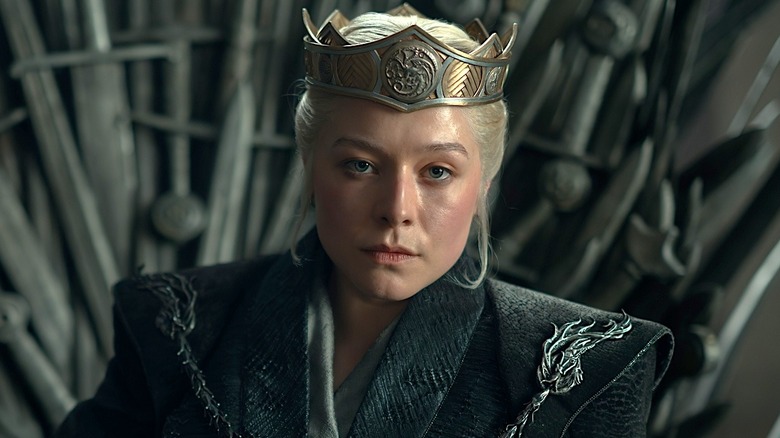
Following in the giant footsteps of "Game of Thrones" is no simple task, but "House of the Dragon" has proven a worthy, and in some ways superior, successor to the hit HBO series. Set 200 years before the events of "Game of Thrones" during the Targaryen civil war known as the Dance of the Dragons, "House of the Dragon" adapts a portion of George R.R. Martin's "A Song of Ice and Fire" prequel "Fire & Blood" — a detailed history of House Targaryen's first century-and-a-half in Westeros.
Through the first three of its four planned seasons, "House of the Dragon" has improved on some of the faults present throughout all eight seasons of "Game of Thrones" and remedied certain problems that drove the show's later seasons into the ground. Fans will undoubtedly continue to debate which show is better long after "House of the Dragon" airs its final season in 2028, but there are five aspects of the spin-off that clearly outshine its predecessor.
1. House of the Dragon has more dragons
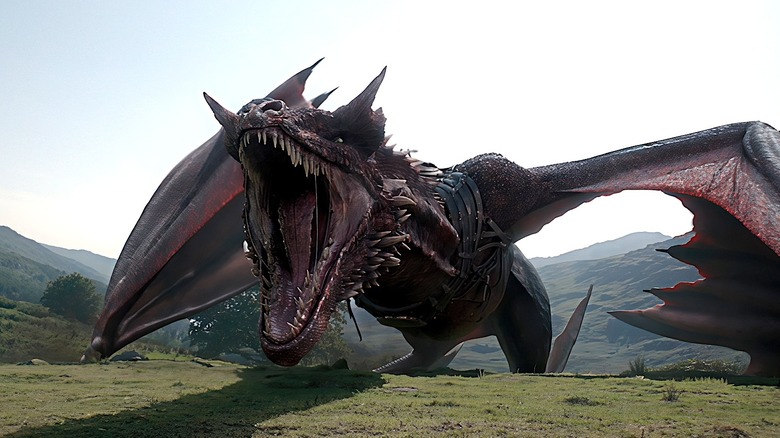
"Game of Thrones" was notoriously light on dragons, as the story takes place long after the last of the winged beasts in Westeros died out. Daenerys' (Emilia Clarke) trio of Drogon, Rhaegal, and Viserion emerge as the only living dragons in the series, yet they don't play an important role in battle as adults until Seasons 7 and 8.
Much to the contrary, "House of the Dragon" has depicted around 15 dragons on screen thus far, with potentially more to appear in Season 4. Here, dragons are an integral part of the world, serving as both modes of transportation and weapons of war, with the bond to their riders the most fascinating part of their existence. Moreover, the dragons in "House of the Dragon" are fierce, unique, and breathtaking to watch soar, screech, and blast fire.
Daemon's (Matt Smith) ferocious "Blood Wyrm," Caraxes; Aemond's (Ewan Mitchell) ancient behemoth, Vhagar; and Aegon's (Tom Glynn-Carney) dazzling golden dragon, Sunfyre, are just of few of the fascinating creatures "House of the Dragon" has so impressively brought to life. With a wartime narrative set in the prime of Targaryen dragonriders, "House of the Dragon" delivers with dragons in a way "Game of Thrones" never could.
2. It adapts a completed source material
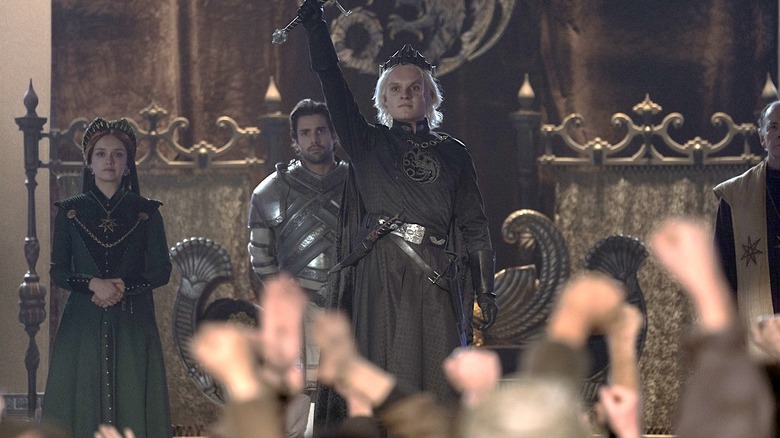
Most viewers agree that "Game of Thrones" began to deteriorate when it ran out of books to adapt, as George R.R. Martin wrote only five "Song of Ice and Fire" novels, covered by the first five seasons of the HBO drama. While Seasons 6 and 7 managed to keep the series afloat despite some shortcomings, "Game of Thrones" Season 8 was widely deemed a rushed and unsatisfying conclusion to the battle for the Iron Throne and the threat of the White Walkers.
Fortunately, "House of the Dragon" hasn't suffered and won't suffer the same issue since George R.R. Martin wrote the complete story of the Targaryen civil war in "Fire & Blood." With each battle, betrayal, and death, "House of the Dragon" follows the book's straightforward outline of events — albeit while altering some characters and circumstances. Fans have both praised and criticized the show's many changes to its source material, but the presence of a clear roadmap for the final episodes of "House of the Dragon" should put any major fears to bed.
3. House of the Dragon tells a more contained story
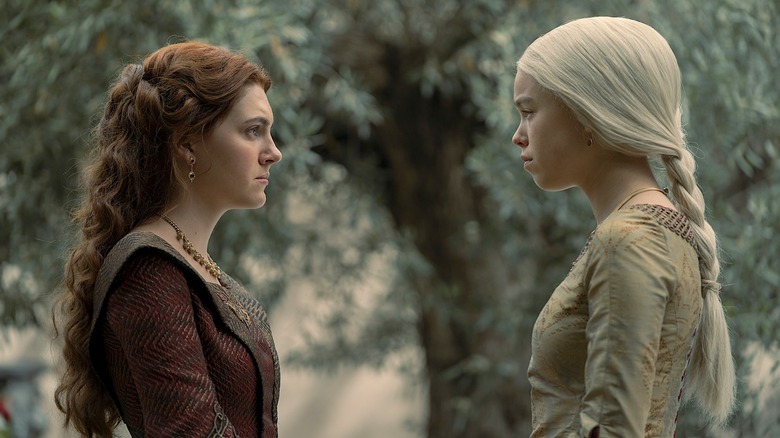
"Game of Thrones" followed a multitude of self-contained storylines — some of which converged only near the very end. From Daenerys' cultivation of power outside of the Seven Kingdoms to Jon Snow's (Kit Harrington) eerie endeavors at the Wall to the deadly power struggles in King's Landing and the North, the countless plot threads on "Game of Thrones" made the show great — until they didn't. Worsened by its lack of source material, "Game of Thrones" was juggling too many threads to deliver a satisfying conclusion.
"House of the Dragon" doesn't face the same uphill battle thanks to its tight focus on the two Targaryen rulers vying for legitimacy during the Dance of the Dragons. Nearly every character belongs to either the Black banner, supporting Rhaenyra's (Emma D'Arcy) succession to the Iron Throne, or the Green camp, backing Aegon's claim, meaning audiences don't have too many names, factions, and storylines to keep track of. Shortening the show's length to half the number of seasons of "Game of Thrones," the more straightforward approach of "House of the Dragon" avoids an overstuffed narrative forced to weave an entirely separate supernatural plot within its layered political tale.
4. House of the Dragon's Iron Throne is a huge improvement
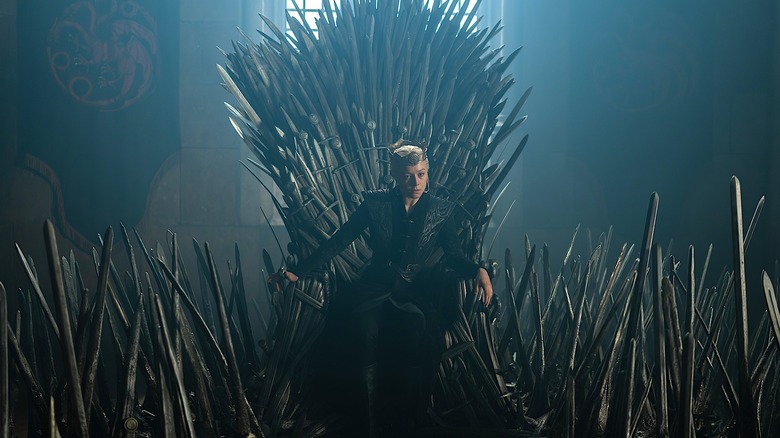
Although the Iron Throne in "Game of Thrones" wasn't exactly an eyesore, it was a pretty far cry from how George R.R. Martin envisioned the great seat of Westerosi power. "Game of Thrones" depicted the Iron Throne as a moderately sized chair composed of a small number of swords — which came across as aesthetically pleasing yet hardly reminiscent of the enormous mountain of twisted metal Aegon the Conqueror built.
"House of the Dragon" introduces an upgraded Iron Throne — a larger structure forged from a lot more swords. By adding a field of raised blades on the steps and around the chair, "House of the Dragon" better represents the books' description of the Iron Throne while remaining practical for a TV production. Striking and intimidating as it was meant to be, the "House of the Dragon" rendition reigns in a league above the original design seen in "Game of Thrones."
5. It revolves around the most interesting family in Westeros
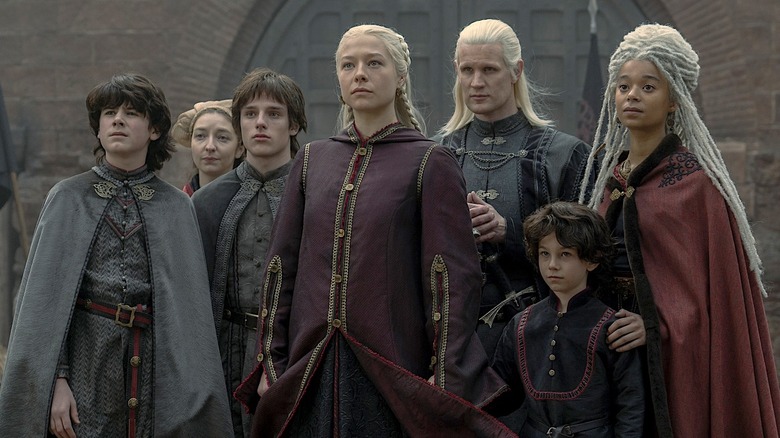
The Targaryens are arguably the most fascinating family in the "Song of Ice and Fire" universe, a status justified by their rich Old Valyrian history, persistent lust for power, unconventional marriage customs, and most of all, dragons. Only a few members of House Targaryen were alive at the start of "Game of Thrones," as Daenerys resolved to reclaim her family's throne over a decade after her father, Aerys II, the last Targaryen king, was overthrown.
"House of the Dragon" sets its story amid the bloodiest period of the Targaryen dynasty, spotlighting everything that separates it from other houses. Viewers get to experience the reigns of Viserys (Paddy Considine), Aegon II, and Rhaenyra and witness the relationships — both heartwarming and volatile — the Targaryens of this era formed with one another.
Furthermore, the Velaryons and Hightowers — who were effectively absent from "Game of Thrones" — feature as fascinating supporting factions in "House of the Dragon." House Velaryon's naval prowess and shared Valyrian roots with House Targaryen make it a compelling addition to the franchise's on-screen lore, while the vastly influential House Hightower brings even more complexity to "House of the Dragon."