

Lanterns Episode 4 Brings Back A Controversial Villain From The Ryan Reynolds Movie
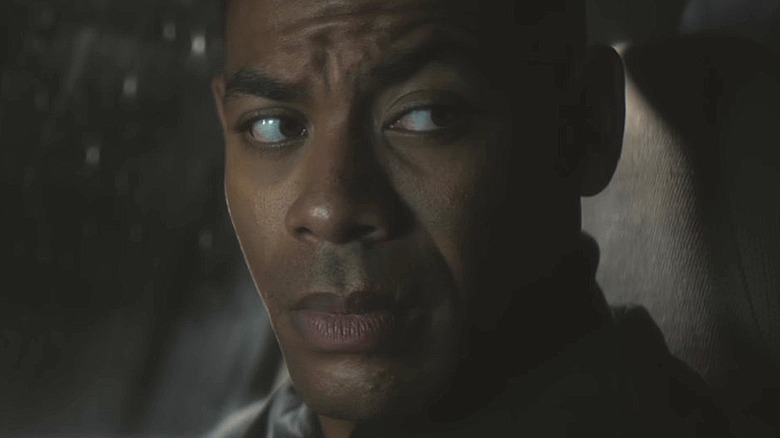
HBO had us yellow with fear for a second.
As the drama in the latest episode of "Lanterns" escalated to the point of an apparent space-laser assassination, the DCU series threatened to introduce Hector Hammond. The classic villain was the underwhelming antagonist of the widely panned 2011 "Green Lantern" film starring Ryan Reynolds. Two-time Emmy nominee Peter Sarsgaard played a slightly remixed version of the big-headed super-scientist who gains telekinetic powers from the film's other forgettable bad guy — a cosmic cloud of fear meant to be Parallax.
"Lanterns" alters the character (played by "Dexter" alum Jason Manuel Olazabal) even further. Though he is still extraordinarily intelligent and is positioned (albeit briefly) as an intimidating foe for the space cops, he is ultimately revealed to be a regular, nonpowered red herring in the investigation. His name isn't even Hector Hammond — it's Hector Gutierrez.
Fans may hypothesize that he isn't the real Hammond, and maybe he isn't, but it seems likely that "Lanterns" wanted to subvert expectations to emphasize the episode's final twist. "Hector Hammond" is seemingly just a pawn for the Manhunter... and nothing at all like the character Sarsgaard played in the early 2010s.
Lanterns is repairing the Green Lantern brand
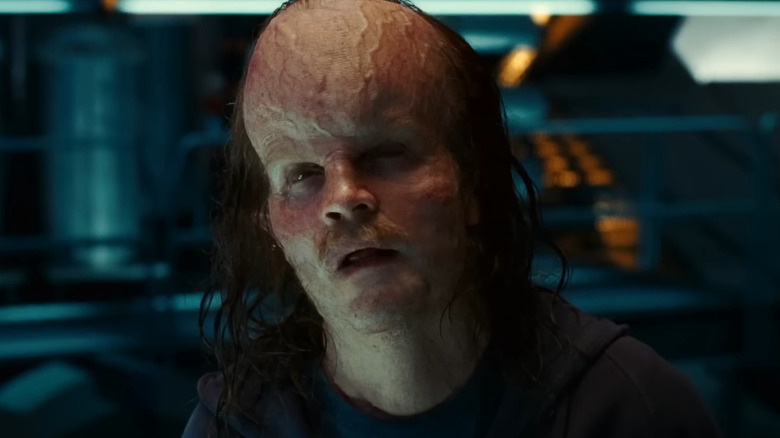
Ryan Reynolds' feelings about 2011's "Green Lantern" are well known at this point. "Deadpool 2" even features a scene of Wade Wilson (Reynolds) going back in time to kill Reynolds and prevent the movie from being made. Peter Sarsgaard has hardly spoken about it at all.
The movie wasn't just a disaster for Warner Bros., but for the "Green Lantern" IP. Josh Keaton, who voiced Hal Jordan in the beloved and short-lived "Green Lantern" animated series, said that the show was canceled as an indirect consequence of the film's abysmal performance. Kids didn't want to buy "Green Lantern" toys — and low toy sales can be a death sentence for children's superhero shows.
The minds behind HBO's "Lanterns" aren't beholden to the same toyetic expectations, but they've nonetheless constructed a show that exists in creative opposition to the film. Virtually every major complaint fans have about 2011's "Green Lantern" is resolved in the series — the story is adult, psychological, and novel in its approach to the superhero subgenre; instead of Reynolds' uncanny CG suit, Kyle Chandler sports a practical uniform; Ulrich Thomsen's Sinestro is a menacing villain, rather than a tease for a sequel that will never come, and Hector Hammond is thus far a conservatively used supporting character rather than a grotesque, load-bearing big bad.