

What Is Television's 'Friday Night Death Slot,' And Does It Still Exist?
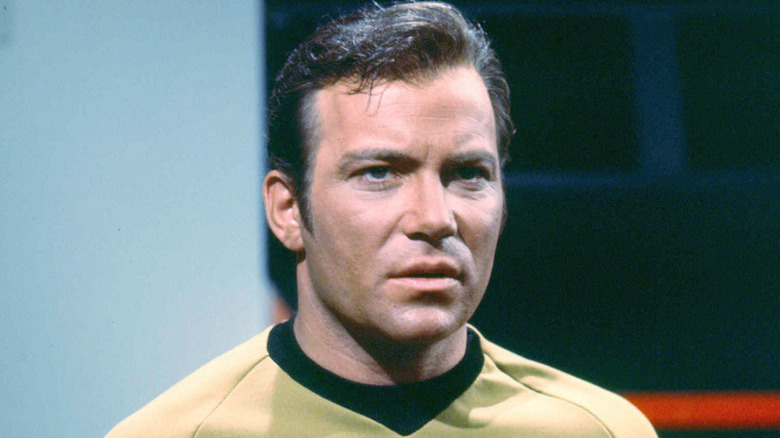
Throughout television history, there has been one night of the week that's considered cursed by the cast, crew, and producers on network TV shows — Friday. The idea is that network executives put shows in Friday evening time slots when they want them to fail. Logically, this is when young people in the 18-to-34 demographic are out socializing, not sitting around watching their favorite characters get in trouble. It makes sense that for shows looking to attract young-adult audiences, a spot on Friday evening became known as the "Friday night death slot." Few viewers were home to watch their shows, which led to a decline in ratings and cancellation, aka death.
One of the most prominent victims of the Friday night death slot phenomenon is the original, legendary sci-fi series "Star Trek," which aired on NBC for three seasons from 1966 to 1969. Season 1 aired on Thursday nights in the 8:30-to-9:30 p.m. time slot. For Season 2, NBC moved "Star Trek" to Friday nights from 8:30 to 9:30 p.m. It was renewed for Season 3 only because of a fan letter campaign, and NBC's lack of faith was evident when it moved the show in its final season to an even weaker time slot, Friday night from 10 to 11 p.m.
Per the Television Academy, "Star Trek" experienced its most "acute" ratings drop in Season 3 because of both the time slot change and budget cuts by NBC. The network reasoned that the show didn't have broad appeal, which was later proven false in syndication and by the fact that it's now one of the most beloved sci-fi franchises in TV history.
Only certain shows fail on Friday nights

Another show that famously fell victim to the Friday night death slot is the cult sci-fi hit "Firefly," which ran on Fox on Friday nights at 8 p.m. for one season between 2002 and 2003. TV Week noted a 24% ratings drop from the series premiere to Episode 2. Plus, "Firefly" had to compete with the World Series, and Fox aired episodes out of order.
The network did the same thing to another sci-fi/fantasy show, "Wonderfalls," in 2004. The show, about a young gift shop worker whose merchandise talks to her, drew less than 5 million viewers to its Friday night series premiere (per TV Guide), despite critical acclaim. It lasted for 14 episodes. And, to establish itself as master of the Friday night death slot in 2006, Fox moved the final four episodes of the critically acclaimed comedy "Arrested Development" from its Sunday night time slot to a Friday night marathon against the Olympics.
But the phenomenon appears to be true only for shows geared toward young-adult audiences. For example, the CBS cop drama "Blue Bloods" aired most of the episodes of its 14-season run on Fridays. It premiered on a Friday to an impressive audience of 12.8 million (per TV Guide). It briefly moved to Wednesday in Season 1 before going back to Friday nights. And in 2014, "Blue Bloods" became the most-watched Friday series in 11 years, with an average of 14.11 million viewers per week (per Paramount).
Does the 'Friday night death slot' still exist?
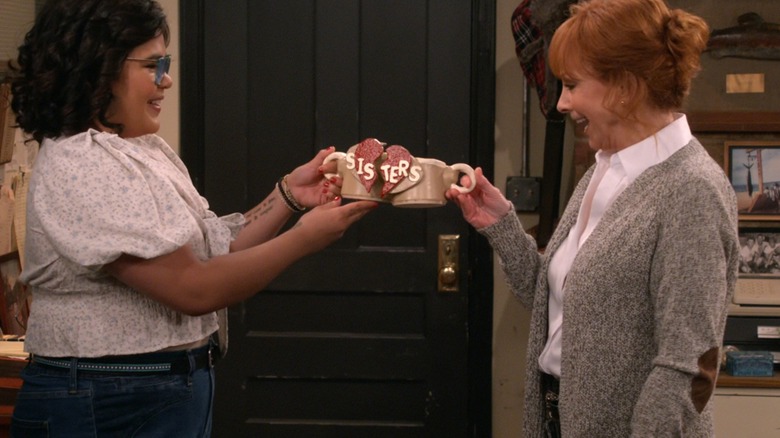
"Blue Bloods" ended in 2024, and the TV industry moves fast. ABC and Fox do not air scripted shows on Friday nights. The only major networks that still do are CBS and NBC.
For the 2026-2027 season, CBS is sticking to the Friday night lineup it had the previous season, leading with "Sheriff Country" at 8 p.m., followed by "Fire Country" at 9 p.m., and ending with the "Blue Bloods" spinoff, "Boston Blue," at 10 p.m. This lineup performed well for CBS last year. On NBC, the successful comedy "Happy's Place" is returning for its third season in the Friday at 8 p.m. time slot. But it hasn't been the most successful lead-in for the 8:30 time slot on Fridays. The Jenn Lyon-led comedy "Stumble," a satire of the junior college cheerleading world, was canceled in 2026 after just 13 episodes in the time slot after "Happy's Place." Although it was critically acclaimed, Variety attributed its cancellation to poor viewership. Still, NBC likely didn't put "Stumble" after one of its extremely successful comedies hoping it would die.
So, is it risky to put an untested, scripted show in a Friday night slot? Yes. But the television industry has come a long way since "Star Trek" became the poster child for the Friday night death slot. Network TV is struggling in the streaming era. Executives need every show in their lineup to succeed; they can't afford to knowingly waste a Friday night slot on a show targeted to the wrong audience knowing it will likely fail.