

15 TV Shows To Watch If You Like King Of The Hill
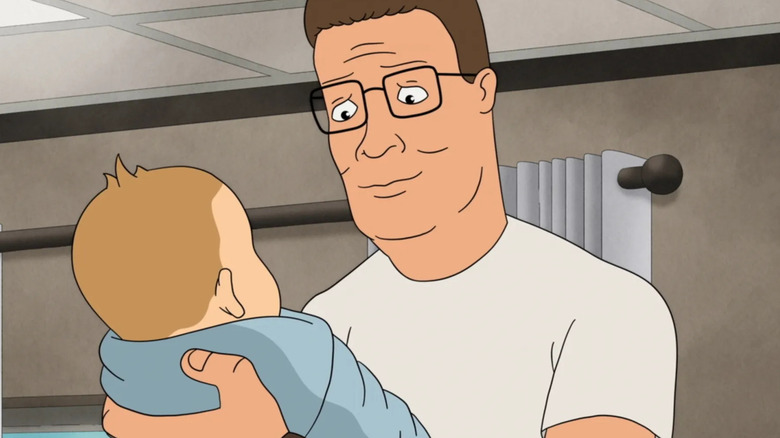
There's no show quite like "King of the Hill," but there are lots that are kinda-sorta like it. Mike Judge's animated sitcom about propane salesman Hank Hill (Judge), his substitute teacher wife Peggy (Kathy Najimy), and eccentric son Bobby (Pamela Adlon) is a rare animated sitcom that's grounded almost entirely in realism (with rules to enforce it), though its colorful Texan characters may sometimes seem stranger than nonfiction. It's a mix of ingredients hard to capture this well.
In live-action, Hank is not the sort of guy who'd often be cast as a lead. He's mostly funny by accident, and not exactly blessed with traditionally handsome looks or abs. His best friends, with whom he drinks beer in the alley, are more eccentric still: conspiracy-loving exterminator Dale (Johnny Hardwick and Toby Huss), broken-down and desperate Bill (Stephen Root), and mumbly stud Boomhauer (Judge). Nonetheless, we have managed to find more than a few live-action shows in the same spirit.
Arlen, Texas, may not be a real town, but Judge and collaborator Greg Daniels created a specific sense of time and place that feels authentic. If you've seen "King of the Hill" and were hooked, what else out there scratches similar itches? Where are the slightly clueless dads, oddball kids, richly sketched-out towns, and similarly funny cartoon sitcoms? We've rounded them up below.
Beavis and Butt-Head
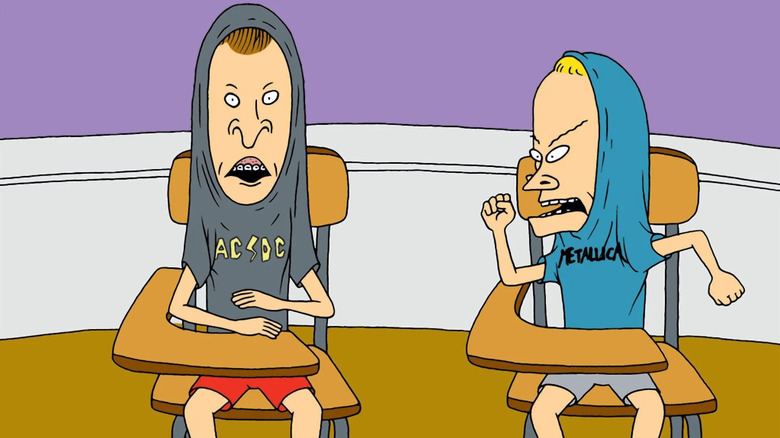
If you like one Mike Judge animated show, chances are you'll like the one that came before it, even if it's a lot more cynical about humanity. "Beavis and Butt-Head" is also set in Texas, but rather than the comparatively modern town of Arlen, moron metalheads Beavis and Butt-Head live in a run-down suburb from Hell called Highland, where virtually everyone is oblivious, self-centered, and, more often than not, pretty dumb.
For fans of Judge's ability to insert humanity into even the most ridiculous voices, sharp-eared "King of the Hill" viewers will recognize at least two. Butt-Head blatantly inspired Bobby's delinquent classmate Dooley, while Hank Hill's voice is the same as that of Tom Anderson, the myopic, slightly out-of-it Korean War veteran who never remembers Beavis and Butt-Head as the kids who trashed his house the last time he hired them for chores. All of them, of course, are actually Judge himself.
"Beavis and Butt-Head" captured a generation — their simple desires to burn things, play loud music, and "score" often prove both relatable and mockable, and their very basic reactions to music videos are, at best, art criticism boiled down to its absolute fundamentals. Now in middle-age, they also skewer the futility of their same generation's distrust of everything and belief in nothing.
The Goode Family
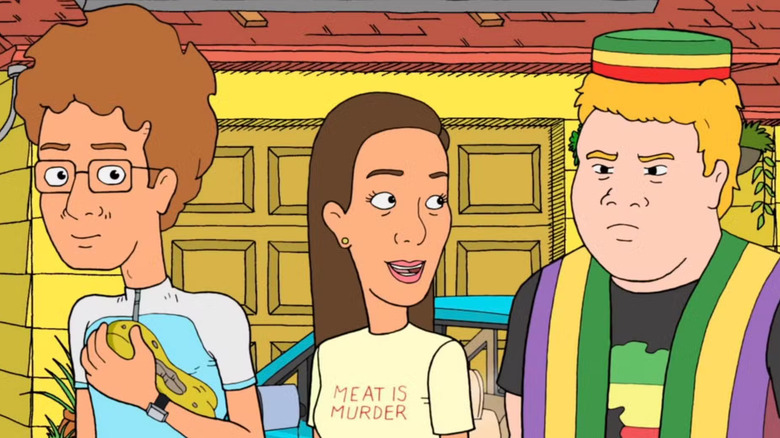
After his success depicting an animated Republican Texas family in "King of the Hill," Mike Judge decided to try the opposite with "The Goode Family," which follows California liberals. It didn't work as well for audiences, and got canceled after 13 episodes. Nonetheless, Judge aficionados ought to give it a look on DVD or streaming.
It's the complete opposite of "King of the Hill" in many ways, but with the same mind and voice behind it. Here, instead of channeling Mr. Anderson from "Beavis and Butt-Head," Judge adapts the hippie persona of David Van Driessen to create Gerald Goode, an extremely politically correct environmentalist academic whose kids are slightly more pragmatic.
What Goode and Hank Hill have most in common (aside from Judge's voice) is they both like things precisely their way and are easily disgusted. Throughout, Judge's ability to put his finger on all that needs skewering remains astute. It's harder to make fun of smart people than dumb ones, but "The Goode Family" manages the latter by cutting down their moral superiority complex. Perhaps it cut too deep for the target audience.
The Simpsons
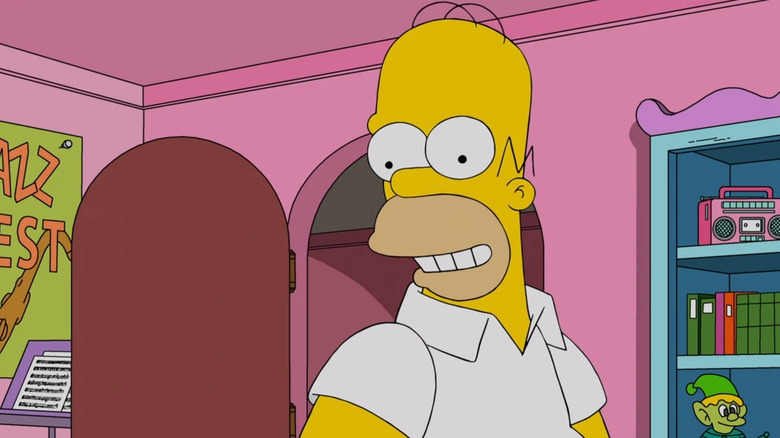
"The Simpsons" is the first family of Fox primetime animation, and "King of the Hill" is arguably the second. The titular families are not all that similar — Hank is actually good at his job, and Bobby tries to not get in trouble at school. Where the shows do feel of a feather, however, is in the expansive casts of eccentric characters built around the central clan. Arlen and Springfield aren't real places, but they're fleshed out so well, we feel like they could be.
From its favorite alcoholic clown entertainer to the old sea captain, cartoonishly evil boss, goofy mascots, neurotic mobsters, psychotic Scottish groundskeeper, depressed teachers, caricature-ish restaurateurs and more, Springfield has become rich with wacky characters over the years. Bart's sassiness and Homer's stupidity used to be the top draws, but these days, any of the multitude of eccentrics in the Simpson family's hometown can be put at the center of a compelling story. They may be cartoons, but on some level, they remind us of the weirdos we know, and their pop culture is only a slight exaggeration of our own — to hilarious effect.
The Drew Carey Show
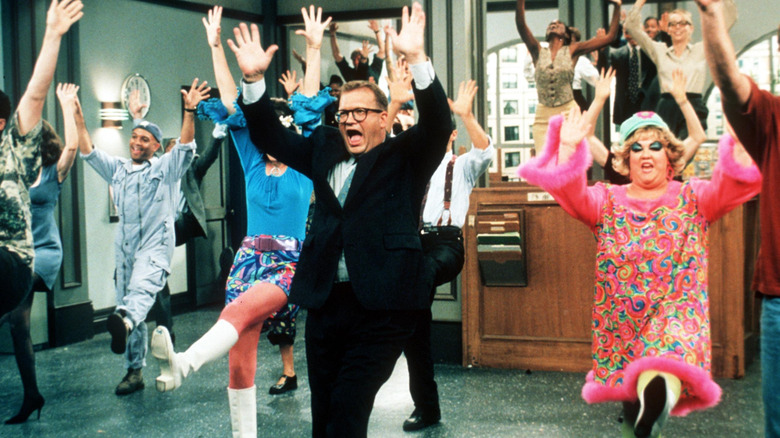
Though "The Drew Carey Show" bears the name of one man, it's an ensemble show at heart, following four amiable goofball friends with aspirations to be more than just clock-punchers. Drew, Lewis (Ryan Stiles), Oswald (Diedrich Bader), and Kate (Christa Miller) live in the very real city of Cleveland, where they attempt to market their homebrewed, caffeinated Buzz Beer and leave their regular day jobs. In particular, Drew is often made to suffer at work by overly made-up coworker Mimi (Kathy Kinney) and his insane English boss Mr. Wick (Craig Ferguson), who, impeccable accent aside, is every bit as unstable as Hank Hill's boss Buck Strickland.
The core four are similar in dynamic to Hank, Dale, Bill, and Boomhauer, though perhaps less so when Drew and Kate start to date. Where "The Drew Carey Show" excels is in its flights of fancy — the cast could as easily break into a musical number as a game of pool. Also, Lewis and Oswald aren't just comedically dull-witted, but genuinely weird too, making them effectively unpredictable foils for the somewhat dorky Drew. Eschewing the usual New York/LA dynamic, the show probably gave Cleveland its biggest pop culture boost ever.
Whose Line Is It Anyway? (U.S. Version)
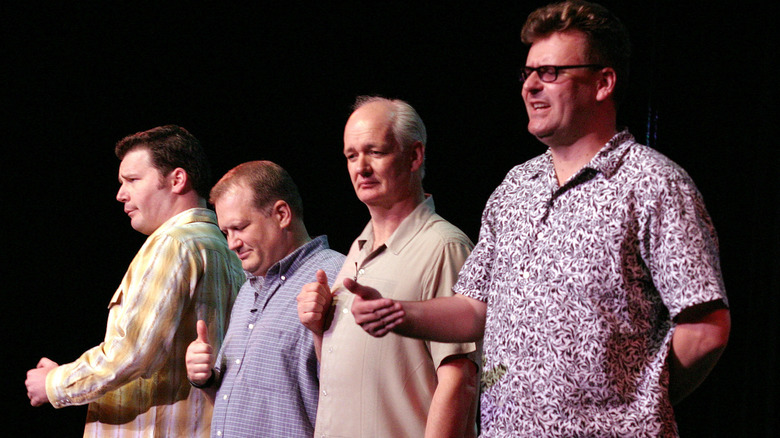
On "Whose Line Is It Anyway?" Drew Carey presides over an almost totally different wacky foursome from "The Drew Carey Show," with the notable exception of Ryan Stiles as the one holdover. In premise, it's a show that may seem utterly unlike an animated sitcom set in Texas. Yet, in the dynamic of four pals gently ribbing each other and working together in unusual ways, it somehow feels like a spiritual cousin.
Those pals are usually Colin Mochrie, Stiles, Wayne Brady, and Greg Proops, with an occasional substitution. Mochrie, like Bill on "King of the Hill," often deliberately leans into "sad bald man" tropes; Proops might appear to overthink like Dale; and Brady is the party guy-slash-ladies' man, leaving Stiles as the most normal — albeit very physical.
In improvisation games, they come up with situations more ridiculous than most cartoon sitcoms would conjure, but by the end, more often than not, they come together in either an old-fashioned hoedown or Irish drinking song. "Yep/Yep/Uh-huh" becomes "Lidie didie didie." Real beers become imagined ones, but their respective friendships always feel 100% true.
Married... with Children
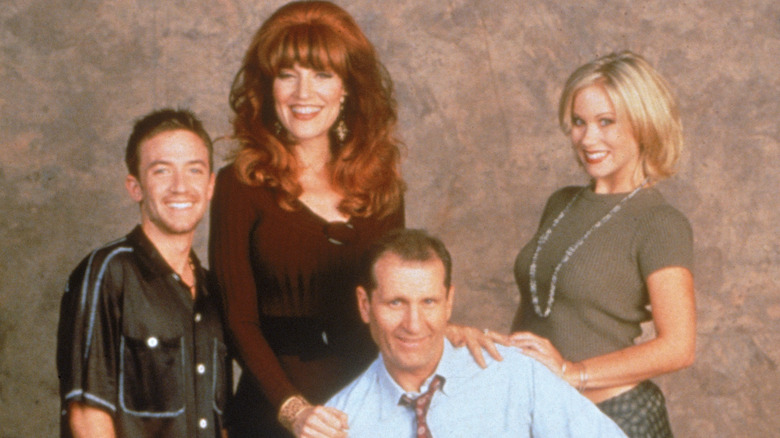
High-school athletes, even the best ones, don't always go on to further athletic glory. In many cases, they just end up married, have at least one kid, and get a job in sales. Such is the fate of Al Bundy and Hank Hill, both of whom were greats in their teens, but then real life intervened. Hank was injured; Al knocked up his girlfriend. They became sitcom patriarchs in shows that depart wonderfully from standard tropes.
"Married...with Children" was pitched as the antithesis of "The Cosby Show," and it gleefully torches the family show model of moral lessons learned, tears shed, and hugs all around. More relatably, Al (Ed O'Neill) just wants some peace and quiet, and to keep some of the money he earned, usually to spend on beer and strippers. Most of the time, his family gets in the way, with whiny wife Peg (Katey Sagal) demanding attention and horny kids Kelly (Christina Applegate) and Bud (David Faustino) getting in trouble.
Though the awfulness of Al Bundy's life occasionally verges into the surreal, "Married... with Children" works because it feels more honest than most about the many ways in which family can actually be hell.
Bob's Burgers
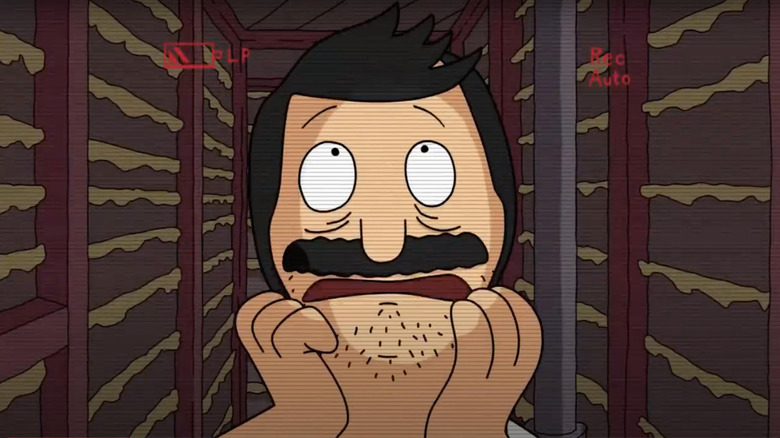
Bob Belcher (H. Jon Benjamin) and Hank Hill are somewhat alike. To make his signature burgers, Bob relies on grills, and Hank sells them (or, as he calls them, "propane accessories"). Both men have also learned how to humor their wives, and particularly put up with the way those wives indulge their weird kids. Bobby, it must be said, would probably embrace Belcher kids Tina (Dan Mintz), Gene (Eugene Mirman), and Louise (Kristen Schaal) like long-lost cousins, all letting their freak flags fly together.
What makes "Bob's Burgers" resonate with viewers is its warm sense of humor. The kids are very strange, from Louise's bunny ears to Tina's zombie obsessions, and the animation style isn't like anything else on TV, but the show's heart makes it relatable. Even deliberate disorientations like obviously male voices for female characters are played so sincerely that they don't distract. Through it all, Benjamin's familiar deadpan is all of us, just trying to get through the day with a shrug that acknowledges the ridiculousness of life while keeping steady through it.
King of Queens
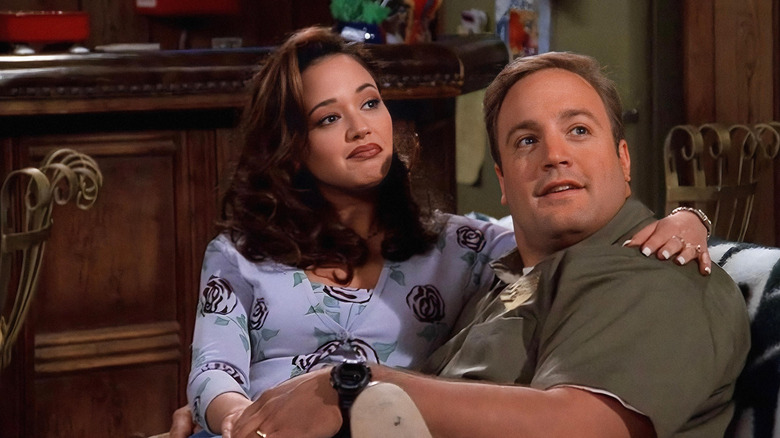
Hank Hill and Doug Heffernan (Kevin James) don't just share an ironic monarchical title. They're also both paunchy, regular middle-class guys with three best drinking buddies and a wife who seems smarter, but is just as flawed in her own way.
Politicians, and vintage Pace Picante salsa commercials, are fond of pitting Texas against New York as states with different values and cultures, but "The King of Queens" suggests that they have a lot in common once you get past the different accents. The guys love their food, their sports, their drink, and their wives whom they're probably also afraid of.
What makes Doug and Carrie (Leah Remini) different (and worth watching in a sea of related shows) from similar duos is a key element. They are more recently married than the Hills and have no kids. Instead, for a different kind of generation-gap humor, they share a place with Carrie's dad Arthur (Jerry Stiller), who lives in the basement, and can be as much of a handful as Bobby, generating weird, offbeat takes. After Stiller passed away in 2020, James said he will not consider a reboot. That's how essential Stiller was to "The King of Queens.
Blue Collar TV
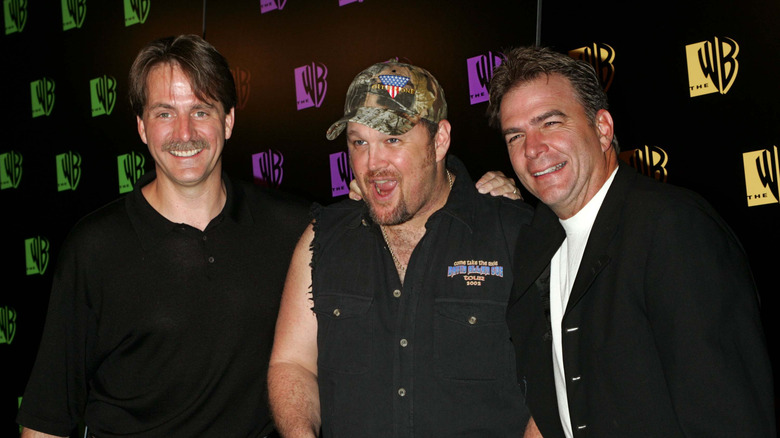
The "Blue Collar TV" trio of regulars — Jeff Foxworthy, Bill Engvall, and Larry the Cable Guy — and frequent guest Ron White make up a quartet that resembles a real-life version of Hank and his alley pals. Well, "real-life" apart from the fact that Larry is a made-up character by Nebraska comedian Dan Whitney, whose actual accent isn't even Southern.
As a sketch comedy show, "Blue Collar TV" is a lot more episodic than an animated sitcom like "King of the Hill," but they come from the same place, creatively. Both mock dumb Southerners and country folk, but from a place of love and self-identification. It's not a case of Hollywood writers looking down on the rubes, but actual good ol' boys mocking their dumb cousins and drinking buddies knowing that they are as much the butt of the jokes they're telling as anybody else.
They're also better together than apart — as individual sitcom dads, Engvall and Foxworthy had fairly generic sitcoms of their own. Pushed together into the sketch format, their competition to seemingly try to make the others crack up first brings out their weirdest, goofiest impulses.
Home Improvement
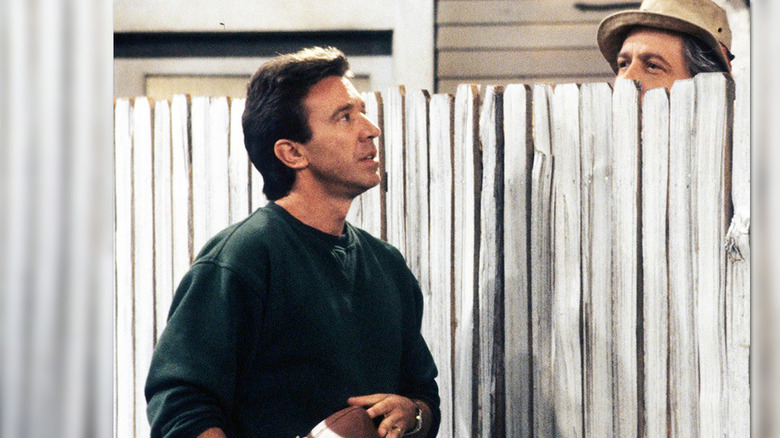
If there's anyone on TV who's as likely to love propane tanks as much as Hank Hill, it's Tim "The Toolman" Taylor (Tim Allen). With his motto of "More power!" the host of TV's "Tool Time" likes to make his home repair demonstrations more and more extreme and super-charged, which inevitably ends badly for him. He's like a live-action Charlie Brown trying to kick the football each time — except that in creating the dangerous situations, he's his own Lucy too.
Allen makes himself the center of attention on his show, but also the butt of the joke, as he has every other character deflate his balloon, whether it's sidekick Al doing repairs better, wife Jill handling the kids with more empathy, or the regular advice from a neighbor who's clearly smarter than him: the sagely (yet usually very much alone) Wilson (Earl Hindman).
Tim could learn a thing or two about correct tool usage from Hank Hill, but there's little chance he'd actually listen.
Major Dad
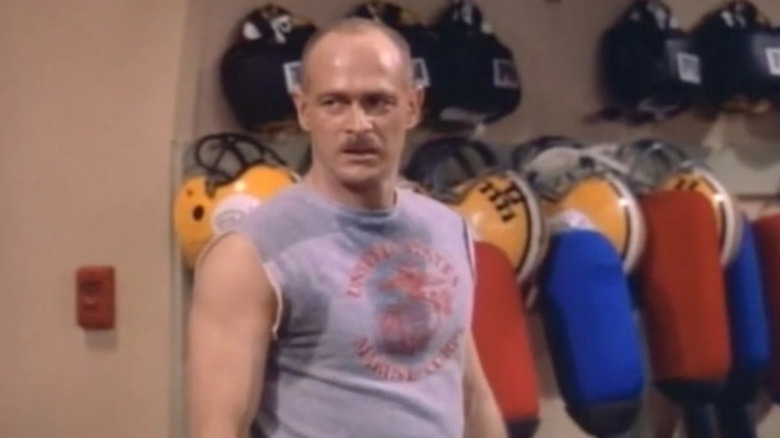
Marine Major John D. McGillis (Gerald McRaney) has as hard a time being a sensitive father figure as Hank does, though it's an additional challenge for the former because he has to deal with three girls who are his new stepkids. He can try to give them orders when he gets frustrated, but good luck getting them to actually obey. McGillis also isn't always savvy about feminine hygiene products, calling to mind the "King of the Hill" episode when Hank babysits Connie and she gets her period.
Sometimes, the traditional man actually knows what he's talking about and the seemingly astute wife outsmarts herself. Mostly, though, it's the other way around — and the kids ultimately know what's really up. McRaney could have played the role as a typical hardass who screams and yells like a drill instructor, but his delicate balance of sensitivity and toughness sells the show. He has the gravitas to keep his military men in line, yet allows himself to look completely overwhelmed when it comes to having to be the head of the (nearly all female) household.
The Office (U.K. Version)
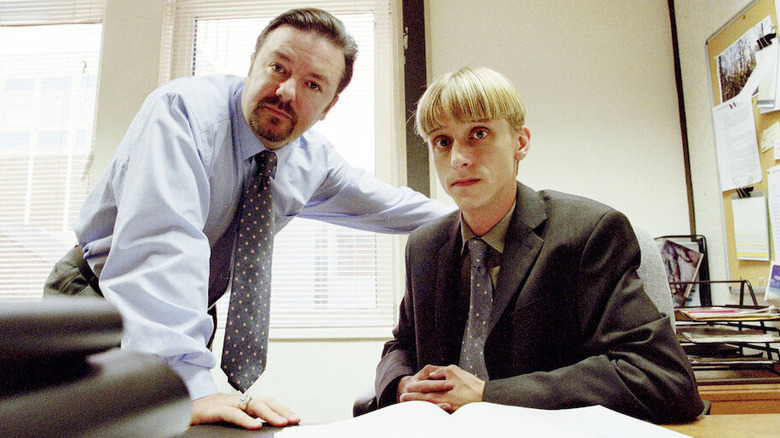
David Brent (Ricky Gervais) and Hank Hill have different motivations, but both make for the same kind of clueless, less-respected-than-they-imagine supervisors at their extraordinary banal places of business. David wants to be seen as the cool boss who doesn't care about the rules; Hank is pure squaresville and imagines he'll be admired for being by the book. In both cases, neither management nor coworkers are especially impressed.
The U.S. remake of "The Office" focuses on the averageness of the workplace, but the original makes it utterly depressing, with its downbeat intro music and miserable-looking corporate exterior in dismal weather. It's telling you right off the bat that there is no hope of a better life for anyone involved; the best they can do is amuse themselves pranking coworkers. Michael Scott seems amused with his own mediocrity; David Brent feels desperate.
American sitcoms often advocate for finding your joy with family, even when the job's a bore. English shows like "The Office" only want to emphasize just how soul crushing the job is — and thereby how lucky you, the viewer, are to presumably have it better.
All in the Family
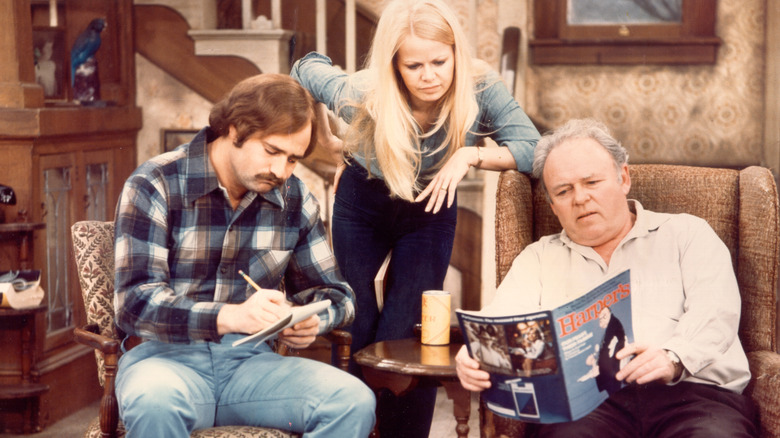
If Hank Hill is a sensible centrist, Archie Bunker (Carroll O'Connor) would likely be far to the right. TV's most notorious bigot dad is closer to Hank's father Cotton (Toby Huss), the angry, misogynist war veteran whose legs were shot in half in combat. Archie and Cotton would likely vote the same way, but deep down, the Bunker patriarch is more like Hank in that he really does care about his family despite their frequent, loud disagreements.
Archie may disagree strongly with his daughter Gloria (Sally Struthers) about her rejection of traditional gender roles and (especially) choice of spouse, but when the chips are down, he'll defend her. His views may be awful — they are, and you aren't supposed to agree with him — but he's not a complete monster. People say this show couldn't be made now because of the bigoted words, but in actuality, the idea that a problematic loved one and his disagreeing family members can coexist is what's rapidly feeling like fantasy nowadays.
Thank the wife. Edith (Jean Stapleton), who's smarter than she sounds with that screechy voice, seldom fails to push her husband into the sometimes uncomfortable area of actually showing love.
American Dad
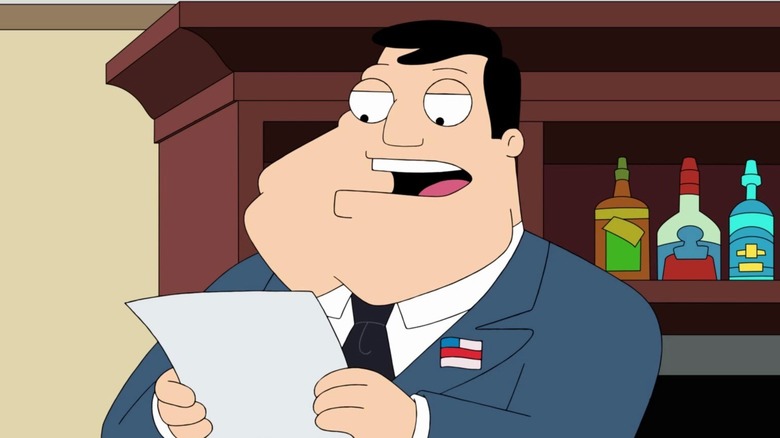
"American Dad" patriarch Stan Smith (Seth MacFarlane) would probably be revered in Arlen for his strong jawline, overt patriotism, and shoot first, ask questions later philosophy of life. Hill neighbor Dale Gribble would probably be his best friend if Stan would let him, as their hangouts would confirm all Dale's wildest theories about aliens and the CIA.
"Family Guy" was MacFarlane's initial take on the basic family sitcom. "American Dad" pushes the envelope further, asking what if the father in the family also works for the CIA and is as narcissistic and stupidly macho in that role as all liberals fear? His daughter's a hippie, for contrast, and the Paul Lynde-style uncle character is an alien who regularly commits crimes on a massive scale. While "Family Guy" often riffs on pop culture for its storylines and isn't super-tight with continuity, "American Dad" has an action set-up that creates its own storylines and mythology.
Could Stan Smith ever meet Hank Hill? Executive producer Richard Appel says he's open to an "American Dad" crossover with shows that have different aesthetics ... so it's possible.
Family Guy
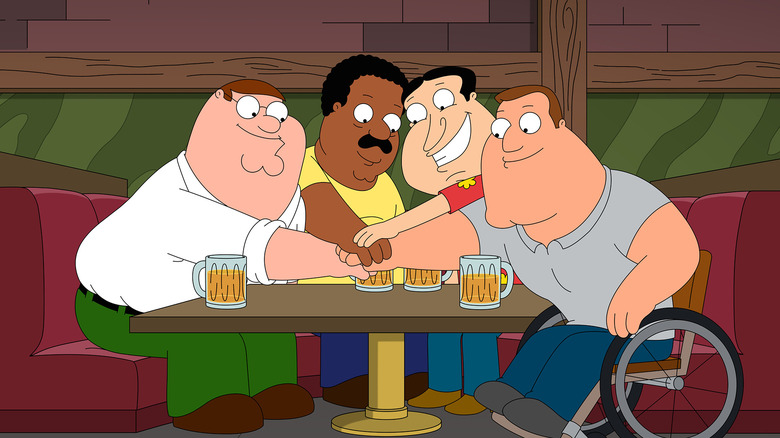
Hank is naive, but not stupid. Peter Griffin (Seth MacFarlane) is truly, incredibly stupid. Yet, both characters are used on their respective shows to make larger points about society and its extremes. Peter would probably get along better with Hank than he did with Homer Simpson, since Hank's not above having blockheads like Bill for best friends.
The differences between the two can largely be attributed to their creators. Mike Judge first grew up in Ecuador, and then on a New Mexico chicken farm; he studied science in college and toured with a blues band before deciding to become an animator. Seth MacFarlane was obsessed with cartoons from childhood, and always wanted to work in animation.
"Family Guy" takes the standard "Simpsons" and "Flintstones" model for cartoon families and just throws out the rulebook. The dog talks. The baby is a genius supervillain. The local pervert is a recurring character played as a joke. Most of all, Peter is constantly having flashbacks to things that never happened, usually involving pop culture icons or tropes. The randomness is awkward for a viewer hoping the story will be linear, but ultimately gives the show a jazz-like flow you just have to go with.