

5 Law & Order: SVU Episodes That Could Never Be Made Today
This article contains discussions of sexual assault, domestic abuse, and mental health.
The entire premise of "Law & Order: Special Victims Unit" revolves around sexual assault and crimes against children. Nearly every episode is intense and filled with heavy subject matter. This is not a show for people who don't want to see sensitive — sometimes polarizing — topics explored. In particular, several older episodes haven't aged well and would never make it to air if they were being written today.
The series' writers veer into some uncomfortable territory. Some of the best "SVU" episodes are inspired by real-life crimes, but executives don't reach out to the victims to tell them an episode based on their story is going to air. Former "SVU" showrunner René Balcer told NPR in 2009 that they change names and details in cases inspired by real events to preserve "plausible deniability." But that doesn't make the series' most controversial episodes any more tasteful. Between derogatory remarks and harmful stereotypes, these five "Law & Order: SVU" episodes could never be made today. Society's understanding of social issues has evolved so much since the ground-breaking procedural show originally premiered. What "SVU" got away with ten years ago wouldn't fly today.
If you or anyone you know has been a victim of sexual assault, help is available. Visit the Rape, Abuse & Incest National Network website or contact RAINN's National Helpline at 1-800-656-HOPE (4673).
Rotten (Season 4, Episode 13)
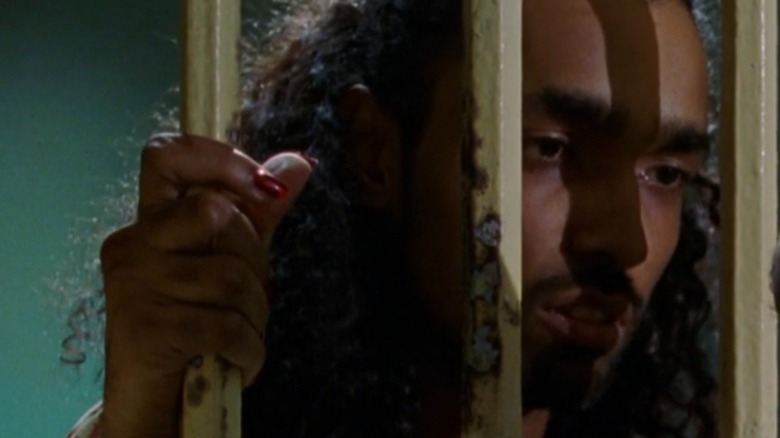
An inmate and drug dealer from Washington Heights, Carlos Torres, is discovered dead in prison on "Law & Order: SVU" Season 4, Episode 13, "Rotten." There are signs of sodomy on his body, so Olivia and her team investigate by conducting interviews with prisoners, including Carlos' cellmate, Ortega (A.B. Lugo), who commits one of the most egregious offenses of the episode when Detective Fin Tutuola (Ice-T) asks him why they didn't speak to each other and he replies, "He's Dominican, they're animals."
The episode first aired in the U.S. in January 2003. After the episode premiered and had been rerun, the New York Post reported on a protest held outside of NBC headquarters in October. A spokeswoman for the Dominican-American Anti-Defamation League, Mercedes Jimenez-Ramirez, said that the line was the most upsetting part of the episode, "It's a generalized term — it sounded like they were talking about Dominicans as a whole, not as [just one] character in that particular case." The group wanted an apology printed in newspapers and a "Deadline" segment celebrating life in Washington Heights. It's unclear if any of their demands were met, but NBC refused to comment on the matter.
That's not the only offensive scene, either. During an interview with Fin and Benson, a prison nurse recalls an offensive gay slur an inmate said. She's relaying facts, but in 2026, there is no need to actually say the word on-screen.
Fallacy (Season 4, Episode 21)
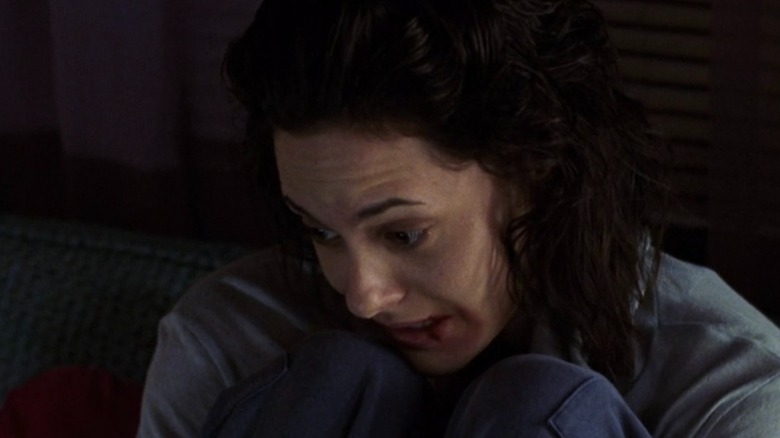
Season 4, Episode 21, "Fallacy" also aired in 2003 and faced criticism as "the most transphobic SVU episode ever." After Cheryl Avery (Kate Moennig) claims she was sexually assaulted at a party and refuses to be examined, it's slowly revealed that she is transgender and keeping her identity a secret from her boyfriend, Eddie (Chad Lindberg). The audience learns that Eddie's brother Joe (uncredited) was confronting Cheryl about her identity when she threw a vase at him and killed him.
The first red flag in the episode is Olivia using a derogatory term for trans people, followed by a very outdated way to reference the community. Later, once Detective Elliot Stabler (Christopher Meloni) tells Eddie about Cheryl's identity, he has an angry, transphobic reaction and physically assaults her. Eddie overdoses and dies, with the episode framing Cheryl's identity as the clear motive. She's eventually charged with murder and sent to a men's prison.
Hopefully, "Law & Order: SVU" would handle a case like this with significantly more care, tact, and respect today. Trans women are more likely to be the victims of murder when they hide their identity than perpetrators. To say nothing of the fact that casting directors should be hiring trans actors for trans roles in 2026.
P.C. (Season 11, Episode 13)
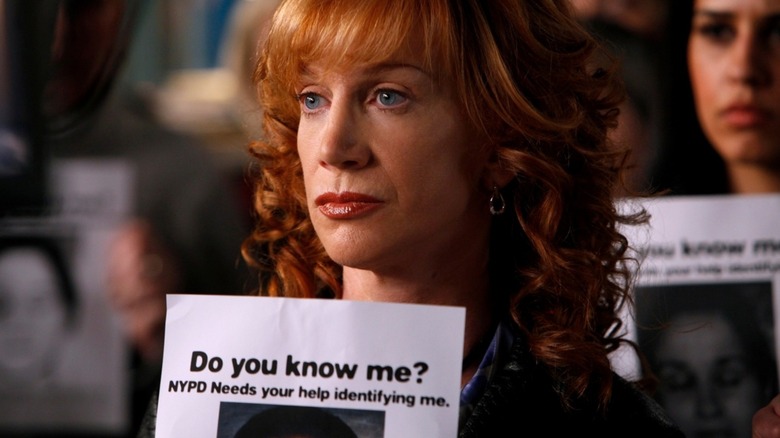
"Law & Order" still had trouble respectfully representing the LGBTQIA+ community in 2010, as seen in the Season 11 episode "P.C." Kathy Griffin guest stars as Babs Duffy, the tough, man-hating leader of a lesbian rights group who gets involved in a case when another lesbian is killed. Babs was supposed to try to kiss Olivia, and NBC faced criticism from queer media sites at the time for cutting the scene.
Saying that all of the negative stereotypes Babs represented were "over the top" as After Ellen did is being kind. "SVU" could've stopped there and it would've been bad enough, but it didn't. At the end of the episode, Babs reveals she's bisexual and many of her fellow militant lesbians feel betrayed. Plus, since she hit on Olivia, she couldn't leave without hitting on Elliot, too. Why not perpetuate the negative stereotype that bisexual people flirt with everyone on the way out? The episode ends with the notion that being bisexual is something to remain hidden, even within the LGBTQIA+ community.
Funny Valentine (Season 14, Episode 16)
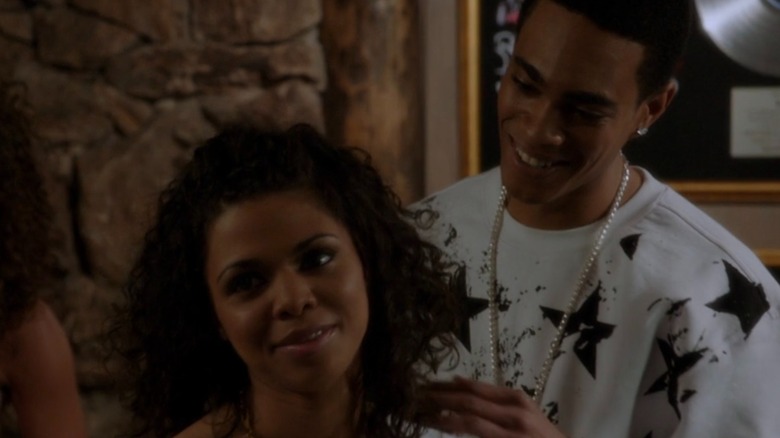
Before every episode of "SVU," the audience is warned: "The following story is fictional and does not depict any actual person or event." But, the show obviously rips cases from headlines and changes them just enough that NBC has plausible deniability in any potential legal case. Season 14 Episode 16, "Funny Valentine," seems to have ignored the usual formula for mimicking high-profile situations. The storyline centers on two pop stars, Micha Green (Tiffany Robinson) and Caleb Bryant (Raaka Kikka), who are blatantly playing fictional versions of Rihanna and Chris Brown. As if Caleb Bryant's initials and the characters' careers aren't enough evidence, the title of the episode references a February holiday, and it aired in February 2013 — Rihanna and Brown's domestic violence incident occurred in February 2009.
The plot was fictionalized and heightened for drama (Micha doesn't cooperate with police, Rihanna did), but other details were eerily similar, like Caleb's public apology. "SVU" likely had plausible deniability here, or the episode wouldn't have been made, but it really tread a line by making the "Umbrella" singer and Brown so easy to associate with the characters. While it's important to portray the reality that domestic violence can end in death, it's disturbing to watch Micha die since she clearly represents Rihanna. It feels disrespectful to the pop star, or at least morally irresponsible to mimic the hardships of an actual person so closely.
Porn Star's Requiem (Season 16, Episode 5)
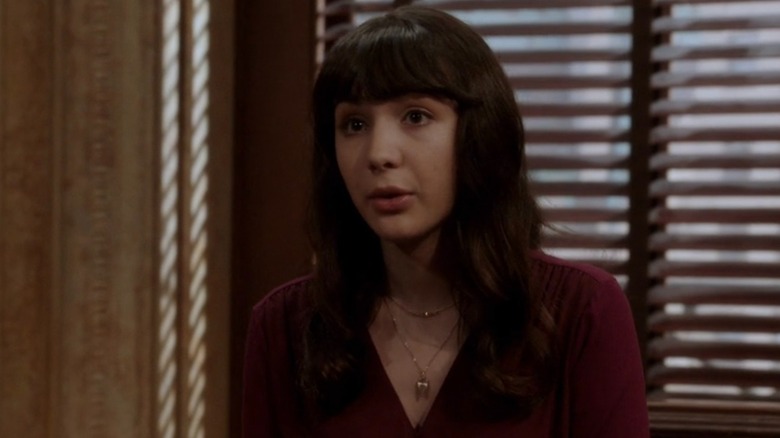
"Law & Order: SVU" Season 16, Episode 5, "Porn Star's Requiem" tackles the issue of consent and stereotypes related to sex work. In the 2014 episode, Hannah Marks plays Evie Barnes, a college student who stars in violent adult videos to pay for school. Two of her classmates uncover her secret identity online, invite her to a party, trap her in a bathroom, and assault her. They refuse to let her out of the room even as she begs them to stop. Evie wasn't drunk, so the male students' defense is that her adult videos are consent. A jury finds the men guilty, but upon sentencing, the defense makes a motion that the judge set aside the verdict, a legal maneuver allowing him to ignore the jury and deliver his own decision, which he does. According to the judge, there isn't enough evidence, so the men aren't responsible.
This example doesn't exactly involve the "SVU" staff offending a person or community. The topic is disturbing yet still important cover, and there are modern examples of similar outcomes befalling alleged sexual assault victims. The problem with the episode is that the execution honestly feels lazy and misguided considering just how heavy the story's subject matter is. Time is wasted showing Evie's parents disowning her and her school finding a loophole to expel her. There's not enough time focused on how this affects Evie's life or her relationship with sex work. Although progress is slow, society's understanding of the matter is different in 2026 than it was in 2014. When "SVU" explores the issue again, there will ideally be more more focus on realistically portraying the victim's perspective.