

10 Best The Sopranos Guest Stars, Ranked
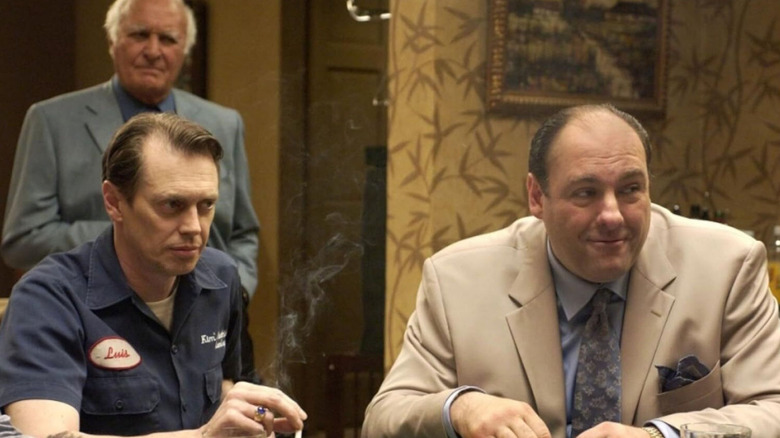
It's hard to imagine a job in television that was as simultaneously rewarding and punishing as being a guest star on "The Sopranos." The acclaimed HBO drama famously gave a litany of recognizable faces some of their earliest roles on TV, including future Academy Award winner Michael B. Jordan. But established actors who were brought onto the series weren't necessarily there to be shown off — they were often there to be whacked. For some, a brief appearance was all it took to leave a lasting impression, even if their characters weren't fortunate enough to survive the experience.
While they weren't always literally killed on the show, major guest stars were often used to show how quickly James Gandolfini's Tony Soprano, or someone in his orbit, could destroy another person's life, even unintentionally. For this list, we selected the 10 most memorable guest stars across the show's six-season run. We ranked them based on the impact of their storyline, the quality of the themes they explored, how much they were able to accomplish relative to their screen time, and the performances of the actors who played them.
10. Ben Kingsley
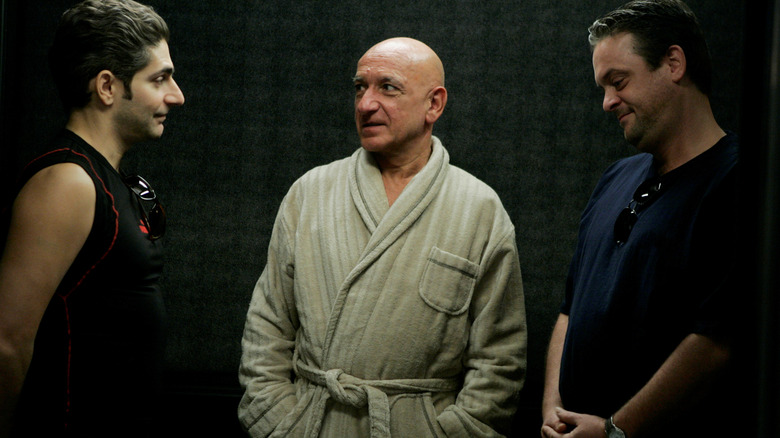
"The Sopranos" was never above hiring celebrity guest stars to play themselves. Sometimes the casting is inspired, like Annette Bening in "The Test Dream" — sometimes the cameo falls in a flat episode, like the underwhelming "D-Girl." Of the celebs who had meaningful guest-starring roles, Ben Kingsley takes the crown.
In Season 6, Episode 7, "Luxury Lounge," Christopher Moltisanti (Michael Imperioli) and "Little" Carmine Lupertazzi Jr. (Ray Abruzzo) fly out to Los Angeles in an attempt to persuade the recently knighted actor to star in their gimmicky mob horror movie "Cleaver." The trip is a wash in terms of casting — Kingsley's performance perfectly conveys a mixture of genuine politeness and annoyed skepticism. They didn't even bother to show up with a script or a director. Naturally, Chris spends the rest of the trip trying to fleece Hollywood for freebies after seeing Kingsley's VIP treatment, eventually mugging Lauren Bacall for her gift basket.
The episode is amusingly self-referential throughout, with Kingsley playing into it in an interesting way. Though he's not unreasonably unimpressed by "Cleaver," his superficial air and urgency about getting to explore the titular "Luxury Lounge" (a room where VIPs get to shop for expensive souvenirs for free) play on the pretentious public image he had at the time. (On an episode of "Talking Sopranos," Abruzzo recalled that the cast was warned that Kingsley might be "difficult.") His apparent willingness to lean into the joke gives his "character" a level of complexity that prevents his appearance from feeling like a distracting celebrity cameo.
9. Charles S. Dutton
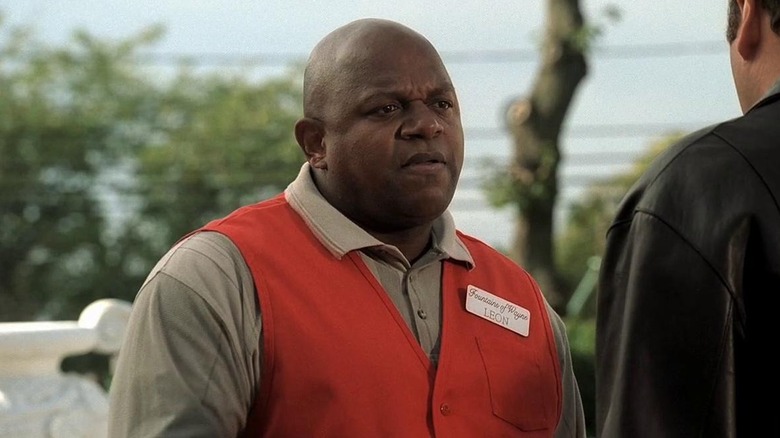
Few characters helped explore the toxicity of Tony Soprano as efficiently as Officer Leon Wilmore. Played by three-time Emmy Award winner Charles S. Dutton (in the Season 3 episode "Another Toothpick"), the character is a patrolman who refuses to be corrupted after he pulls Tony over for speeding. In retaliation, Tony enlists the help of the crooked assemblyman Ronald Zellman (Peter Riegert), who pulls strings to have him professionally punished. Tony then runs into Wilmore working a retail job as a result.
The whole point of Leon is that, morally speaking, he's the immovable object that meets a seemingly unstoppable Tony. Tony's connections to men like Zellman have already given him considerable influence outside the mob, allowing him to punish even a police officer who refuses to bend the rules for him. Tony feels untouchable — a belief reinforced by men like Zellman, whose willingness to abuse their positions validates his myopic worldview. When Tony is confronted with actual moral fortitude, it doesn't stop him — but it does seemingly trouble him a great deal. By the end of the episode, Tony attempts to buy his guilt away by offering Leon a generous cash tip while ordering a lawn ornament. Leon recognizes it as just another bribe and walks away.
Dutton's performance throughout the episode is powerful. He isn't given a wide range of material to work with relative to those listed below, but makes each scene hurt Tony in a new way.
8. Robert Loggia
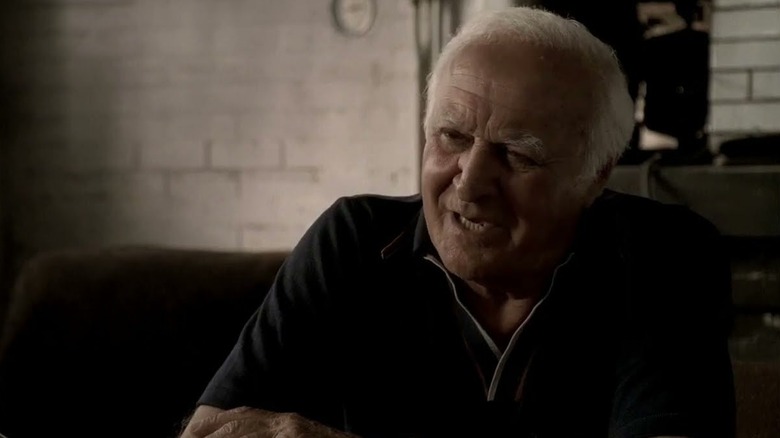
Feech La Manna had been a minor ghost of the early seasons of "The Sopranos." Much hay was made of that fateful card game of his, the robbing of which helped Tony Soprano and Jackie Aprile make their names in the mob. He finally appears on screen in Season 5, played by "Scarface" actor Robert Loggia, after serving roughly 20 years in prison.
That history gives the character immediate weight, similar to Steve Buscemi's Tony Blundetto (released alongside Feech at the top of the season). Both men had been all but forgotten by the family — and while Tony is happy to play the grateful and gracious king now that they're out, his simmering resentment at the trouble they invite as they fail to fall in line intensifies. Through their mirroring storylines, Feech is something of a warning for Tony B.
What makes Feech's storyline distinct is his seniority. Blundetto falls back into his life of crime because it's simply easier than making an honest living. Feech returns without hesitation because it's the only life he really knows outside of prison — and yet, it's changed dramatically during his time on the inside. That brat he once failed to receive restitution from is now the head of a family, while Feech himself is an old, entitled man entirely out of step with details of the current operation. By the time he's sent back to prison, it feels like forced retirement.
7. Sydney Pollack
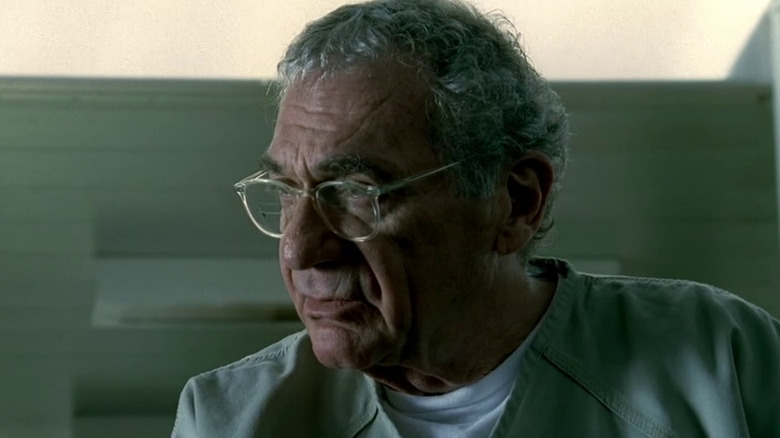
As brief as it is, Sydney Pollack's role on "The Sopranos" feels like an early example of a compelling supporting character that would later pop up in prestige crime dramas. Saul Goodman in "Breaking Bad," the Vet in "Better Call Saul," Marty Byrde in "Ozark" — intelligent professionals whose expertise becomes valuable to the criminal underworld because they're willing to participate in it.
Pollack's Warren Feldman isn't a full-time mob doctor. He's an imprisoned physician who happens to be working as an orderly in the ward housing the cancer-ridden John Sacrimoni (Vincent Curatola). But their relationship gets to the heart of why these kinds of characters are endlessly fascinating to watch — Feldman is all at once a murderer and a competent doctor; Johnny Sack is a murderer in need of such a doctor, and Feldman's past makes it so he's probably the only medical professional in the world who will treat him like an equal human being. It's as if they cancel one another out, and suddenly the two men are a normal doctor and patient when they interact. Pollack emphasizes this by playing up Feldman's charismatic bedside manner, which far outclasses that of the cold and impersonal prison doc assigned to Johnny.
For fans of Pollack, the scene is painfully bittersweet. The Academy Award-winning director and actor died of cancer in May 2008, a little over a year after the episode aired. One of his final roles is as a man trying to comfort someone at the end of their life after the rest of the world has written them off.
6. Burt Young
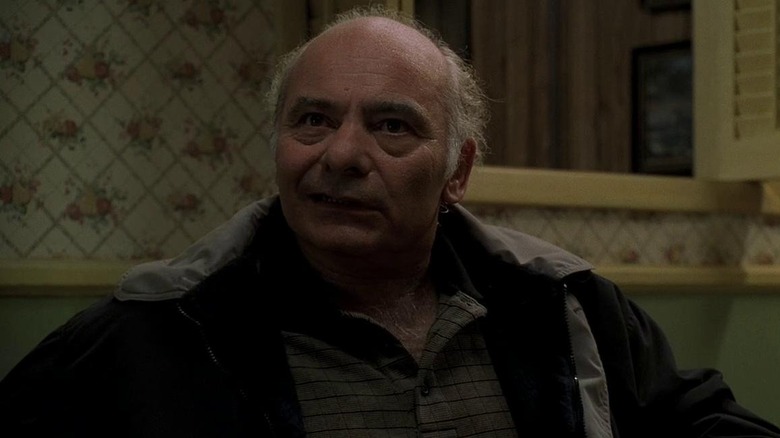
In the same episode that Tony comes up against Charles S. Dutton's Officer Wilmore, he carries out one of his less-discussed acts of cruelty by having Bobby Baccalieri Sr. (Burt Young) perform a hit on Bobby's own godson. It isn't the relationship that's cruel — it's the fact that Tony is pushing a quasi-retired wiseguy who can barely breathe to kill a young associate.
Tony allows it to happen despite protests from both Bobby Jr. (Steve Schirripa) and Uncle Junior (Dominic Chianese). It's a nasty example of the other side of Tony's transactional relationship with the world — Wilmore couldn't be bought, so Tony had him thrown away; Bobby jumped at the chance to serve without asking for a dime and died shortly afterward. When you work in waste management, everyone is disposable.
Burt Young is perfectly cast as a tough criminal way past his prime. He plays the role like he's got the fire of Christopher Moltisanti trapped in a body that bears the consequences of such a hot lifestyle. His character is a compulsive cigarette smoker, to the extent that he can't get through a sentence without hacking. After the hit, he doesn't even wipe the blood off his face and hands before reaching for a pack. His brief appearance emphasizes how this life rewards total self-destruction.
5. Robert Patrick
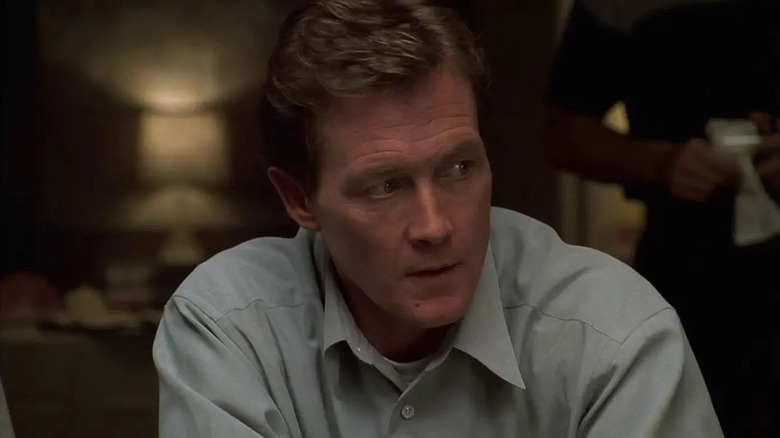
Before "The Happy Wanderer" aired in 2000, during the second season of "The Sopranos," Robert Patrick had already been defined by his performance as a shapeshifting assassin in "Terminator 2: Judgment Day." Casting directors saw him as cold, stoic, dangerous, and strong — in the decades since, he has been mostly cast as tough authority figures, no-nonsense military men, and murderous villains (see HBO's "Peacemaker"). That on-screen reputation makes him almost unrecognizable in his role on "The Sopranos."
David Chase pitched Patrick on the role of Davey Scatino by teasing that it would go against how audiences and casting directors saw him. The character is a childhood friend of Tony's whose gambling addiction ultimately costs him his business and family life. When you first meet him, he's already the opposite of everything you'd expect from a Patrick character — warm, excitable, almost juvenile in some ways. Then the show breaks him in front of your eyes, until he's left a beaten, sobbing mess in the back of the very store that's about to be taken from him.
"The Happy Wanderer" and "Bust Out" are quietly two of the most difficult episodes of "The Sopranos" to watch because of Patrick's work. Watching his confidence, optimism, and future disappear overnight is as brutal as any scene of violence in the series. James Gandolfini did his best work of the season opposite Patrick as well, and won his first Emmy for "The Happy Wanderer."
4. Hal Holbrook
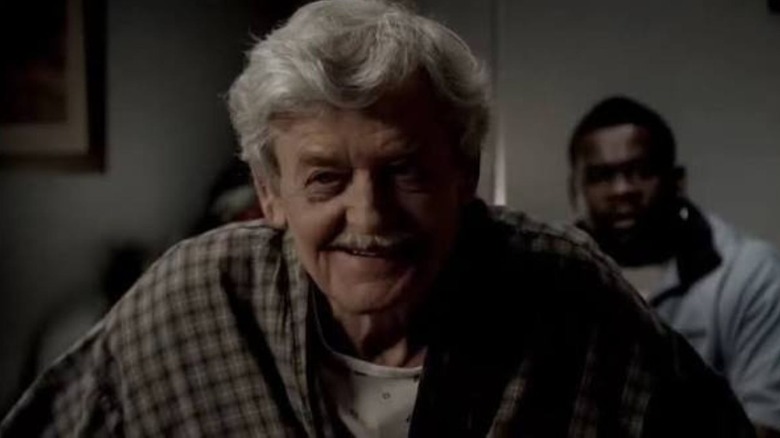
Tony meets Hal Holbrook's John Schwinn in the hospital after waking from his coma toward the start of Season 6, in "The Fleshy Part of the Thigh." The mobster had spent the previous episodes having vivid dreams about an alternate life that deeply unsettled his understanding of the world — and in walks a dying scientist who imparts that, materially, everything we see is connected. The separation between individual objects, Schwinn suggests, exists largely in our perception of them. "Everything is everything," as Lord Jamar's DaLux says.
That monologue (written by Diane Frolov and Andrew Schneider) is one of the most impactful things Tony hears in the entire series. It's also one of the most beautifully nuanced. At a time when everyone is pushing traditional religious spirituality on him, Tony stumbles upon something very similar in a man who is ostensibly describing a scientific concept. It somehow manages to break past the morally rigid barriers of Dr. Melfi's office, where Tony can't seem to step beyond the idea that he should be rewarded for his meager attempts at goodness. Here, he begins to understand what Melfi and others have been trying to explain to him the whole time — his actions have meaning because he exists as part of something bigger than himself.
The tragedy is that Tony can only absorb it on a superficial, self-serving level. He can imagine his connection to the natural beauty of the world — he can't confront his connection to the ugly mortality and suffering on Schwinn's hospital bed.
3. Tim Daly
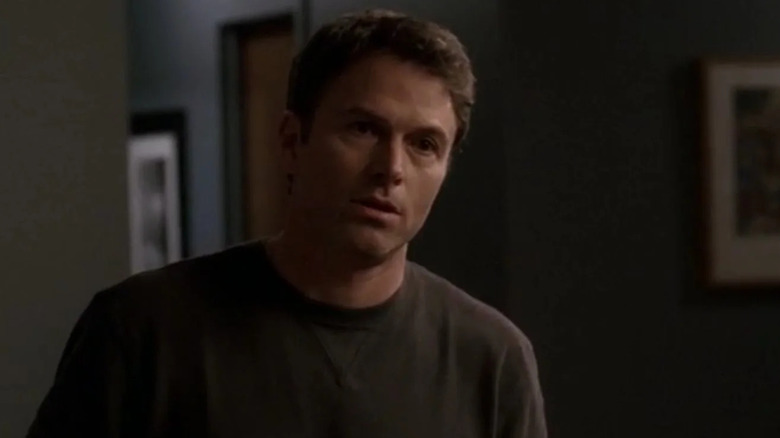
Tim Daly played J.T. Dolan in several episodes across the show's fifth and sixth seasons. We're introduced to him through Christopher's recovery program — and while he's never Chris' sponsor, J.T. is briefly one of the most supportive people in his life. Naturally, Chris draws him into a high-stakes card game, where J.T. accumulates a debt that sends his life spiraling and contributes to his relapse. The storyline might've read like a retread of the Davey Scatino episodes, if J.T. hadn't been written to mirror Chris so closely.
After all, J.T. is the successful screenwriter Chris wanted so badly to be. He eventually uses the gambling debt to pressure J.T. into writing "Cleaver," effectively exploiting his Mafia connections to take advantage of J.T.'s professional skills. It's dark to imagine Chris even subconsciously ruined J.T.'s life out of jealousy, but it's not at all unlikely. And despite all of this, when Chris is at his absolute lowest, he still feels that J.T. is the only person who will sympathize with him. Somewhere in his soul, the part of him that resents J.T. for being sober, successful, and morally clean desperately wants to be seen in the same way. Chris shoots J.T. dead when he shatters that illusion.
It's one of the scenes that make the final season of "The Sopranos" so brilliantly claustrophobic – killing J.T. closes off Chris' potential for redemption right before his own death. For his performance in Season 6, Tim Daly was nominated for an Emmy Award for Outstanding Guest Actor in a Drama Series.
2. John Heard
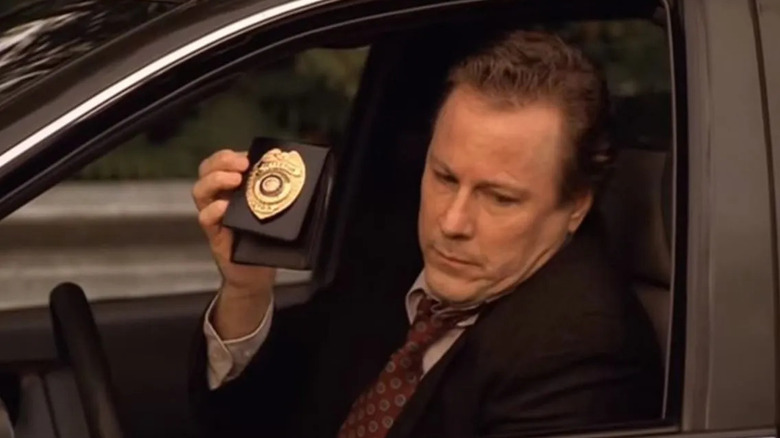
Around the same time Robert Patrick wrote his cinematic legacy in liquid metal, John Heard rewrote his own in the snow. His role in "Home Alone" popularized him as an exhausted father in a cartoonish kids' movie — and, for the most part, that's what people remember him for. "The Sopranos" challenged that image by giving him his most complex role since "Cutter's Way."
Heard was a recurring guest star in the show's first season as Vin Makazian, a crooked detective who feeds information to Tony. At first, it seems as though he's compromised himself to ease his gambling debts, but both the show and Heard dig deeper than that. With each subsequent appearance, Detective Makazian's motives start to look more personal — Heard plays him as a likable scumbag who enjoys being close to Tony's criminal empire. He goes above and beyond expectations when Tony hires him to spy on Dr. Melfi (Lorraine Bracco), ultimately assaulting her date and revealing just how far he's willing to take the assignment. After he dies in "Nobody Knows Anything," a madam at a brothel shares with Tony that Makazian saw him as a trustworthy friend.
It's easy to see the "Home Alone" dad in pain and feel bad that Tony didn't reciprocate the feeling, but we'd argue Heard's work had something more behind it. We'd argue that the friendship was largely one-sided — Makazian's life had become so empty that he seemed to find meaning in his association with Tony's criminal empire. Like Daly's, Heard's performance was honored with an Emmy Award nomination.
1. Annabella Sciorra
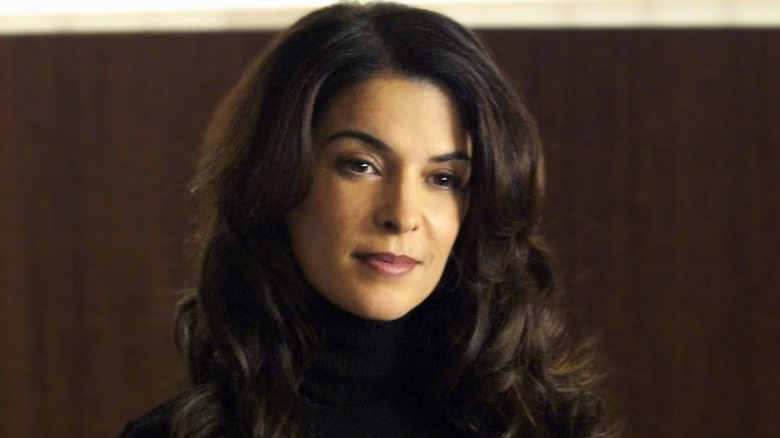
There are plenty of memorable and deeply moving performances on this list, but Annabella Sciorra's portrayal of Gloria Trillo is arguably the best. The character was immediately striking when she debuted in "He Is Risen." Unlike Tony's previous mistresses, Gloria was outwardly self-possessed, professionally successful and respectable, and — in his mind — capable of matching him intellectually and emotionally.
Tony didn't think much of the women in his life, but he thought the world of Gloria — until he began seeing uncomfortable similarities between her and his mother. Whether or not Gloria truly shares the same psychological struggles as the late Livia Soprano (Nancy Marchand), Sciorra is enthralling as she navigates her character's increasingly volatile behavior. She maintains a chilling lucidity throughout, regardless of whether she's charming her way through a date with Tony or begging him to strangle her to death. Even when her behavior seems irrational to Tony or the audience, Sciorra makes Gloria's emotional responses feel entirely convincing from the character's perspective. The entire storyline is so haunting that, when it's later revealed that she died off-screen, "The Sopranos" makes the sudden absence of Gloria a captivating drama.
Sciorra's performance earned her an Emmy nomination, although her subsequent career was also affected by circumstances she later described publicly in her testimony against Harvey Weinstein. It's one of the most distinct and powerful recurring guest performances of the early prestige TV era.