

Quote Of The Day By Henry Winkler: "Being Smart Does Not Necessarily Correspond To School Work. There Is..."
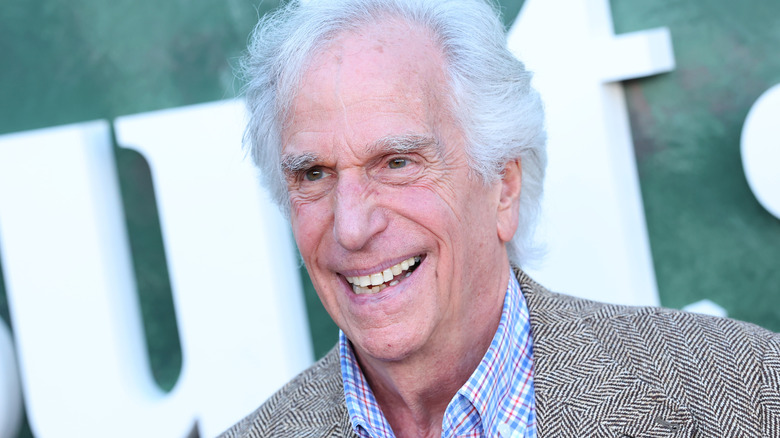
Henry Winkler is best known for playing Arthur "Fonzie" Fonzarelli on "Happy Days," one of the most popular shows that defined the '70s. In fact, Fonzie was so integral to the show that Winkler had four firm rules about playing the beloved character.
He also helped develop 1985's "MacGyver" series and helmed comedy films like "Memories of Me" and "Cop and a Half." Winkler has earned nine Emmy nominations so far, winning the award in the outstanding supporting actor in a comedy series category for "Barry" in 2018.
Winkler has appeared in an impressive number of films and shows over the years. He has starred in "Night Shift," "Scream," "Click," "The French Dispatch," and "Black Adam," to name a few. On the television front, Winkler has starred in "The Fonz and the Happy Days Gang," "South Park," "Law & Order: Special Victims Unit," "Arrested Development," and "Parks and Recreation," among others.
Winkler's iconic run as Fonzie, along with his lifelong advocacy for literacy, makes him an inspirational figure, which is why he is today's Quote of the Day.
Quote of the Day by Henry Winkler
"Being smart does not necessarily correspond to school work. There is intuitive smart, emotional smart, street smart, knowing-how-the-cosmos-works smart."
The above quote is from Winkler's interview with LDOnline, a website dedicated to shedding light on learning disabilities and ADHD. When asked about his experience of growing up with dyslexia, Winkler explained that school work alone doesn't make an individual "smart."
"If there was one word that I would pass on to all children, it would be tenacity," Winkler stated. "What your school abilities are, and how you perceive your dreams are two very different things," he continued.
The actor went on to say that while he was not "very good" at a lot of standard subjects, his dream of becoming an actor "never wavered," as school work is not the only marker of intelligence.
Deeper meaning of Henry Winkler's quote — don't limit your definition of smartness
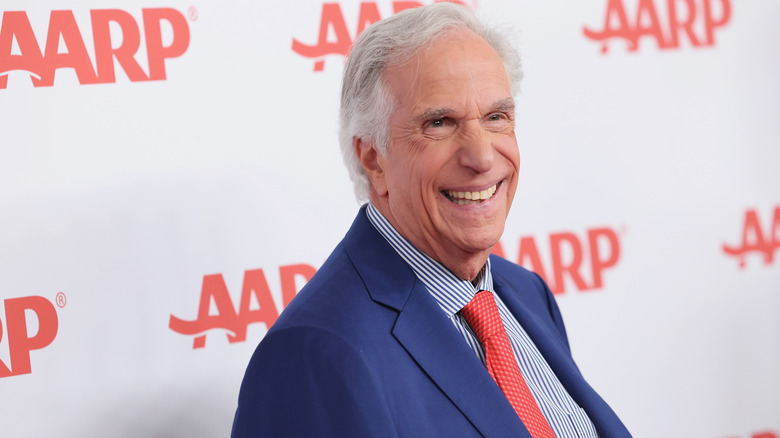
Henry Winkler co-wrote the children's book series "Hank Zipzer" alongside author Lin Oliver. These books revolve around a dyslexic child named Hank Zipzer and how he explores life as a second grader. Winkler drew from his own childhood experiences with dyslexia to write these books, as it is essential for children with learning disabilities to feel supported and represented.
In the same interview with LDOnline, Winkler explained the necessity of urging children to embrace a wider definition of what it means to be "smart." "A child with a learning challenge is embarrassed by their inability to keep up," the actor stated. "They already feel bad. All they need is support, support, a little more support, and then some support. And, ALL of that support must be positive," he said.
While mentioning different kinds of intelligence, including street-smarts and emotional intelligence, Winkler emphasized that life can be beautiful even if a person lacks school-smartness. "Those incredible pods of intelligence can create a wonderful life without ever getting a passing grade in geometry," Winkler concluded.
More quotes from Henry Winkler
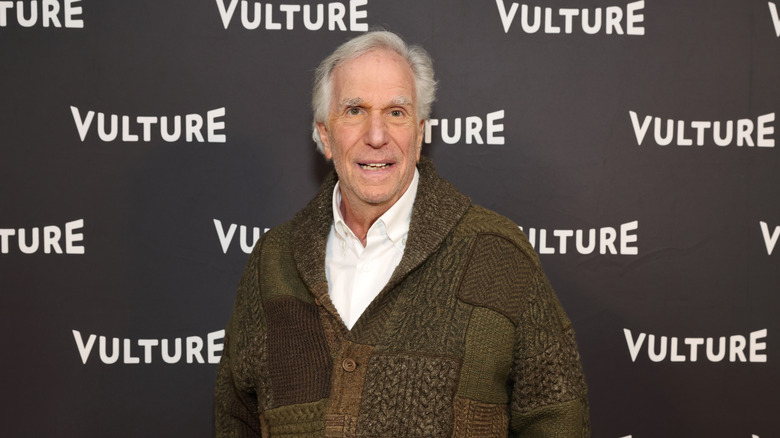
- "You know, being an actor is like being a brain surgeon. When you're 55, you finally put it all together. I was 27 years old when I got the Fonz, but it's only recently that I arrived at where I always wanted to be as an actor. And the energy is not manufactured! I'm telling you straight: I am blessed! I love my life! My only real concern is — no, not death — but the fact that one day I will not be able to call upon this endless stream of energy, because what then? What then?" — from a 2016 interview with The Independent
- "I live by two words. Tenacity and gratitude. I was extremely single-minded." — from a 2023 interview with The Guardian
- "I don't know why I had to take that much geometry because from that day in August of 1963 until tonight, not one person has ever said 'hypotenuse' to me. What were they thinking? So I finally figured out that we have to teach our children how they learn, not what we think they should learn. And if there are young people in this audience, if you are still going to school, I want to say to you now how you learn and how difficult it is has nothing to do with how brilliant you are." — from a 2024 podcast with Chicago Humanities