

15 Funniest TV Characters Of All Time, Ranked
Comedy is arguably the most subjective out of any of the big storytelling genres, and television comedy, in particular, can be a bit of a Rorschach test. There's no real formula or unit of measurement for what constitutes an objectively "funny" gag, line, scene, plot, or character. But even then, some characters stand out as clear giants in the history of television for their ability to bring laughter wherever they go.
Here, you'll find a ranking of the 15 absolute funniest characters in TV history — limited to live-action shows, if only because great cartoon characters would be a whole other (and much bigger) ball game. Whether they're kooks, dorks, jerks, or stoics, these are all screen figures who are guaranteed to bring the house down every time they step onto a scene.
15. Phoebe Buffay (Friends)
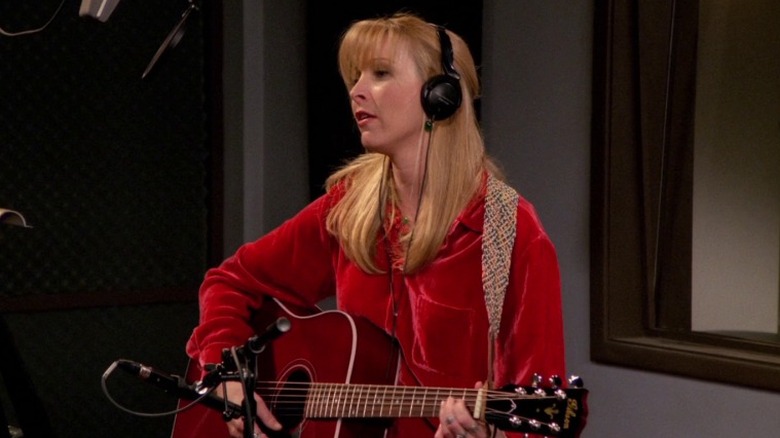
Every main character on "Friends" had a major part to play in the show's comic alchemy — Chandler (Matthew Perry) with his deadpan one-liners, Rachel (Jennifer Aniston) with her naiveté and erraticness, Joey (Matt LeBlanc) with his sheer idiocy and his ineffectual swagger, Monica (Courteney Cox) with her neurotic tendencies. But there was just something special about Phoebe Buffay (Lisa Kudrow), the group's resident dreamer, wildcard, and philosophical contrarian.
An inveterate New Ager with a vastly different belief system and cultural baggage from the rest of the group, Phoebe was not only the most dependable source of laughs on "Friends," but also the engine behind many of the show's comedic high points. Her willingness to say whatever was on her mind, even if it went completely against the grain of social acceptability or risked leaving her friends baffled, made her a running source of preposterous, hilarious commentary on the other characters' quandaries. And her own storylines gave us absurd highs like Princess Consuela Banana-Hammock, the infamous musical performance at a children's library, the Central Park running attempt, and the whole "Smelly Cat" performing and recording cycle — all of which gained massively from Kudrow's brilliant line deliveries and elite-tier physical comedy.
14. Barney Fife (The Andy Griffith Show)
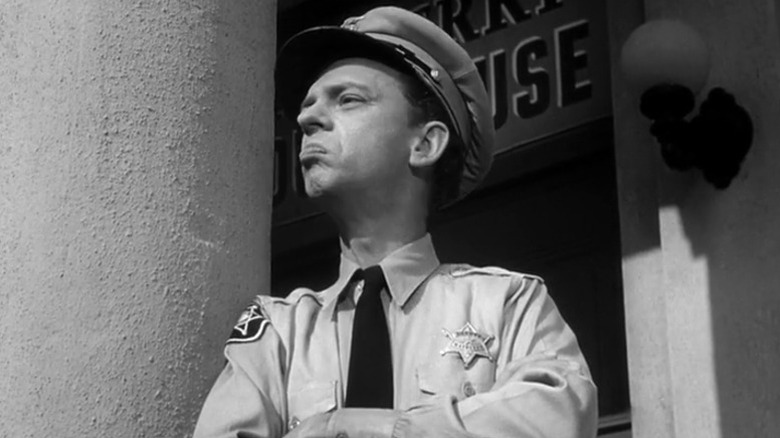
"The Andy Griffith Show" is largely remembered nowadays as a massively popular vehicle for the folksy everyman charisma of its titular star, and as a source of nostalgia for the tranquil fictional community of Mayberry, North Carolina. The humor of the legendary CBS series tended to err more on the side of "charming" and "cozy" than out-and-out hilarious — but there was one big exception in the form of Barney Fife (Don Knotts).
The deputy sheriff and second-in-command to Sheriff Andy Taylor (Griffith), Barney was not only the funniest character on the show, but the primary source of most of its funny business for the five seasons on which Knotts starred as a series regular. Unlike the ever-reliable Andy, Barney was awkward, timid, high-strung, and completely incompetent as an officer of the law, and all of these flaws were compounded by his utterly incongruent self-image. Episodes would often find him marching into action in a delusional, disproportionate manner to resolve Mayberry's minor community squabbles as though it were a regular Gotham City, leaving Andy to clean up his messes. Yet Barney was so well-meaning and pure of heart that it was never not charming to watch him bumble around, and Knotts' live-wire performance imbued him with unflagging comic magnetism.
13. Ava Coleman (Abbott Elementary)
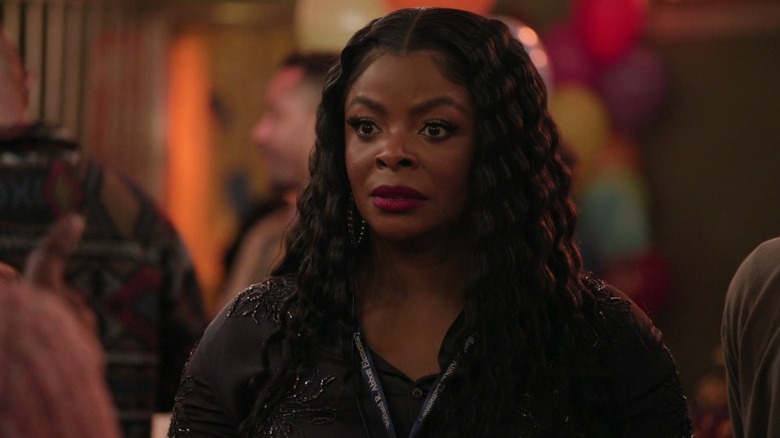
In the all-star lineup that is the "Abbott Elementary" main cast, Janelle James' Ava Coleman stands out as the most consistent MVP. Everyone else endears themselves to the viewer by some choice combination of kooky eccentricity and sincere dedication to their profession, but Ava is another story: She may well be the single most unqualified elementary school principal in the United States, and yet she's so brilliantly, mesmerizingly self-absorbed that she never lets her obvious incompetence deter her from living her best life.
Comically selfish characters are a longtime staple of sitcoms, but the "Abbott" writers put a fresh, thrilling spin on Ava by making her open disinterest in her job an improbable catalyst for various forms of deep personal involvement in the school business. The contrast of a vapid would-be social media influencer being made to have a stake in the well-being of the teachers and schoolchildren under her (nominal) tutelage is explored so vividly and imaginatively that every single Ava one-liner, camera side-eye, and random office hobby lands with its own unique comic charge — not least because James is one of those performers who can elicit guffaws with just a well-timed half-smile.
12. Marlon Williams (The Wayans Bros.)
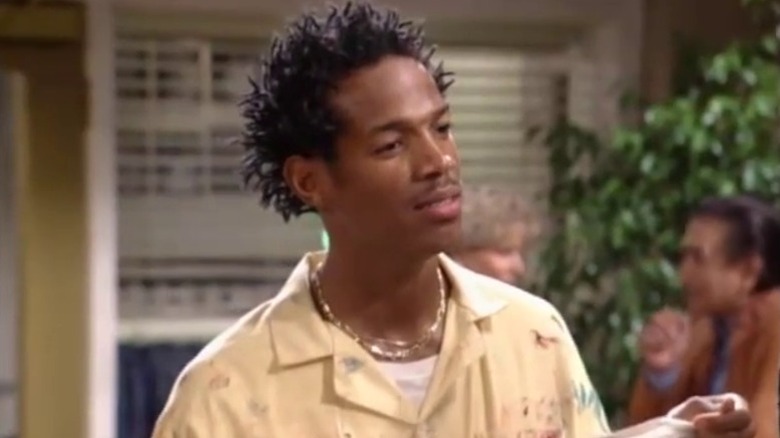
Another sitcom character trope that tends to yield great rewards is the cartoonish dimwit — and that particular archetype has seldom been played with more gusto or skill than by Marlon Wayans on "The Wayans Bros." This five-season The WB show became notable as a career springboard for both Marlon and his brother Shawn Wayans, who went on to co-write and co-star in 2000s comedy hits like "Scary Movie" and "White Chicks." Balanced though their future partnerships may have been, however, this early showcase for the Wayans brothers was first and foremost a vehicle for the madcap talents of Marlon, with Shawn holding down the "straight man" half of their effervescent two-man act.
Shawn's sensible and level-headed Shawn Williams was closer to the show's main protagonist, but most of the fun of "The Wayans Bros." lay in witnessing the complete, unbridled, full-bodied commitment with which Marlon threw himself into the role of Shawn's brother Marlon. By turns a dangerous idiot and an irrepressible go-getter whose laziness acted as both motivator and obstacle in a litany of get-rich-quick schemes, Marlon Williams was essentially a Looney Tunes character in live-action form — and Wayans made it impossible not to cackle at his pratfalls, bizarre soliloquies, and intemperate decisions.
11. Charlie Kelly (It's Always Sunny in Philadelphia)
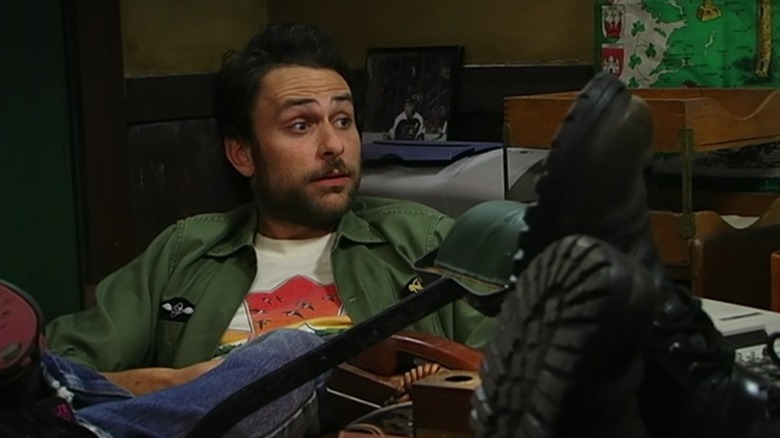
Dennis (Glenn Howerton), Mac (Rob Mac), Dee (Kaitlin Olson), and Frank (Danny DeVito) could all be broadly described as petty, selfish, irredeemably awful people prone to catastrophic attempts at getting ahead in life and taking revenge on their enemies, in keeping with the ethos of "It's Always Sunny in Philadelphia" as a show about the hilarity of amorality. But Charlie Kelly (Charlie Day) is something else entirely: A gremlin of chaos, filth, and destruction so untethered from baseline human functionality that to even call him "evil" would be giving him too much credit.
While the rest of the "Always Sunny" cast fluctuates on a spectrum of sociopathy, Charlie is the one Paddy's Pub co-owner who scans as genuinely insane — and this allows him to be a destabilizing force on a series made up entirely of destabilization. Much of the fun of "Always Sunny" comes from jaw-dropping displays of articulate wickedness, but, eight times out of ten, the biggest laugh on any given episode will come from one of Charlie's shrieking high-pitched outbursts, scraggly feats of physical comedy, and quixotic skirmishes with material reality.
10. Raymond Holt (Brooklyn Nine-Nine)
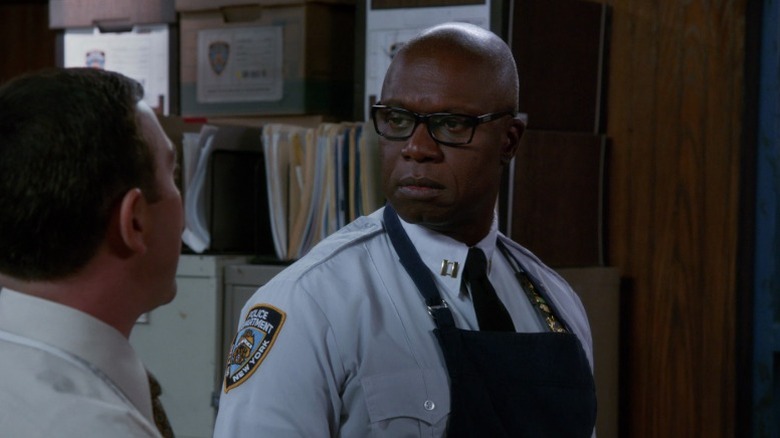
In comedy, as in drama, less is often more. Leave it to Julliard-trained, Emmy-winning Shakespearean thespian Andre Braugher to understand as much in his portrayal of Raymond Holt. Introduced as a deadpan foil in the recognizable, Bob Newhart-esque sitcom tradition, the captain of the titular NYPD precinct of "Brooklyn Nine-Nine" was gradually revealed to be stoic and formal to the point of absurdity, and Braugher put all of his savvy and experience as a performer into sanding down Holt's line deliveries and emotional displays until they were hysterically funny in their sheer, piercing minimalism.
Understanding what a gifted actor they had in their hands, the show's writers made Holt one of the richest, most arresting sitcom characters of his time, imbuing him with layers of hidden quirkiness and labyrinthine backstory that made his once-in-a-blue-moon eruptions of glee, rage, immaturity, and vulnerability as psychologically fascinating as they were invariably hilarious. "Brooklyn Nine-Nine" was always a giddy joy to watch, but never more so than when Holt was on screen.
9. Michael Scott (The Office)
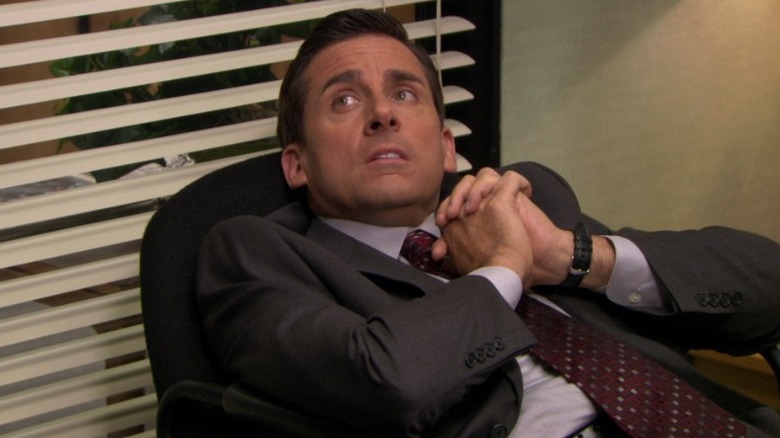
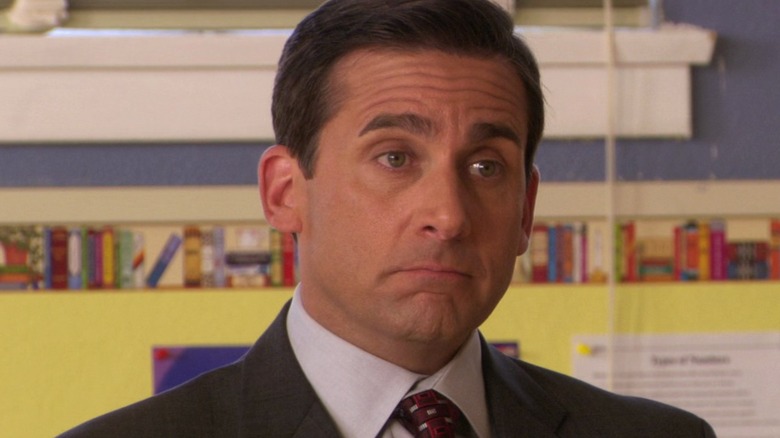
You may have noticed that this entire list thus far has been made up of supporting characters, which tracks with the typical structuring of a sitcom ensemble — the protagonist is usually a more neutral, grounding presence, whose personality can fit comfortably into every corner of the show's inner world and function as a center of gravity amid the cast's wilder forces of nature. But sometimes, the protagonist is the force of nature; just look at Michael Scott (Steve Carell), the man whose buffoonery powers seven seasons of "The Office."
Miraculously perched right on the ridge between "endearing in his clueless sincerity" and "so lacking in common sense as to be insufferable," the manchild who runs the Scranton, PA branch of Dunder Mifflin Paper Company fancies himself the world's greatest boss, yet can't get through one business day without embarrassing himself or his employees in some capacity. Carell gives one of the all-time great sitcom leading performances in his rendering of Michael's painful jokes, pitiful delusions of grandeur, constant professional blunders, and desperate efforts to be liked, mining comedy gold from a character whose whole thing is having no ability whatsoever to be intentionally funny.
8. Sue Ann Nivens (The Mary Tyler Moore Show)
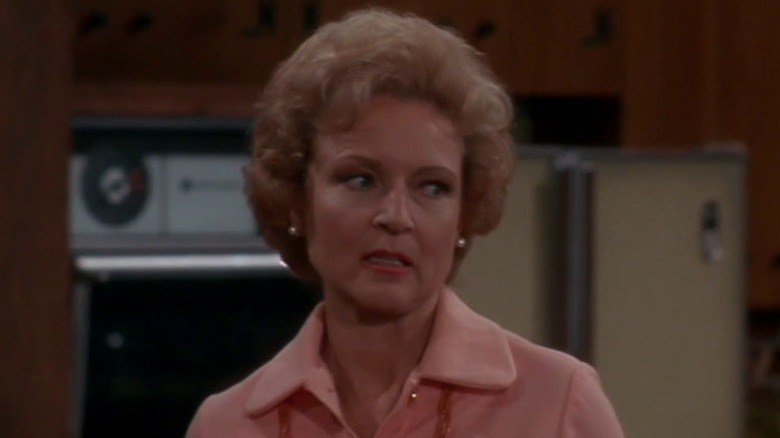
It's hard for a late cast addition to truly gel with the vets on any show, but on "The Mary Tyler Moore Show," which arguably perfected the workplace sitcom cast balance, the challenge was tenfold. Even so, when Betty White popped up for an appearance as Sue Ann Nivens, the deceptively cheerful host of WJM cooking show "The Happy Homemaker," the character felt so immediately at home on the series that she ended up staying — and going down as one of the funniest TV characters ever created.
Sue Ann was not just a departure but a kind of winking self-spoof for White, who by then was already known for her genial, chipper roles. A consummate pro and perpetual smiler when cameras were rolling, the Happy Homemaker quickly revealed a caustic, exasperated, and sexually forward true self behind the scenes. In essence, it was a dual role — one that allowed White to both play up her traditional sweet-girl persona as wacky caricature, and flex an unappreciated knack for catty ruthlessness, devious cunning, and precision-strike insults. Needless to say, she made the absolute most of the two Sue Anns.
7. Titus Andromedon (Unbreakable Kimmy Schmidt)
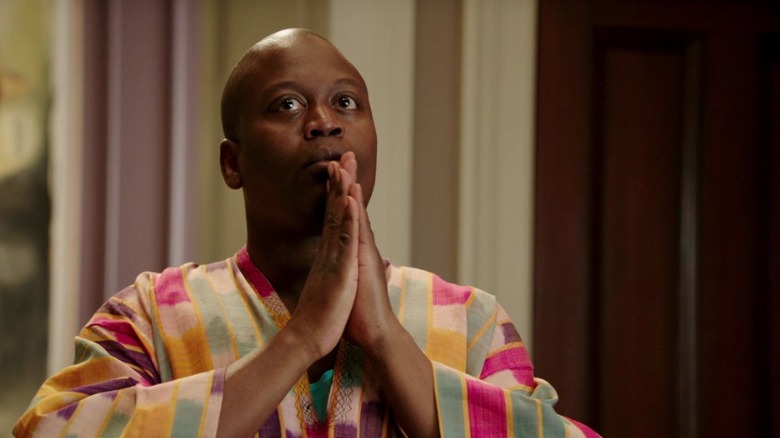
Whether he was going on face journeys at the local library computer, having a midlife crisis in his early 30s, trying to swindle an ATM and accidentally drawing negative 1 dollar, singing gibberish lyrics to a song about Pinot Noir, or "Lemonading" in full attire, there was nary a second of "Unbreakable Kimmy Schmidt" in which Titus Andromedon (Titus Burgess) wasn't setting the screen ablaze.
A Mississippi-born self-styled New Yorker with a dream of making it big as an actor and singer, Titus played the biggest part out of any "Unbreakable" cast member in making the show the zany, surreal live-action cartoon that it was. To call him larger-than-life would be the most severe of understatements; the vigor with which he navigated his various preposterous plotlines, mentored Kimmy (Ellie Kemper) in the improvisational ways of underfunded New York City existence, and poured himself into a variety of high-camp musical performances made such a thing as "real life" seem like an obsolete concept.
6. Jim Ignatowski (Taxi)
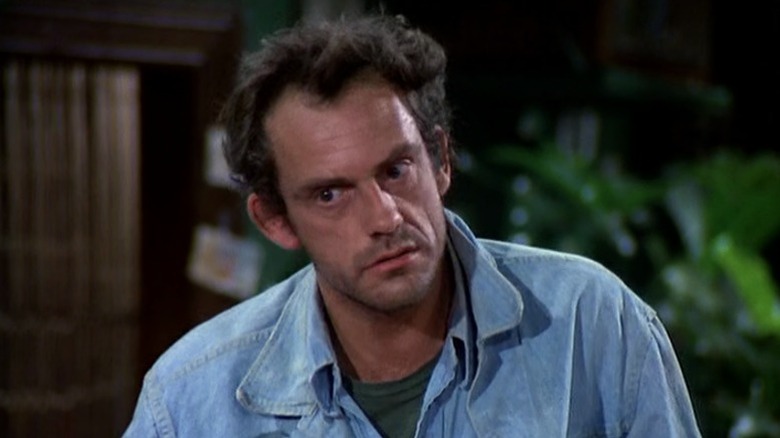
Years before he was playing Doc Brown in the "Back to the Future" trilogy, Christopher Lloyd cut his teeth playing one of the most unforgettable TV characters of all time — and, conversely, one of the most forgetful. Originally a one-off on the Season 1 episode "Paper Marriage," which saw him officiate the wedding between Latka Gravas (Andy Kaufman) and call girl Vivian Harrow (Rita Taggart), Reverend Jim Ignatowski was hired as a driver at Sunshine Cab on Season 2, and became so integral to "Taxi" that it was soon impossible to imagine the show without him.
Although it was already 1979 when Jim joined the series full-time, he was still a hippie through and through, with a sprawling backstory and an unpredictable outsider's worldview that imparted fascination to every word that came out of his mouth. Most of the time, he was sluggish and zoned-out as a result of having lived the '60s a little too intensely, but underneath the nonplussed exterior was a man of many layers — philosopher, Harvard alum, DNC persona non grata, musical genius. He was essentially a vessel for Lloyd's idiosyncratic talents and the boundless creativity of the "Taxi" writing staff; it's little surprise, then, that the ratio of Jim moments to belly laughs was pretty darn close to 1:1.
5. Jenna Maroney (30 Rock)
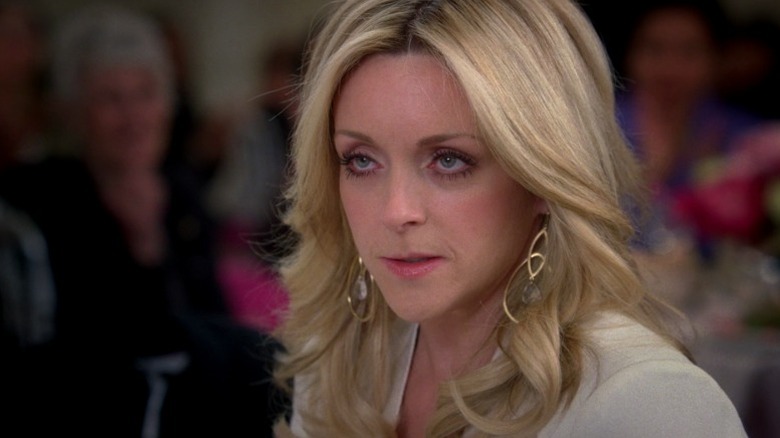
Not a lot of characters on "30 Rock" could be described as having a healthy relationship to celebrity, prestige, and show business, but even by the show's burlesque standards, Jenna Maroney was a sight to behold. Played by the monumental Jane Krakowski with an incomparable blend of Broadway showmanship and fearless comic decadence, the resident female star of "TGS with Tracy Jordan" was the primadonna to end all primadonnas — a ravenous, unstoppable, borderline psychopathic chaser of fame and attention who made every other iteration of that character archetype seem bland by comparison.
Virtually everything that Jenna said or did was incandescently funny, thanks both to the bountiful writing of her character as the primary keeper of the show's surreal satirical cosmology, and to Krakowski's ability to ace every single comedic challenge thrown her way — no matter how ridiculous, elaborate, or physically demanding. On a show where every other beat was a masterclass in gag construction, she consistently scored the heartiest laughs. Talk about commanding the spotlight.
4. Fred Sanford (Sanford & Son)
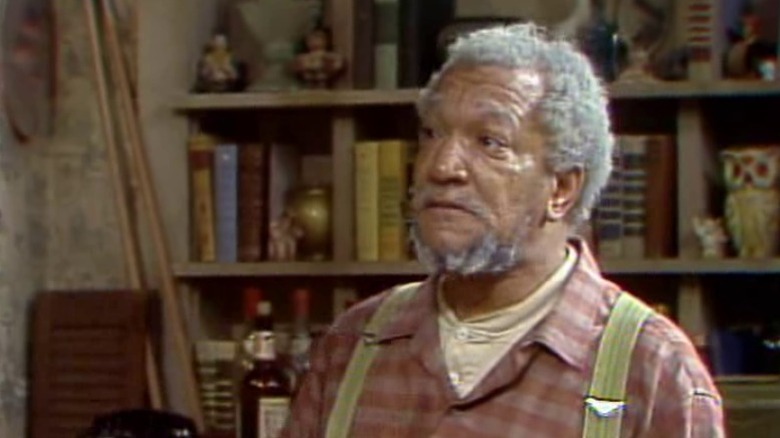
American television in the 1970s was not necessarily the most welcoming environment to humor as sharp, raunchy, and envelope-pushing as what Redd Foxx had been doing for years in his ultra-popular nightclub act. But, even with the era's network propriety demands in place, Foxx managed to utterly revolutionize television with his work as Fred Sanford, the cantankerous grouch who made up the elder half of the titular duo on NBC's "Sanford & Son."
An adaptation of the British sitcom "Steptoe and Son," "Sanford & Son" was among the first American sitcoms to depict the arduous, unglamorous lives of genuinely poor people, and this demographic change of pace liberated it to pursue a much edgier and more caustic style of comedy than anything else on TV at the time. Foxx's Fred Sanford was at the forefront of this disruption; unencumbered with courting audience sympathy through conventional means, he reached delirious heights of humor with his colorful insults, angry diatribes, fake heart attacks, and convoluted schemes, and helped prove that sitcom characters needn't be nice at all.
3. Lucille Bluth (Arrested Development)
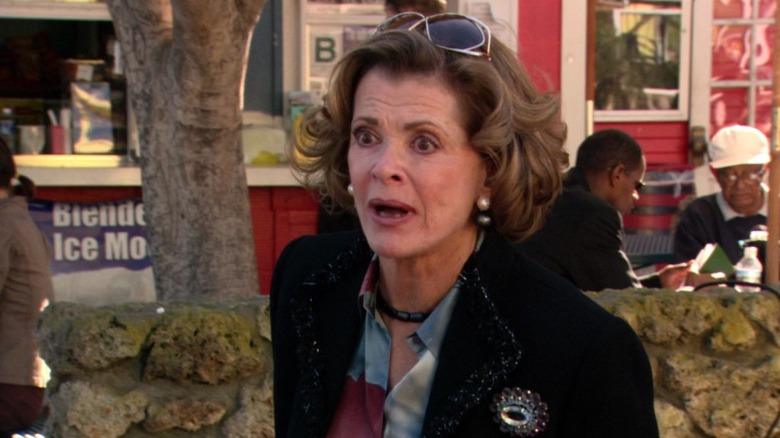
"Arrested Development" may have had, pound for pound, the strongest ensemble cast of any sitcom in history — there isn't a character on it who isn't a stroke of comic genius, and the only actors in the main cast who didn't become marquee names in the show's wake were the ones who already had that stature beforehand. So it's a testament to the brilliance of Lucille Bluth, the family's conniving soap-opera-villain matriarch, that she still manages to stand out as the show's funniest character.
It helps, of course, that Lucille is played by Jessica Walter, who could spin comedy gold out of reading a grocery shopping list even if it didn't include misinformed musings about the cost of a single banana. But it's not just Walter's performance that cinches Lucille as a legendary TV character. If "Arrested Development" was a case study in the roiling, overwhelming power of finely-honed farcical structuring as a conduit for sheer silliness, Lucille, at once the show's goofiest and most intricately layered avatar of clueless wealth and narcissistic dysfunction, was the epitome of everything that made "Arrested Development" a riot.
2. Lucy Ricardo (I Love Lucy)
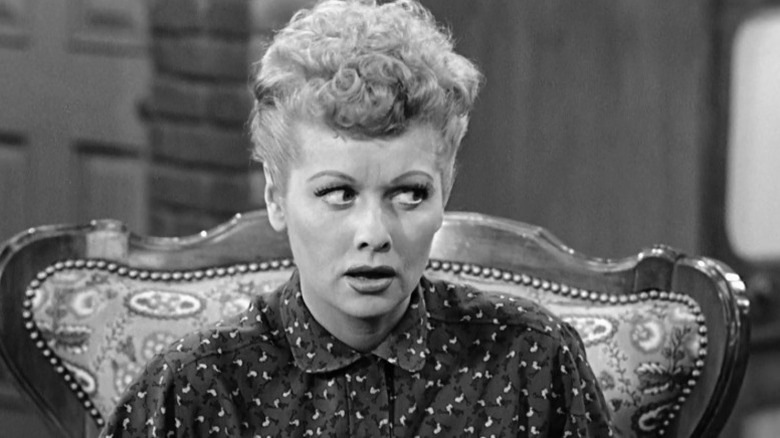
Speaking of great Lucilles in TV history, there has yet to be a character who embodies the essence of joy, comedy, and laughter as fully as Lucille Ball's Lucy Ricardo. Although her stature is certainly helped by the fact that "I Love Lucy" changed television by pioneering virtually every sitcom convention, idea, and device under the sun, the solar charisma and infectious wackiness of Lucy as a character are responsible for at least 50% of why the show is as great as it is.
Even 70 years on, it's still impossible not to have continuous laughing fits at the gumption with which Lucy throws herself into her various elaborate plots to appear in the nightclub show of her husband Ricky Ricardo (Desi Arnaz) despite her utter ineptitude as a performer, the sincerity with which she pursues her weekly passions and obsessions, or the mixture of slyness and obliviousness with which she tangles up the edges of her housewife duties. And Ball's once-in-a-century talent for physical comedy, mugging, precise delivery, and rapid-fire comic sparring makes the most of Lucy's every moment.
1. George Costanza (Seinfeld)
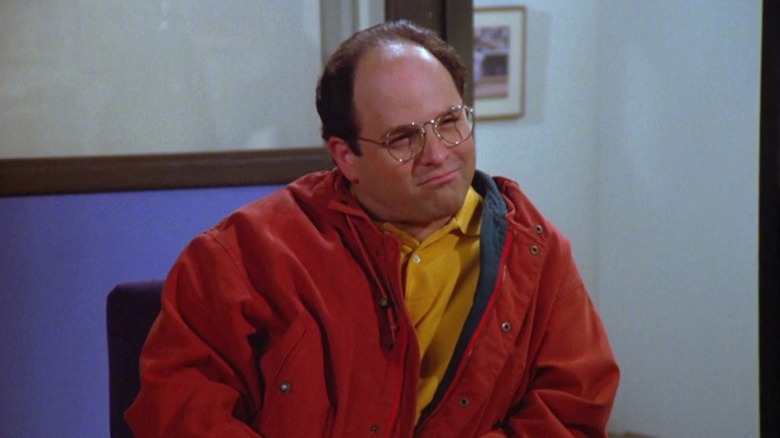
There has never been a more scheming, sniveling, spineless, feckless, foolish, selfish, deceitful, resentful, and brilliant sitcom character than George Costanza. The deuteragonist and de-facto existential mouthpiece of "Seinfeld" manages to be at once the most pathetic man to ever live, the most neurotically unaccepting of his life circumstances, and the most entrancingly unbothered — almost empowered, even — in his complete surrender to cynicism, narcissism, and amorality.
What makes George so funny — in addition, of course, to Jason Alexander's absolutely heroic rendering of his every overthinking rant, nervous tic, bitter laugh, and sociopathic reaction — is his willingness to be his own bitter self so thoroughly as to remind viewers of their own scuzziest, pettiest substrates. We laugh in identification at his daily frustrations and insecurities, we laugh in incredulity at the Machiavellian machinations they inspire, we laugh in schadenfreude when it all blows up in his face, we laugh with a strange familial affection as his closing ruminations prove that he's learned nothing. All the fundamentals are there; George Costanza is comedy writ large.