

5 Mistakes The Original X-Files Series Made That Ryan Coogler's Revival Needs To Avoid
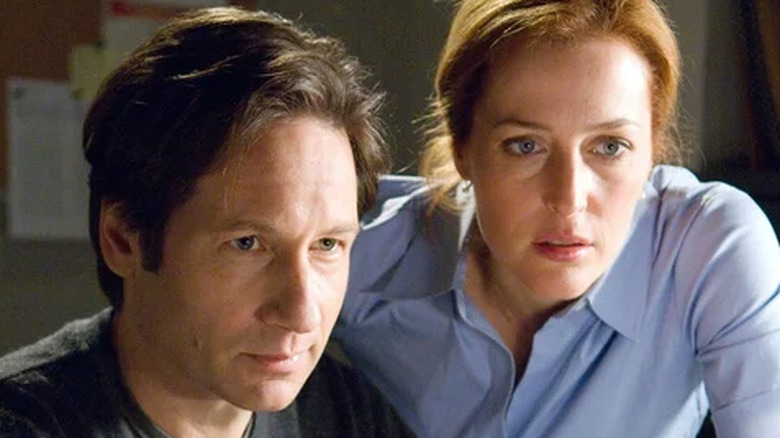
With the exciting news that Ryan Coogler's "The X-Files" reboot has been given a series order, fans of the iconic paranormal procedural have something concrete to look forward to. Few details are known about the project at this time, including whether the upcoming show is a straight-up reboot or a continuation/revival. Still, if the new "X-Files" is going to be anything like the original, there are a few missteps it should guard against before they occur.
Created by Chris Carter, "The X-Files" initially ran from 1993 to 2002 and followed the adventures of FBI agents Fox Mulder (David Duchovny) and Dana Scully (Gillian Anderson). As Mulder and Scully investigated strange phenomena and horrific happenings nationwide, they uncovered a conspiracy — involving the existence of extra-terrestrials — at the center of the United States government. The series spawned two feature films, one spin-off, and eventually two revival seasons that aired 2016-2018.
However the new version of "The X-Files" goes forward, here are some mistakes that the original series made and that Coogler & Co. ought to keep in mind.
A convoluted mythology
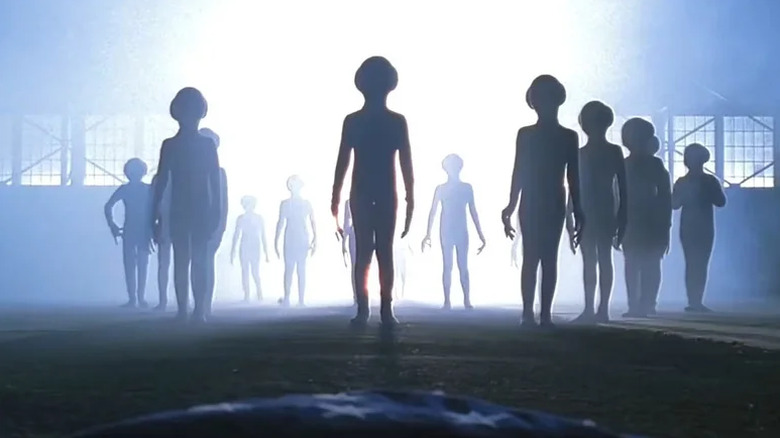
The series-long mytharc was the most convoluted aspect of "The X-Files." What began as an alien-oriented concept became, over time, a series of half-truths and incomplete answers that never felt like they really amounted to much. Yes, the mystery was fun. But nearly every tantalizing revelation came mired in new and unanswered questions.
Even the original series' creative team didn't always know where the story would go next. Producer R.W. Goodwin noted as much when reflecting humorously on the production of the Season 2 finale ("Anasazi") at a Philefest panel in 2023, where he revealed that Chris Carter had no idea how Mulder would get out of that exploding train car (via YouTube). Eventually, the mytharc got so turned around, so expansive and bloated, that the original series finale ("The Truth") bent over backwards trying to explain it all and tie everything together.
Coogler has said his "X-Files" will have a mytharc, and secrets are inherent to such stories; offering definitive answers along the way will give the new series more credibility than its predecessor had. "The X-Files" struggled with parceling information out over the years, especially regarding Mulder's missing sister, Samantha. By the time the show finally got around to giving Mulder closure on the storyline, it felt lackluster and tacked on rather than intentional and revelatory. The reboot should ask plenty of questions; it just shouldn't be afraid to give us real answers to them, too.
In short: If Coogler's reboot is to succeed, a detailed roadmap may be helpful.
Romantically pairing the leads
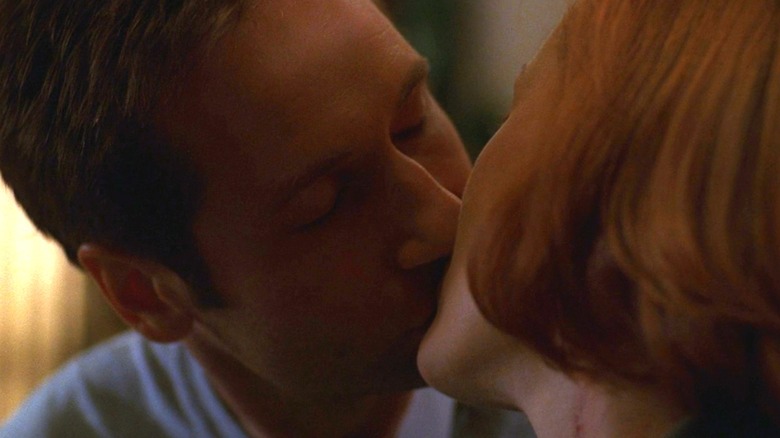
Okay, this one is a bit controversial (and it may land us in the doghouse with other X-Philes out there), but Mulder and Scully's romance didn't do the show many favors. The series danced around the characters' unmistakable chemistry for too long, utilizing killer bee fake-outs and other cliched excuses to keep the drama going. No wonder it's so hard to pinpoint when Mulder and Scully actually fell in love!
If the show's new iteration can avoid this trap, it will set itself firmly apart from its predecessor. Although we can't speak yet to the chemistry between the new series' stars —Danielle Deadwyler and Himesh Patel — perhaps setting the stage early by introducing significant others/spouses or simply highlighting the main characters' incompatibility will keep the 'shippers at bay and allow the focus to remain on the new cases at hand. After all, an outside-of-work romantic relationship was what Chris Carter originally intended for Scully, who initially had a boyfriend before he was cut out of the pilot.
Trying too hard to replace Mulder and Scully
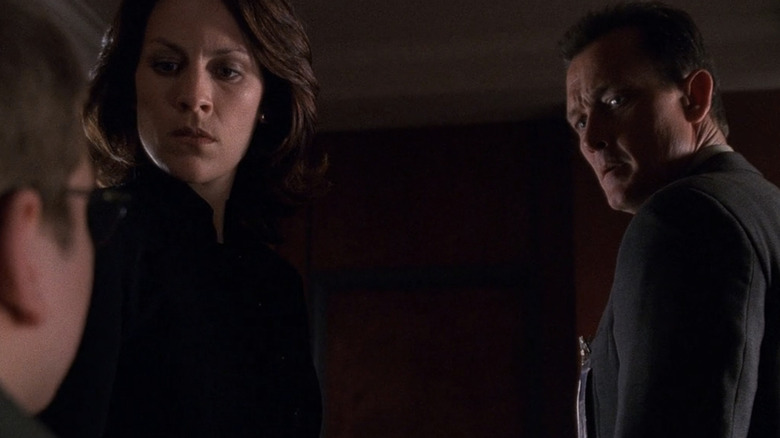
With the reboot set to introduce new leading characters, Ryan Coogler & Co. must avoid turning them into simple Mulder-and-Scully replacements/stand-ins. The original series famously suffered during its eighth and ninth seasons when John Doggett (Robert Patrick) and Monica Reyes (Annabeth Gish) took on an increased presence. In the revival seasons, Kyd Miller (Robbie Amell) and Liz Einstein (Lauren Ambrose) largely were lambasted by fans, who saw the pair as a poor attempt to replace our favorite agents.
The issue wasn't that the non Mulder-and-Scully characters didn't work or that they couldn't have been interesting on their own. Doggett, especially, proved to be a well-rounded character with a complex history worth exploring. The issue was that they weren't Mulder and Scully, full-stop. The best move for Coogler's reboot would be to actively avoid comparison, perhaps going so far as to avoid any tangible connection to Mulder and Scully at all, beyond a cursory knowledge of their existence.
Of course, Mulder didn't originate the X-Files; he only revived it years after Arthur Dales (Darren McGavin) gave it the old college try (see "Travelers"). All he wanted to do was spiritually pick up where Dales left off. Something similar might work with Coogler's reboot.
Avoid unnecessary retcons
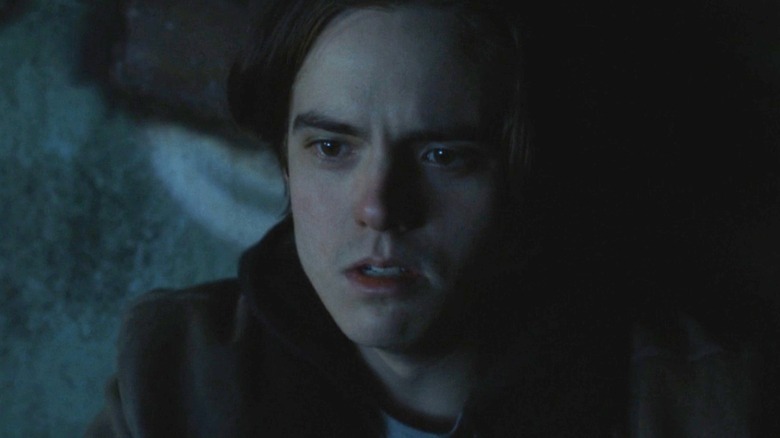
Part of the reason that the mytharc became so complicated over time is that "The X-Files" retconned story points later on. The revival seasons were notorious for this, walking back several elements that failed to land in the original run. The lack of a 2012 alien invasion, the Season 11 vision "reset," and especially the reveal that the Cigarette Smoking Man (William B. Davis) was William's (Miles Robbins) father all along — the revisionist history got old quick.
Since retcons typically become an issue the longer a series runs, the reboot likely won't have this issue... at first. However, if the new "X-Files" isn't a full-on franchise reboot, it also should avoid retconning elements from its predecessor. If Mulder and Scully are still out there, there's no reason to walk back their final adventures, even if not everyone was on board with the direction Carter took the characters in the end. Rather, it would be better for the new show to largely leave the original story alone and move on to something new entirely.
Immortal villains
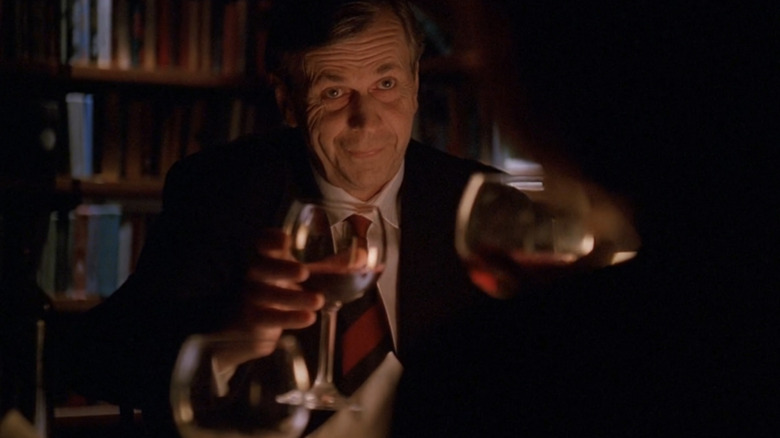
Everyone loved to hate the Cigarette Smoking Man (or "Old Smokey," as Mulder has called him), and his role on "The X-Files" only got bigger as the show progressed. But by the end of the series, CSM had been killed not once or even twice, but three times on-screen: first in Season 7's "Requiem," then in Season 9's "The Truth," and lastly in Season 11's "My Struggle IV." Putting a face to the conspiratorial conflict is important, of course... but it doesn't always have to be the same face.
Ryan Coogler's "X-Files" easily could have a CSM-like character of its own; that idea itself isn't the issue here. Rather, the problem that Chris Carter and company ran into was that the CSM (and William B. Davis, who played him) became so precious to the writers that Mulder and Scully never truly could get the upper hand. By the end, the CSM essentially felt immortal, unbeatable, and ever-present — it's no wonder Carter himself reportedly referred to the character as "the Devil."
No doubt, some of the very best "X-Files" characters have been its antagonists, but the reboot project could set itself apart by not being so precious with them. A good villain can go a long way, but at some point, keeping them around for too long can undercut their effectiveness.