

Why NBC Nearly Ended Up Sending ER To A Rival Network
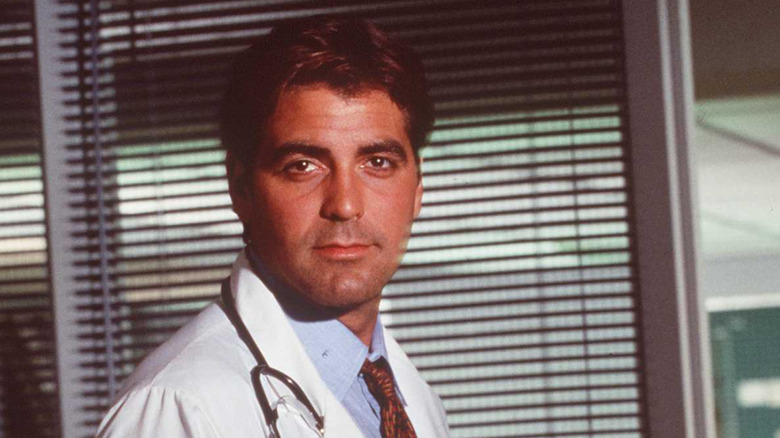
Arguably the best medical drama of all time, it's hard to overstate just how massive a hit "ER" was for NBC during the show's heyday in the 1990s. It was the top show on television, and nearly half of all American TV audiences tuned in during the peak of the second season, according to TV Guide. So it's a little surprising that the network almost let "ER" slip out of its grasp and become a CBS series.
The issue was that NBC didn't actually own "ER." Warner Bros. Television had created the series and licensed it to the network. The first season of "ER" premiered in 1994 and was a ratings success, so Warner Bros. Television went to NBC in an effort to preemptively negotiate a deal to keep the show going and increase the $3 million per-episode fee the network was paying for it. However, according to the book "ER: The Oral History" (via Deadline), NBC didn't want to renegotiate their standard four-year contract before it was up. But once it came time to negotiate a new contract in 1998, "ER" was a monumental hit, and NBC had very little leverage. The network had to pay up or risk losing the show.
Les Moonves (who developed and sold "ER" to NBC when he was at Warner Bros. before his tenure as President of Entertainment at CBS) made "a ridiculous offer to bring the show to CBS," according to his interview in "ER: The Oral History." His offer of around $12 million an episode does sound ridiculous, but Moonves had a fondness for the show. "'ER' had a special place in my heart," he said. "'ER' was one of my babies back in the day." But ultimately, no deal was made with CBS.
Seinfeld may have been responsible for keeping ER on NBC
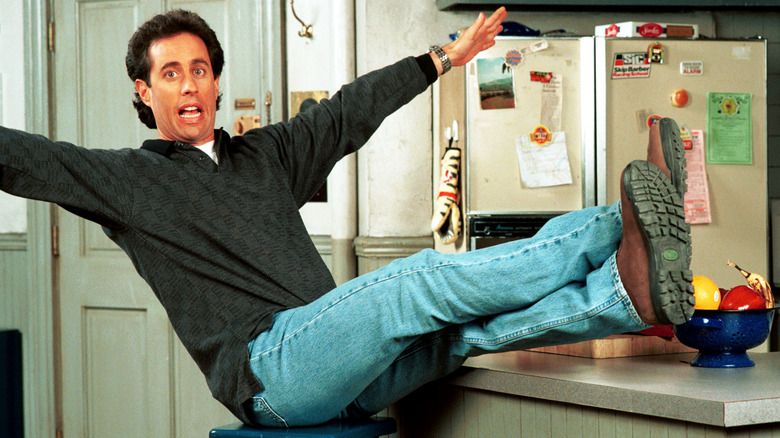
In addition to CBS' offer, ABC was also interested in snatching "ER" away from NBC. As if the threat of losing the medical drama to a rival network wasn't motivation enough, NBC had another reason to pay whatever it took to keep "ER." Jerry Seinfeld had told President of NBC West Coast, Don Ohlmeyer, that he wanted to end his hit sitcom "Seinfeld," the No. 2 show on TV after "ER," in the spring of 1998. ("Seinfeld" did indeed end that year, with one of the worst finales in TV history.)
That "shifted the dynamics somewhat," Ohlmeyer told trade publications at the time. "You're never going to want to lose 'ER,' but I think not having 'Seinfeld' turned the Bunsen burner up even more," he said, according to "ER: The Oral History."
Rather than lose both of the biggest shows on TV at the same time, NBC agreed to pay $13 million per episode to continue broadcasting "ER." That's $286 million per year for 22 episodes, which ate up more than half of the $500 million in profit NBC was making off the show. Considering how "ER" reinvented the medical drama, it was probably still worth it. But you have to imagine that NBC executives were kicking themselves for not negotiating for a much lower price years earlier. "We didn't own 'ER.' We just rented it," reflected former NBC Entertainment President Warren Littlefield in "ER: The Oral History." "After the first four years, we rented it for a lot more."