

All 7 Star Trek Episodes That Were Banned Or Censored Around The World
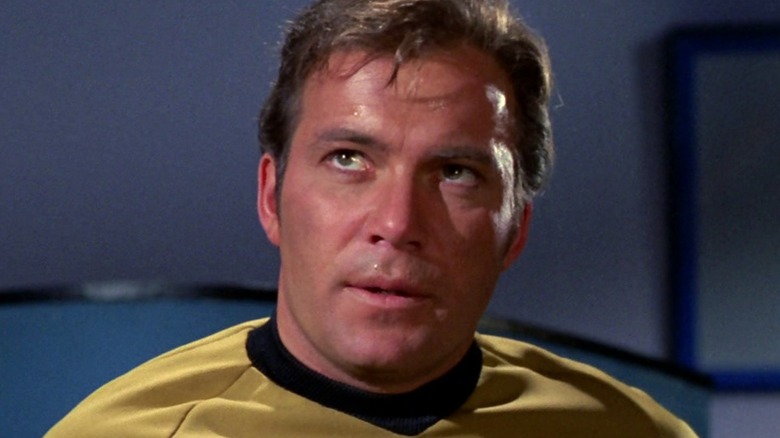
"Star Trek" may have a fantastical premise, but the best episodes of this iconic TV franchise told grounded stories rooted in lived realities, and their ability to examine political doctrines with a level of social awareness made those stories all the more intriguing. While this balance of futuristic environments and human-centric conflicts was one of the franchise's defining characteristics, it also led to seven episodes being either withheld, censored, or excluded from broadcast due to their taboo themes.
"Star Trek: The Original Series" accounts for more than half of these episodes, with four in particular having caught some unwanted attention from the BBC. Whether it was for overt violence, disturbing imagery, distressing themes, or sexual innuendo, the original show and its successors ended up crossing into controversial territory. Fortunately, all these episodes were later broadcast, with the unedited versions becoming available for the fans who never saw them the first time around.
Whom Gods Destroy was deemed unpleasant
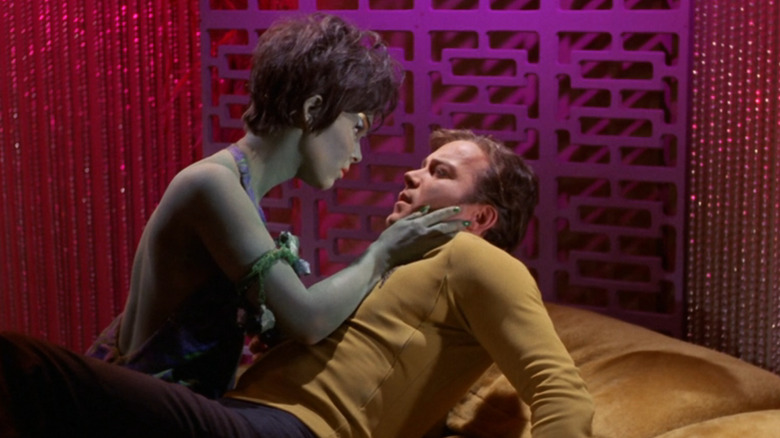
Season 3, Episode 14 of the original series, titled "Whom Gods Destroy," saw Spock (Leonard Nimoy) and Kirk (William Shatner) visit a Federation facility for the mentally ill to deliver a cure for the inmates. They discover the facility has been overrun and taken over by those same inmates, however, who are led by the villainous Captain Garth (Steve Ihnat). After acquiring the ability to shapeshift, Garth aims to escape and take over the galaxy. He impersonates the governor of the facility and captures Spock and Kirk, torturing Kirk in an attempt to uncover the codes for the USS Enterprise.
The episode aired on January 3, 1969, but it wasn't until January 19, 1994, that the BBC broadcast it. The fact that the premise revolved around the mentally ill meant that the episode was already treading dangerous waters, but the torture of Kirk and the numerous forced acts levied against the protagonists sealed the deal. In a letter to a fan, the BBC explained that this episode was one of four not broadcast because "they all dealt most unpleasantly with the already unpleasant subjects of madness, torture, sadism, and disease" (via Den of Geek). Furthermore, the attempted seduction of Kirk by the Orion Marta (Yvonne Craig) gave the episode a touch of provocativeness, which might also have contributed to the episode being withheld.
Plato's Stepchildren was a humiliation ritual for the heroes
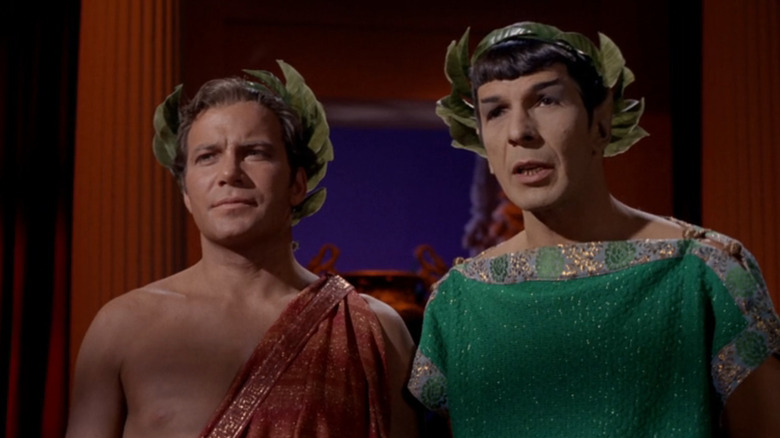
"Plato's Stepchildren" sees Kirk, Spock, and McCoy (DeForest Kelley) head to the planet Platonius after they receive a distress call. The planet is inhabited by Platonians, a race that models its society on ancient Greece — and who also happen to have telekinetic powers. When they discover that their leader, Parmen (Liam Sullivan), has a leg injury, McCoy treats him. The Platonians refuse to let them leave after this, however, because Parmen wants McCoy to stay and serve as his personal doctor. The group is subsequently subjected to humiliation and torture, but after a Platonian named Alexander (Michael Dunn) helps them discover that their telekinetic power comes from the mineral kironide, McCoy injects Spock and Kirk with it. Equipped with telekinesis, Kirk and Spock take down the Platonians and leave the planet.
Originally broadcast on November 22, 1968, the BBC aired Season 3, Episode 10 on December 22, 1993. This was one of the episodes that the broadcaster deemed too sadistic since it featured the heroes being subjected to acts of humiliation. Kirk is forced to slap himself and crawl on all fours, while Spock is made to experience heightened emotions; at one point, Kirk and Uhura (Nichelle Nichols) are also forced to kiss. The repeated psychological torment of the heroes was apparently considered too distressing by the BBC, and the episode didn't make it to broadcast until more than two decades later.
Conspiracy had one of the franchise's most graphic scenes
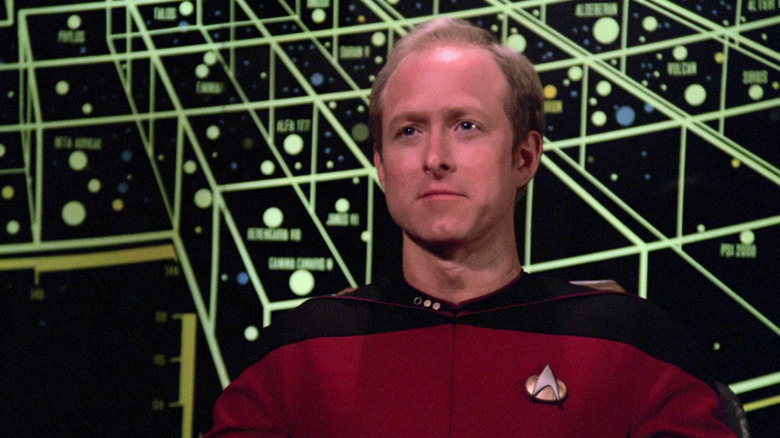
Season 1, Episode 25 of "Star Trek: The Next Generation" was one of the franchise's more disturbing episodes. After Picard (Patrick Stewart) receives information from his friend, Captain Walker Keel (Jonathan Farwell), regarding the suspicious behavior of senior officials in Starfleet Command, Keel's ship is destroyed. When Picard and his crew head to Earth to investigate, they discover that parasitic aliens have compromised many officers by attaching to them and controlling their behavior. With the aliens quickly multiplying, Picard and Riker (Jonathan Frakes) have no option but to take down the compromised officers.
Star Trek has had plenty of memorable moments over the years, but this episode stood out mostly due to the climax, in which Picard and Riker blast Commander Remmick (Robert Schenkkan) with phasers, vaporizing his upper body and forcing an alien to emerge. Rather than exclude it from broadcast, the BBC opted to edit the episode by cutting out the sequence in question. The edited episode was first broadcast in the U.K. on March 20, 1991.
The Empath featured multiple torture scenes
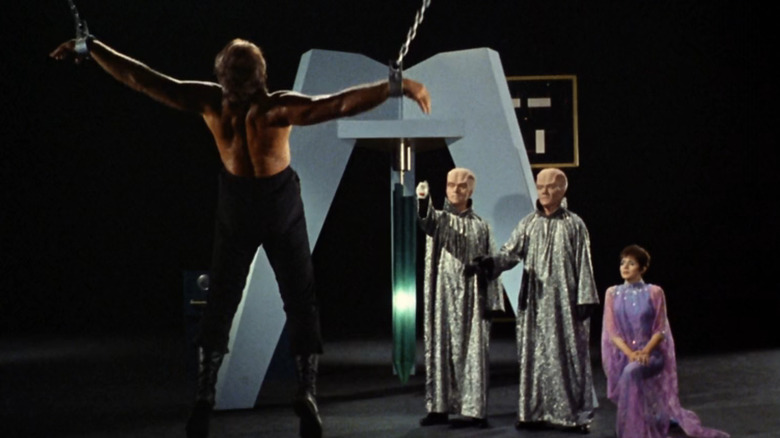
In Season 3, Episode 12 of the original series, Kirk, Spock, and McCoy travel to a research station to evacuate the team stationed there before the system's star explodes. However, they find the station empty, and they themselves are subsequently kidnapped. They wake up in a dark lab alongside a humanoid woman called Gem (Kathryn Hays), and meet two aliens called Vians (Alan Bergmann and Willard Sage). The Vians are deciding whether Gem's species deserves to live, and they do this by torturing Kirk, Spock, and McCoy to see how Gem responds. She has the unique ability to absorb anyone's injuries, effectively inflicting the pain on herself. When McCoy volunteers for the final and deadliest torture, he is left near death — but Gem selflessly saves him and transfers the damage to herself. The Vians note her deep compassion and decide that her species are worth saving from the supernova.
Unlike other episodes, in which violence and persecution were incidental, this episode's premise revolved entirely around torture. Because it fell right in with the "unpleasant subjects of madness, torture," it's no surprise that the BBC did not broadcast the episode until January 5, 1994, nearly 30 years after it was made.
Miri depicted violence against children
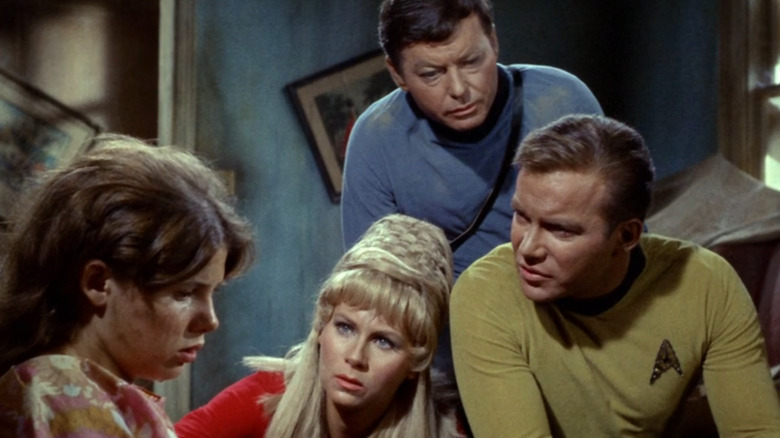
In "Miri," the Enterprise discovers a planet with a similar geographic outline to Earth after following a distress signal. When Kirk, Spock, and McCoy beam down to investigate, they find out the planet is inhabited only by children. They soon learn that a disease killed all the adults and now causes the children to age extremely slowly; before reaching puberty, they go insane and die. With the exception of Spock, who is immune, the Enterprise team contracts the disease. With only days to live, McCoy manages to make a vaccine that he tests on himself, and, once it proves effective, he administers it to the crew and the surviving children.
Similar to some other episodes, the BBC criticized "Miri" for containing disease, violence, and displays of insanity, and, while it first aired on December 2, 1970, it was omitted from a later rerun in the '80s after the BBC received viewer complaints. Season 1, Episode 8 of the original series, it had another layer that made it potentially uncomfortable — the fact that children were the victims of the disease. The disturbing portrayal of children as plague survivors who become violent and face premature death might have had something to do with the episode's notoriety.
The High Ground was pulled from broadcast thanks to one line
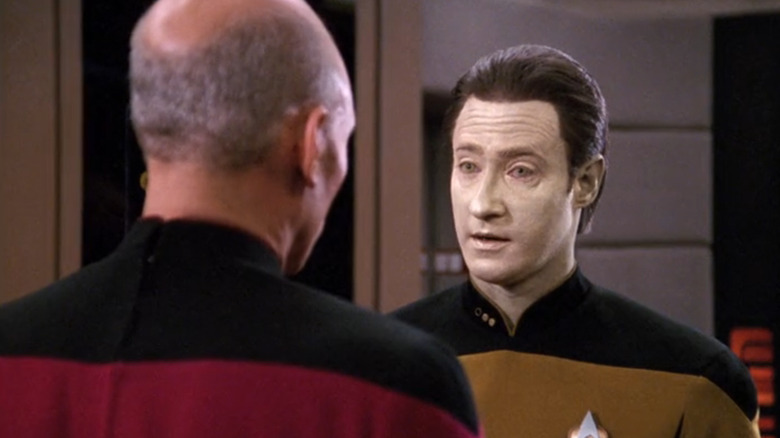
In Season 3, Episode 12 of "Star Trek: The Next Generation," the Enterprise travels to deliver medical supplies to Rutia IV, a planet caught up in a decades-long conflict between the ruling government and the separatists, the Ansata Autonomists. When Dr. Beverly Crusher (Gates McFadden) attempts to help victims of a bombing, she is kidnapped by the Ansata and taken to their hideout. Kyril Finn (Richard Cox), the leader of the group, also kidnaps Picard after infiltrating the Enterprise. Wesley Crusher (Wil Wheaton) and Data (Brent Spiner) manage to locate the group's hideout, leading to a rescue mission for the hostages and the death of Finn. One of the franchise's most nuanced episodes, "The High Ground" explored violence as a means to freedom, which is what led to this Star Trek episode being banned in the U.K.
The reason why Sky One aired an edited version on November 29, 1992, and why the BBC didn't broadcast the episode until September 29, 2007, was a scene between Data and Picard. Here, they discuss whether political violence can ever be an effective method of fighting tyranny, and Data references a fictional unification of Ireland in 2024. For context, the episode originally aired on January 29, 1990 — right in the middle of the Troubles, a decades-long conflict in Northern Ireland that was fought over the subject of unification.
Patterns of Force revisited Germany's darkest era
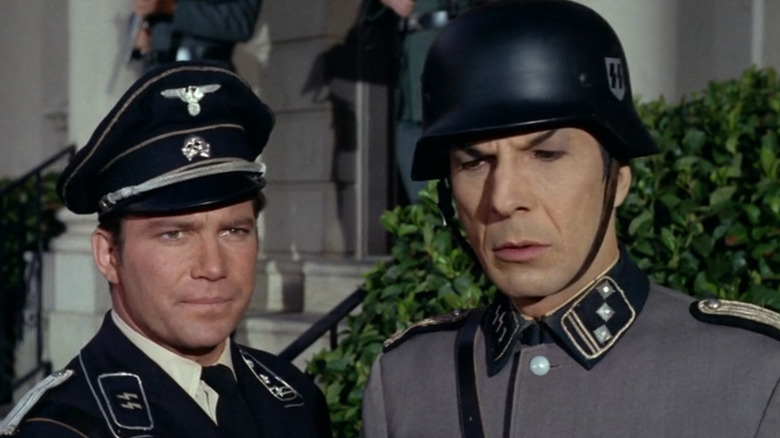
When the USS Enterprise travels to Ekos in search of the historian Professor John Gill (David Brian), they discover that he has modeled the planet's society on Nazi Germany — but without the antisemitism — apparently because he believes it was the most efficient form of government practiced by mankind. However, his plan is derailed when his subordinate, Melakon (Skip Homeier), takes over as supreme leader by drugging Gill; after this, Ekos adopts the emblems, military uniforms, and authoritarian structure of Nazism, as well as a deep hatred for the neighboring Zeon species. Spock and Kirk infiltrate the Nazi military and free Gill, and Gill tells the people about Melakon's betrayal while ordering an immediate end to the military aggression against the Zeons.
So, yes, Spock and Kirk actually wore Nazi uniforms, in what is considered one of Star Trek's most poorly aged episodes. It didn't have a free-to-air television premiere in Germany until November 4, 2011, decades after the February 16, 1968, U.S. broadcast. Given the plot of the episode, it's not hard to understand why the German public broadcaster ZDF was reluctant to air it. At the time, it had been only 23 years since the defeat of the Nazis, and in Germany, the public display of such overt imagery is banned by law. It's important to note, though, that the episode very clearly portrayed the Nazis as villains, and the heroes condemned everything about the dictatorship.