

60 Best Star Trek Episodes In Franchise History, Ranked
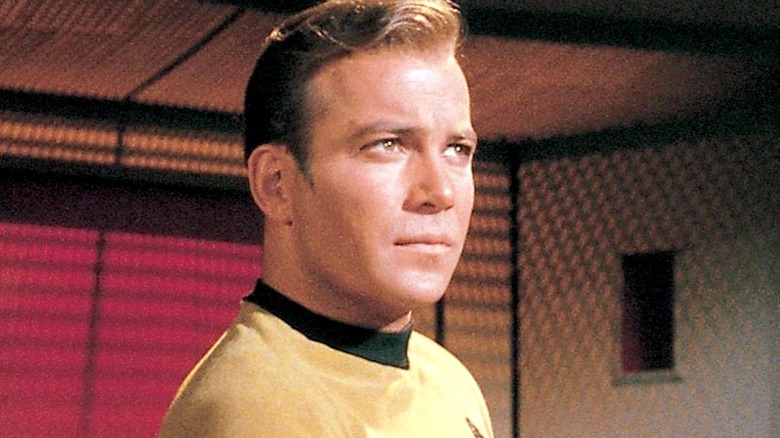
"Star Trek" debuted 60 years ago today — and that's inspired us to boldly go into the archives to rank the greatest episodes in franchise history.
Since the original "Star Trek" series premiered on NBC on September 8, 1966, "Star Trek" has become not only an enduring science fiction staple, but also a shining beacon of hope. In a sea of cynical, pessimistic visions of the future, "Trek" dared to dream big and show us a brighter tomorrow we can all dream of achieving.
The first "Star Trek" series wasn't exactly a runaway hit: Ratings were never high, and NBC pulled the plug after just three seasons. But it built a dedicated fan base of Trekkies, and the show's strong performance in syndication (and the success of "Star Wars") convinced producers to bring back the cast for a feature film: 1979's "Star Trek: The Motion Picture." Since then, the franchise has exploded, with more than a dozen films and 13 additional spin-off series that cemented "Star Trek" as a sci-fi juggernaut. So what are the very best episodes across all "Star Trek" TV series? We're glad you asked.
Pour yourself a tall glass of Romulan ale — or maybe a cup of tea, Earl Grey, hot — and join us as we count down the 60 best episodes across all "Star Trek" series, spanning six decades of interstellar greatness. (Many thanks to Sam Stone, Pauli Poisou, and Ben F. Silverio for contributing their "Trek" expertise to this list.) And please note: We had to make some tough cuts, so some shows — "Star Trek: The Animated Series," "Star Trek: Prodigy," and "Star Trek: Starfleet Academy" — didn't get an episode on the final list.
Read on to see what did make our list, and which "Trek" episode we crown as the best of all time, and then beam down to the comments to share your own personal favorites.
60. A Piece of the Action (Star Trek — Season 2, Episode 17)
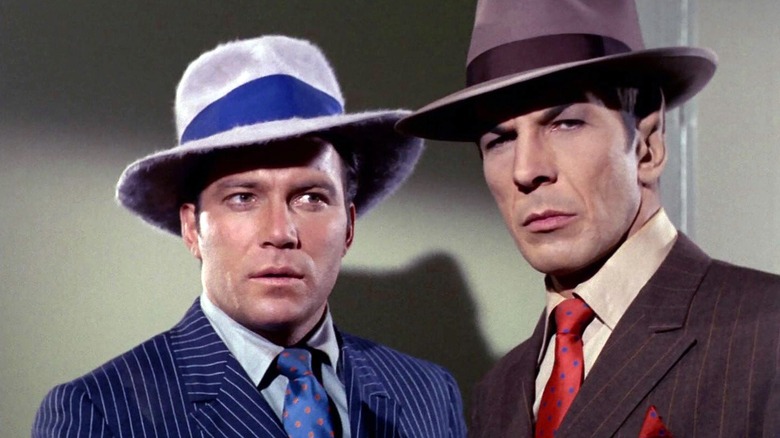
This goofy comedy gem is built on a particularly silly premise: Kirk and Spock visit a distant planet that has constructed its entire culture to match... the gangster-run Chicago of the 1920s. (Hey, they learned it from a book, alright? What are you, a wise guy?) Our Starfleet heroes are understandably out of their element surrounded by guns, molls, and tough guys — Spock warns one mobster, "Sir, you are employing a double negative" — but soon enough, Kirk is talking like Al Capone and looking to take over the whole kit and kaboodle to prevent a mutually destructive turf war. William Shatner's sly wit has never been sharper as Kirk goes full mob boss, fuzzy fedora and all, and Leonard Nimoy has a lot of fun playing a tommy gun-toting Spock ("I would advise youse to keep dialing, Oxmyx"). Trifles like this are part of what make "Star Trek" such a blast to watch, and this is one of the sweetest. — Dave Nemetz
59. Hear All, Trust Nothing (Lower Decks — Season 3, Episode 6)
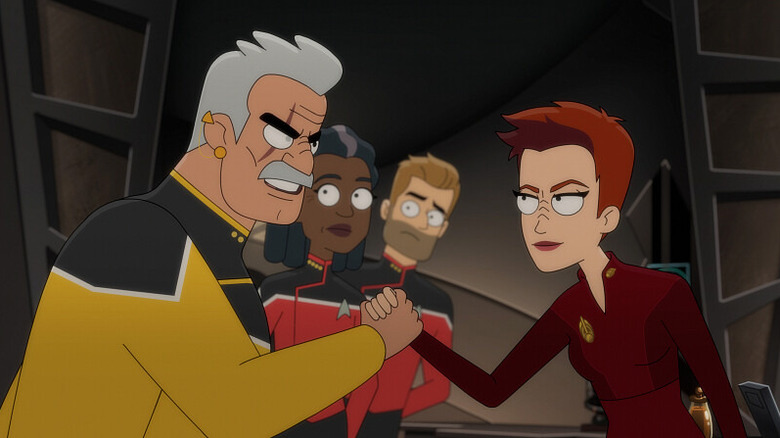
After a change of plans, Captain Freeman and the Cerritos are dispatched to Deep Space Nine in this Season 3 installment to lead trade negotiations with the Karemma. While Boimler explores Quark's bar and Mariner meets her girlfriend's friends, Rutherford and Tendi meet Orion Starfleet officer Mesk (voiced by Adam Pally), who constantly references the more nefarious elements of Orion culture such as pirating. And though typically open to new friends, D'vana is irritated by being stereotyped.
After such a long time away, fans were happy to revisit DS9 in this episode, especially with Nana Visitor and Armin Shimerman reprising their "DS9" roles as Kira and Quark. (And Kira having a history with Shaxs tracing back to the Bajoran Resistance was such a nice touch.) However, for fans who may not be as familiar with the '90s series, it was still easy to follow along, which is something that "Lower Decks" generally does well. You could still feel how important it was to be back at this iconic "Star Trek" location while still enjoying Boimler nerding out, Mariner trying to behave in front of Jennifer's friends, and Tendi finding a harmonious balance between her Orion culture and her new life in Starfleet. — Ben F. Silverio
58. Calypso (Short Treks — Season 1, Episode 2)
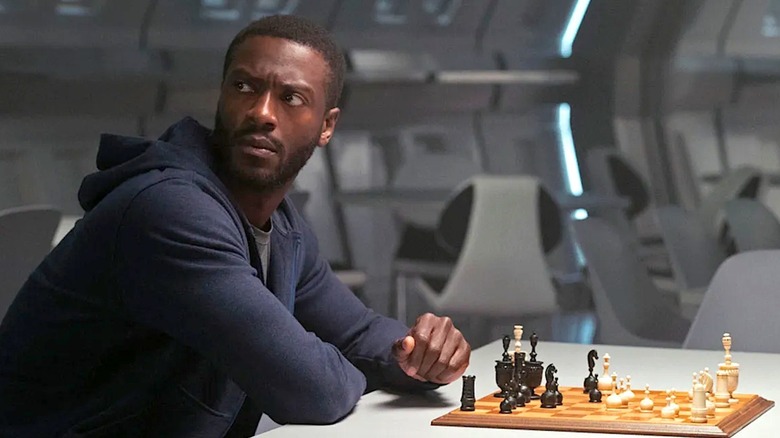
Paramount+ launched the anthology of short films "Star Trek: Short Treks" in 2018 as a companion piece to "Discovery," allowing writers to boldly go off on brief stints into the unexplored corners of the "Trek" universe. We're glad they did, too, because they delivered an absolute stunner in "Calypso," with "Cross" star Aldis Hodge playing Craft, a man who finds himself stranded on a far-flung spaceship with the A.I. computer (voiced by "Peaky Blinders" alum Annabelle Wallis) as his only companion. At first, the story — co-written by Pulitzer Prize-winning author Michael Chabon — plays like a "Black Mirror" episode, or a Trekkie take on "Her," with Craft and the computer slowly learning how each other operates. But it develops into an achingly beautiful romance, highlighted by Craft slow-dancing with a virtual hologram of the computer in the style of their favorite Fred Astaire movie "Funny Face." "Short Treks" only ran for two seasons, but we wish it'd been given more time, if only to see if it could give us more unforgettable tales like this one. — D.N.
57. Carbon Creek (Enterprise — Season 2, Episode 2)
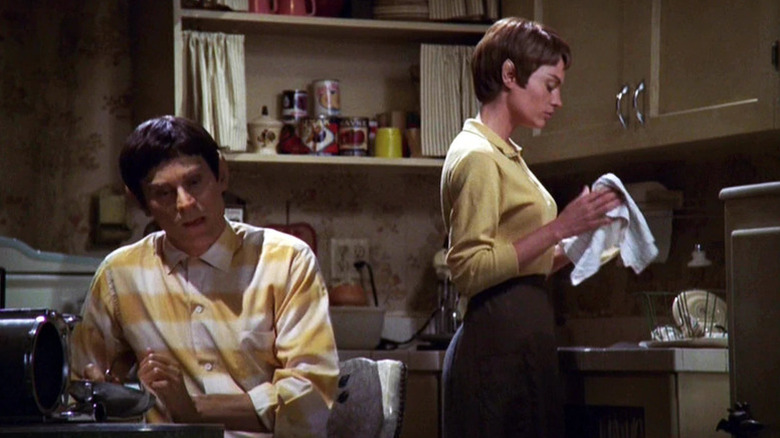
"Star Trek: Enterprise" is admittedly a stranger beast within the wider franchise, a prequel that really only coalesces in its back half. Set approximately a century before the events of "The Original Series," the show played with the franchise's established history in interesting ways, though not all of them panned out. One episode that does offer a satisfying wrinkle to the mythos' past is the Season 2 episode "Carbon Creek." The story reveals that Vulcans lived on Earth on a secret observation mission in the 1950s, with one of the research team being the great-grandmother of T'Pol.
Before "Star Trek: Enterprise" was canceled after four seasons, it brought some fascinating ideas to the franchise, and "Carbon Creek" is clear evidence of that. Eschewing the show's usual prequel-driven storytelling unveiling the gradual formation of the Federation, this episode is a decided departure. Instead, the tale wisely leans into the straitlaced charm of the Vulcans for a surprisingly heartwarming story, given the alien race's penchant for concealing their emotions. An effectively off-kilter episode for a largely off-kilter show, "Carbon Creek" is a great standalone story that can be enjoyed without watching the rest of "Enterprise." — Sam Stone
56. The Siege of AR-558 (Deep Space Nine — Season 7, Episode 8)
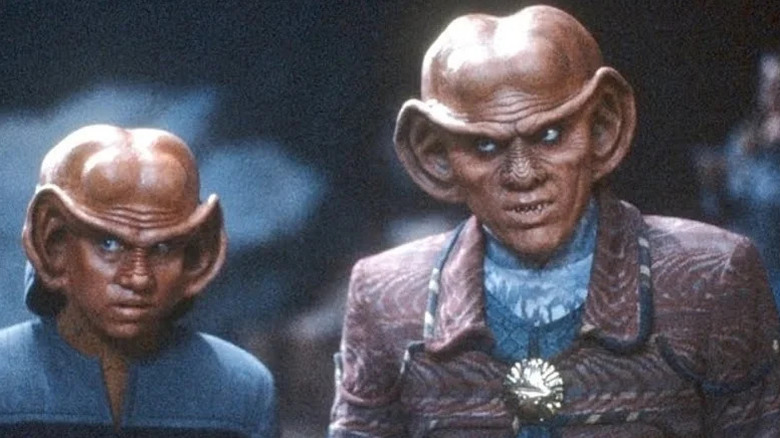
From director Winrich Kolbe and writers Ira Steven Behr and Hans Beimler comes "The Siege of AR-558," a dark but captivating war story through and through. As the USS Defiant commits to a supply run to an otherwise unremarkable planet captured from the enemy, we're taken to one particular front of the raging Dominion War, with memorable and brutal results.
The troops on planet AR-558 are on their last legs and suffering massive casualties, thanks to an ingenious minefield. What's more, a Dominion attack is incoming, and Benjamin Sisko has no option but to take command. Amidst the battle preparations are Quark and his nephew Nog, both inexperienced in combat but with few other options but to observe and partake.
As Sisko reminds us in the end, the message of the episode is simple. While commanders might view deaths as figures on a paper, every front of a war is full of soldiers who have human wants and needs — at least, right up until that Houdini mine appears out of thin air right next to them. — Pauli Poisou
55. Nepenthe (Picard — Season 1, Episode 7)
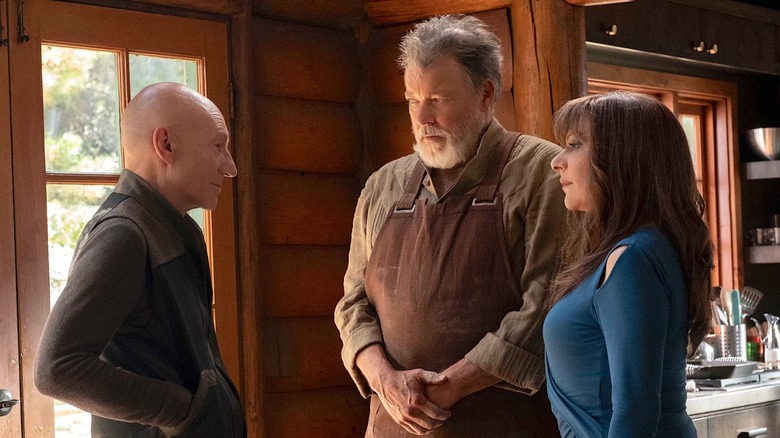
When "Star Trek: Picard" debuted on Paramount+ in 2020, it gave Jean-Luc Picard a new crew of shipmates to zip around the universe with... but we admit we missed seeing him with the old "Next Generation" gang. So it's a thrill when Jean-Luc brings Soji along to hide out on the idyllic planet of Nepenthe, where he reunites with his Enterprise pals Riker and Troi. Their reunion is like a warm hug to "Trek" fans, with Jonathan Frakes and Marina Sirtis slipping right back into their "TNG" roles like no time has passed. (Riker has become quite the home cook, whipping up a tasty tomato and basil pizza.) Their visit adds some emotional heft, too, as we learn Riker and Troi's son Thad died young of a rare disease. It's such a lovely time that we wish Jean-Luc could stay on Nepenthe, sipping wine and catching up with his old friends, and while we'd have to wait another two seasons of "Picard" to get a full "Next Generation" reunion, this is a nice little appetizer. — D.N.
54. Duet (Deep Space Nine — Season 1, Episode 19)
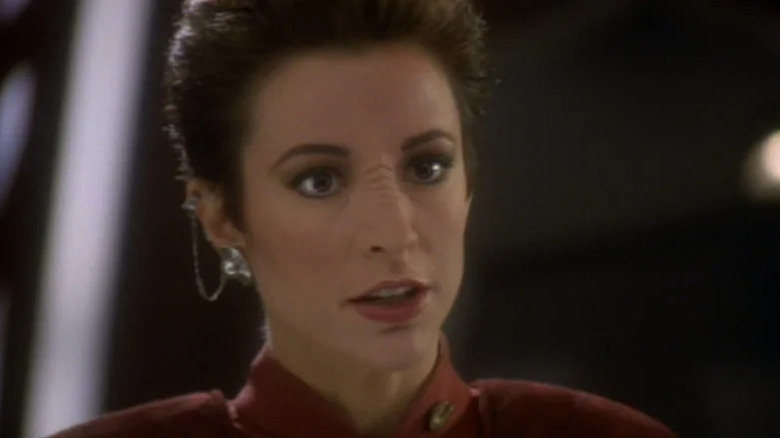
When "Deep Space Nine" began, the neighboring planet of Bajor was still recovering from the brutal occupation it endured under the Cardassian Union. These tensions and traumas are largely explored through the station's Bajoran first officer Kira Nerys, played by Nana Visitor, as she deals with unresolved injustices from the Cardassian regime. This comes to a head relatively early on in the Season 1 episode "Duet," with Kira encountering a suspected Cardassian war criminal (Harris Yulin) who evaded Bajoran justice after the occupation. As Kira realizes just how broken and remorseful the Cardassian is, she begins to rethink her own prejudices towards her former oppressors.
Visitor is arguably one of the most under-appreciated actors in the "Deep Space Nine" cast, bringing an assertive energy to the ensemble. Kira also serves as a reminder of the traumatic elements of Bajoran experience, contrasting Sisko's own inner turmoil and grief from his losses. "Duet" marks a big step forward for Kira in reconciling with the painful parts of her past and starting to grow past them. The strongest episode from what is a largely uneven first season, "Duet" has the show's themes about the cost of conflict on one's soul begin to visibly coalesce. — S.S.
53. If Memory Serves (Discovery — Season 2, Episode 8)
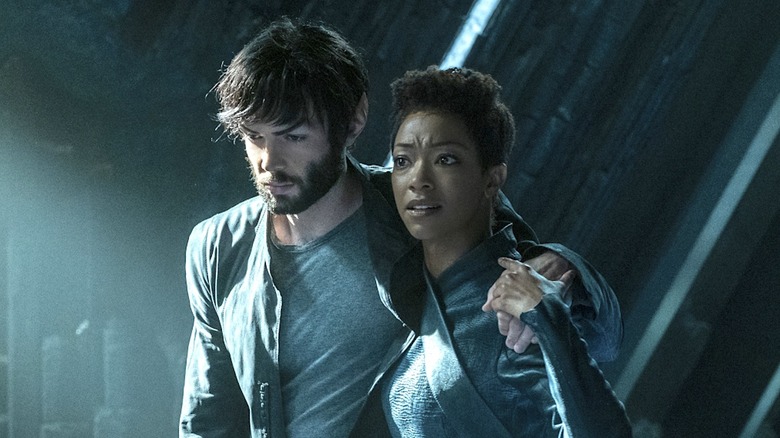
After a bumpy but promising maiden voyage, "Star Trek: Discovery" really hit its stride in Season 2 with the additions of Ethan Peck as a bearded Spock and Anson Mount as Starfleet captain Christopher Pike. It digs deep into the memory banks here, going all the way back to the original "Trek" series' "The Menagerie," with Burnham and Spock returning to Talos IV, the home of the giant-brained Talosians. It's a treat to explore the connective tissue between this episode and one that aired half a century earlier, and Mount is terrific here, letting us feel every bit of Pike's bittersweet yearning as he reunites with his former flame Vina... who may or may not be only an illusion. Plus, Burnham heals her rift with Spock by diving into his painful childhood memories so they can start fresh together. Mount and Peck were so great this season as Pike and Spock, in fact, that Paramount+ later spun them off in their own series: "Star Trek: Strange New Worlds." — D.N.
52. Improbable Cause/The Die Is Cast (Deep Space Nine — Season 3, Episodes 20 and 21)
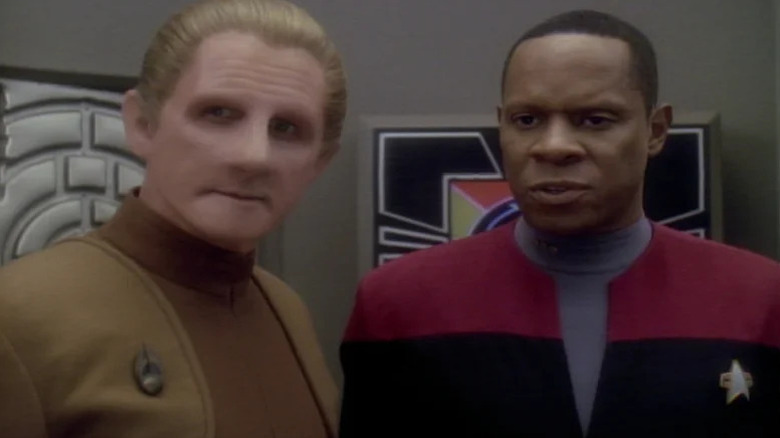
A "Star Trek" detective story that effortlessly juggles personal moments and large-scale stuff, built around René Auberjonois' Odo and Andrew J. Robinson's Elim Garak? Sign us up. The arc of the Avery Brooks-directed "Improbable Cause" and David Livingston's "The Die Is Cast" starts with everyone's favorite Changeling investigating a bombing incident at Garak's tailor shop. Odo's investigative abilities soon find out that things are far more complicated and relate to Garak's past in the Cardassian Obsidian Order. Come "The Die Is Cast," the breadcrumbs have led to a full-on Cardassian-Romulan alliance with a bold plan to bring the Dominion to its knees.
While the scale of the story expands considerably over time, Odo and Garak remain at its heart. The two-parter explores the pair's history and relationship with their relative races, while also paying plenty of attention to the inner workings of the Dominion, the Cardassians, and the Romulans. As a bonus, Sisko gets to channel his inner James T. Kirk a bit, courtesy of a gung-ho rescue mission to save Odo from the Gamma Quadrant. — P.P.
51. The Sehlat Who Ate Its Tail (Strange New Worlds — Season 3, Episode 6)
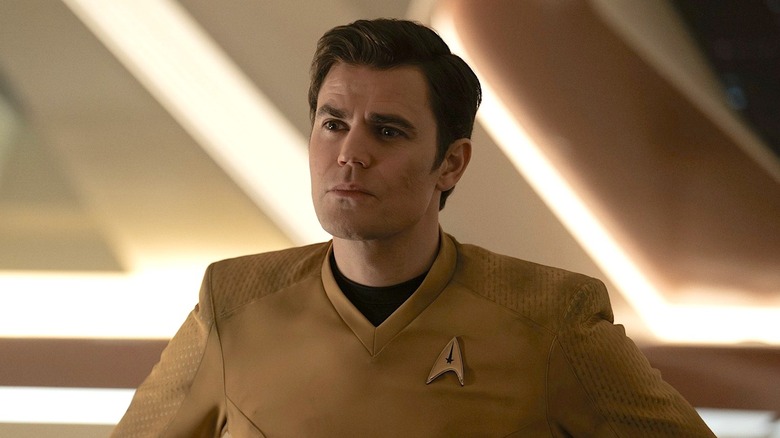
William Shatner's James T. Kirk is one of the most iconic characters in TV history, and it can't have been easy for Paul Wesley to slip into his golden yellow Starfleet uniform. But in this Season 3 episode, Kirk is still just a first officer on the Farragut, and Wesley shows us the growing pains Kirk had to go through to become the captain we know and love. Kirk is thrust into the captain's chair when most of his crew is injured, and he tries to go full Kirk at first, guns blazing. But his reckless approach backfires, leading to a crisis of confidence that teaches him it's not always best to go for broke. Wesley really comes into his own here as Kirk, both in his burning desire for leadership and his eventual humbling when his bold plans fall apart. (He also has instant chemistry with Ethan Peck's Spock and Martin Quinn's Scotty.) In the end, Kirk is left bruised but wiser, laying the groundwork for all his glorious space adventures to come. — D.N.
50. Darmok (The Next Generation — Season 5, Episode 2)
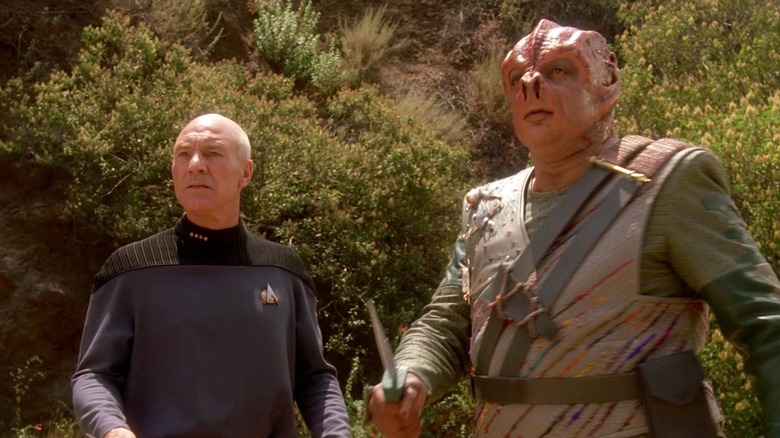
"Star Trek" crews are usually able to talk to a wide array of alien species with ease, thanks to a universal translator, but that communication breaks down in this "TNG" installment, which sees the Enterprise crew encounter the Tamarians, who speak in an impenetrable alien language made up of myths and riddles. We can feel Jean-Luc's frustration as he struggles to make sense of what the Tamarian captain (played by "Star Trek II" alum Paul Winfield) is saying while they're stranded on a planet together, but they're forced to find common ground when a native beast attacks them both. It's a classic science fiction tale of alien enemies learning they're not so different, buoyed by Patrick Stewart's richly layered work as Jean-Luc, and it's a literature major's dream, too, with Jean-Luc employing the ancient epic of Gilgamesh to finally get through to the Tamarian captain. Thankfully, there's quite a bit of overlap between book nerds and Trekkies. — D.N.
49. Azati Prime (Enterprise — Season 3, Episode 18)
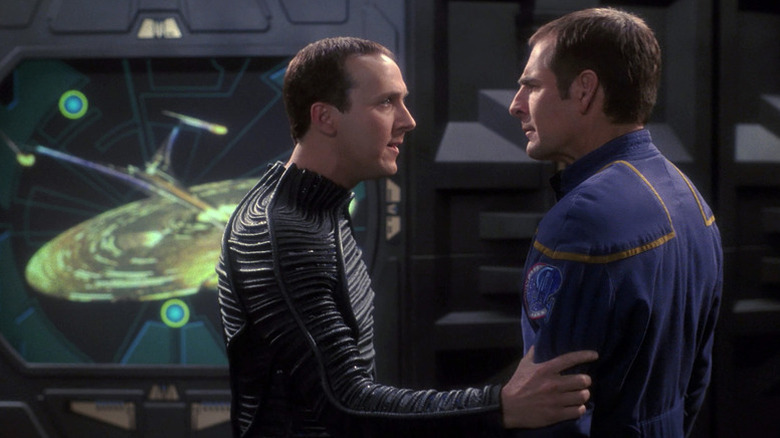
One of the overarching narratives throughout "Star Trek: Enterprise" was the Temporal Cold War, involving shadowy figures from the future trying to change history. This culminated in the show's Xindi War storyline as Earth was attacked by a coalition of hostile extraterrestrial civilizations. Plunging humanity and its allies into a devastating war against the Xindi for much of Season 3, things come to a head in "Azati Prime." Jonathan Archer launches a daring mission to destroy a Xindi superweapon, only to gain a glimpse of the future and the true roots of this conflict.
"Azati Prime" showcases why Jonathan Archer is different from other "Star Trek" captains, particularly how willing he is to put himself in harm's way. The episode also finally unveils the timeline-altering stakes that make "Enterprise" more than just a conventional prequel. Though the story continues directly into the subsequent episode "Damage," "Azati Prime" feels like the real turning point in the series. The Xindi War storyline gave "Enterprise" a focused long-form narrative to follow, and "Azati Prime" reveals the conflict's true stakes. — S.S.
48. Arena (Star Trek — Season 1, Episode 19)
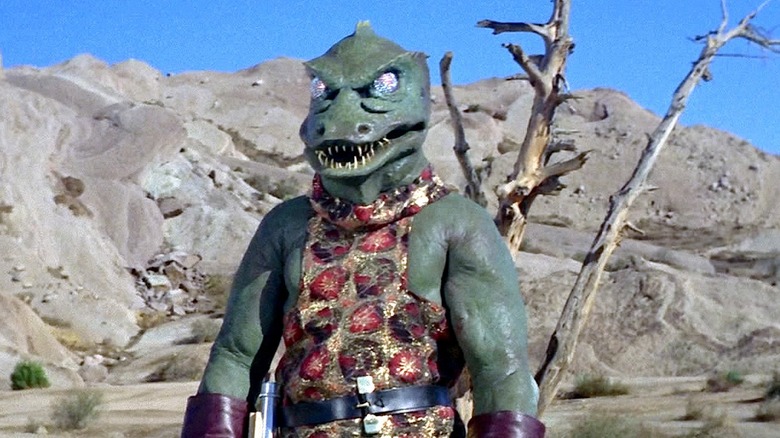
This lean and mean episode starts out like a gritty war movie, with Kirk and Spock's away team taking heavy fire on a battle-scarred planet from an alien assailant. (It's an ambitious installment, too: Those explosions couldn't have been cheap!) But the action really kicks into high gear when the powerful Metrons pit Kirk against a lizard-like Gorn warrior in one-on-one combat, "brute strength against brute strength." Their prolonged hand-to-hand battle across a barren desert landscape is campy at times, sure — the hissing Gorn looks like a guy in a dollar-store Godzilla costume — but it's also mesmerizing: a primal battle for supremacy, leaving Kirk with nothing to count on but his wits. Kirk's fight with the Gorn takes up the bulk of the episode, playing out in virtual silence, and even though we know Kirk makes it out alive, it's still a thrill to see exactly how he does it. — D.N.
47. Message in a Bottle (Voyager — Season 4, Episode 14)
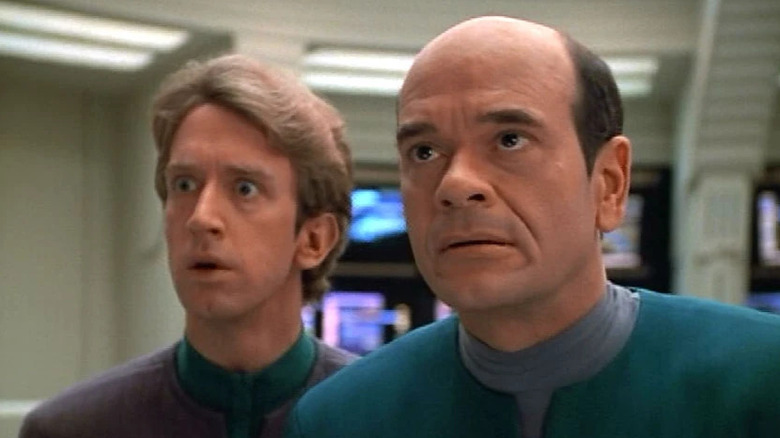
When "Voyager" began, the crew was completely cut off from Starfleet, presumed lost, and forced to survive on their own as they began the arduous trek home. This Season 4 episode begins to restore that connection between the wayward starship and Starfleet, albeit not without unforeseen complications. Due to his holographic nature, the Doctor is transmitted to a Starfleet vessel through an ancient communications array that the Voyager crew repurposes. However, the Doctor finds the vessel he's transmitted to commandeered by the Romulans, making him think fast how to regain control and contact Starfleet.
"Message in a Bottle" showcases how much the Doctor has grown, especially in terms of thinking quickly on his feet. Robert Picardo holds his own magnificently, working through a crisis that only grows more complex as it progresses throughout the story. This episode repositions the Doctor as an ersatz action hero, while giving him a memorable comedic foil to play off of in a different medical hologram on the other ship. "Voyager" Season 4 gave the story a visible sense of progress, and "Message in a Bottle" furthered that underlying payoff. — S.S.
46. The Offspring (The Next Generation — Season 3, Episode 16)
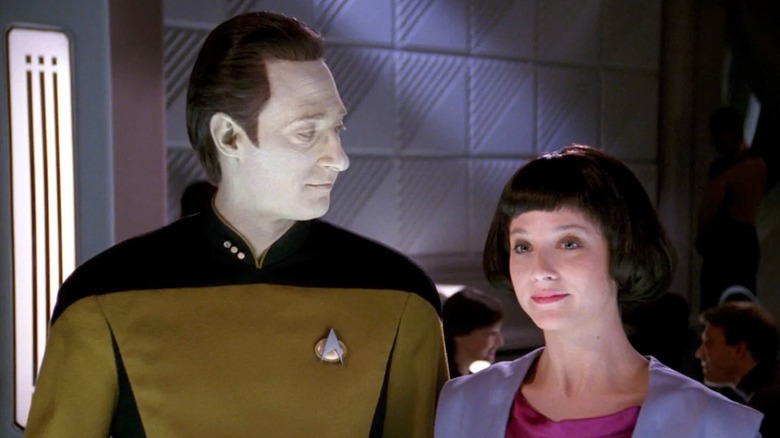
It can be lonely being the only android aboard a starship, so Data decides to build his own robotic child in this Season 3 standout, giving him his first taste of parenthood. At first, this plays out like a comedy: When Jean-Luc objects to Data creating a new robot without his approval, a puzzled Data replies, "I have not observed anyone on board consulting you about their procreation, Captain." But the story actually becomes quite touching, with Hallie Todd — who would go on to play Lizzie McGuire's mom — delivering a stellar performance as Data's android "daughter" Lal, who slowly acclimates to human life on the Enterprise. (She even learns to flirt... and kisses Riker!) A mean old Starfleet admiral tries to take Lal away for research, leaving us to ponder the thin line between human and artificial life, as many Data-centric stories do. It ends in heartbreak, but we come away learning a little bit more about Data (and about ourselves) in the process. — D.N.
45. Favor the Bold/Sacrifice of Angels (Deep Space Nine — Season 6, Episodes 5 and 6)
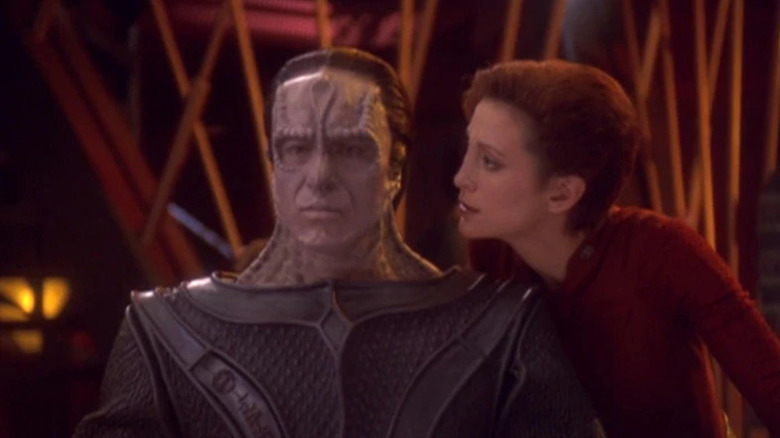
For anyone who dismisses "Star Trek" shows as not having enough space-based action, the Dominion War should dissuade that notion. The conflict reaches a crescendo in the Season 6 episode "Favor the Bold," the first installment of a two-part story with "Sacrifice of Angels." To rally the Federation and its allies in the devastating war, Sisko personally leads an armada to retake Deep Space Nine from the Dominion. The battle is joined in "Sacrifice of Angels," with Sisko facing a numerically superior force but remaining undeterred while Kira Nerys leads the resistance on DS9.
Really, both "Favor the Bold" and "Sacrifice of Angels" work as a pair, providing the thrilling liberation of DS9 from Dominion hands. This story was set up marvelously by the show's Season 5 finale, with Sisko trying to regain control of his space station ever since. "Favor the Bold" brings all the warranted hype with him finally launching that offensive, even as hope for success appears to be exceedingly lost. An exciting escalation of the Dominion War and turning point for the series, "Favor the Bold" and "Sacrifice of Angels" feel like a rewarding payoff that lives up to expectations. — S.S.
44. Magic to Make the Sanest Man Go Mad (Discovery — Season 1, Episode 7)
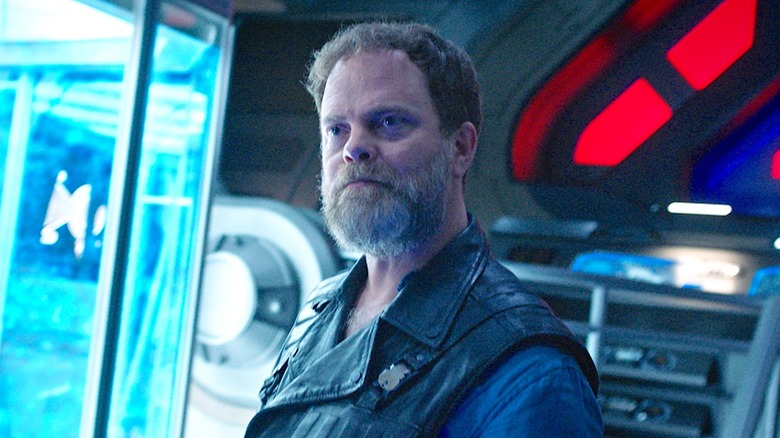
As the first new "Trek" series to hit the small screen in more than a decade, "Star Trek: Discovery" had some very big space shoes to fill. But it won us over early on with this sleek time loop tale, which sees Burnham and the Discovery crew trapped in a deadly loop by the classic "Trek" villain Harry Mudd, who wants to sell off the ship's spore drive to the Klingons. Sure, we've seen time loops on "Star Trek" before — and we'll get to those — but this one has the added twist of Mudd consciously pulling the time loop strings, with "The Office" alum Rainn Wilson happily sowing chaos like a new-wave Q. It's a lot of fun to watch Burnham and friends slowly piece together a way to stop the loop and save the ship, and it's even more fun to see Mudd get his ultimate comeuppance: a reunion with his insufferable wife Stella. — D.N.
43. Distant Origin (Voyager — Season 3, Episode 23)
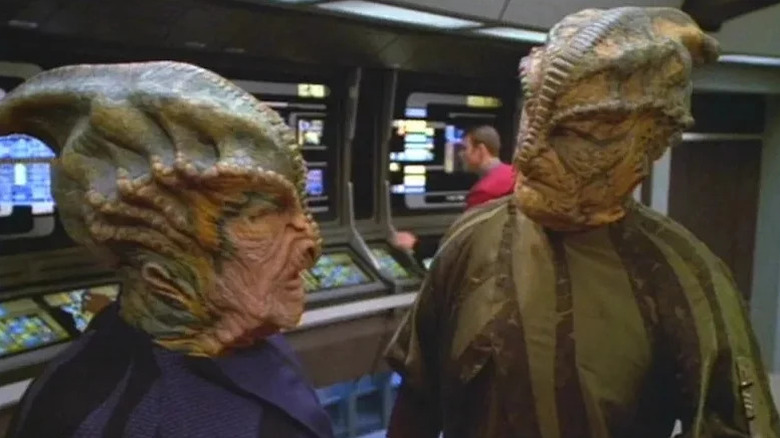
Science, politics, and a unique point of view make "Distant Origin" the kind of "Star Trek: Voyager" episode that immediately imprints itself in the viewer's memory. Instead of our usual suspects, it unfolds its story through the eyes of Voth paleontologists Gegen (Henry Woronitz) and Veer (Christopher Liam Moore). The pair become fascinated with the USS Voyager after discovering a human skeleton. They start stealthily observing the ship, suspecting that it might be the key to the grand theory of Distant Origin — a belief the the Voth descend from a lifeform from another planet. Unfortunately, there are politics in play, and the theory is considered to be heresy.
Director David Livingston and writers Brannon Braga and Joe Menosky weave an entertaining story that initially reduces the familiar USS Voyager crew into strange creatures that the episode's Voth protagonists observe. Even when our usual main characters take a more active role in the proceedings, the episode keeps a laser-like focus on showing how hard it is for scientific knowledge to battle official propaganda — a theme that's as timely today as it's ever been. — P.P.
42. The Menagerie (Star Trek — Season 1, Episodes 11 and 12)
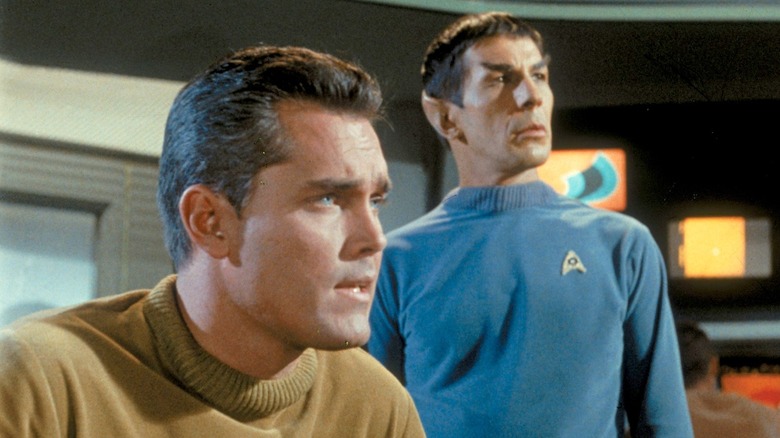
This two-parter (the first of many in franchise history) was actually an ingenious bit of recycling from series creator Gene Roddenberry, taking footage from the scrapped "Trek" pilot "The Cage" and using it as the key evidence in Spock's court-martial trial. The pointy-eared Vulcan takes control of the ship — highly illogical! — in order to get his former captain Christopher Pike back to the planet Talos IV, explaining his actions with clips from "The Cage." Pike's story is an intriguing sci-fi yarn, too, with him and the Enterprise crew being held captive by super-brainy aliens and fooled by a series of fantastical illusions. But in the present day, Pike is badly disabled and disfigured, only able to communicate with a series of flashing lights, adding a melancholy tint to the proceedings. The episode introduces several "Trek" staples, like the seductive green-skinned Orion slave girl, and serves as an essential thread that connects the original "Trek" to the pre-Kirk history we're just now exploring on "Strange New Worlds." — D.N.
41. Drone (Voyager — Season 5, Episode 2)
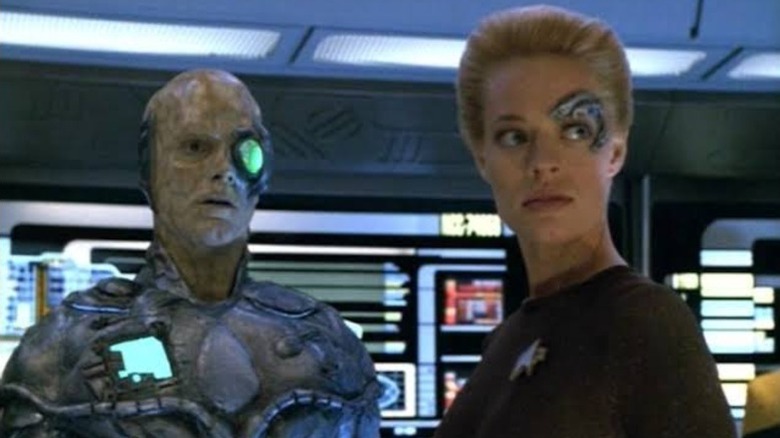
Jeri Ryan's Seven of Nine is front and center in "Drone," a Season 5 episode that manages to create an even stranger Borg than the ones we've seen before. "Drone" dips its toe in the classic "transporter accident" pond when Seven's lingering Borg nanoprobes get stuck in the Doctor's mobile emitter while they return to the ship. Soon enough, the ship's laboratory has a full-on Borg maturation chamber that's building a particularly advanced drone that eventually starts calling himself One (J. Paul Boehmer).
Directed by Les Landau and written by Bryan Fuller and Harry Kloor, "Drone" deftly plays with themes of family, independence, and sacrifice. One's existence is a complex thing: He's technically Seven's offspring, and she displays maternal instinct as she steers him toward the individualism she herself has managed to regain. Unfortunately, this particular story doesn't get a chance to mature: The Borg soon learn of One's existence, and will do anything to assimilate him. This makes One's presence a constant threat to the USS Voyager, and in a heart-wrenching finale, he ends up making his own conclusions after receiving a critical injury. — P.P.
40. What You Leave Behind (Deep Space Nine — Season 7, Episodes 25 and 26)
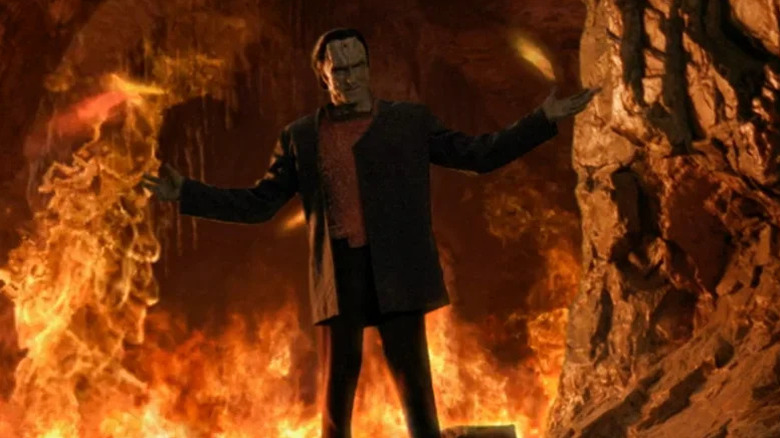
"Deep Space Nine" began on an esoteric note, with the suggestion that Ben Sisko was the unwitting emissary to revered otherworldly entities known as the Prophets. The full implications of that prophecy are finally realized in the show's two-part series finale "What You Leave Behind." The episode revolves around the Federation and their allies' final push to defeat the Dominion and a desperate plot to force the Changelings to surrender. As the antagonistic coalition ruptures, Sisko has one final confrontation with the villainous Dukat, with both embracing their opposing divine destinies.
"What You Leave Behind" provides a payoff to more than just the adversarial dynamic between Sisko and Dukat, but most of the main characters. This is often done in the melancholic tones that only "DS9" could pull off so well within the wider "Star Trek" framework. From Sisko's parting with his family as he accepts his new role to Odo making his own sacrifice, the story is a triumphant one but with heavy cost. An all-around satisfying finale that brings the action that defined "DS9" to an explosive crescendo, "What You Leave Behind" never loses sight of its emotional stakes. — S.S.
39. The Devil in the Dark (Star Trek — Season 1, Episode 25)
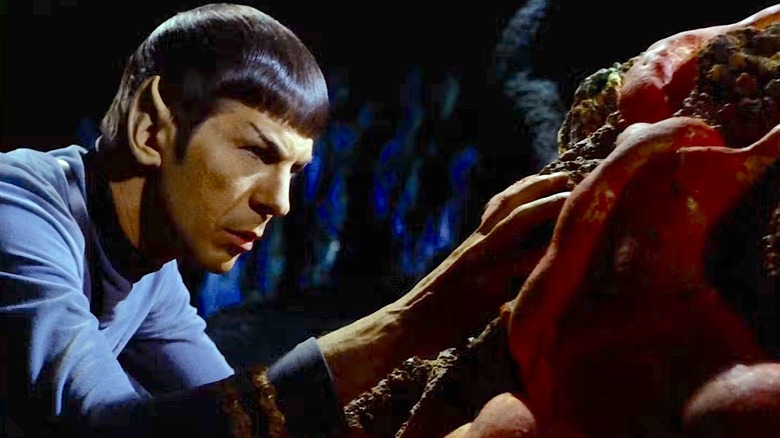
This Season 1 installment places Kirk and company in a horror movie plot in the vein of "The Thing," with a mining colony on a distant planet seeing its workers picked off one by one by a mysterious alien life form, reducing them to smoking holes in the ground. But the terror takes on a psychological component when Spock mind-melds with the creature (known as the Horta) and discovers it's merely a wounded animal desperate to protect its young. Yes, the show's shoestring budget adds some unintentional laughs today — the blob-like Horta looks like a walking pile of spaghetti and meatballs — but the emotional stakes are very real, with Leonard Nimoy letting out some hellish shrieks as Spock taps into the Horta's intense pain. In the end, it's a parable about the pitfalls of fearing the unknown, and a damn good one. Plus, it gives McCoy one of his best lines ever when he's asked to treat the wounded Horta and scoffs: "I'm a doctor, not a bricklayer!" — D.N.
38. Q Who (The Next Generation — Season 2, Episode 16)
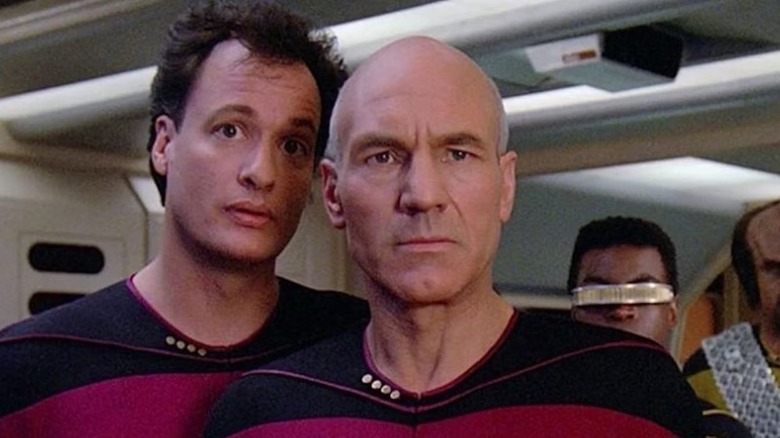
We always loved seeing John de Lancie pop in as the trickster god Q — although Jean-Luc never enjoyed seeing him — and this Season 2 appearance is a key one in "Trek" lore, with Q sending the Enterprise to a distant corner of space and giving them "a preview of what's to come." There, we get our first look at the merciless villains known as the Borg, a formidable cybernetic race that is relentlessly driven to assimilate all other lifeforms in its path. ("How do we reason with them?" Jean-Luc asks Guinan. "You don't," she grimly replies.) In the Borg, we get a new enemy as terrifying as any in "Trek" history, and one that Jean-Luc would continue battling for seasons (and decades) to come. The seemingly unstoppable foe pushes Jean-Luc to his absolute limits, forcing him to beg Q for help in order to survive — and we're left with the ominous feeling that this will be just the first battle of many. — D.N.
37. Those Old Scientists (Strange New Worlds — Season 2, Episode 7)
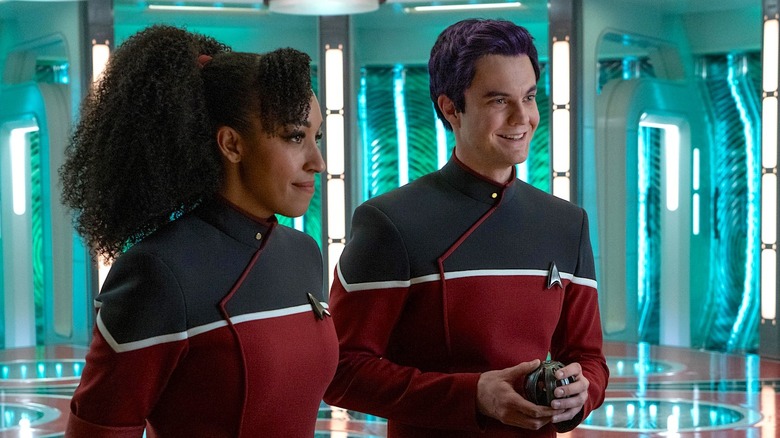
We've seen plenty of "Star Trek" series cross over with other "Trek" series, but this breezy installment manages to stand out because it actually brings two animated characters from "Star Trek: Lower Decks" into the live-action world of "Strange New Worlds" — and thankfully, they bring their show's zany, jokey tone along with them.
Jack Quaid and Tawny Newsome reprise their roles as "Lower Decks" ensigns Boimler and Mariner, who stumble upon an old portal that lands them on the bridge of the Enterprise during Captain Pike's heyday. Boimler and Mariner both idolize the Enterprise crew, and it's a riot to watch them fanboy out over seeing Starfleet legends like Spock and Uhura in the flesh, with plenty of meta winks to the Trekkie fandom. (Boimler refers to the "TOS" era, which he says stands for "Those Old Scientists.") Quaid and Newsome bring a giddy, chaotic energy to the Enterprise, fully inhabiting their cartoons come to three-dimensional life, and that energy is infectious, giving us one of the most flat-out fun "Strange New Worlds" episodes of all. — D.N.
36. Dark Frontier (Voyager — Season 5, Episodes 15 and 16)
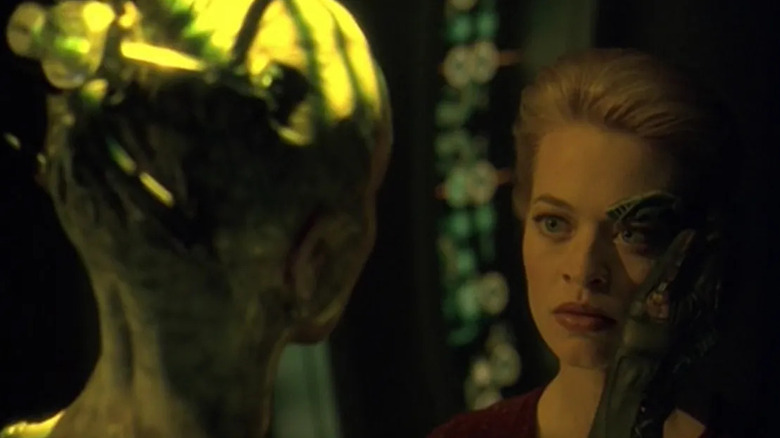
After the Borg Collective entered "Star Trek: Voyager" with the show's third season, they became the biggest recurring antagonist moving forward. The double-sized Season 5 episode "Dark Frontier" makes that distinction abundantly clear, bringing the Borg Queen (played here by Susanna Thompson) into the dynamic. The Voyager crew decides to stage a heist from a Borg vessel, obtaining its advanced transwarp coil to accelerate their return trip home considerably. As the crew carries off this daring mission, the history of Seven of Nine's association with the Borg is told in flashbacks.
Many of the greatest "Voyager" episodes involve the Borg, and "Dark Frontier" stands among the best. With the added real estate from its doubled length, the story expertly juxtaposes Seven's origins with its action-packed main narrative. This parallel structure also raises the idea that maybe, just maybe, Seven isn't as free from the Borg's influence as she claims, building suspense. If there was any doubt that Voyager's final obstacle to get home involved the Borg, "Dark Frontier" makes the cybernetic villain integral to the overall journey. — S.S.
35. Fissure Quest (Lower Decks — Season 5, Episode 9)
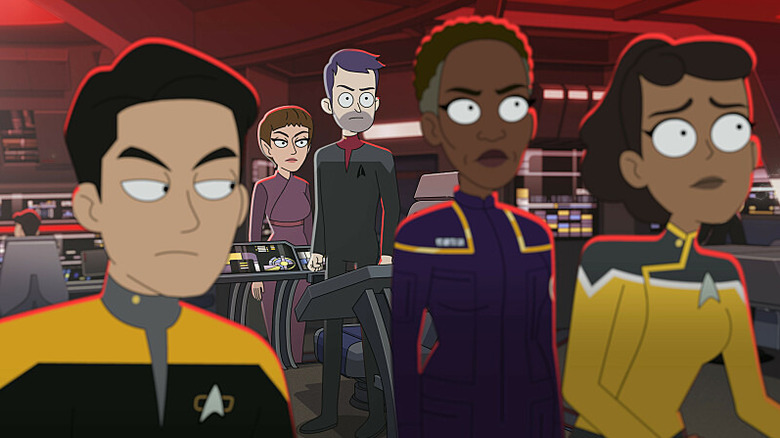
Following the "death" of Boimler's transporter duplicate William, the clone is revealed to be alive and serving as the captain of the USS Anaximander with a crew of variants from other universes, including alternate versions of "Trek" favorites Garak, Bashir, Harry Kim, and T'Pol. Their mission here is to stop the temporal rifts that have been plaguing the multiverse throughout "Lower Decks" Season 5.
Just as Captain Boimler has become jaded by exploring the multiverse, many critics will disparage fan service as distracting or lazy. But sometimes giving fans what they want can be a lot of fun, and "Fissure Quest" is a great example of that. Just before they closed the book on this series, creator Mike McMahan and company dumped out every last toy left in their toy box and had a grand old time referencing classic "Star Trek" lore.
Not only is this a love letter to the legions of loyal fans of the franchise over the years, but it is a celebration of "Star Trek" itself. Plus, rather than facing off against another Big Bad to end the series, it's pretty great to see these crews deal with the consequences of exploration, both the good and the bad. — B.F.S.
34. Scorpion (Voyager — Season 3, Episode 26 and Season 4, Episode 1)
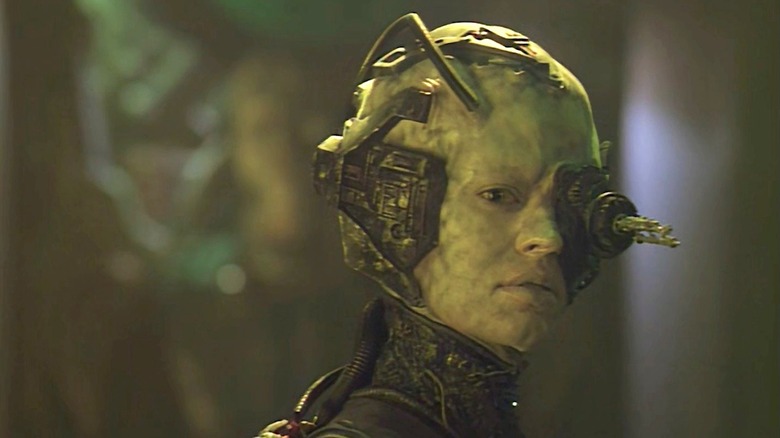
"Star Trek: Voyager" puts its crew in a much more consistently desperate situation than any other "Star Trek" series. Stranded on the other end of the galaxy, Captain Kathryn Janeway and her crew are often forced to make strange compromises to progress towards home safely. This is thoroughly illustrated in the two-parter "Scorpion," which closes the third season and kicks off Season 4. The story has Voyager enter a temporary truce with the Borg Collective against a common enemy, leading to liberated Borg drone Seven of Nine joining the crew.
"Scorpion" brings a lot of big concepts to the table and balances them all cohesively with its two-part story. On the one hand, the tale brings a threat even bigger to the Borg and repositions the techno-organic enemy as an ersatz ally to Janeway. Moreover, the episode provides the introduction of Seven of Nine, who quickly became the biggest fan-favorite character in the entire series. A turning point for the show, "Scorpion" is where the show's quality began to visibly gel together. — S.S.
33. The Trouble With Tribbles (Star Trek — Season 2, Episode 15)
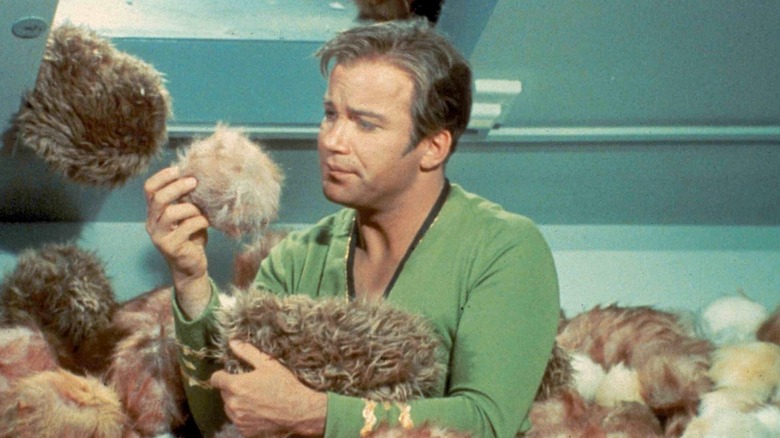
A long tradition of goofy, low-stakes "Trek" comedy episodes was established with this Season 2 confection, with Kirk and his crew facing their most relentless adversary yet: a tiny, purring fuzzball known as a Tribble. Yes, the Tribbles are undeniably cute — Uhura is instantly smitten by them — but they rapidly reproduce like a Gremlin in a swimming pool, leaving the Enterprise overrun by thousands of the little critters. (This is where we're treated to the timeless sight gag of Kirk opening up a storage hatch and having dozens of Tribbles rain down on his head.) Sure, the plot is a little silly — something about Klingons and a strain of wheat called quadrotriticale? — but the fun, free-wheeling tone is a welcome respite from heavier "Trek" fare. The episode even ends like a Scooby-Doo episode, with Kirk and his friends all laughing together on the bridge. Well, all except Spock, of course. — D.N.
32. Living Witness (Voyager — Season 4, Episode 23)
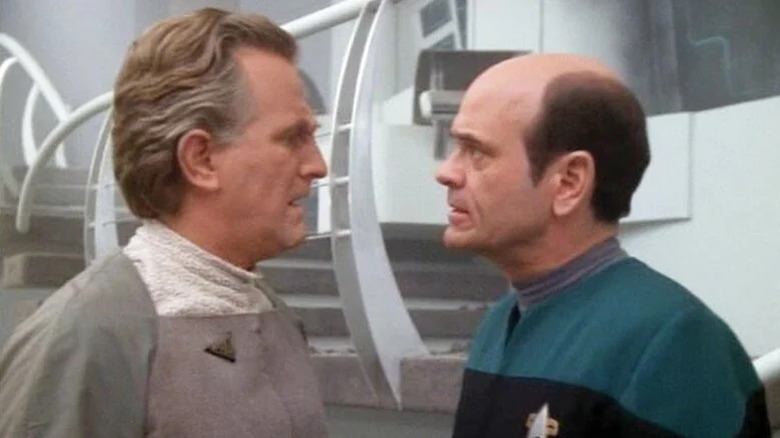
"Living Witness" takes us a neat 700 years into the future, and unfolds through the eyes of the reactivated Doctor. That's already a fascinating premise, but there's a further catch: In this future, the Voyager crew are seen as brutal war criminals due to a false perception of events that took place all those centuries ago.
Fortunately, the Doctor knows the truth. With museum curator Quarren (Henry Woronicz) as his sparring partner, the hologram begins his mission to fix the Voyager's bad reputation. But would the revelation cause further harm on the troubled planet?
The episode is far more than its gimmick. At the end of the day, "Living Witness" is an exploration of cultural misunderstandings. It's also an exploration of the Doctor himself, showing us just how far removed the long-functioning hologram is from humans — and how deeply he feels connected to humanity, despite this. The franchise has taken a drink from this storytelling well before and since, but rarely has it done so better than here. — P.P.
31. No Small Parts (Lower Decks — Season 1, Episode 10)
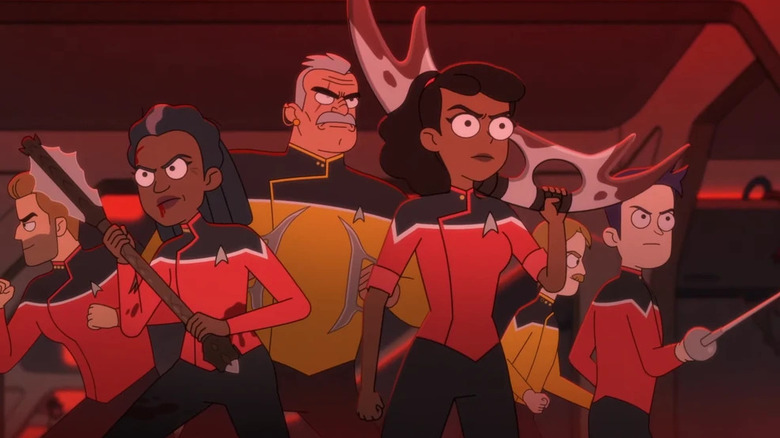
This finale is the perfect way to wrap up the first chapter of a new animated era of "Star Trek." When the Cerritos answers a distress call from the Solvang, Captain Freeman and the crew encounter a relatively harmless alien race who had previously dealt with the Enterprise, and they learn the hard way that the Pakleds had stepped their game up. But after an action-packed 30-minute episode, the entire galaxy knows exactly what it means to be #CerritosStrong.
It's fitting that the antagonists are the Pakleds here, because they're the perfect metaphor for the Cerritos and this show in general. Many people will underestimate this animated series and write it off because it's a comedy. But when they encounter some legitimate threats that require them to be heroes in addition to explorers, even Mariner, Boimler, and the other Lower Deckers can stand toe to toe with any other crew in Starfleet.
Plus, the cameos from Captain Riker and Commander Troi add even more legitimacy to "Star Trek: Lower Decks" as a sequel to "Star Trek: The Next Generation." While Peanut Hamper, Badgey, and powered-up Pakleds may seem implausible in the larger tapestry of the "Star Trek" franchise, everything is now on the table after this episode. — B.F.S.
30. Yesterday's Enterprise (The Next Generation — Season 3, Episode 15)
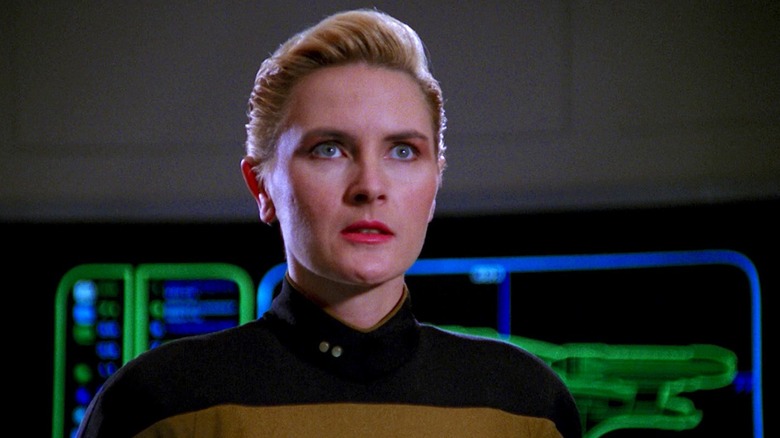
We get a classic time-bending episode of "Trek" here when the Enterprise stumbles upon a temporal anomaly and finds themselves face-to-face with their predecessor: the Enterprise-C. Oh, and our Enterprise has been transformed into an eerie alternate version, too: a battered warship with several key changes to the crew... including the return of Denise Crosby's Lt. Tasha Yar, who was killed off in Season 1. (Guinan is the only one who can sense something is wrong, of course.) The episode deftly weaves together strands from past "Trek" — the alt-reality of "Mirror, Mirror"; the noble sacrifice to prevent a nightmare timeline of "The City on the Edge of Forever" — into a richly satisfying new tale with a tint of melancholy. The episode itself is an attempt to correct history as well, giving Tasha Yar (and Crosby) a much more fitting send-off than the one she originally got. After all, sometimes history deserves to be rewritten. — D.N.
29. A Quality of Mercy (Strange New Worlds — Season 1, Episode 10)
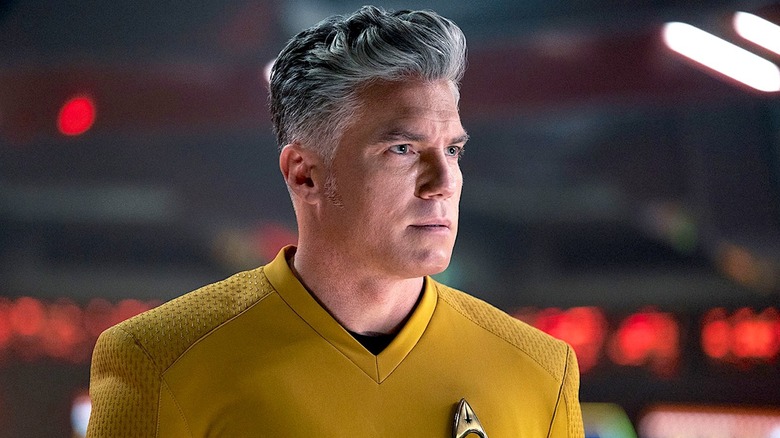
Captain Christopher Pike is haunted by visions of himself horribly disfigured in the future, so when he sees a chance to prevent that future in the Season 1 finale, he takes it. But his decision to save himself has "unforeseen consequences," as his future self tells him: Years later, he's the captain of the Enterprise during the classic "Trek" episode "Balance of Terror" instead of Kirk, and his overly cautious approach to the conflict with the Romulans leads to all-out war — and a devasting injury to Spock. The tragic twist is a powerful demonstration of the dangers of tinkering with destiny, and Anson Mount gives a poignant performance worthy of a "Star Trek" captain as Pike comes to terms with how crucial his sacrifice actually was. (Plus, we get our first look at Paul Wesley as a young, swaggering James T. Kirk.) It may borrow heavily from past "Trek," but this installment proved that "Strange New Worlds" was charting a course all its own. — D.N.
28. The Last Generation (Picard — Season 3, Episode 10)
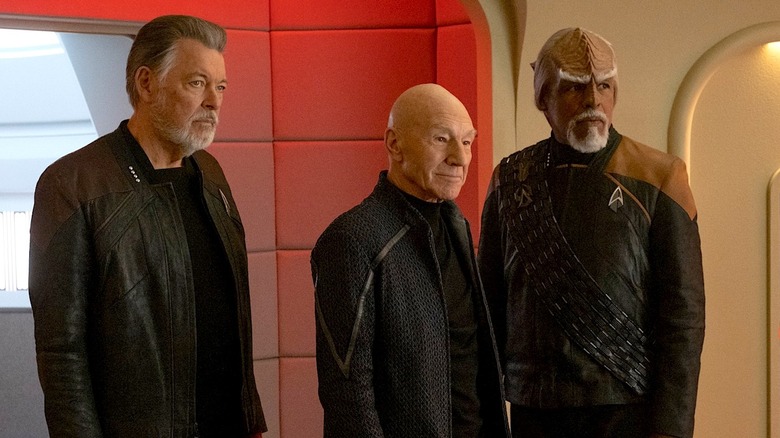
After two seasons of new adventures, "Star Trek: Picard" finally decided to give fans what they wanted all along in its third and final season: a full-fledged "Next Generation" reunion, with Patrick Stewart's "TNG" castmates joining him for one last mission together. The entire season is a blast to watch, weaving in new twists — Jean-Luc and Beverly have a son named Jack! — with our old favorites, and this series finale is the shiny red cherry on top, with Jean-Luc and company dusting off the old Enterprise-D for yet another battle with Jean-Luc's archrivals: the Borg. Showrunner Terry Matalas strikes a perfect balance between nostalgia and innovation here, even setting up a possible continuation with Seven of Nine at the helm of a new Enterprise. But above all else, this is a love letter to "TNG" fans, and a beautifully penned one at that. And if you're trying not to get choked up when Jean-Luc joins his old friends for a game of poker, don't bother: Resistance is futile. — D.N.
27. Crisis Point (Lower Decks — Season 1, Episode 9)
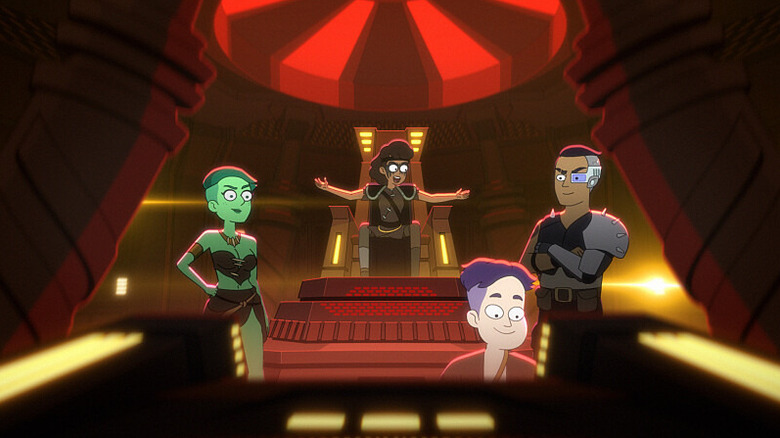
Rather than going to therapy, Mariner commandeers Boimler's holodeck program of the Cerritos crew in this Season 1 installment to play out a scenario where she lets out her frustrations with Captain Freeman in an action-packed movie titled "Crisis Point: The Rise of Vindicta." In a way, it's more like 13 movies, as the episode lovingly pokes fun at every "Star Trek" movie.
This is a huge episode for Mariner as she pushes her rebelliousness to a new extreme by stepping into the role of the villain in this simulation — so much so that she even alienates her friends. However, when her space marauder Vindicta comes face-to-face with the program's version of Ensign Beckett Mariner, the real Mariner is forced to reevaluate herself and her place in Starfleet.
From the audience's perspective, it's great to dive deeper into what makes Mariner tick. While the episode is literally the embodiment of two wolves fighting inside her, Boimler gets much more information than the necessary answers to ace his interview for a place in a diplomacy seminar (which he tanks). He learns that his friend is actually the captain's daughter: a secret that becomes rather important as the show progresses. — B.F.S.
26. Chain of Command (The Next Generation — Season 6, Episodes 10 and 11)
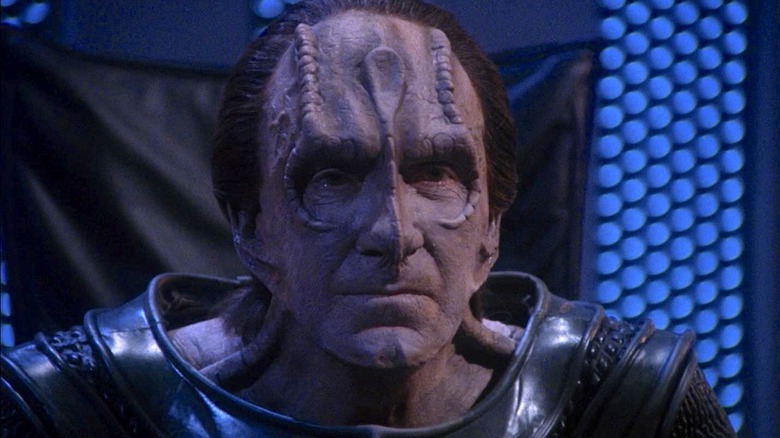
This action-packed two-parter, where Jean-Luc is sent on a top-secret mission to stop the Cardassians from developing biological weapons, introduces a pair of formidable adversaries for our Enterprise friends to contend with. First, in Jean-Luc's absence, the Enterprise is handed over to an abrasive new captain, played by "RoboCop" heavy Ronny Cox, who rules with an iron fist and immediately butts heads with Riker. (The hostile dynamic is reminiscent of the original "Trek" episode "The Doomsday Machine.") Then Jean-Luc is captured and subjected to brutal torture by a sadistic Cardassian interrogator played by "Trek" movie veteran David Warner. The chance to spar with a fellow Shakespearean actor brings out the best in Patrick Stewart, and we get a bracingly clear-eyed view of the horrors of war that's rare in the "Trek" franchise. By the end, we're as exhausted as Jean-Luc is — but exhilarated, too, by his resilient humanity. — D.N.
25. Balance of Terror (Star Trek — Season 1, Episode 14)
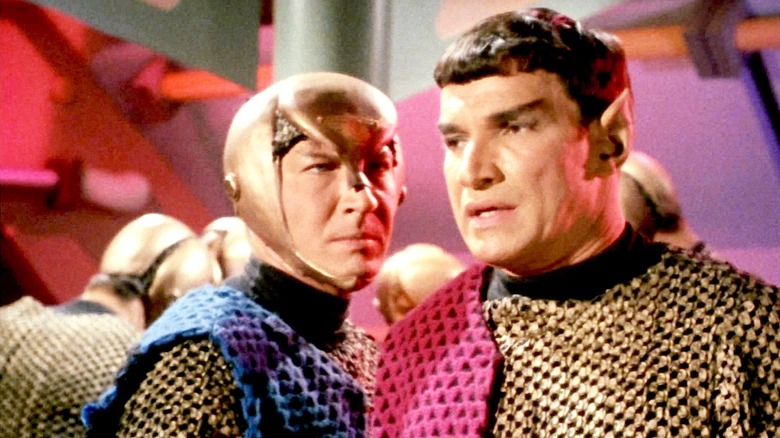
This nail-bitingly tense thriller is stripped-down "Trek" at its best, pitting Kirk's Enterprise against a Romulan warship intent on destroying every trace of the Federation in its path. The tension ratchets up beautifully throughout the hour, with Kirk matching wits with a Romulan commander played by Mark Lenard (who would later play Spock's father Sarek on the show and in the "Trek" movies). The riveting war games between the two captains, with each carefully testing the other's strengths and weaknesses, presage the similar dynamic to come between Kirk and Khan in "Star Trek II: The Wrath of Khan." Lenard is terrific here, too, adding a surprising humanity to Kirk's foe as he senses a kinship with the Enterprise captain: "In a different reality, I could have called you friend." Plus, in a cruel twist of fate, the battle's only casualty is an Enterprise crew member who was just about to get married, reminding us that these whiz-bang space wars can take a very real toll. — D.N.
24. Endgame (Voyager — Season 7, Episode 25)
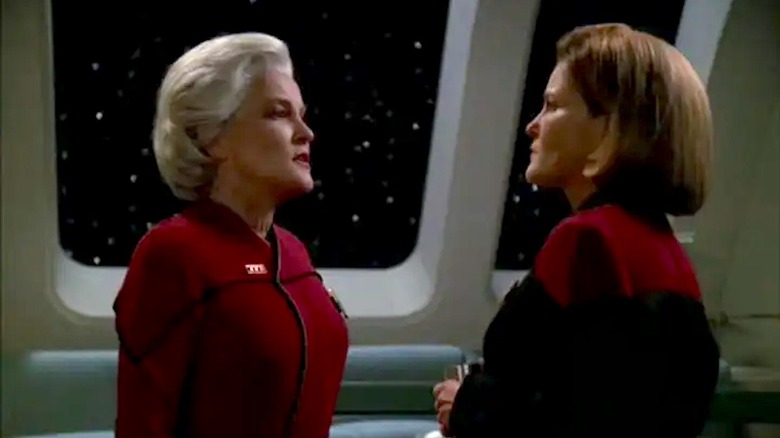
After seven seasons, "Star Trek: Voyager" came to a close with its double-sized series finale "Endgame." The episode opens with an older Kathryn Janeway from decades in the future traveling back in time to speed up her starship's return home to avert tragedy. This plan involves the crew taking advantage of advanced technology utilized by the Borg in their conquest of the galaxy. However, the crew also wants to destroy this technology rather than allowing the Borg to continue to use it, leading to a confrontation with the Borg Queen (played once again by Alice Krige).
With the Borg such a contentious presence throughout "Voyager," particularly in the back half of the series, "Endgame" feels like a satisfying conclusion to that adversarial dynamic. The episode finally makes good on the longstanding series' promise of bringing its titular starship home with one last epic battle. The alternate-timeline Janeway's sacrifice may feel diminished somewhat after the continued appearances of the Borg beyond "Voyager," but the story itself is expertly handled. One of the best "Star Trek" series finales, "Endgame" sticks the landing, mixing explosive action with time-bending scope. — S.S.
23. An Embarrassment of Dooplers (Lower Decks — Season 2, Episode 5)
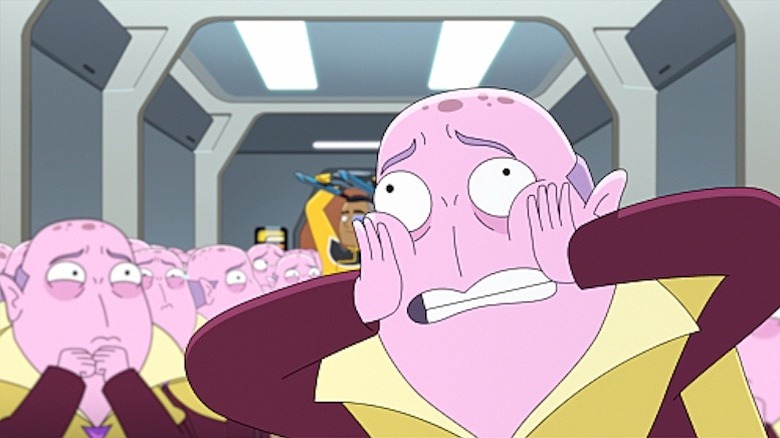
Here, the Cerritos is transporting a Doopler diplomat to Starbase 25, which is also the location of the annual Starfleet Command ball. However, the crew is walking on eggshells because Dooplers multiply when embarrassed or anxious. And when the emissary overhears Captain Freeman talking about the strenuous trip and starts "dooplercating," this keeps the ship from docking and joining the party.
First, Richard Kind is a comedy legend, and they couldn't have picked a better Doopler. Second, the Doopler is a great metaphor for believing in yourself. Otherwise, you fall apart. And third, the real emotional core of this episode is friendship. Mariner and Boimler must reconcile after he left for a reassignment on the Titan under the leadership of Captain Will Riker for a short time. Freeman and the bridge crew realize that the California Class doesn't get the same respect as the rest of Starfleet. When both groups end up at a bar because they couldn't get into the party, they learn that the legendary Kirk and Spock were also in their shoes once after they were turned away from the party as well, assuring them all that they could still do great things. — B.F.S.
22. Far Beyond the Stars (Deep Space Nine — Season 6, Episode 13)
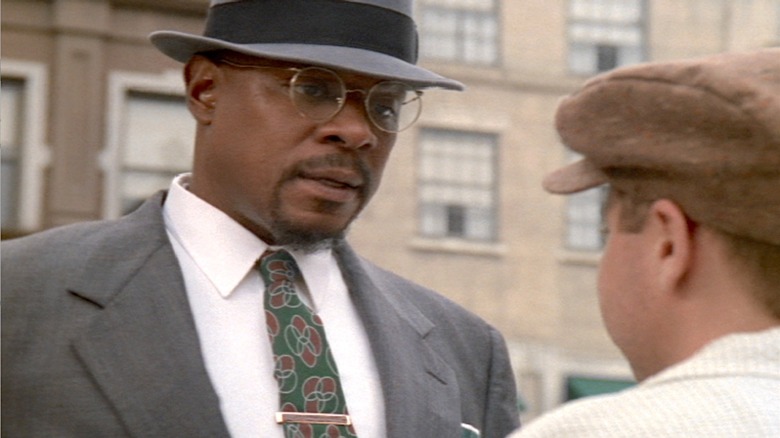
Throughout the doom and gloom of the Dominion War storyline in the back half of "Deep Space Nine," the show offered some intriguing departures from this overarching narrative, and the most spectacularly delivered detour from the Dominion War arc is this Season 6 episode, directed by series star Avery Brooks. The stress from the war leads Sisko to dream about himself within the persona of 1950s sci-fi writer Benny Russell. Compelled to write a futuristic story about a space station appearing in his own dreams, Benny faces systemic racism every step of the way.
"Far Beyond the Stars" works because it stands out so effectively as a standalone story, largely separated from "DS9" overall. You could watch and thoroughly enjoy this episode without any knowledge of what was happening in the rest of the series, with the story presented almost like a stage play. This installment is also an excellent showcase for the dramatic talents of the main cast and several prominent recurring actors, like Brock Peters, but Brooks steals the show. An expertly crafted reimagining of what "Star Trek" can be within the context of larger shows, "Far Beyond the Stars" is a masterclass production. — S.S.
21. In a Mirror, Darkly (Enterprise — Season 4, Episodes 18 and 19)
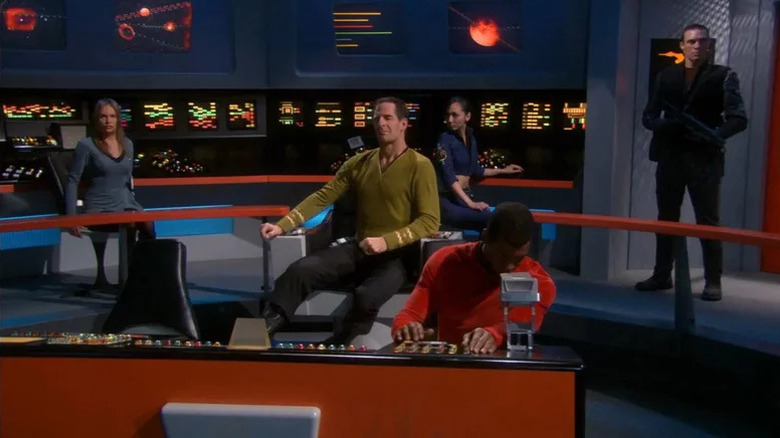
If you think that the "Star Trek: Enterprise" characters are acting a little bit out of sync in the "In a Mirror, Darkly" double episode, it's because they are. The two-parter, you see, focuses on evil alternate-reality takes on our heroes.
"In a Mirror, Darkly" pays homage to "Star Trek: The Original Series" episodes "The Tholian Web" and "Mirror, Mirror," featuring both the former's tech gimmick and the latter's Mirror Universe. In true Mirror Universe fashion, everyone sucks here, and it's clear that the actors are having a blast playing wicked alternate versions of their usual characters.
It's a big, bold swing to just go nuts with the Mirror Universe and make it the focal point of a lengthy story instead of portraying it as something to be visited or encountered. "Star Trek" fans might not consider it the best Mirror Universe episode ever, but "In a Mirror, Darkly" goes to places where few other "Star Trek" episodes dare to tread. Sadly, the original idea of featuring William Shatner in the episode didn't pan out, but the end result still holds water. — P.P.
20. The Way of the Warrior (Deep Space Nine — Season 4, Episodes 1 and 2)
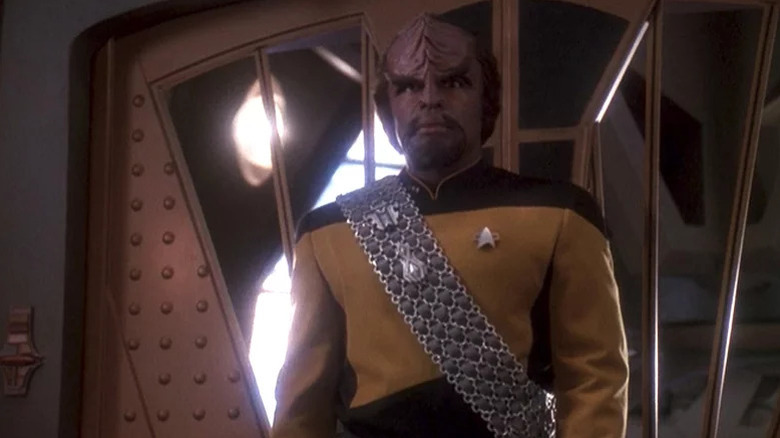
Worf might often be a professional stick in the mud, but wow, does his introduction to the "Star Trek: Deep Space Nine" leg of the franchise improve the series as a whole. The two-part Season 4 opener "The Way of the Warrior" is all about the Klingons, and when Sisko is (justifiably) suspicious of General Martok's intentions, he promptly brings Worf in as his new expert on all things Klingon.
The episode rejuvenates the ready-to-resign Worf and gives him a whole new array of characters to butt heads with. It also introduces a personal conflict with the Klingon Empire, which deepens his character a great deal. Moving established characters from one show to another always carries the risk of coming across as a gimmick of banging action figures together and hoping magic happens. In this particular case, it works like a dream, giving Worf a new lease in life and a brand new perspective. Also, this is the episode that finally gives us the iconic bald, goatee-rocking look of Sisko, which surely counts toward something. — P.P.
19. Timeless (Voyager — Season 5, Episode 6)
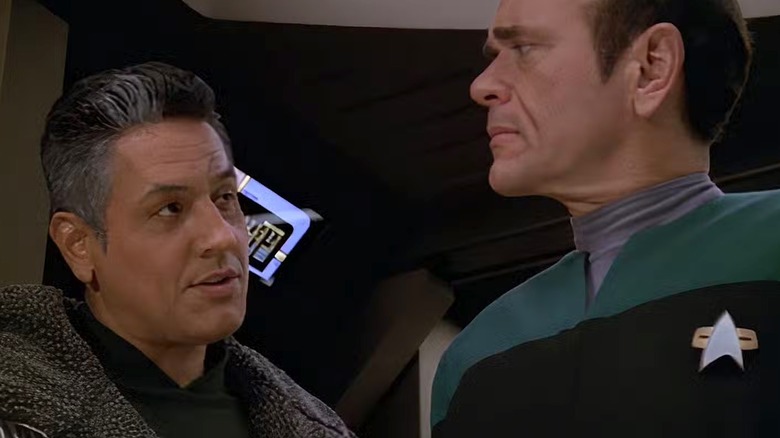
"Timeless" begins with the visibly aged Harry Kim and Chakotay surveying the wreckage of the USS Voyager. Yes, you guessed it: We're due for a particularly entertaining reminder that the "Star Trek" franchise likes to make its TV shows about time travel every once in a while.
We soon find out that Voyager crashed 15 years ago, with the pair as the only survivors. Deeply unhappy with the way things ended, Harry and Chakotay are out to change the events by informing the past Seven of Nine about the impending doom. However, Geordi LaForge ("The Next Generation" veteran LeVar Burton, who also directed the episode) now captains the USS Challenger and isn't having any of it, and is planning to stop the duo from messing with the past.
Apart from a nice spin on time-travel shenanigans and a welcome LaForge sighting, the episode has a lot of classic "Star Trek" goodness going for it. Dangerous new technology that causes a disaster, characters acting in a dramatically different way than usual — big up for the cool, confident older Harry — and a desperate rescue mission join forces to make "Timeless" a, well, timeless classic. — P.P.
18. Relics (The Next Generation — Season 6, Episode 4)
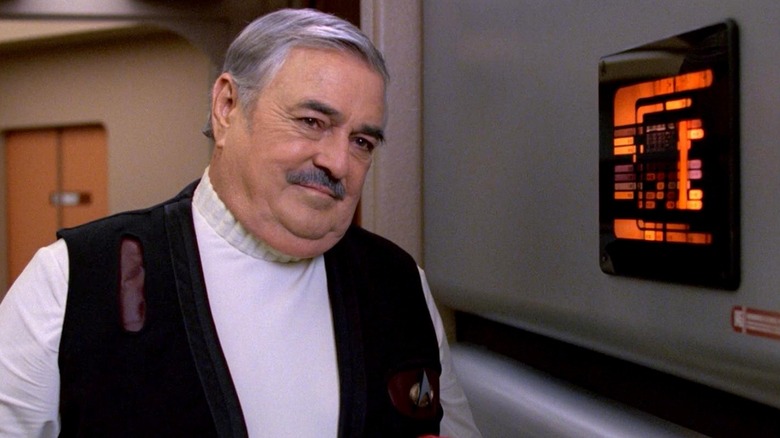
"TNG" brought back a few familiar faces from the original "Star Trek" across its seven-season run, but our favorite reunion was seeing James Doohan's Scotty return to the Enterprise 75 years later after being preserved inside a transporter buffer. Doohan delivers lots of laughs as Scotty turns up his nose at synthetic alcohol and advises Geordi to pace himself as a chief engineer: "You've got a lot to learn if you want people to think you're a miracle worker!" But it's not just a simple nostalgia cruise: There's a bittersweet quality to all of this, too, with Scotty feeling like time and technology have passed him by and yearning for the old days, asking the holodeck to recreate the original Enterprise: "No bloody A, B, C, or D!" It's maybe Doohan's best work of the franchise, and Scotty's experience ends up saving the day, proving that old scrap heaps can still have plenty of value. — D.N.
17. Year of Hell (Voyager — Season 4, Episodes 8 and 9)
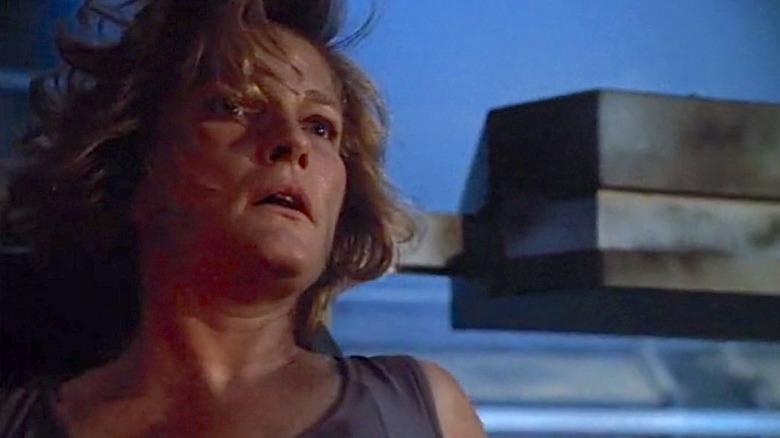
By its fourth season, "Star Trek: Voyager" was really hitting its stride, with the season containing the show's most memorable story, "Year of Hell." A two-parter, the episode opens with the Voyager taking a shortcut through disputed territory, resulting in them being confronted by hostile vessels. However, a temporal anomaly severely damages the Federation starship, with the remainder of the story featuring Janeway doing her best to lead her crew to safety despite being doggedly pursued. This leads to one of the best time loop twists in "Star Trek," for a franchise that's full of them.
"Year of Hell" best realizes the core "Voyager" concept of stacking the odds against its main characters and seeing the lengths they'll go to survive. Even though the actual impact of the story is reset by the episode's ending, by design, the dire stakes stay with the viewer long after it's done. Regardless of its conclusion, the suspense of seeing how the Voyager even stands a chance at making out of this story in one piece is unfailingly riveting. Voyager's journey home was always a precarious one, and "Year of Hell" is a strong reminder how close the crew was to complete mayhem. — S.S.
16. The Measure of a Man (The Next Generation — Season 2, Episode 9)
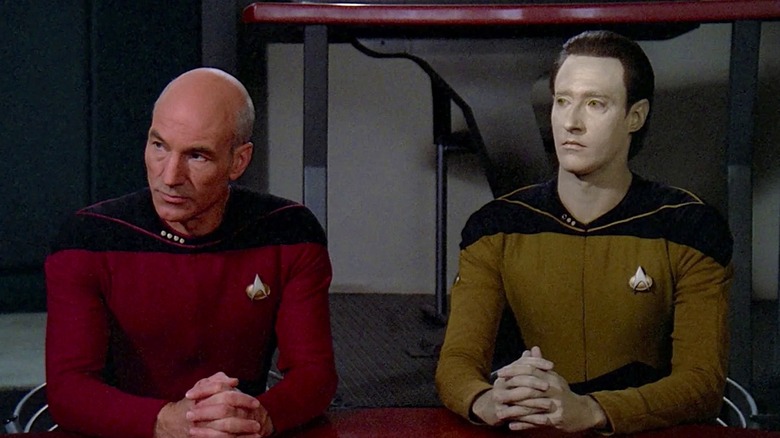
"The Next Generation" got off to an infamously slow start, with fans griping about recycled plot lines and stilted dialogue. But it began to find its groove in Season 2, thanks to compelling tales like this one, where a Federation scientist wants to dismantle Data (!) to learn what makes the android tick. The ensuing debate brings up weighty themes of identity and what it means to be human — the scientist's insistence on calling Data "it" stings every time he says it — and the prospect of losing Data helps us realize what a valued crew member he's become. Jean-Luc steps in to defend Data's right to exist at a hearing, and the story turns into a rousing courtroom drama, with Patrick Stewart channeling a righteous rage as Jean-Luc hammers the scientist in a passionate cross-examination. In the end, Data gets to stay in one piece, of course — and we get a glimpse at just how great this new "Trek" can be. — D.N.
15. Call to Arms (Deep Space Nine — Season 5, Episode 26)
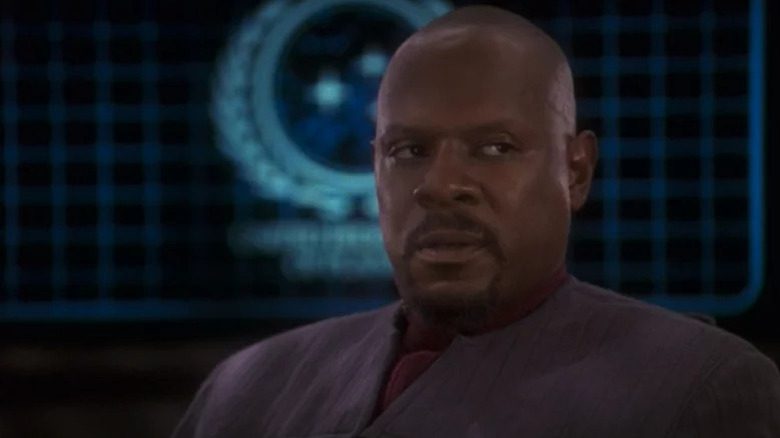
The "Star Trek: Deep Space Nine" Season 5 finale is just one of those episodes that fires on all cylinders — literally. "Call to Arms" focuses on a pivotal opening salvo in the Dominion Invasion arc of the grand Dominion War, as Sisko launches a crafty space mine stratagem against the Dominion's wormhole. The enemy's response? Attacking and capturing Deep Space Nine itself.
"Call to Arms" shuffles the DS9 deck in a massive way, conveying that the situation is truly dire. It strips several protagonists of the base that the viewers have grown accustomed to over the seasons, scattering them in the proverbial wind and leaving Sisko's nemesis Gul Dukat in charge of the station. Lovers are separated, families torn apart. Yet, despite this moment of defeat, the episode teases great things to come as it unveils the massive Klingon-Starfleet joint force, and very pointedly plants the seeds of several future storylines. This is "Deep Space Nine" at its most exciting, boldly going where no "Star Trek" show has gone before. — P.P.
14. Mirror, Mirror (Star Trek — Season 2, Episode 4)
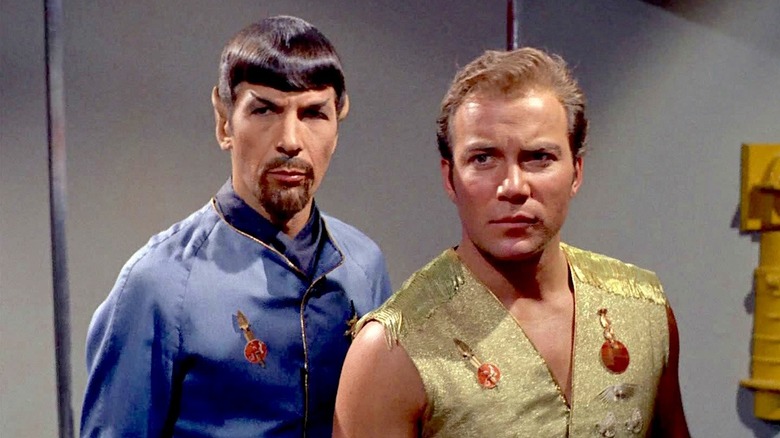
The concept of parallel universes is a well-worn science fiction staple, and it gets one of its earliest (and most enjoyable) TV treatments in this Season 2 classic, which sees Kirk and three of his shipmates transported onto an alternate Enterprise during a magnetic storm. On the bizarro Enterprise, the crew members are all sadistic warmongers, complete with a Nazi-like salute, willing to murder each other to climb up the ranks. (The alternate Spock famously sports a goatee, starting a long trend of "evil twin" characters with facial hair.) The writers had a lot of fun dreaming up weapons for the mirror universe, like the brutal "agony booth" and Kirk's all-powerful device capable of vaporizing anyone on the ship at any time. Plus, Kirk forms an unlikely connection with the bizarro Spock, appealing to his Vulcan mind ("I submit to you that your empire is illogical") to try and inspire change in the mirror world. It's a highly entertaining hour that opens up a door to a fascinating alternate world that many "Trek" series have been happy to walk through ever since. — D.N.
13. Twilight (Enterprise — Season 3, Episode 8)
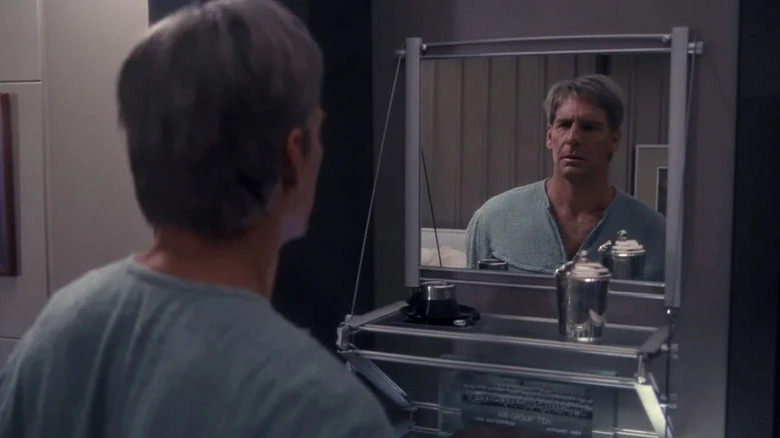
Done wrong, "the main character gets amnesia" can be a tricky and overused theme for any show. "Twilight" pulls it off by simply piling up ingredients until it builds a delicious layer cake filled with twists and turns.
"Twilight" starts off with the destruction of Earth, courtesy of the hostile Xindi. We eventually find out that 12 years before the episode's present, Jonathan Archer was injured while saving T'Pol, leading to a situation where he was unable to command the Enterprise and save Earth. The only cure? Resetting the timeline by subjecting Archer to a treatment that should retroactively cancel his parasite-induced amnesia — while the Xindi are attacking the Enterprise.
It's a high concept that, in most hands, couldn't and perhaps even shouldn't work. Fortunately, "Twilight" has writer Michael Sussman and director Robert Duncan McNeill, who deliver a magnificent "what if" tale with extreme stakes and a genuine puzzle box of a plot. — P.P.
12. Blink of an Eye (Voyager — Season 6, Episode 12)
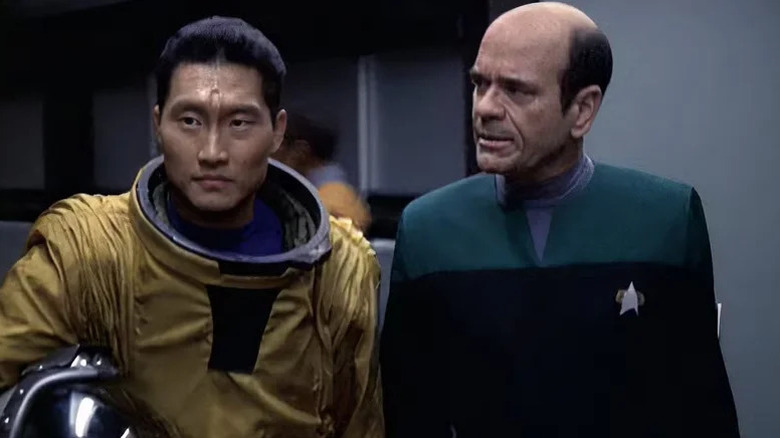
What if aliens were observing us, but they experience time so differently that we could never fully comprehend them? "Blink of an Eye" takes this fascinating premise and casts the USS Voyager into the role of such aliens. As the ship gets trapped into the orbit of a strange planet, the Voyager crew attempts to figure out how to get out of this particular week's jam. However, the true allure of the episode comes from the planet itself, where time advances at a highly rapid pace.
This allows the crew to witness the arc of an entire civilization in barely any time at all. Yet, sometimes the abyss stares back. All the while, the people of the planet have been trying to figure out the strange ship in the sky that also happens to cause periodical earthquakes. After countless generations, the planet manages to establish contact with the Voyager — but also figures out the technology to shoot down the ship. An intriguing storytelling experiment on the subject of time dilation, "Blink of an Eye" is one of the best case-of-the-week tales "Star Trek: Voyager" has in its pocket. — P.P.
11. Cause and Effect (The Next Generation — Season 5, Episode 18)
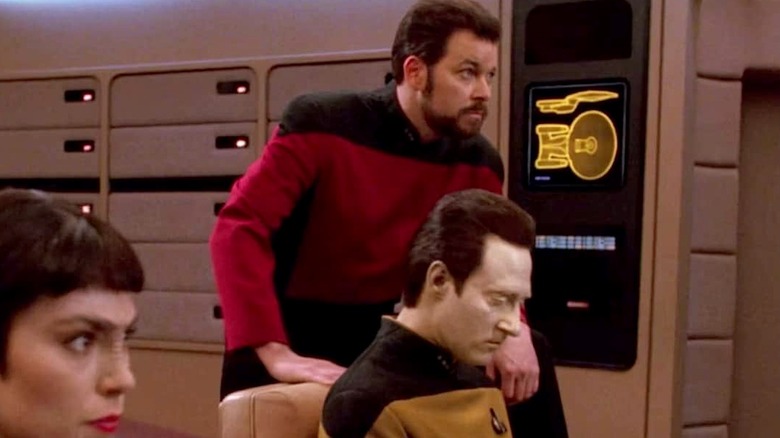
A year before Bill Murray suffered through the same day over and over again in "Groundhog Day," the Enterprise found themselves stuck in their own time loop in this delightfully clever Season 5 standout — and we don't mind watching it over and over again. After one of the boldest cold opens in "Trek" history, which sees a badly damaged Enterprise spin out of control and then explode (!!!), we watch Jean-Luc and the crew relive the same day again and again, always ending with that fatal explosion, thanks to a mysterious spatial anomaly. Dr. Crusher starts getting a sense of déjà vu, though, and the crew begins to piece together that they're in a loop, leaving us to puzzle over how to stop it right along with them. It's a real brain teaser that adds layers of tension with each repetition of the loop, and the ultimate solution is a brilliant one from Data, giving us an intellectual thrill that hits like a photon torpedo. (Bonus points for a fun cameo from "Cheers" and "Frasier" star Kelsey Grammer.) — D.N.
10. The Visitor (Deep Space Nine — Season 4, Episode 2)
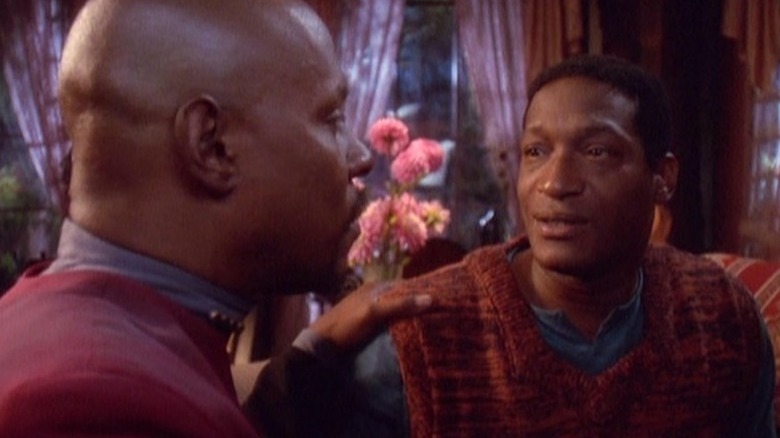
The emotional core of "Deep Space Nine" is the father-son bond between Ben Sisko and his teenage son Jake. It's the first major interpersonal dynamic we're introduced to in the show and carries throughout the series' seven-season run until its finale. This Season 4 episode puts that familial love into undeniable focus, opening with Ben trapped in a subspace anomaly. With his father phasing in and out for brief reunions as he grows older, Jake grows obsessed with saving his dad, even at the cost of his own personal life.
Bolstered by a guest-starring appearance from the late Tony Todd as the older Jake, "The Visitor" is one of the most overtly emotional stories "Star Trek" has ever done. Seeing the lengths Jake goes to rescue his dad is so intensely tragic, right through to the episode's heartbreaking climax. Avery Brooks complements Todd's performance beautifully, culminating in the story's closing scene, successful and yet no less personally shattering. "Star Trek: Starfleet Academy" has its own nod to the father-son bond that defines "DS9" and "The Visitor," albeit in a mercifully less sad way. — S.S.
9. Amok Time (Star Trek — Season 2, Episode 1)
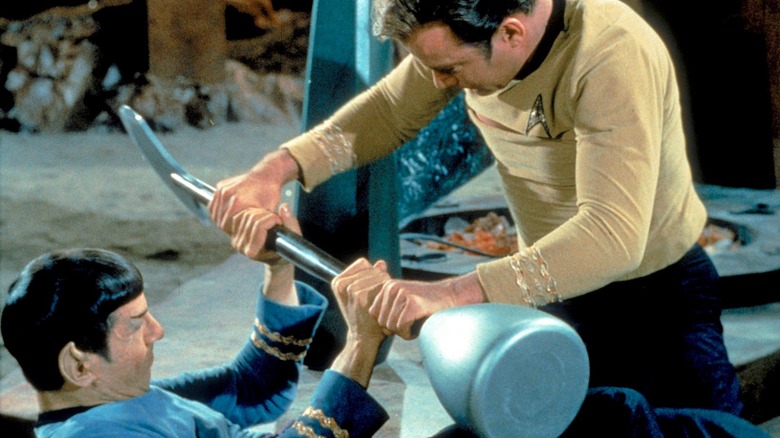
Like in "The Menagerie," the Season 2 premiere opens with Spock acting very un-Spock-like, disobeying orders and throwing temper tantrums like a petulant teenager. It's only later that we learn that he needs to return home for Vulcan mating season and is being driven crazy by his raging hormones. (Hey, we've all been there.) Leonard Nimoy does some of his best work in the series as Spock takes Kirk and McCoy back home for his arranged marriage to T'Pring, giving us our first look at Spock's home world. (It also marks the debut of the iconic Vulcan hand signal.) But when T'Pring chooses Kirk instead, it forces Spock and Kirk to fight to the death (!), setting up a savage battle between our two heroes that ranks as one of the best fights in franchise history. Both Kirk and Spock survive, of course, but even knowing that, the fight is still edge-of-your-seat tense, and the episode still ranks as one of Spock's finest hours. — D.N.
8. I, Borg (The Next Generation — Season 5, Episode 23)
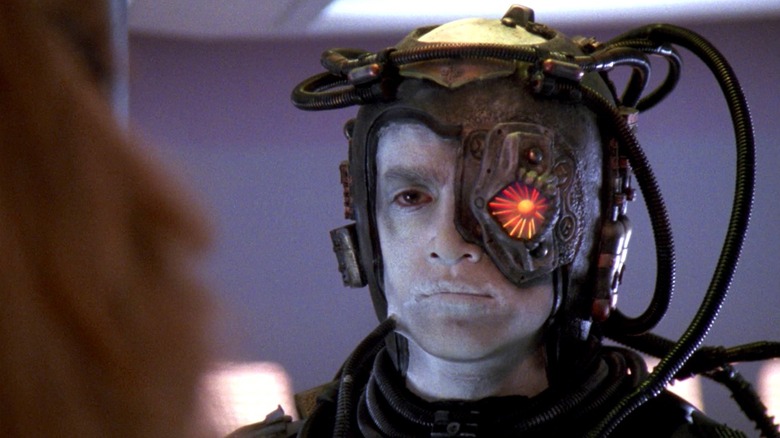
Jean-Luc is forced to confront his lingering trauma from being assimilated by the Borg in this thoughtful entry, where the Enterprise stumbles upon a wounded Borg drone and brings him aboard for treatment... against Jean-Luc's strong objections. Our captain is shockingly coldblooded here, even plotting to use the Borg drone as a kamikaze weapon to infect the collective, and it's a sobering portrait of how war can drive us to see the enemy as unworthy of life. (This is some of Patrick Stewart's finest work in the entire series, we should note.) But the Borg drone begins to show signs of human emotions — Geordi even names him "Hugh" — and Jonathan Del Arco's innocent, childlike performance as Hugh puts us in the unlikely position of empathizing with a Borg. It's an exquisite moral dilemma, and Hugh made such a big impression that Del Arco went on to reprise the role in the Season 6 "TNG" finale "Descent" and then again decades later on "Star Trek: Picard." — D.N.
7. Trials and Tribble-ations (Deep Space Nine — Season 5, Episode 6)
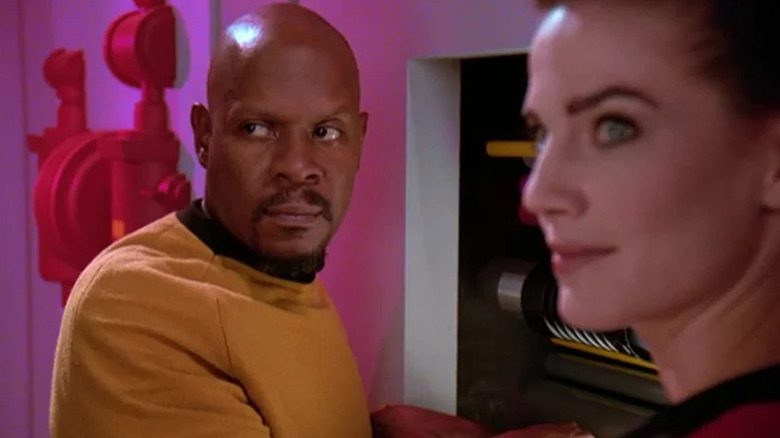
Who doesn't love the classic "Star Trek: The Original Series" episode "The Trouble with Tribbles," provided they don't have to share a spaceship with the rapidly procreating critters? This "Deep Space Nine" episode takes things to the next level when the Defiant is sent a full century back in time, courtesy of a Klingon operative's time travel ploy to kill James T. Kirk with a bomb.
To get out of this jam, Benjamin Sisko and Jadzia Dax pose as USS Enterprise crewmen, trying to locate and dismantle the bomb. The problem is that they're there during the events of "The Trouble with Tribbles," and the explosive is... in a tribble.
That description alone is enough to convince a prospective viewer that "Trials and Tribble-ations" is nostalgia-infused fun with a capital F, and the episode delivers on the premise with gusto. The combination of old footage and digitally inserted infiltration shenanigans is as fun as "Star Trek" gets, and the interaction between the two shows' characters is well worth the price of the metaphorical admission. — P.P.
6. All Good Things... (The Next Generation — Season 7, Episodes 23 and 24)
Forget this being one of the best "Star Trek" episodes ever: The time-tripping two-parter that wraps up "TNG" is one of the best TV series finales of all time, in any genre. (It's also a lot better than the first "TNG" movie, "Star Trek: Generations," which hit theaters later the same year.) A helpless Jean-Luc finds himself jumping across multiple timelines, including one that reunites him with the late Tasha Yar, with Denise Crosby reprising her role. It's the work of Q, of course — John de Lancie is at his mischievous best here — bringing us full circle with the "TNG" pilot, "Encounter at Farpoint," with Q once again putting Jean-Luc on trial for the crimes of humanity. Jean-Luc gets the Enterprise band back together to solve the mystery and prove humanity's worth, and there's an air of bittersweet sentiment to their adventure, knowing that it's the final one — until the movies, anyway. The gorgeous final scene, with Jean-Luc finally joining his friends for a game of poker, serves as the perfect epilogue for the finale, and for the show's seven-season run as well. "The sky's the limit," indeed. — D.N.
5. Space Seed (Star Trek — Season 1, Episode 23)
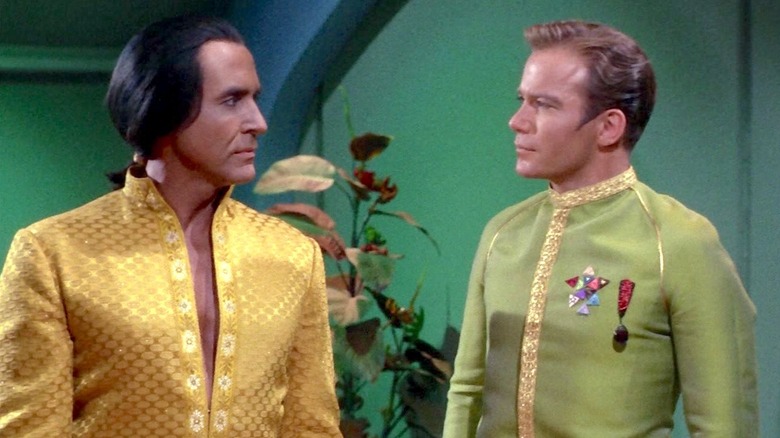
The legend of Khan — truly one of the greatest villains in "Trek" franchise history — springs from this fantastically entertaining episode, with Ricardo Montalban chewing space scenery left and right as the genetically engineered tyrant who's unfrozen after centuries in stasis. Once awake, Khan naturally wants to conquer everything in his path... including Kirk's Enterprise. Montalban and William Shatner are both firing on all cylinders here as Khan and Kirk face off, debating philosophy over a tense dinner before tussling in a one-on-one brawl. The hour is a riveting blend of high camp — the stunt doubles in the Kirk-vs.-Khan fistfight are laughably obvious — and heady science fiction, pitting a superior race of superhumans against a scrappy band of average joes. And of course, it sets up Khan's return for another showdown with Kirk more than a decade later in the best "Trek" movie of all: 1982's "Star Trek II: The Wrath of Khan." — D.N.
4. The Best of Both Worlds (The Next Generation — Season 3, Episode 26 and Season 4, Episode 1)
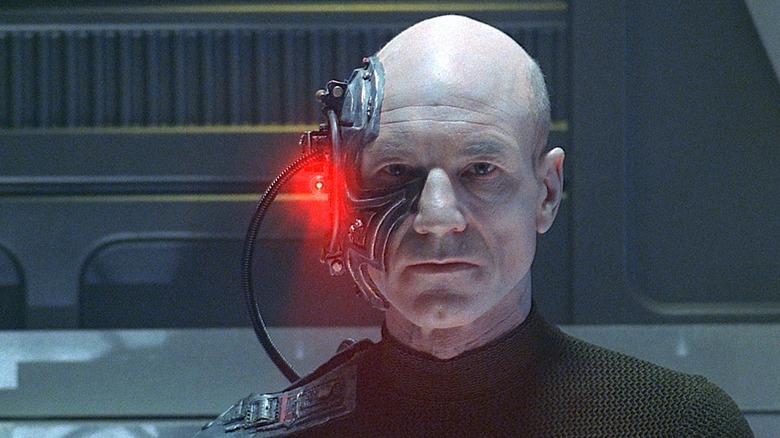
This gloriously epic two-parter is not only one of the best "TNG" installments, with Jean-Luc getting captured by the Borg and assimilated into a mindless drone called Locutus — a shocking reveal that still chills us to the bone 35 years later. It also delivers one of the greatest cliffhangers in TV history: The Season 3 finale ends with Riker ordering the Enterprise to fire on the Borg cube with Locutus on board, leaving fans waiting all summer long to see if Jean-Luc survived. He did, of course, but even knowing that, the episode is still a masterfully tense nail-biter, with the added emotional resonance of Riker considering an offer to captain another ship and contemplating his own Starfleet future while taking command of the Enterprise in Jean-Luc's absence. Jean-Luc's Borg abduction continued to haunt him for years after, and us, too; this episode had us convinced that some enemies are so powerful, even our Starfleet heroes are no match for them. — D.N.
3. In the Pale Moonlight (Deep Space Nine — Season 6, Episode 19)
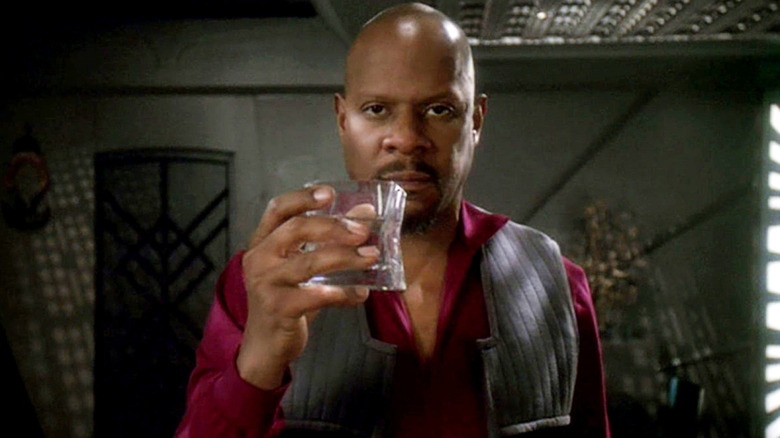
With its unique premise, "Star Trek: Deep Space Nine" was able to get around Gene Roddenberry's rules to avoid interpersonal conflicts in the franchise. The latter half of the series sees the Federation and its allies plunge into a war against a formidable coalition known as the Dominion for the fate of the galaxy. Given the titular space station's strategic importance, its commander, Captain Benjamin Sisko, has to make increasingly morally ambiguous decisions to prevent the war from going sideways. This is exemplified in the Season 6 episode "In the Pale Moonlight," with Sisko engaging in desperate measures to secure Romulan support against the Dominion.
"In the Pale Moonlight" is a must-watch "Star Trek: Deep Space Nine" episode, highlighting the show's darker themes and moral compromises that its characters had to make. Brooks' grim narration throughout the episode underscores the toll this particular story has taken on Sisko's soul in contrast to other less nuanced "Star Trek" leads. Moreover, the episode itself is a tightly crafted political thriller with a heck of a punchline in its closing scene. "Deep Space Nine" was finally able to bring the franchise into morally gray territory, and "In the Pale Moonlight" takes full advantage of that complexity. — S.S.
2. The City on the Edge of Forever (Star Trek — Season 1, Episode 29)
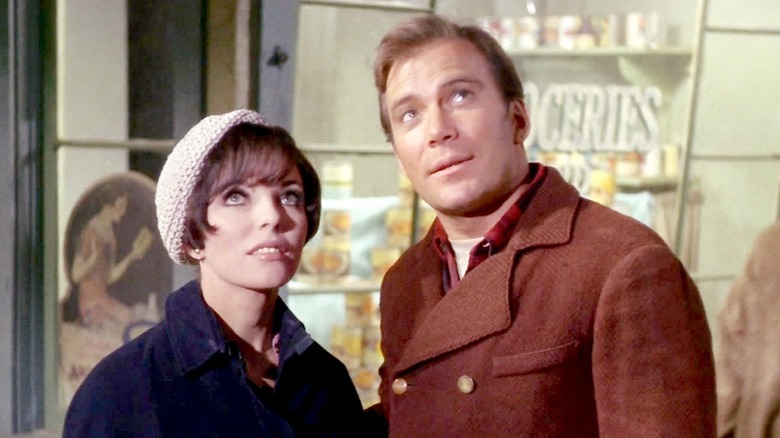
The greatest "Star Trek" episodes transcend the franchise, and even the entire science fiction genre, and tell a superb story that can captivate anyone. That's what we get in this iconic installment that finds Kirk and Spock traveling back in time to 1930s New York City to stop a drug-crazed McCoy from altering history. Penned by legendary sci-fi author Harlan Ellison, it's a clever time-travel tale and also an enchanting romance that finds Kirk falling in love with a kindhearted woman from the past named Edith Keeler, played by a luminous, pre-"Dynasty" Joan Collins. (There are a few laughs, too, with Spock trying to blend in with the human population.) But restoring the original timeline means heartbreak for Kirk, and the tragic conclusion is one of the most exquisitely heart-wrenching moments in all of "Trek"-dom. It's an enduring classic that still hits hard today, and no list of the best "Trek" episodes would be complete without it. — D.N.
1. The Inner Light (The Next Generation — Season 5, Episode 25)
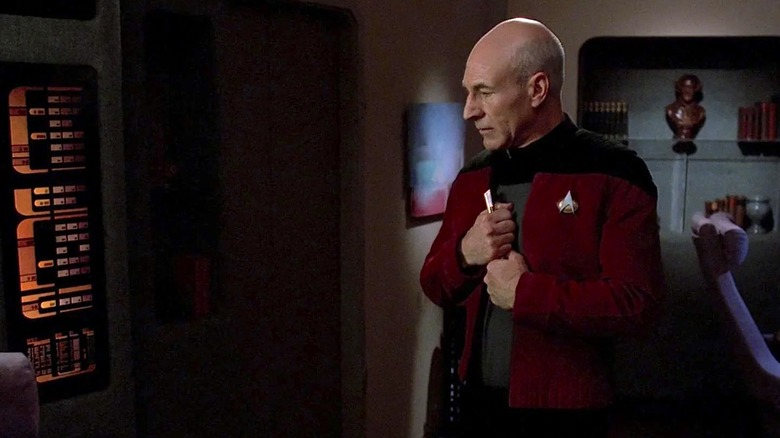
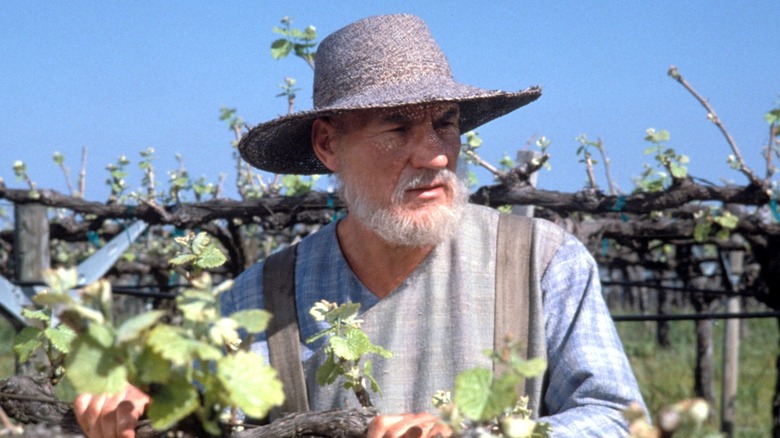
At its very best, "Star Trek" not only explores the farthest reaches of outer space; it explores the deepest corners of the human condition as well. Here, Jean-Luc gets zapped by a mysterious probe and wakes up as a man named Kamin living in a peaceful, agrarian society. On the ship, Jean-Luc is only knocked out for a matter of minutes, but he lives a full 40 years (!) as Kamin, having children with his loving wife and watching them grow up to have their own children. It's a taste of a simpler life for Jean-Luc, and the bittersweet conclusion still hits like a ton of bricks, with Jean-Luc bringing back to the ship with him the flute he learned to play as Kamin. There are no space battles here, no phasers fired — just a beautifully delicate examination of the road not traveled and what truly matters most in life. Jean-Luc's time as Kamin stayed with him for a long time afterwards... and it's stayed with us all these years, too. — D.N.
Alright, Trekkies, it's your turn: Beam down to the comments and tell us your favorite "Star Trek" episodes of all time.