

Rings Of Power: What Is The Secret Fire In The Lord Of The Rings?
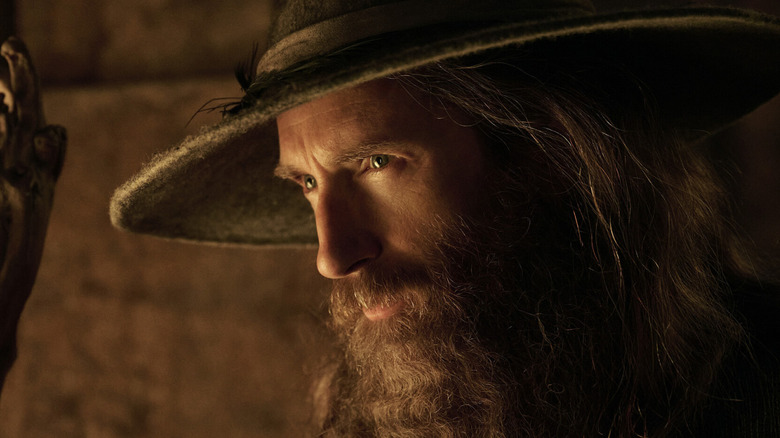
Contains spoilers for "The Lord of the Rings: The Rings of Power" Season 3, Episode 3 — "The Secret Fire."
In "The Rings of Power" Season 3, Episode 3, Tolkien's Secret Fire is not simply referenced, but it is a present character. (Heck, the episode is even named after it.) So what is this mysterious glowing force with Moses-and-the-burning-bush vibes? While Tolkien stays cryptic about the specifics in his writings, it isn't a stretch to say that the Secret Fire is God himself — at least, kind of. It's confusing.
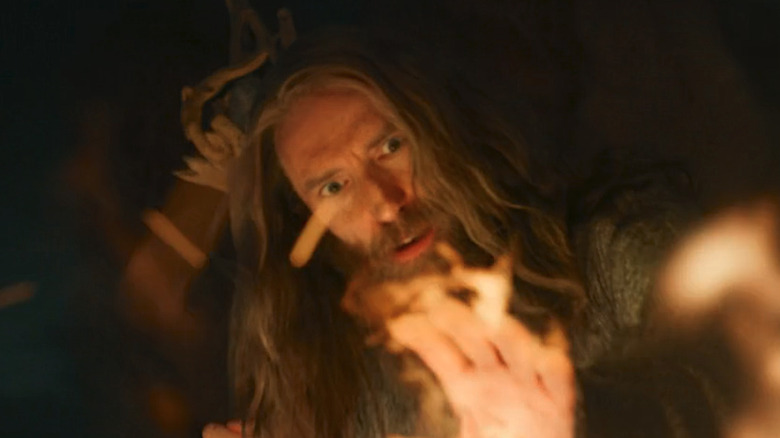
In the episode, Gandalf discovers a mysterious flame in the deserts of Rhûn. It doesn't burn him when he touches it — and when he calls it the Secret Fire, it responds with a voice, saying, "You know me not. I am that which burns within all things yet still remains unseen. I built the heavens and stars, and all of Middle-earth is cradled within my flame." It goes on to explain the history of the Wizards, one of whom was already killed off-screen. That answers one burning question fans had going into the new season. But what about the mysterious flame itself? It's described as endless — and it is. It's been around since before Middle-earth was shaped or the universe (which Tolkien calls Eä) came into being.
The book "The Silmarillion" introduces the Secret Fire by saying, "Therefore Ilúvatar gave to their vision Being, and set it amid the Void, and the Secret Fire was sent to burn at the heart of the World; and it was called Eä." There's a lot to unpack there. Let's break it down.
What does Tolkien say about the Secret Fire?
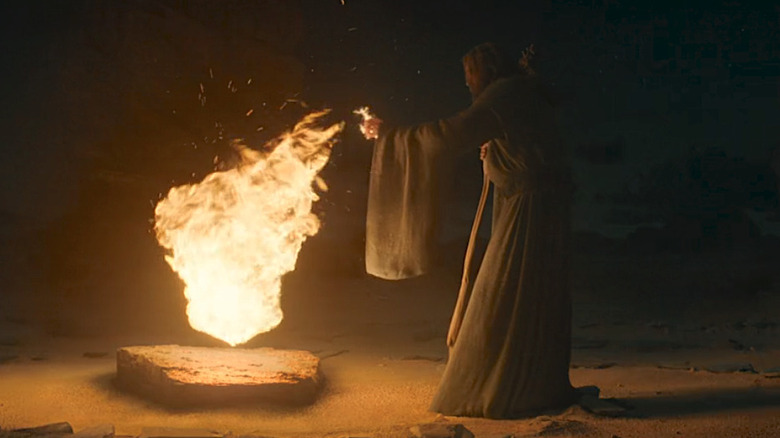
The Secret Fire is also called the Flame Imperishable and the Imperishable Flame. It first comes up when Tolkien's version of the One God, which he calls Eru Ilúvatar, creates the universe. He does this by composing an epic musical score with his angels (some of whom afterward become the god-like protectors of Middle-earth called the Valar and Maiar). When they finish their song, we get the line we already saw introducing the Secret Fire. Ilúvatar turns the music into a vision and then gives that vision Being. Then he uses the Secret Fire as the central life-giving force at the center of the world.
The tricky part about the Secret Fire is its relationship to the Creator. Tolkien can be really enigmatic when it comes to magical elements in his world. That's why the way the Rings of Power work in Prime Video's series differs from in the "Lord of the Rings" books, for instance. In the case of the Secret Fire, Tolkien doesn't make the relationship between the Fire and Ilúvatar definitively clear. Instead, Ilúvatar is referenced as the Creator being, whereas the Secret Fire is seen more as an element or manifestation of his power.
The Secret Fire is something that people can contain and even search for (more on that in a minute). It's the key force behind creation and intangibly connected to life in Middle-earth. Everything from the angelic Valar and immortal Elves to mortal Men and Dwarves has sentient, independent will because of the Secret Fire. But it isn't exactly a one-for-one name swap for the Creator himself.
Tolkien's Secret Fire is the Holy Spirit
Noted Tolkien scholar Dr. Clyde S. Kilby claimed to have some clarity on the Secret Fire from Tolkien himself. He reported that when he interviewed the author, Tolkien directly connected the Secret Fire to the Holy Spirit. The connection makes sense. In the Christian worldview, God and the Holy Spirit are both part of the complex theological concept called the Trinity. Tolkien was a devout man of faith, so it's logical that he might integrate the enigma of the "three-in-one" concept of Christianity into his story through Ilúvatar and the Secret Fire.
Whatever its specific connection to the Creator might be, the Secret Fire regularly comes up in Tolkien's writings. Gandalf references serving it when he faces the Balrog on the Bridge of Khazad-dûm. Ilúvatar uses it to craft the entire universe and then puts it at the center of the new creation. Even Sauron's original master, the Dark Lord Morgoth, seeks out its creative force. "The Silmarillion" describes this thusly: "He had gone often alone into the void places seeking the Imperishable Flame; for desire grew hot within him to bring into Being things of his own ... Yet he found not the Fire, for it is with Ilúvatar."
And now, in a non-canonical new moment, the Secret Fire shows up in "The Rings of Power." The character personally explains Gandalf's Second Age mission to him. Whether we see the Imperishable Flame again in the show or not, we know it's definitely operating behind the scenes in J.D. Payne and Patrick McKay's adaptation.