

The Rings Of Power: Why Tolkien Called Death The Gift Of Men
Contains spoilers for "The Lord of the Rings: The Rings of Power" Season 3, Episode 5 — "The Lady of Lórien" and Episode 6 — "From Valinor"
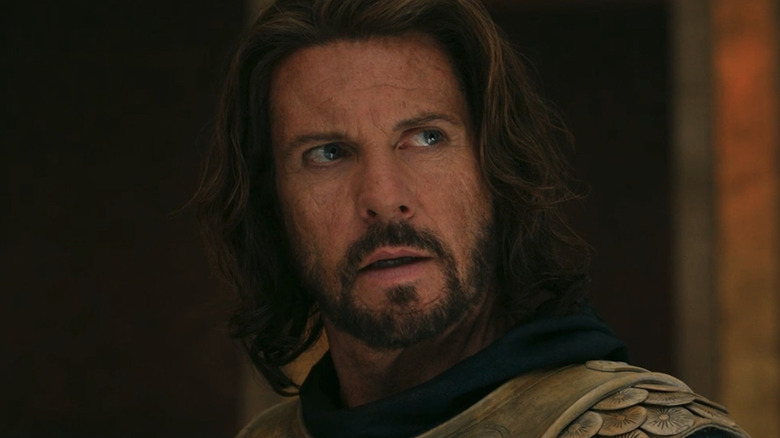
In "The Rings of Power" Season 3, Episode 5, Elros (Robert Aramayo) says, "The Valar promised. Death would not be a doom, but a gift." This isn't the first time we've heard about the "gift of death" in Season 3, either. Back in Episode 2, as civil war brews in Númenor, Eärien (Ema Horvath) talked to a tortured member of the Faithful (not long before she herself faces one of the most shocking deaths on "The Rings of Power" so far). She said, "I know the Faithful believe death to be a gift of the Valar." A little later, her brother Isildur (Maxim Baldry) again talks about death being "not a doom, but a gift."
What's up with the "death is a gift" obsession? Is it Tolkien? While the showrunners have had to make up parts of the "Rings of Power" story to fill gaps, the "death is good" angle comes straight from the author's pen — and it's a recurring theme. "The Silmarillion" talks about the way Ilúvatar (God in Tolkien's legendarium) blesses the Human race, saying, "to Men he gave strange gifts...Therefore he willed that the hearts of Men should seek beyond the world and should find no rest therein." A bit later, it reiterates, "Men dwell only a short space in the world alive, and are not bound to it, and depart soon whither the Elves know not ... Death is their fate, the gift of Ilúvatar, which as Time wears even the Powers shall envy."
Is Death really a gift according to Tolkien?
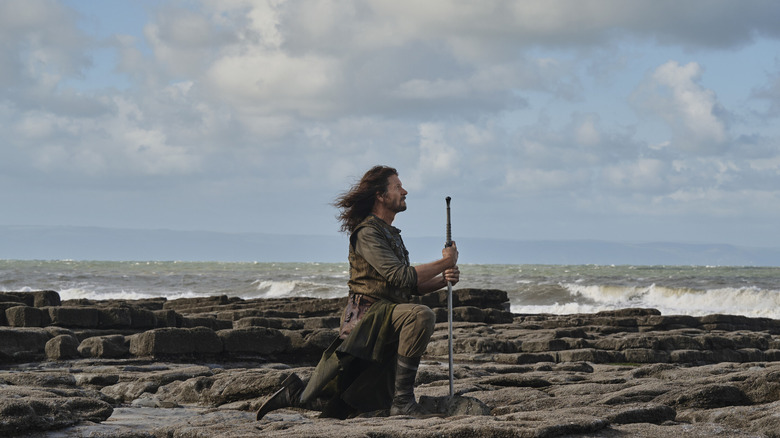
Tolkien doubles down on the idea of death as a gift more than once. One of his best conceptual explanations comes in a draft of an unsent letter written from 1958, where the author offers a solid summary of death, describing it as "not being tied to the 'circles of the world'." He also explains what it looks like from the perspective of Men and of Elves — and that the difference matters. Elves struggle to understand death.
Here's how Tolkien says it: "Mortality, that is a short life-span having no relation to the life of Arda, is spoken of as the given nature of Men: The Elves called it the Gift of Ilúvatar (God)." While a distinctly Elvish view, this interpretation of death also influences the Human nation of Númenor due to a deep and ancient respect for the Elves and Ilúvatar throughout the island civilization's history.
In his unsent letter, Tolkien goes on to explain why something as terrible as death ends up being a gift in his world. He says, "A divine 'punishment' is also a divine 'gift', if accepted, since its object is ultimate blessing, and the supreme inventiveness of the Creator will make 'punishments' (that is changes of design) produce a good not otherwise to be attained: A 'mortal' Man has probably (an Elf would say) a higher if unrevealed destiny than a longeval one."
In other words, Ilúvatar turns death into a gift — one that can be accepted with hope at the end of a well-lived life. Of course, that isn't what happens most of the time.
The gift of Death is a double-edged sword
"The Silmarillion" suggests that Men have an important part to play after the World's end. That gives them hope. But during the World's existence, death is a complicated topic. Bad actors like Morgoth and Sauron use it to create fear, including in Númenor — a fact that has already started to creep into "The Rings of Power" story.
For most of the Second Age, the Númenóreans respect and even treasure death. They surrender their lives willingly before getting old and losing their faculties. But over time, they start to cling to life harder. The appendices of "The Return of the King" (which is a primary source for the "Rings of Power") reveal that the kings of Númenor start to crave immortality, adding, "Thus the shadow deepened, and the thought of death darkened the hearts of the people." They start to look for ways to live longer — and even consider seizing immortality from the Elves and Valar across the sea in the West.
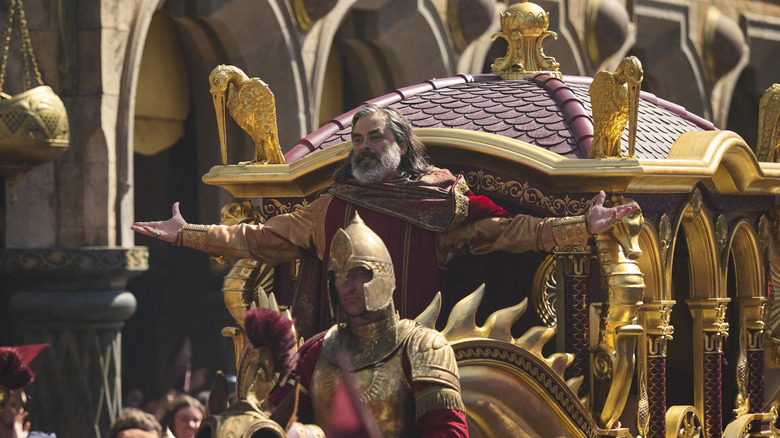
In his unsent letter, Tolkien warns against the danger of Men refusing their gift, saying, "to attempt by device or 'magic' to recover longevity is thus a supreme folly and wickedness of 'mortals'. Longevity or counterfeit 'immortality' ... is the chief bait of Sauron – it leads the small to a Gollum, and the great to a Ringwraith." Say that to Pharazôn. In Season 3, Episode 6, Trystan Gravelle's character tells his Elven visitors that Númenóreans decide their own fates, saying, "No Elf could understand what I want." The foreboding line hints at the King's very mortal future. But that's a story for another season.