

The Rings Of Power's Númenor Explained: Who Created The Island Kingdom?
Contains spoilers for "The Lord of the Rings: The Rings of Power" Season 3, Episode 5, "The Lady of Lórien."
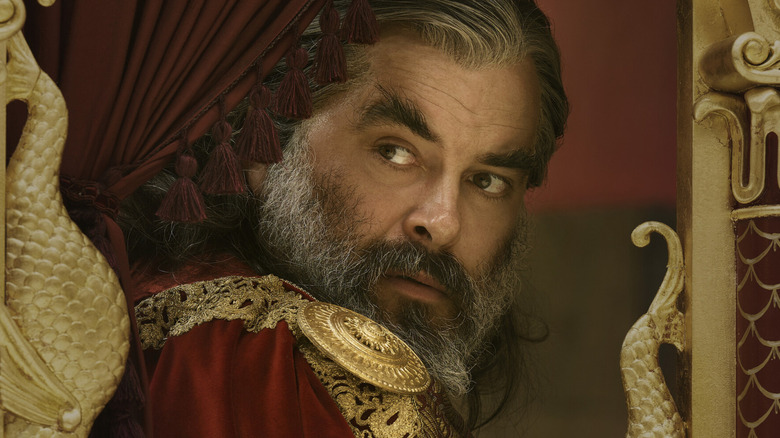
Early in "The Rings of Power" Season 3, Episode 5, Elros tells his brother Elrond (both played by Robert Aramayo) that he's chosen a mortal life and is going away to lead a new nation of Men on the island of Númenor. At one point, Elros waxes poetic, saying, "Can you imagine what it would have been like? To have seen it, up close? An entire island being born from the sea." If the reference seems odd, it's because this is a unique moment in Middle-earth history. Most of Arda (Tolkien's word for Earth) is created at the beginning of the Middle-earth timeline. But during the Second Age, the Earth changes more than once.
The first of these changes comes during the transition from the First Age to the Second Age, when the island of Númenor is literally raised out of the ocean by the angelic guardians called the Valar as a safe new home for the humans who would come to live there. That's the change Elros is talking about when he references islands being born out of oceans.
The part of "The Silmarillion" called "Akallabêth, The Downfall of Númenor," opens with the creation of its titular landmass. It says the Valar create the island as a safe haven and a gift to a select number of tribes of Men (called the Edain). These are the mortals who helped them overthrow Sauron's original master, the Dark Lord Morgoth, as the closing act of First Age history.
Númenor is born from the waves
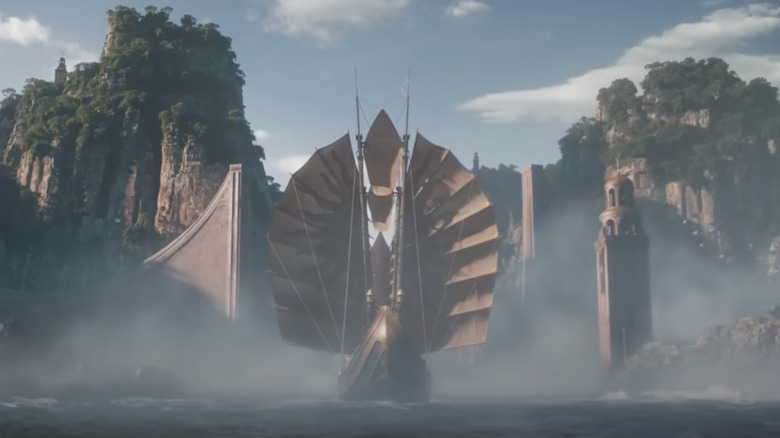
"The Silmarillion" explains the act of Númenor's creation: "A land was made for the Edain to dwell in, neither part of Middle-earth nor of Valinor, for it was sundered from either by a wide sea; yet it was nearer to Valinor." This puts Númenor close to the immortal lands inhabited by Elves and the god-like Valar. (That proximity also plays a key role in the island nation's Atlantean downfall.) The island is raised right out of the sea and enriched and blessed by the Valar, turning it into a Garden of Eden-esque paradise.
The appendices at the end of "The Return of the King" book summarize how the Edain get to the island by saying, "Most of them, therefore, set sail over Sea, and guided by the Star of Eärendil came to the great Isle of Elenna, westernmost of all Mortal lands. There they founded the realm of Númenór." "The Silmarillion" adds that "The Valar laid a peace upon the sea for many days, and sent sunlight and a sailing wind, so that the waters glittered before the eyes of the Edain like rippling glass, and the foam flew like snow before the stems of their ships ... the Edain came at last over leagues of sea and saw afar the land that was prepared for them ... shimmering in a golden haze."
Once they get there, the Edain found the nation of Númenor. Elros is their first king and, after their arrival, Elves come and give them gifts and teach them many things.
The many names of Númenor (and how they hint at its fate)
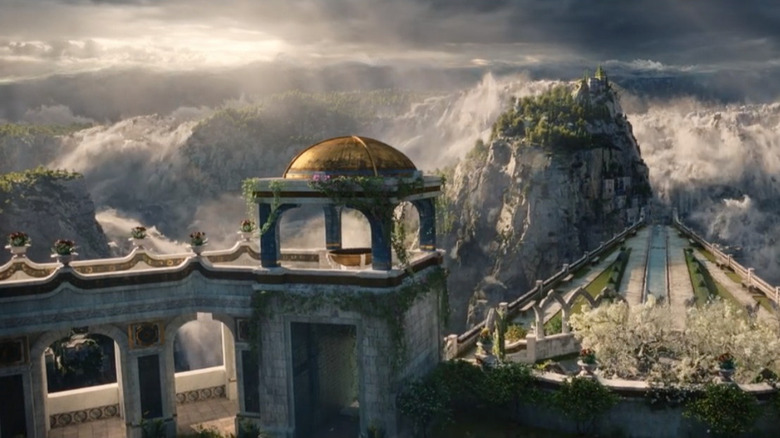
The only restriction when the Edain arrive on their new home is that they aren't allowed to sail further west to the immortal lands where the Elves and Valar live. For thousands of years, that isn't a problem, since their new home is about as good as it gets — for mortals, at least. Over time, it also gets a lot of different names.
In "The Rings of Power," Elros says, "Some are calling it 'Elenna.' I'm fond of 'Númenor.' A new land for a new kind of men. One where they can live out their lives in peace." Those two names are the tip of the iceberg. "The Silmarillion" clarifies Númenor's full name is Númenóre, which means Westernesse. It adds a litany of additional names, including Westland, Anadûnê, Andor, the Land of Gift, and the Land of the Star or Starward, which translates as Elenna. (Númenor is shaped like a five-pointed star.)
Eventually, Númenor slips into civil war (which is starting to show up in "The Rings of Power"). Its kings struggle with the concept of seeing death as a "Gift of Men," and they revolt against the Valar. The ending of the island is as epic as its beginning. The index of "The Silmarillion" offers the chilling summary of additional names for Númenor: "and after its downfall, Akallabêth, Atalantë, and Mar-nu-Falmar." Akallabêth means "the Downfallen." Mar-nu-Falmar means "Land under the Waves." And Atalantë? We'll let that one speak for itself.
Episodes 5 and 6 of "The Rings of Power" Season 3 were released on November 18.